Taxpal-Full-Stack: TaxPal: The Tax App That Turns a Calculation Into a Financial Record
A close look at how a TypeScript MEAN stack uses auth normalization, slab-based tax logic, and on-demand exports to behave more like a system than a calculator.
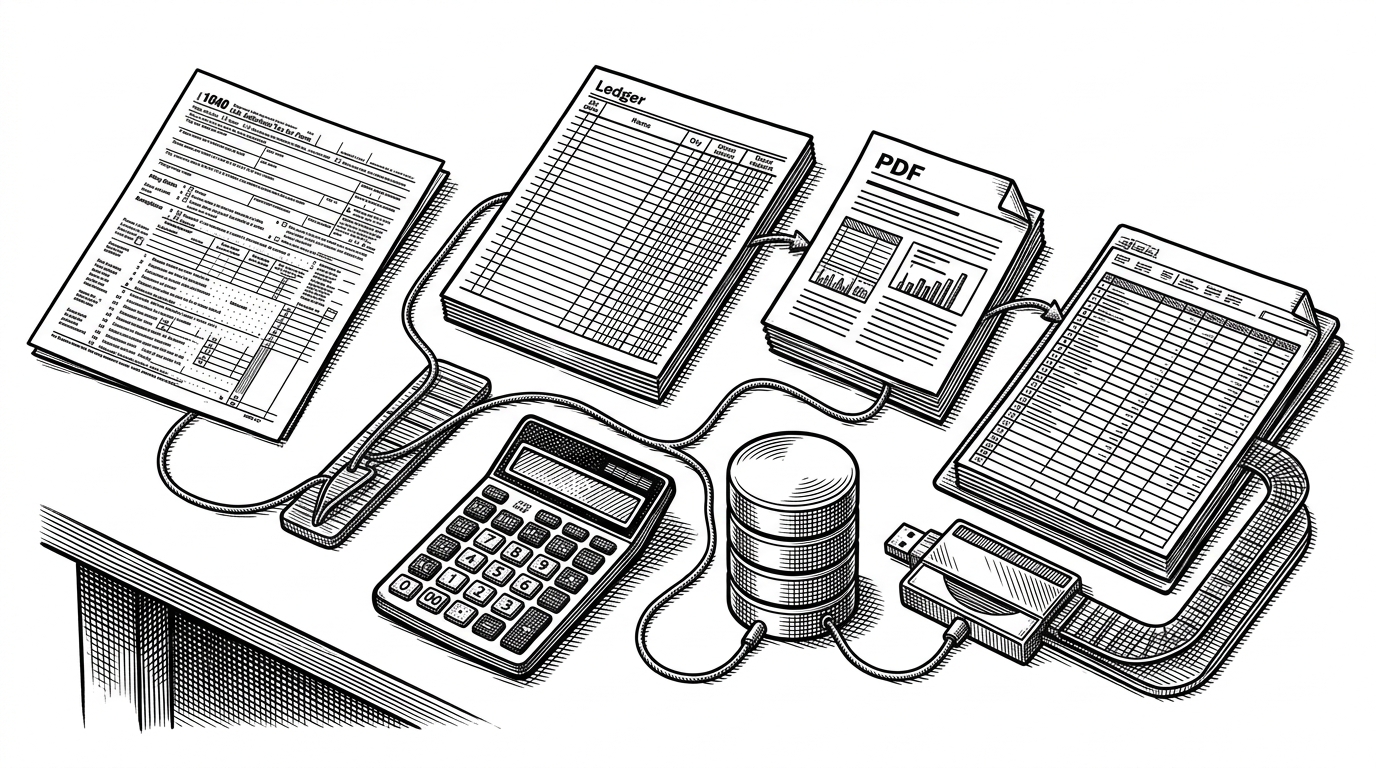
- TaxPal’s real product idea is persistence, because every estimate becomes part of a user-specific record that can be exported and reviewed later.
- The tax engine is intentionally coupled to storage, so calculation and history are not separate concerns but one workflow.
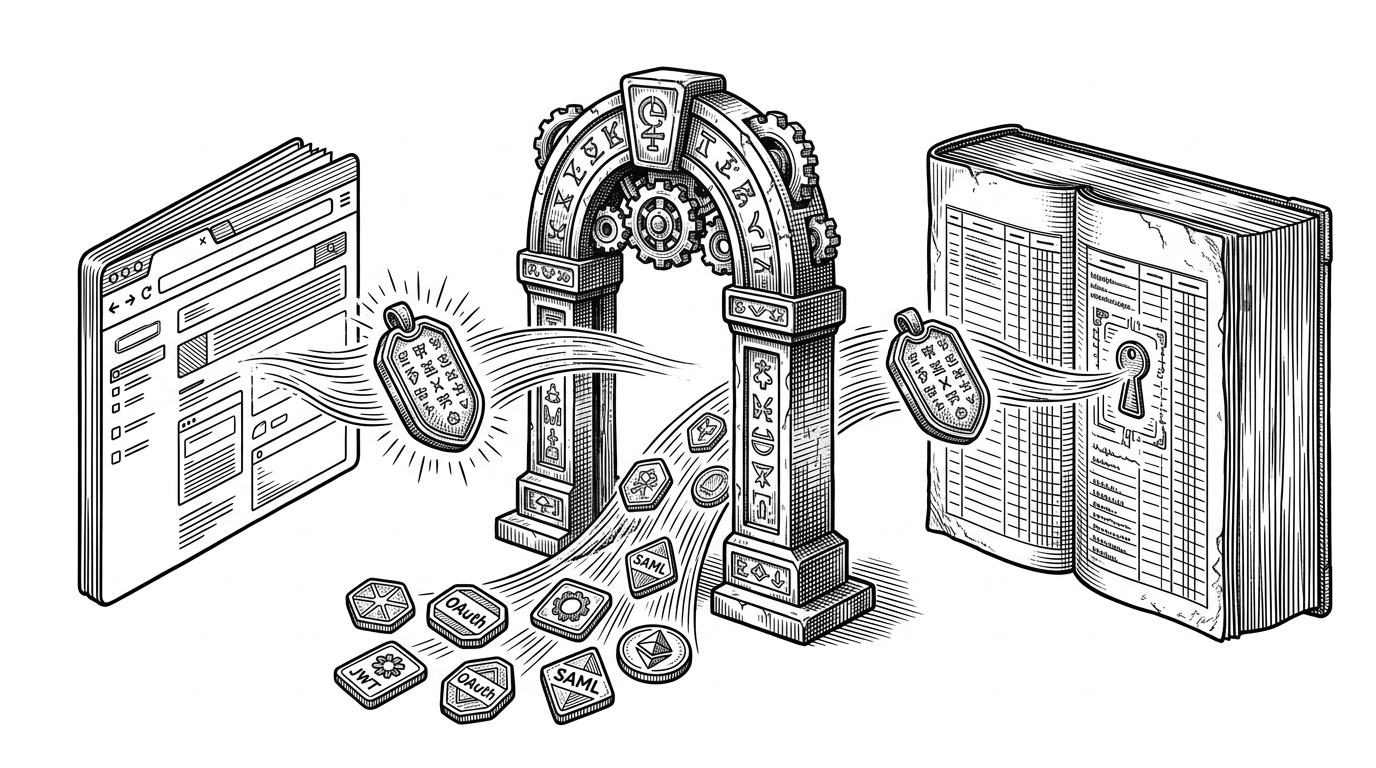
- Auth is normalized at the boundary, which lets browser tokens, cookies, and server controllers converge on a single user identity.
- The frontend stays modular because Angular standalone components and lazy loading keep the app from turning into a monolith.
Why TaxPal feels like a system, not a calculator
Most tax tools optimize for one moment: enter numbers, get an answer, leave. TaxPal takes a different route. It treats the estimate as the start of a financial record, which means the output can be revisited, reported on, and exported instead of disappearing after the form submission.
That design choice changes the feel of the app. A calculator is a dead end. TaxPal behaves more like a small workspace with memory, where tax, income, expenses, and reporting all point back to the same underlying user data.
The engine behind the slab math
The backend’s tax estimator service is the heart of the product. It implements slab-based calculation logic for income tiers, then persists the result immediately so the app keeps a history of what was computed, for whom, and when.
// Conceptual shape of the flow
const result = calculateTax(income, bracket);
await taxEstimatorRepository.save({
  userId,
  income,
  bracket,
  result,
  createdAt: new Date()
});
return result;
That coupling matters. It means the service is not just a pure math function wrapped in an API endpoint. It is part calculator, part ledger entry creator, which is why later views can build reports from real history instead of recomputing everything from scratch.
How identity moves through the app
TaxPal’s auth flow is cleaner than a basic JWT wrapper. The client interceptor adds tokens where they belong, while the server middleware accepts multiple token shapes and maps them into one normalized `req.user.id`. That lets the app support both strict and optional auth paths without forcing every screen into the same access model.
| Auth input | What the app does | Why it matters |
|---|---|---|
| Bearer header or cookie | Middleware normalizes different token shapes into one user identity | Controllers do not need to care where the token came from |
| Signed-in request | User-specific history and exports are available | The same endpoint can support private records |
| Guest or optional auth | The app can still render partial context | The product stays usable without forcing a hard login wall |
Reporting is where the architecture pays off
The export layer is where TaxPal stops looking like a demo. PDF generation, spreadsheet output, and MongoDB aggregation turn raw financial data into something a person can actually use. The key detail is that the system can assemble reports from persisted income and expense collections, so the output reflects stored reality rather than a one-off calculation snapshot.
// Simplified reporting pipeline
const totals = await getIncomeExpenseTotals(userId);
const pdfStream = buildPdfReport(totals);
const workbook = buildSpreadsheet(totals);

return {
  pdf: pdfStream,
  xlsx: workbook
};
This is a strong architectural signal. A small repo could have stopped at CRUD. TaxPal goes further by making reports a first-class output, which is the difference between a form and a financial workflow.
Why the frontend feels lighter than it should
Angular 17 standalone components and lazy loading give the client a modular shape. Feature screens load only when needed, which keeps the app from front-loading every route, every view, and every dependency into one heavy bundle.
That choice pairs well with the product structure. If tax estimation, reporting, budgets, and auth are separate features, the UI should behave that way too. TaxPal’s frontend architecture reflects that boundary instead of blurring it.
| Frontend pattern | What it buys you | Trade-off |
|---|---|---|
| Standalone components | Feature code stays local and easier to reason about | More discipline is needed around shared UI patterns |
| Lazy loaded routes | Smaller initial payload and faster startup | Navigation can feel more segmented if overused |
| Feature-based structure | Tax, auth, and reports stay separated | Cross-feature coordination takes clearer contracts |
What TaxPal does differently from generic accounting tools
TaxPal is not trying to outcompete ERPNext, Akaunting, or TurboTax on breadth. Its value is narrower and more instructive. It demonstrates a focused product thesis: a tax app can be built as a durable, inspectable system without becoming a giant enterprise suite.
| Product | Primary use case | Stack/style | Strength | Limitation |
|---|---|---|---|---|
| TaxPal | Track tax estimates, history, and exports | TypeScript MEAN app | Clear data flow from calculation to record | Narrow scope by design |
| ERPNext | Broad business ERP and accounting | Python, MariaDB | Huge feature surface | Much heavier than a focused tax app |
| Akaunting | Small business accounting | PHP and Laravel | Accessible accounting workflows | Less centered on tax estimation as a pipeline |
| TurboTax | Consumer tax filing | Proprietary | End-to-end filing experience | Closed source and not educational for stack design |
Against that backdrop, TaxPal reads like an excellent reference implementation. It is small enough to understand in one sitting, but complete enough to show how a tax product can carry state across auth, storage, and reporting without collapsing into glue code.
What this repo teaches
The lesson here is not that every tax app should be built with the same stack. It is that a well-scoped product can feel surprisingly mature when the data model, auth path, calculation logic, and export pipeline all agree on what the system is for.
TaxPal makes one strong argument: if a calculation matters, treat it like a record. Once that record exists, the rest of the application has something real to build on.