C-project-Final: The student records app where one character changes everything
A tiny C student information system built on a fixed array, linear search, and manual record shifting. It is a compact lesson in how state, not syntax, becomes the hard part.
- C-project-Final turns a student roster into a lesson about how global state controls everything in small C programs.
- The `while (i = 1)` bug matters because it shows how one mistaken assignment can distort the entire control flow.
- Deletion is the cleanest window into the codebase’s design, because a fixed array can only remove records by shifting neighbors left.
- The project teaches more by exposing its limits than by hiding them behind polish, which makes it a strong learning artifact.
One character is enough to change the behavior of this repo. In while (i = 1), the assignment turns a menu loop into a warning label: the program is not just CRUD, it is a tiny state machine where one shared variable can reshape everything.
The bug that exposes the whole program
while (i = 1)That line is why the project is worth reading. It shows a basic C lesson the repo keeps running into: when state is global, a control-flow typo is never local. It can alter the loop, the count, and the data you thought you had already saved.
What this repo actually is
C-project-Final is a student information management system written as a compact C exercise, not a polished product. The whole application lives in one source file, with a compiled executable beside it, a VS Code task file for building with GCC, and a Jupyter notebook that suggests the project was learned, tested, or documented in a classroom workflow.
struct sinfo {
    char fname[50];
    char lname[50];
    int roll;
    float cgpa;
    int cid[10];
} st[55];
One struct, one array, one counter
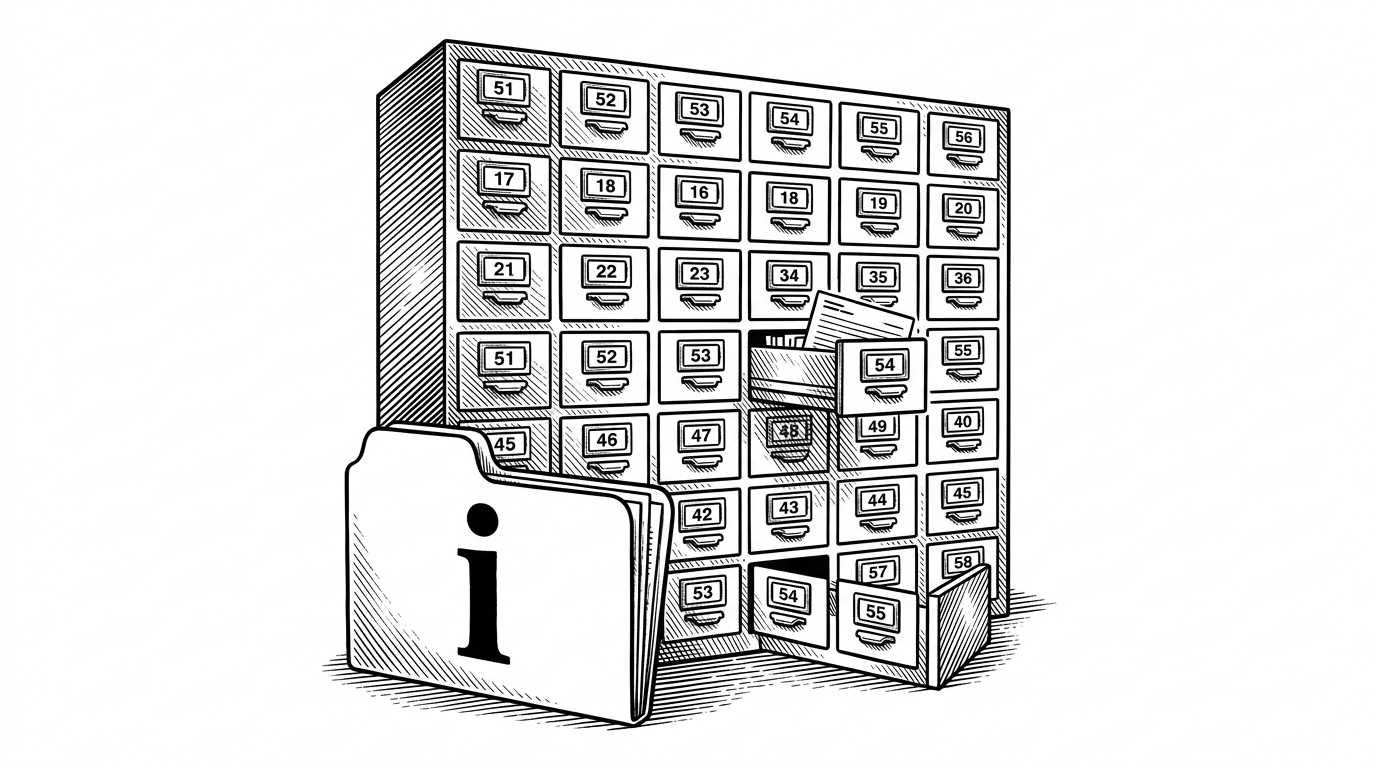
The data model is brutally simple. One struct defines a student, one fixed array holds up to 55 records, and one counter tracks the next free slot. That makes the code easy to follow, but it also means the program lives and dies by a handful of global assumptions.
Add, search, update, delete
The four core actions map neatly to four different kinds of state change. Add writes into the next slot and advances the counter. Search walks the array linearly until it finds a roll number or first name. Update mutates a chosen record in place. Delete removes a record only by compacting the array behind it.
for (int k = j; k < 54; k++)
    st[k] = st[k + 1];
That deletion pattern is the real signature of the code. There is no hole left behind, no pointer juggling, no list node to free. The array stays contiguous, which keeps the rest of the program easy to reason about, but every delete becomes a small left-shift operation.
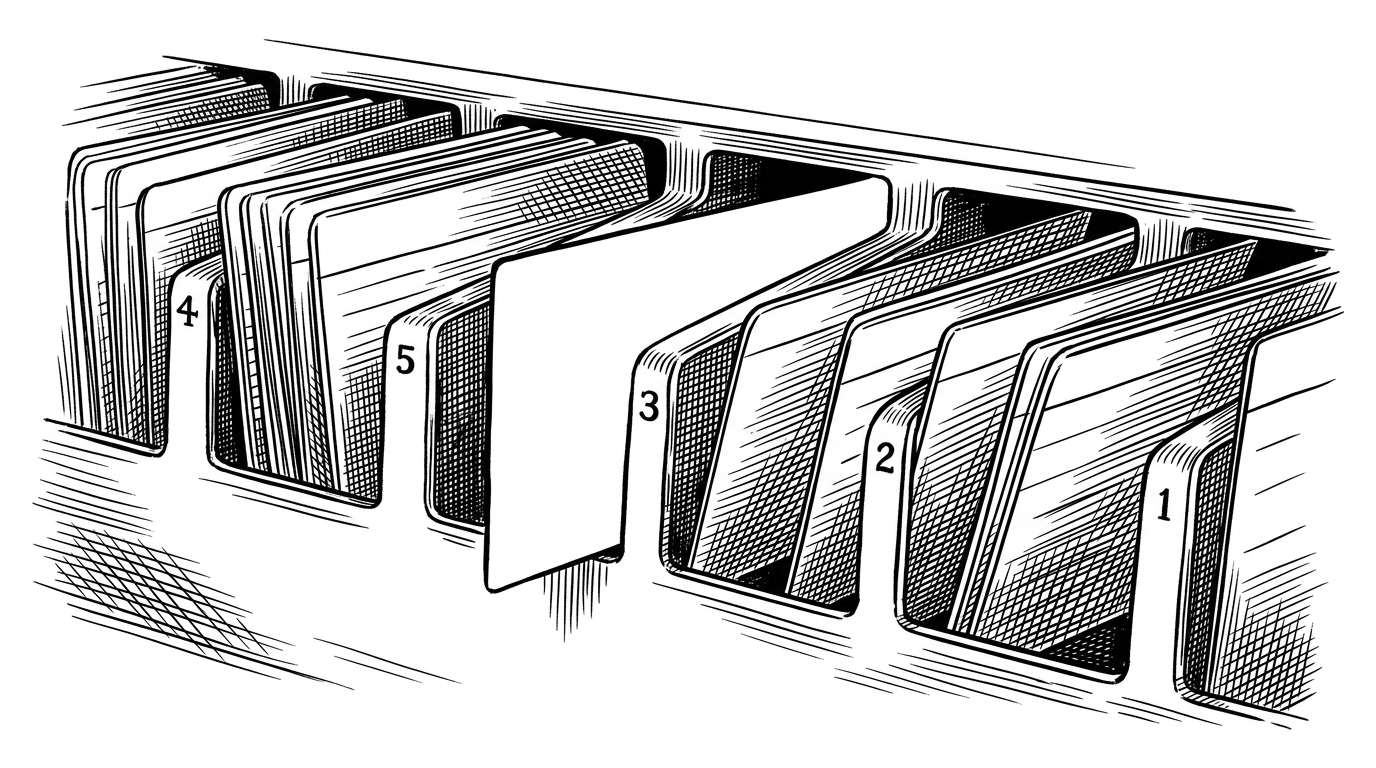
This is why deletion deserves the spotlight. In a fixed roster, removing a student is really a rearrangement problem. The code works because the list stays packed, but the price is obvious: every deletion touches everything that follows.
| Concern | C-project-Final | More durable alternative | Trade-off |
|---|---|---|---|
| Storage model | Fixed array of 55 structs | Dynamic heap or file-backed records | Simplicity versus elastic growth |
| Search method | Linear scan by roll or first name | Indexed lookup or database query | Readable code versus faster scale |
| Delete behavior | Shift every later record left | Tombstone or compaction layer | Straightforward logic versus more machinery |
| Input safety | scanf-driven, little validation | Checked parsing and bounds handling | Short code versus resilience |
| Persistence | In-memory only | Save and load from a file or database | Fast learning versus surviving exit |
| Scalability | Hard cap and global counter | Resizable collection and pagination | Low overhead versus larger user bases |
| Learning value | Makes data movement visible | Hides details behind abstractions | Better for teaching versus better for shipping |
What a more durable version would change
A sturdier version would probably add input validation, dynamic allocation, and persistent storage. It would also stop depending on a single global counter to describe the whole system. That would make the program safer and more realistic, but it would also hide some of the mechanical truths this repo exposes so clearly.
That is the project’s real value. A polished app can hide the cost of its decisions behind frameworks and storage layers. This one cannot. It shows indexing, mutation, control flow, failure modes, and hard limits in plain sight, which is exactly why it teaches well.