auto-outbound: The AI Sales Stack That Researches Before It Writes
How Vercel Labs turns prospect research, workflow durability, and structured prompting into a pipeline for personalized outbound that behaves more like software than copy generation.
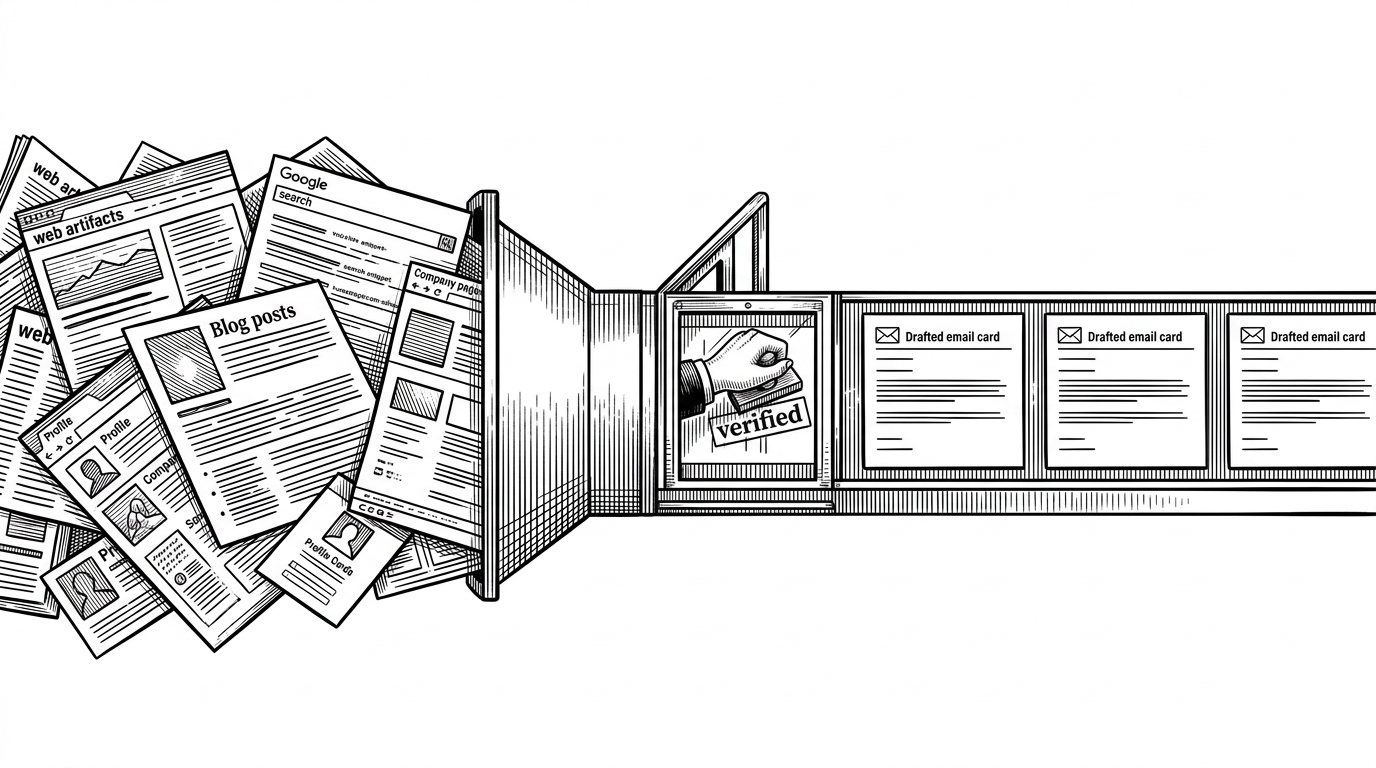
- auto-outbound treats outbound as a verified workflow, not a prompt that guesses from a CRM field.
- Its real innovation is the research loop, where semantic search and LLM checks reduce embarrassing personalization mistakes.
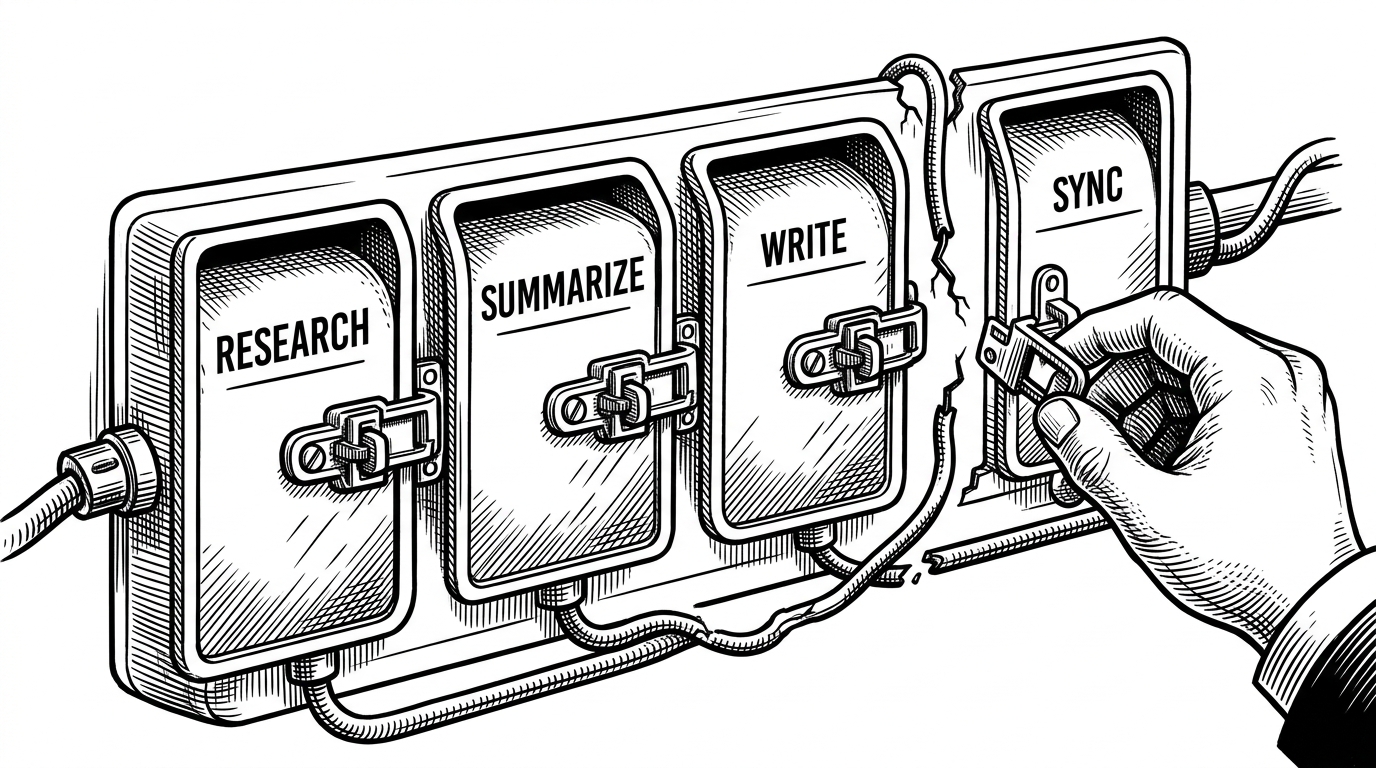
- Durable execution matters because research, generation, and CRM sync can fail independently without forcing a full restart.
- The Outreach handoff proves the output is operationalized, not just well written.
Most AI outbound tools start with a prompt and hope the model does the rest. auto-outbound flips that order. It starts by collecting evidence, verifying what matters, and only then drafting a sequence that can be pushed into a real sales system. That shift sounds small. It changes the whole category.
The shortest path from web evidence to an outbound sequence
The core loop is simple to describe and unusually hard to do well. A contactId enters the workflow, the system loads context, researches the company and the person, summarizes the evidence, generates a three-email sequence, and syncs the result into Outreach. If any stage breaks, the workflow can resume from the last successful checkpoint instead of starting over.
Why this is a workflow problem, not a prompt problem
The center of gravity is workflows/process-contact.ts. It does not just call models in sequence. It coordinates phases, writes state along the way, and makes third-party failure a local problem instead of a total reset. That is the difference between a demo and a system.
| Dimension | Manual SDR work | Generic AI outbound | auto-outbound |
|---|---|---|---|
| Research quality | Human-led and slow | Often thin or guessed | Evidence-first and verified |
| Failure recovery | Manual recovery | Usually none | Resumable checkpoints |
| Personalization depth | Strong but expensive | Variable and brittle | Structured and source-backed |
| Output structure | Depends on the rep | Often freeform | Three-email sequence with schema |
| Integration readiness | Copy-paste into CRM | Usually disconnected | Built for Outreach handoff |
That table is the point. The repo is not trying to win on flashy autonomy. It is trying to make the process trustworthy enough that automation can survive contact with real sales operations.
The anti-hallucination research loop
The smartest part of the repo is that company and person research are treated as separate problems. The company branch uses semantic search to find real artifacts, like engineering blogs and product pages. The person branch checks whether the search results actually belong to the right human before the model writes a line that could embarrass the sender.
That extra confidence check matters. A lot of outbound tools fail in a very specific way: they are personalized to the wrong person, or to a thin signal that never should have been used in the first place. Here, research is not decoration. It is the guardrail.
Prompting the email like a layout engine
The generation layer, especially lib/email/generation.ts, reads less like copywriting and more like design constraints. It pushes the model toward an F-shaped reading pattern, short paragraphs, and box-style follow-ups. It also bans marketing speak, which is a useful signal that the system is optimizing for scanability and deliverability, not brand flourishes.
// Conceptual shape of the email generator
// The prompt constrains structure, spacing, and tone.

const systemPrompt = `Write for fast scanning.
Use short paragraphs.
Lead with the most relevant point.
Avoid marketing language.
Return HTML that renders cleanly in Outreach.`;

const output = {
  subject: string,
  emails: [first, followUp1, followUp2]
};
That is the quiet insight here. The prompt is not just controlling voice. It is controlling layout behavior, because the email has to survive inside a real outbound composer and still be readable on a quick pass.
Why Outreach integration is the final proof
The Outreach layer makes the whole thing real. Generated content is mapped into specific prospect fields, including hardcoded custom field IDs in the current implementation. That is a little rough around the edges, but it also proves the system is meant to operate inside a living sales workflow, not stop at a JSON response.
| Integration layer | What it does | Why it matters |
|---|---|---|
| Generated sequence | Creates subject and follow-ups | Keeps the output structured enough to reuse |
| Custom field mapping | Writes into Outreach prospect fields | Lets SDRs pull the result into existing templates |
| OAuth and API wrappers | Handles sync to the CRM | Turns draft text into an operational artifact |
This is where a prototype starts to look like infrastructure. The outbound system is opinionated, specific, and a bit brittle in places. That is often what early useful software looks like.
How it compares to generic AI outbound tools
Compared with a plain LLM workflow, auto-outbound is narrower and much more disciplined. Compared with a generalized agent platform like OpenClaw, it gives up breadth in exchange for reliability inside one sales motion. It is not trying to be a universal agent. It is trying to be a trustworthy outbound machine.
| Approach | Strength | Weakness |
|---|---|---|
| Manual SDR workflow | Strong judgment and nuance | Slow and hard to scale |
| Generic AI generator | Fast and cheap | Weak verification and fragile outputs |
| General agent platform | Broad task coverage | Less opinionated about outbound quality |
| auto-outbound | Evidence-first, durable, and structured | Narrower scope and more operational assumptions |
That tradeoff is the story. The repo is not a moonshot on general intelligence. It is a focused bet that sales automation becomes useful when the system is designed to protect factuality, not just produce text.
What this repo says about the next generation of sales tooling
The future is probably not a fully autonomous SDR that handles everything end to end. It is a set of systems that can safely compress research, drafting, and CRM operations into one repeatable pipeline. That is more mundane than sci-fi, and much more likely to ship.
If outbound is going to be automated at scale, the winning products will look less like chatbots and more like durable workflows with strong evidence gates. auto-outbound gets that part right.