openclaw-textclaw: The iMessage bridge that lets OpenClaw run without a Mac
openclaw-textclaw strips Apple messaging down to a relay problem, then solves it with a lean Node.js adapter, a persistent WebSocket, and just enough state to keep replies natural.
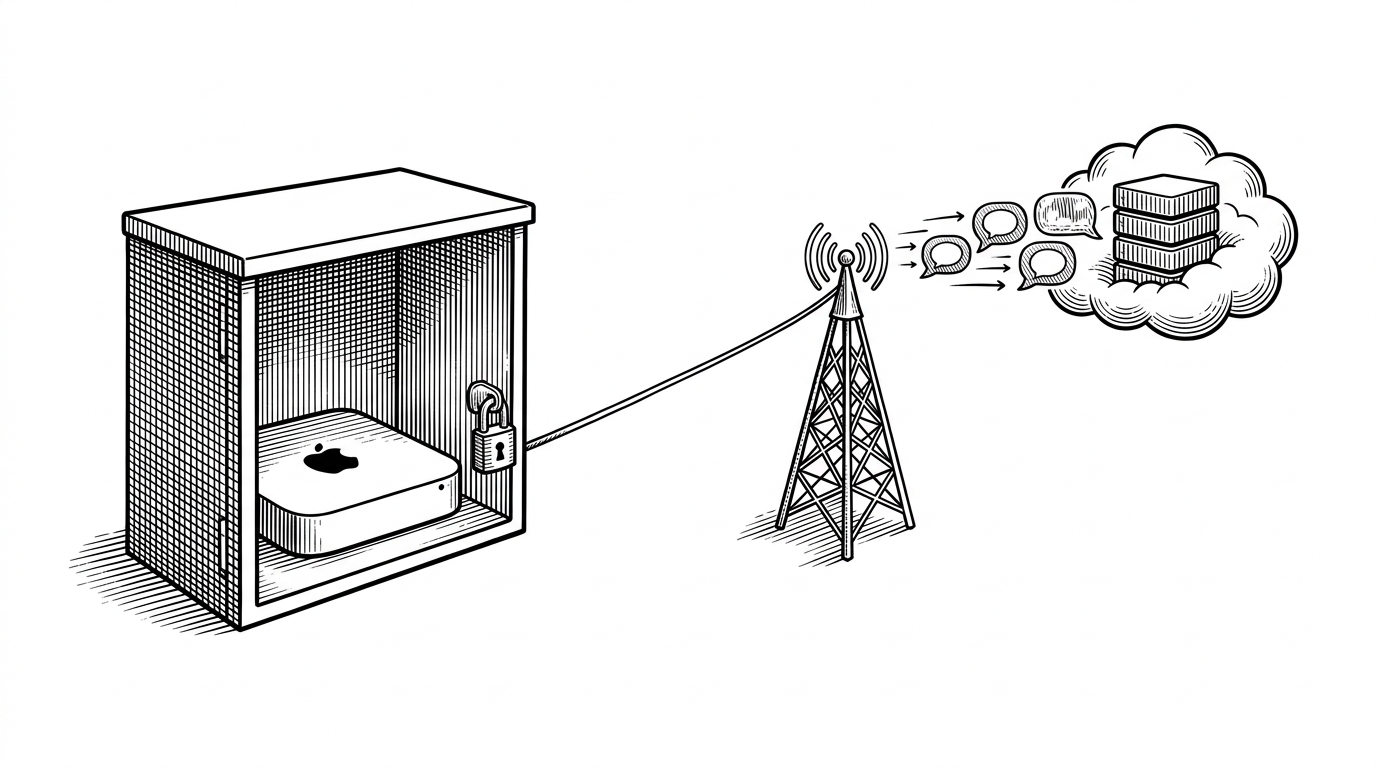
- openclaw-textclaw turns iMessage into a transport layer that an agent can drive, not a Mac-specific setup that has to be babysat.
- Its WebSocket-first design is the key architectural move, because inbound messages can arrive without opening a public port on the host machine.
- The repo's most practical work happens in small seams like debouncing, chunking, and handle caching, where messaging UX is either preserved or destroyed.
- The tradeoff is elegant but clear: the plugin stays lightweight by keeping state in memory, so durability and scale are still delegated to the surrounding runtime.
Most iMessage integrations start with hardware. This one starts with subtraction. openclaw-textclaw takes a familiar pain point for agent builders, the need for a dedicated Mac, and pushes it out of the way with a relay-based bridge that plugs into OpenClaw like any other channel.
Why this plugin matters inside the OpenClaw ecosystem
The broader OpenClaw story is not about chat for chat's sake. As PromptPlaybook.ai put it, "OpenClaw is not a coding assistant like GitHub Copilot or Cursor. It is not an in-editor tool. It is a personal AI agent that runs as a persistent daemon on your own hardware..." That framing matters here, because openclaw-textclaw is one of the pieces that makes the agent feel native in Apple land without forcing the operator to own the Apple stack.
OpenClaw is not a coding assistant like GitHub Copilot or Cursor. It is not an in-editor tool. It is a personal AI agent that runs as a persistent daemon on your own hardware...
How the bridge works
The code is split cleanly by responsibility. `channel.js` exposes iMessage capabilities as agent tools. `api.js` handles outbound actions like send, typing, and reaction. `ws.js` keeps a persistent connection alive for inbound delivery, while `monitor.js` decides when multiple fragments belong in one bubble. `handle-store.js` remembers the latest message handle per peer so tapbacks can point at the right target.
- `channel.js` turns transport details into tools the model can call explicitly.
- `ws.js` keeps the inbound path open with jittered reconnect logic, so the plugin can sit behind NAT or on a locked-down machine.
- `monitor.js` buffers bursts of output, which stops a fast model from firing off a stream of tiny messages.
- `send.js` chunks oversized text so replies stay within iMessage limits instead of failing halfway through.
The hidden product problem is message pacing
The nicest part of the repository is not the relay. It is the restraint. Agents tend to think in bursts, but humans read in turns, so the plugin deliberately debounces delivery and batches output before it reaches iMessage. That makes the conversation feel authored instead of machine-spit, which is the difference between a useful assistant and an annoying one.
| Approach | What it requires | Where it gets brittle | What openclaw-textclaw changes |
|---|---|---|---|
| Dedicated Mac relay | A Mac that stays online and manages Apple-specific plumbing | Hardware overhead, local maintenance, and a tight coupling to one machine | Moves the Apple dependency behind a relay, so the agent runtime can live elsewhere |
| Ad hoc self-hosted messaging bridge | Manual wiring of webhooks, ports, and message state | Inbound delivery is harder to keep reliable when the host is not publicly reachable | Uses outbound WebSocket connectivity and reconnect logic to simplify inbound traffic |
| openclaw-textclaw | OpenClaw plus TextClaw plus a Node.js runtime | Depends on relay availability and in-memory state for some features | Keeps the integration narrow, tool-aware, and easy to drop into an agent stack |
That last point is the real design bet. The repo does not try to become a universal messaging abstraction, and it does not hide the relay behind a giant framework. It stays close to the metal, which is why the code can solve a specific social problem, reactions, typing, reply grouping, without becoming a maintenance burden.