Tencent_test: The Empty Repo That Points to AI-Written Unit Tests
A blank GitHub shell becomes a doorway into TestAgent, a specialized model pipeline that drafts tests and completes missing assertions.
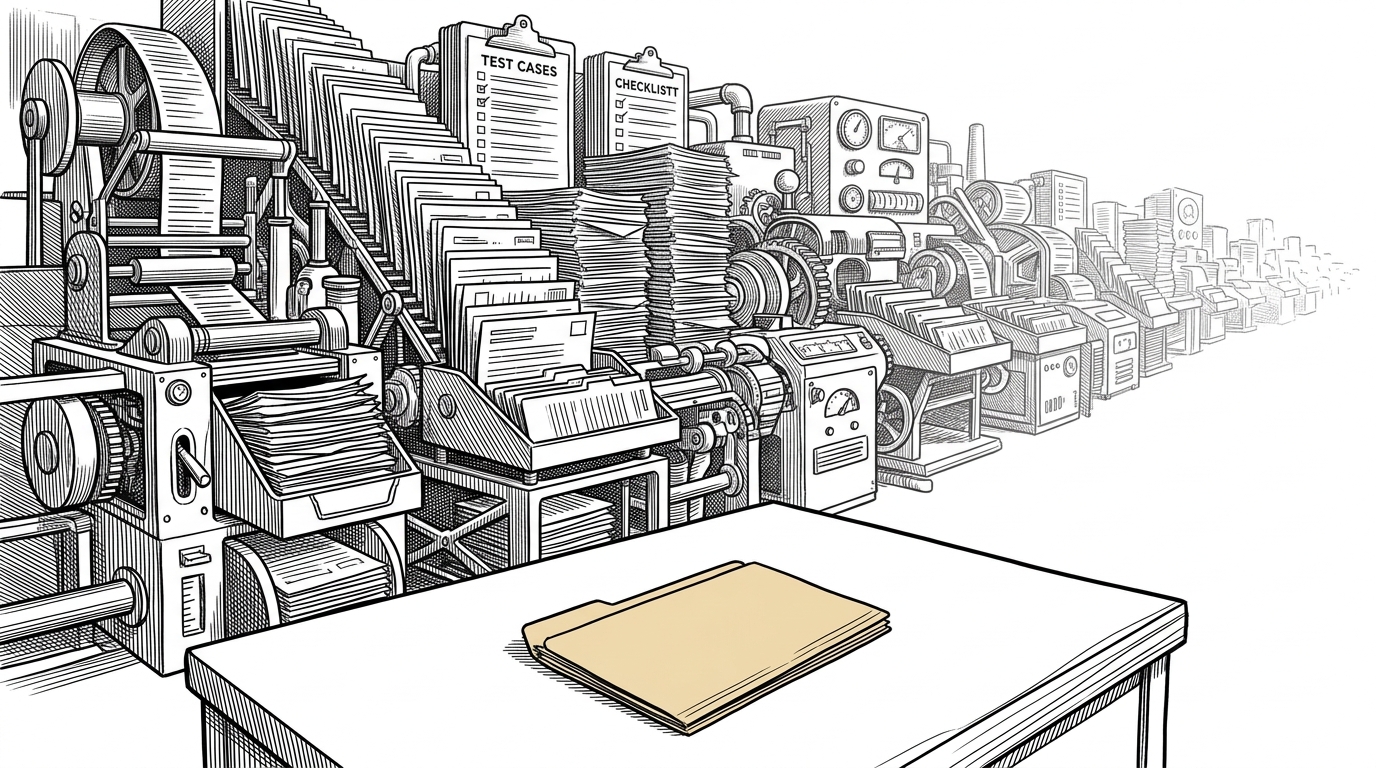
- A nearly blank repo can still reveal a specific product idea when the surrounding context points to a narrow workflow.
- TestAgent matters because it targets one job well: generating unit tests and completing missing assertions.
- The real technical story is the pipeline, not the shell, because source code goes in, candidate tests come out, and human review still closes the loop.
- In the testing landscape, specialization beats breadth when the task is repetitive, measurable, and tightly scoped.
The README is the story
The repository itself is almost nothing. A single README line is enough to tell you that this is not a finished product, and that is exactly why it is worth looking at. The silence is a clue, not a flaw.
# Tencent_testOn its own, that tells you almost nothing. Read it beside the web trail around the repo, though, and it starts to look like a breadcrumb toward a much more specific idea: a test-focused AI system, not a generic coding playground.
The bigger project hiding behind the shell
The interesting context is TestAgent, an open-source testing tool described by its author as a model for the testing industry. Its focus is narrow in the best way possible: generate unit tests in Java, Python, and JavaScript, then complete missing assertions inside existing tests.
TestAgent由蚂蚁研发并开源,旨在构建测试领域的“智能体”,融合大模型和质量领域工程化技术,促进质量技术代系升级。
本期我们开源了测试领域模型TestGPT-7B。模型以CodeLlama-7B为基座,进行了相关下游任务的微调
Why this narrow problem matters
Test writing is tedious in exactly the way software teams hate. It is repetitive, easy to delay, and easy to underinvest in until coverage gaps turn into regressions. A tool that specializes here does not need to understand every kind of developer task. It needs to be unusually good at one workflow that teams already trust.
| Project | Primary job | Input type | Output type | What makes it distinct |
|---|---|---|---|---|
| TestAgent | Generate unit tests and complete missing assertions | Source code and existing test cases | Test cases in Java, Python, or JavaScript | A domain-specific model built for one slice of quality engineering |
| Test_Flow | Create actionable test cases and UI automation | Requirements and Axure prototypes | Test cases and automation steps | RAG-backed workflow that moves from design artifacts to test execution |
| Qwen-Agent-Tester | Orchestrate test tasks end to end | Natural-language instructions | Playwright or Appium actions | An agent that decomposes and executes testing work |
| DiffTest | Reduce false positives in visual regression | Screenshots and visual changes | Visual diff signals | Uses a lightweight ViT to judge semantic sameness |
| LogLoom | Diagnose failures from logs | Failure logs | Fault matches and diagnostic output | Pairs log syntax analysis with a fault-pattern knowledge graph |
That table is the point. These tools all touch testing, but they automate different slices of the stack. TestAgent stands out because it aims directly at the code-writing part of tests, where the return on specialization is highest.
How a model becomes a test author
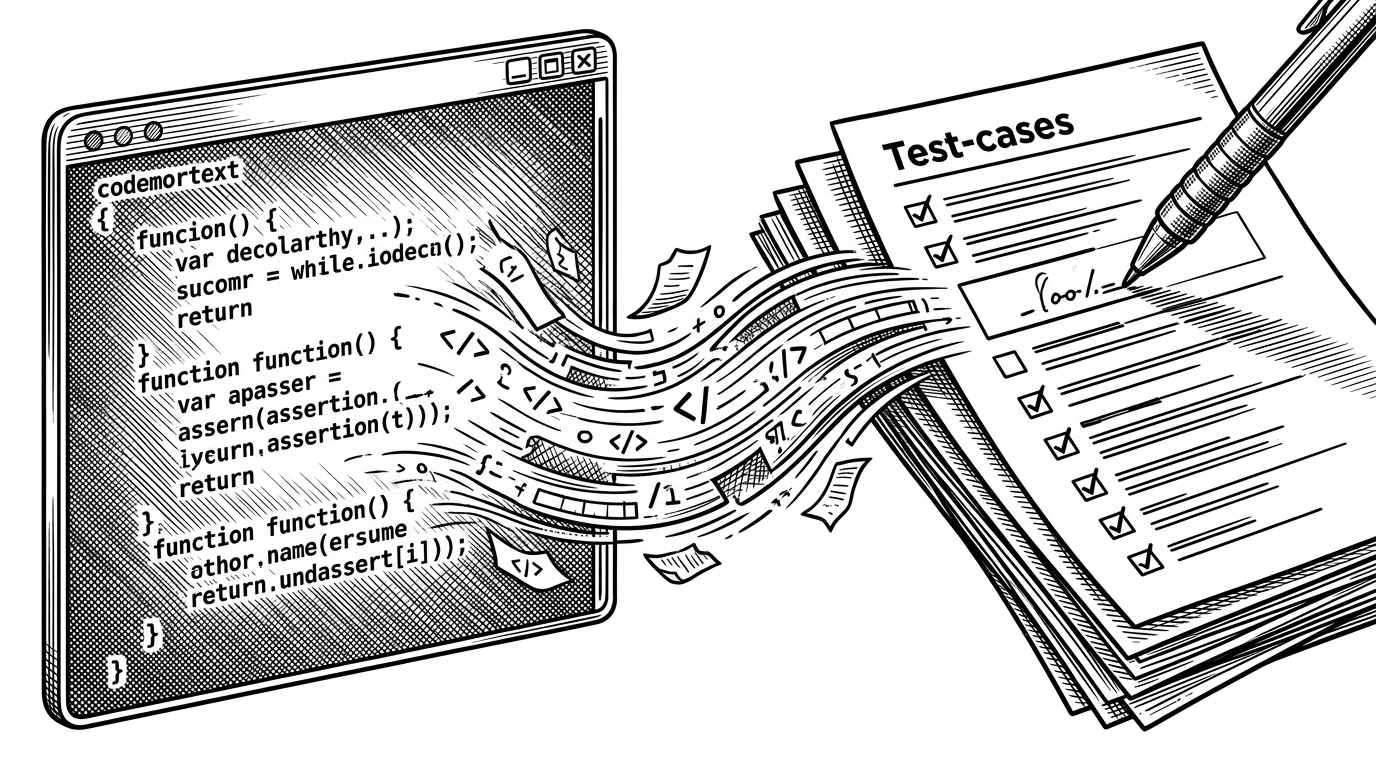
The pipeline is simple enough to explain and subtle enough to matter. Source code enters the system, the model drafts test skeletons, the same system fills in missing assertions, and a human still decides what ships. That last step matters. The model accelerates judgment, but it does not replace it.
That makes the product easier to trust than a general-purpose assistant. It is not trying to do everything around the codebase. It is trying to remove one of the most annoying bottlenecks in the testing workflow and leave the final call to the engineer.
The signal in the silence
Tencent_test is almost empty, but that emptiness is not the story’s weakness. It is the frame. The frame points to a specific kind of open-source idea, one built around precision instead of breadth. In a field crowded with broad AI helpers, a narrow test-writing model feels less like a demo and more like a usable instrument.