native-feel-skill: The Boundary That Makes Desktop Apps Feel Native
A reverse-engineered playbook for drawing the line between web UI, native shell, IPC, and Rust so desktop apps stay fast, polished, and hard to fake.
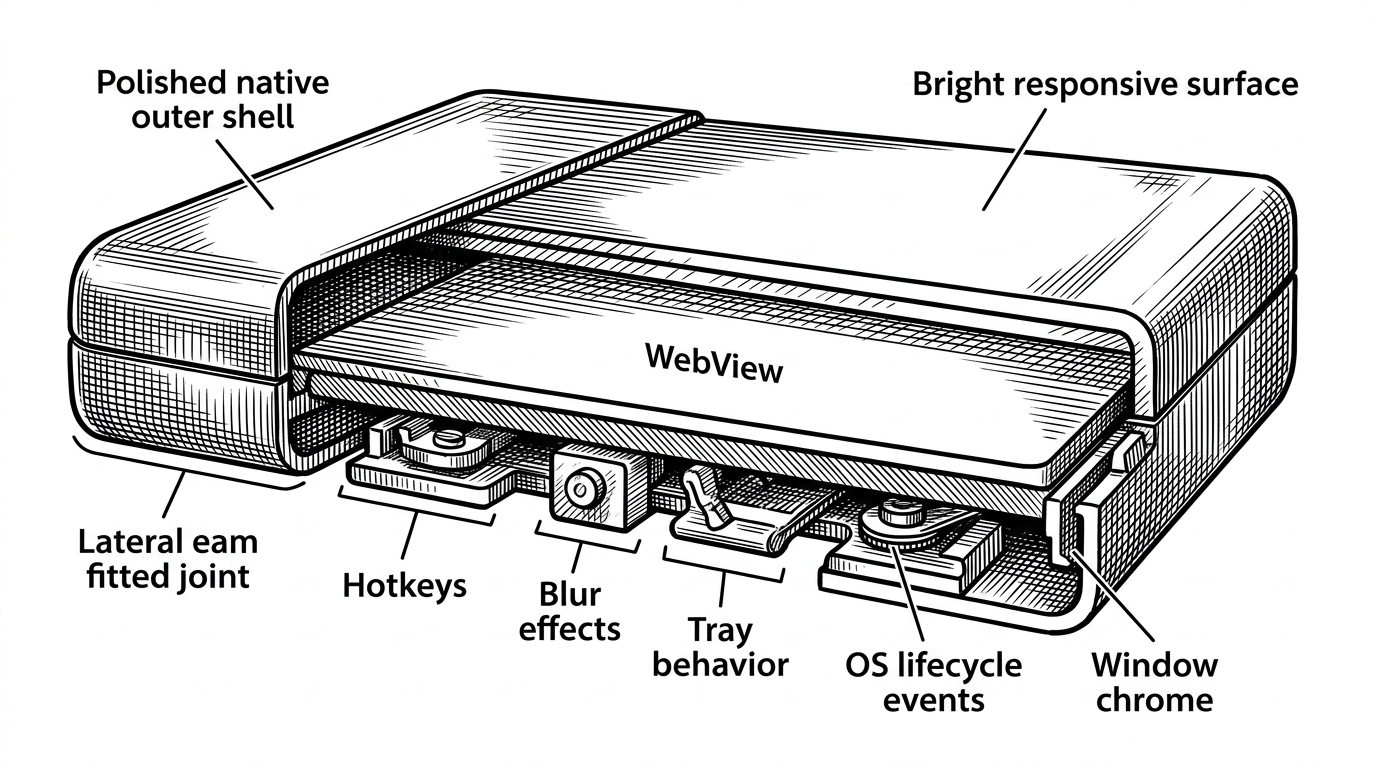
- native-feel-skill argues that desktop polish is decided at the seam between native control and web presentation, not by framework branding.
- Its four-layer stack is intentionally complex because each layer owns a different kind of responsibility, from OS behavior to typed performance work.
- The repository treats hidden-window throttling, cursor conventions, shadows, and latency as product truths, not implementation trivia.
- Its real value is as a decision system for AI-assisted development, where architectural judgment can be reused instead of rewritten.
There is a blunt idea at the center of yetone/native-feel-skill: if a desktop app has to feel native, you cannot blur the boundary between the OS and the app surface. The repo calls that boundary the rendering surface seam, and once you accept it, the rest of the stack stops looking like ideology and starts looking like consequence.
The seam is the product
Most desktop framework debates start with tools. This repo starts with responsibility. Anything that affects window behavior, input responsiveness, shadows, blur, hotkeys, or tray integration belongs below the seam, where the native shell can actually honor OS conventions.
由于这篇文章太伟大了,所以我把它变成了一个 Agent Skill。 大家可以使用自己的 Coding Agent 安装一下这个 Skill,这样就可以用「最佳实践」来轻松地重构或者开发一个既容易跨平台、又极其接近 Native 性能的桌面端应用。
Why web apps start to feel fake
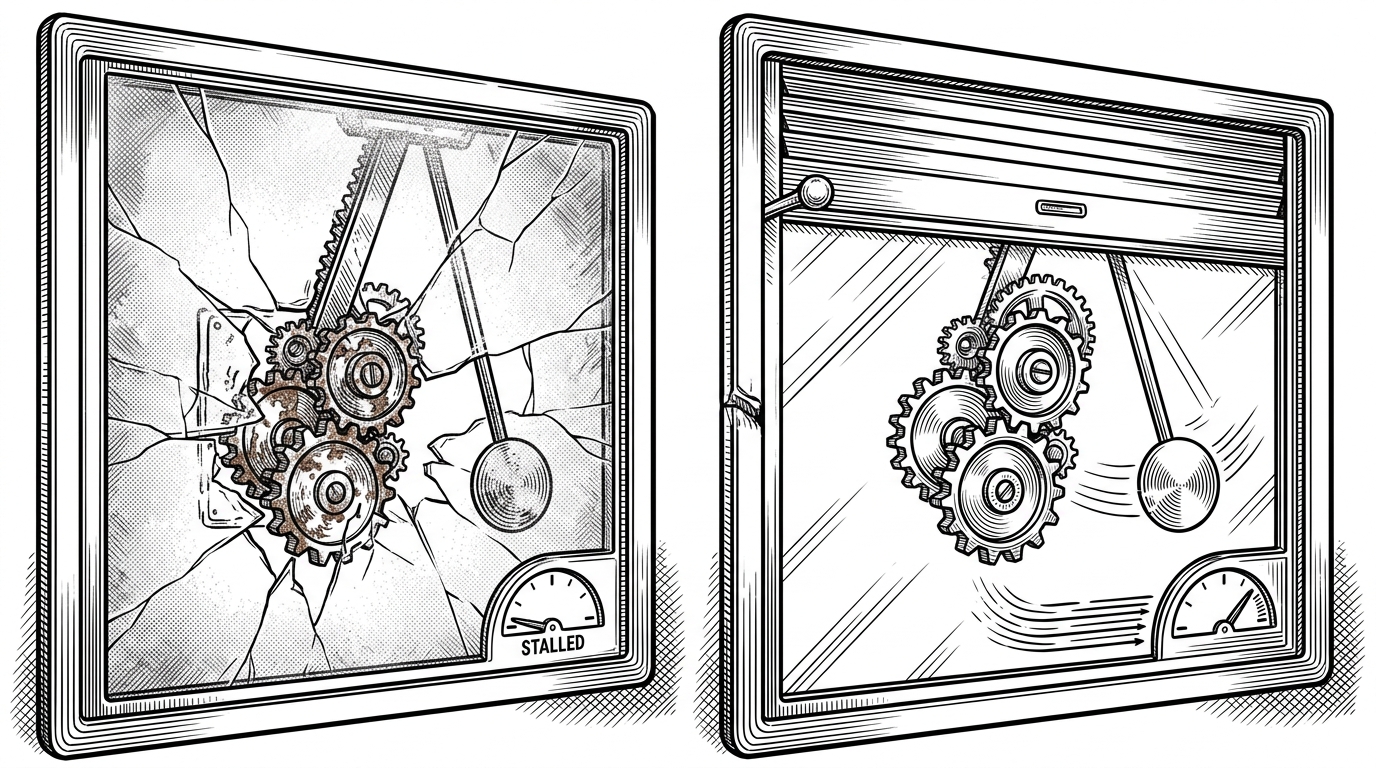
The repo’s WebView survival notes turn a vague complaint into a checklist of tells. A cursor that looks too webby, an app shadow that the browser drew instead of the OS, a hidden window that wakes up too slowly. None of these are dramatic on their own. Together they destroy the illusion.
| Web-y desktop | Native-feel desktop |
|---|---|
| Web cursor conventions and browser-drawn shadows | OS-owned cursor behavior and native window chrome |
| Hidden windows cool off and repaint slowly | Hidden windows stay warm enough to return instantly |
| Responsibility leaks between layers | Each layer owns one job and nothing else |
| Performance is measured by resource use | Performance is judged by visible latency and perceived responsiveness |
The four-layer stack behind the illusion
The stack is deliberately layered. Native shell at the bottom, system WebView for the surface, Node.js for orchestration, Rust for the parts that need to be fast and typed. That sounds heavy until you notice the rule: each layer exists to keep the others honest.
WebView UI -> Node orchestration -> Rust core
Native shell -> OS behavior
UniFFI -> typed contract
Seam -> responsibility boundary
One schema to rule four runtimes
The IPC story is not just about type safety. It is about architectural honesty. If the Rust core changes, the generated bindings should fail loudly instead of letting Swift, JavaScript, or C# drift into a half-working lie.
| Loose polyglot stack | Schema-anchored stack |
|---|---|
| Changes can slip through until runtime | Changes fail at build time |
| Each runtime invents its own interpretation | One schema defines the contract |
| Debugging becomes archaeology | Debugging starts from a shared source of truth |
| Performance gains can break integrations silently | Performance work stays coupled to interface reality |
Memory is not the metric that matters
Design cross platform desktop apps that feel native. Agent skill distilled from Raycast 2.0 deep dive plus reverse engineering. Includes an architecture guide and a 75 item ship audit. https://t.co/3C9R0HnuJU
One of the repo’s sharpest claims is that RSS can be the wrong proxy. A desktop app can use more memory and still feel better if it keeps hotkey-to-visible latency under control. Perception targets matter more than a clean-looking process list.
Raycast as the hidden reference model
This skill is not generic desktop advice. It is a distillation of Raycast’s architecture choices, plus reverse engineering that turns observed practice into reusable judgment. That is why the repo feels unusually specific: it is grounded in what a serious desktop product actually had to do.
| Generic desktop guidance | Raycast-derived skill |
|---|---|
| Explains patterns in the abstract | Names concrete failure modes and fixes |
| Optimizes for broad portability | Optimizes for launcher-grade responsiveness |
| Treats polish as subjective | Treats polish as a set of testable behaviors |
| Leaves architecture to the reader | Packages architecture as a reusable skill |
What this repo is really for
The target user is not building a toy wrapper. It is for people shipping launchers, AI workspaces, utilities, and other desktop tools where polish is part of the product, not a decorative extra. In that sense, the repo is less a framework replacement than a decision framework for AI-assisted building.
| Best fit | Poor fit |
|---|---|
| Launcher-style desktop apps | Simple utility screens that do not need deep OS integration |
| AI workspaces with rich interaction | Products where web conventions are good enough |
| Teams that want reusable architectural judgment | Teams looking for a one-size-fits-all framework |
| Projects where latency and feel matter | Projects that only care about rapid CRUD delivery |
The strongest thing about native-feel-skill is that it does not confuse convenience with correctness. It draws a hard line, then builds a stack around that line. That is what makes the apps it describes feel native instead of merely functional.