ai-reputation-claude: The CLI That Turns Brand Reputation Into a Multi-Agent Consulting Machine
A deep dive into the prompt architecture, parallel scoring, live web research, and PDF generation that transform Claude Code into an on-demand reputation analyst.
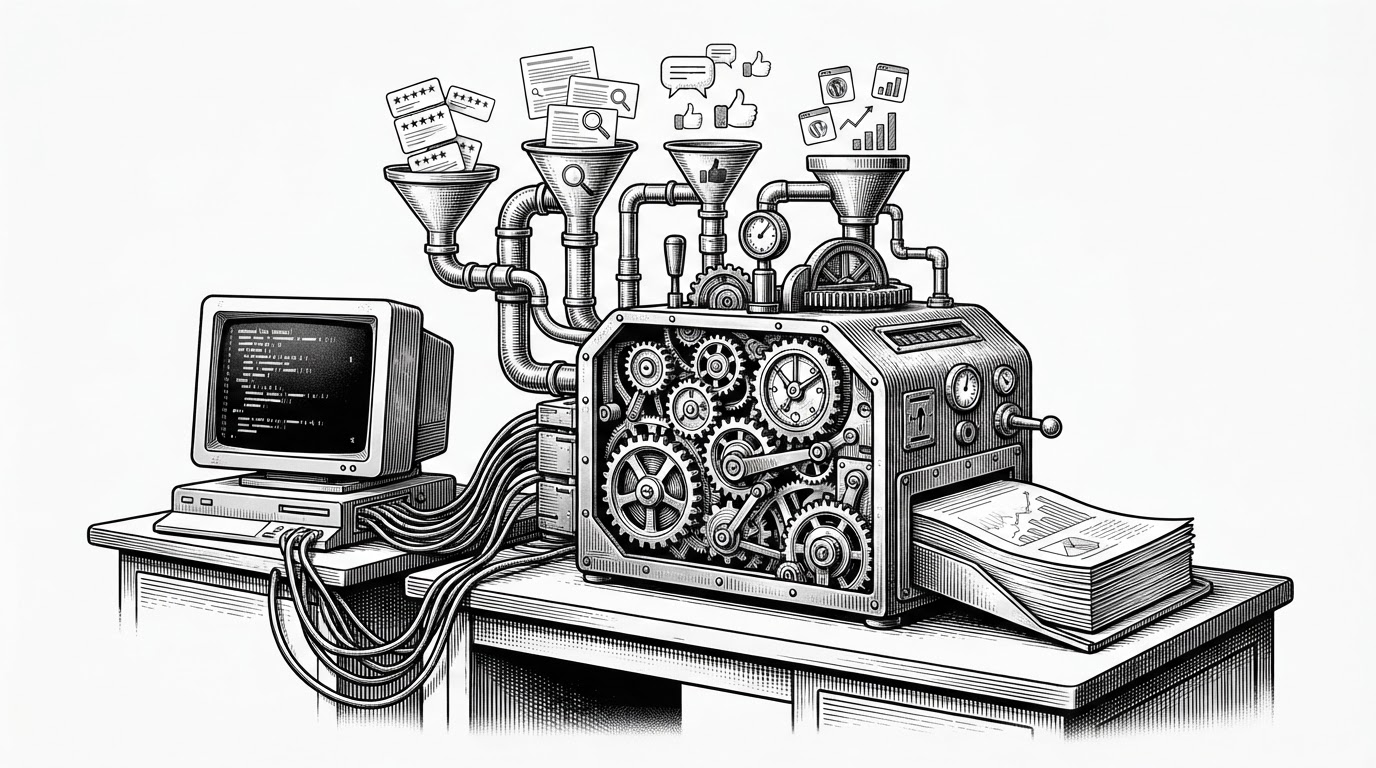
- ai-reputation-claude is built less like a sentiment tool and more like a consulting workflow that produces a sellable audit.
- Its core trick is parallel specialization, where focused agents collect, score, and normalize evidence before the report is assembled.
- Live web lookup keeps the system grounded in current public signals instead of stale model memory.
- The PDF layer matters because it turns model output into a client-facing artifact that can support a service pitch.
Most AI tools promise analysis. This repo promises a deliverable. Run the right command and Claude Code does not just inspect a business's reputation, it assembles a structured audit, scores the evidence, and packages it into a report that looks ready for a client meeting.
That shift matters. Reputation work is usually a messy mix of reviews, search results, competitor context, and judgment calls. Here, that workflow is encoded into Markdown prompts and Python output, which means the product is not a dashboard. It is an agency process in miniature.
Why This Is More Than Sentiment Analysis
A standard sentiment tool tells you whether people sound happy or angry. This repo tries to answer a business question instead: what should we do about it? That is why the output includes themes, emotion labels, risk framing, and recommendations, not just polarity.
| Dimension | Traditional sentiment tool | ai-reputation-claude |
|---|---|---|
| Primary question | How positive is this text? | What does this reputation mean for the business? |
| Input scope | Usually one source or one corpus | Reviews, search results, web pages, and business signals |
| Reasoning style | Single pass classification | Parallel specialist agents with structured outputs |
| Output | Scores or charts | Audit, action plan, and client-ready PDF |
| Best user | Analyst or researcher | Agency, consultant, or operator selling services |
The Orchestrator Splits the Work on Purpose
The command center lives in /reputation/SKILL.md. Instead of asking Claude to infer everything from a single prompt, it routes the job into focused agents with explicit weights and output contracts. That structure is the whole point. Narrow prompts are easier to trust, easier to inspect, and easier to change.
### Orchestration pattern

1. Collect live inputs.
2. Dispatch specialist agents in parallel.
3. Merge outputs into a fixed schema.
4. Score the result.
5. Render a client-ready report.

### Example output contract
- reputation_score
- theme_buckets
- emotion_tags
- risk_level
- recommended_actions
- supporting_sources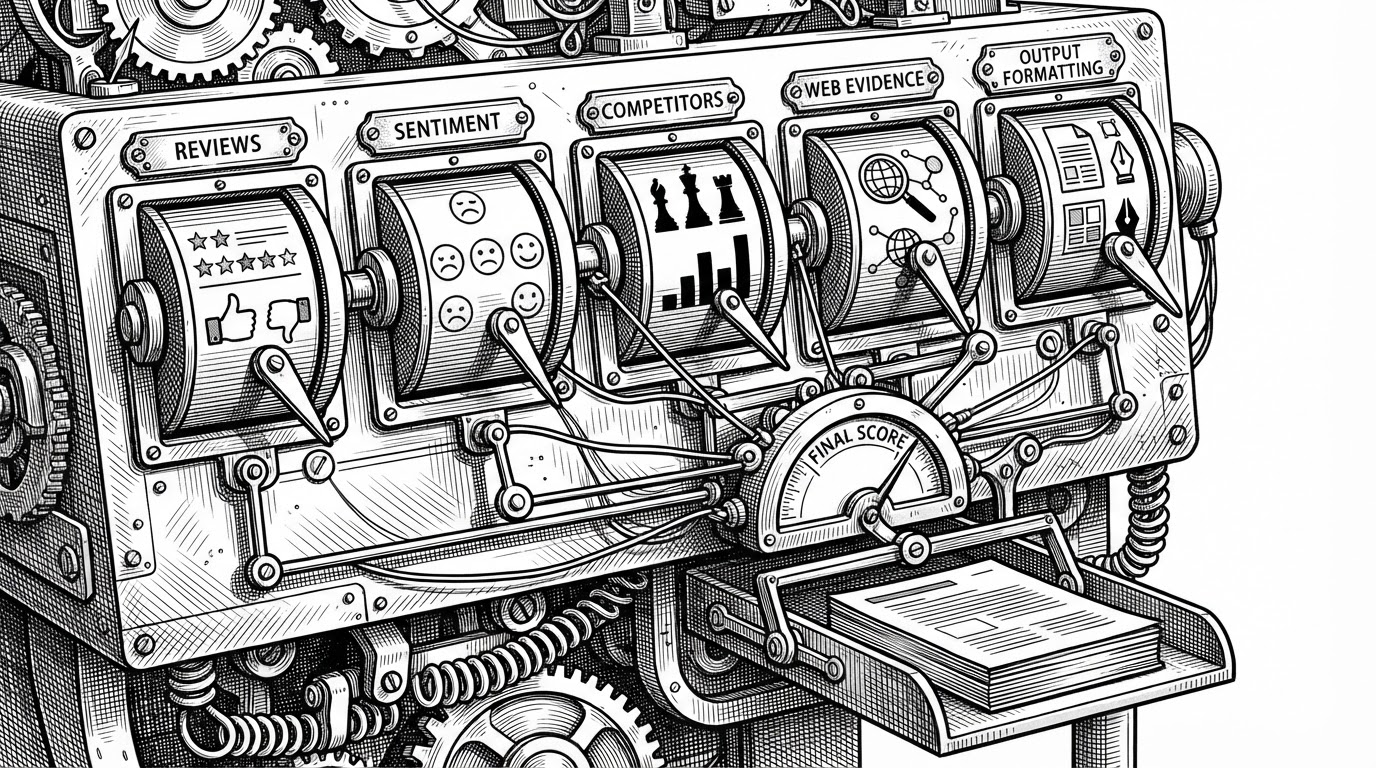
The benefit of this pattern is not just modularity. It reduces the chance that one confused model call dominates the whole audit. If one agent is weak on review themes, the others still contribute a bounded slice of the final picture.
| Structured taxonomy | What it buys you |
|---|---|
| T01 to T10 review themes | A stable vocabulary for recurring business problems |
| E01 to E12 emotion labels | A way to distinguish frustration from betrayal, or relief from delight |
| Weighted agent outputs | A report that reflects judgment, not a flat text dump |
| Fixed schema assembly | A cleaner handoff from analysis to presentation |
That taxonomy work is easy to miss, but it is the spine of the product. Labels like T01 or E12 look dry, yet they give the model a vocabulary that is consistent enough to report on, compare, and reuse across businesses.
Live Web Search Is the Anti-Stale Layer
The repo leans on WebSearch and WebFetch so the audit is grounded in current evidence, not whatever the model vaguely remembers. That matters because reputation is a moving target. A stale summary is worse than no summary at all.
This is also where the tool becomes more than a local analyzer. It interrogates the live web, pulls in current third-party signals, and uses them to shape the report. The output feels more like due diligence than classification.
The PDF Is the Sales Artifact
The Python side matters because it turns a model output into something you can actually hand to a prospect. The PDF generator maps scores into visual treatments, builds tables, and formats the findings as a branded report instead of a raw transcript.
def score_color(score):
    if score >= 80:
        return "#2E7D32"
    if score >= 50:
        return "#F9A825"
    return "#C62828"

# The report uses the score to decide color, emphasis, and presentation.
That is the business insight hiding inside the code. The project is not just trying to understand reputation. It is trying to package understanding in a format that helps sell services.
| Output layer | What it does |
|---|---|
| Raw model text | Shows reasoning, but is hard to hand off |
| Structured JSON or markdown | Makes the result easier to route and reuse |
| Branded PDF report | Turns analysis into a pitchable artifact |
The Real Product Is the Pitch
This repo lives between analysis and service selling. That is why it is interesting. A consultant can use it to produce a polished audit, point to evidence, and open a conversation about remediation, SEO, or reputation management.
In other words, the software is not only a tool for diagnosing a business. It is also a wedge for selling the next engagement. That is a much sharper business model than a generic dashboard.
| Category | What it optimizes for | Why this repo stands out |
|---|---|---|
| Reputation SaaS | Monitoring and alerts | This repo is built for audit and delivery |
| Prompt-only Claude skills | Fast text generation | This repo adds routing, weighting, and a PDF layer |
| Agency workflow | Human judgment and packaging | This repo automates the repeatable parts |
Where It Fits in the Agent Skills Landscape
The project sits in a useful niche. It is more operational than a prompt hack, more flexible than SaaS reputation software, and more specific than a generic agent framework. For developers and AI agencies, that makes it legible as a repeatable service workflow.
Its real differentiator is not that it can read reviews. Plenty of tools do that. The difference is that it turns scattered public evidence into an organized deliverable with enough structure to support a client conversation.