api-practice: a developer syllabus disguised as a monorepo
Inside zubair-trabzada’s collection of fetch sandboxes, React experiments, interview notes, and Ethereum apps, where the real output is deliberate practice.
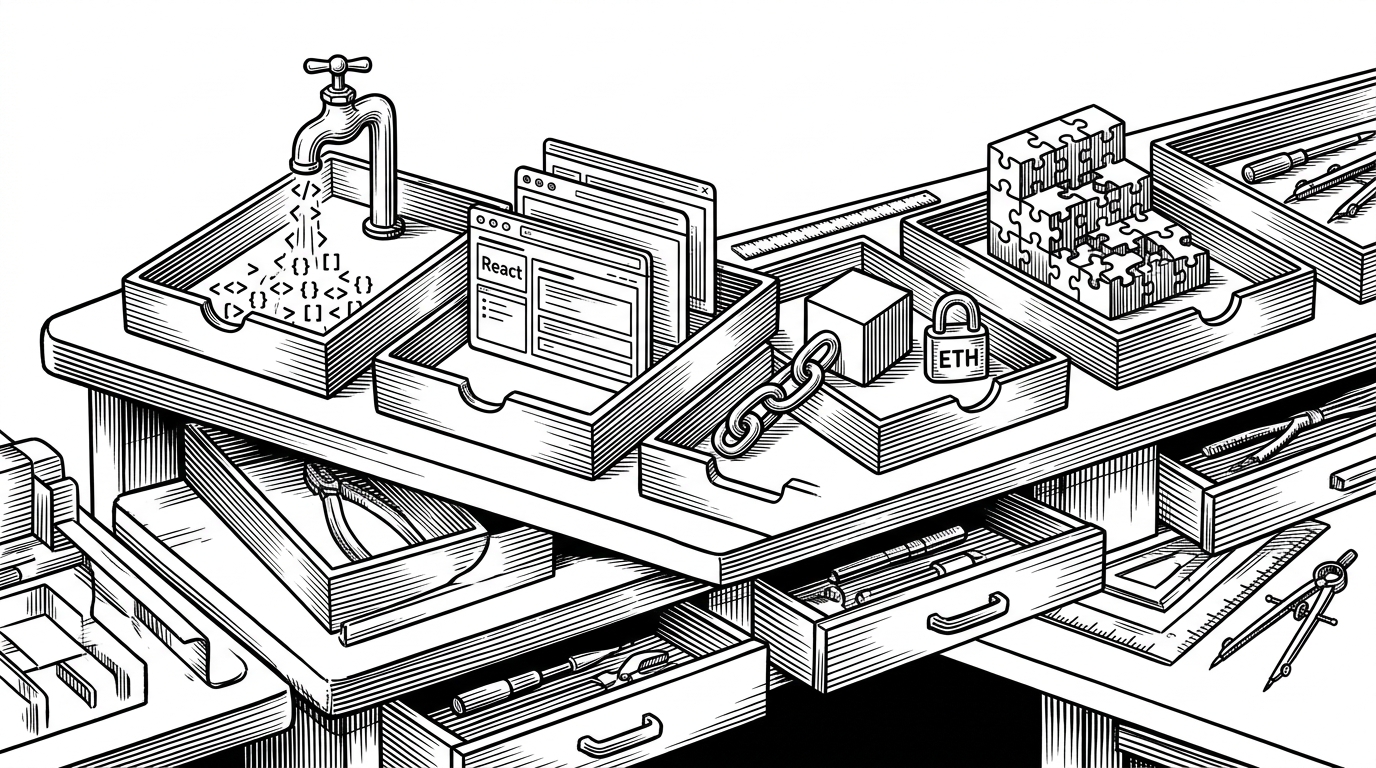
- The repository turns learning into a visible sequence of named labs, so progress lives in the directory tree instead of a release cycle.
- Its real subject is range, moving from fetch sandboxes to React builds, Ethereum apps, and algorithm drills.
- That mix makes the repo feel less like a portfolio piece and more like a private curriculum for building transferable judgment.
- Compared with hosted sandboxes or API directories, this setup preserves the practice loop instead of just the endpoint list.
The most interesting thing about api-practice is not that it contains code. It is that it contains a plan. Open the repo and you can read the curriculum: fetch experiments, React apps, Ethereum builds, and interview prep live side by side, each one marking a different kind of fluency.
This repo is a syllabus, not a product
That shape matters because the repository does not behave like a product repo. It behaves like a training notebook with folders instead of chapters. fetchsandbox teaches request flow, photo-search and react-myportfolio stretch UI composition, ethereum-kickstarter-app and ethereum-lottery-app-react push into smart contracts, and AlgoCasts plus interview keep the fundamentals sharp.
api-practice/
├── fetchsandbox/
├── photo-search/
├── react-myportfolio/
├── devsocial/
├── ethereum-kickstarter-app/
├── ethereum-lottery-app-react/
├── AlgoCasts/
└── interview/
The directory tree is the argument. There is no single application trying to unify every lesson. Instead, each folder answers the same question from a different angle: what does this layer of the stack feel like when you build it by hand?
The curriculum is visible in the folder names
fetchsandboxisolates the Fetch API, promises, and async control flow.photo-search,react-myportfolio, anddevsocialfocus on components, state, and interface composition.ethereum-kickstarter-appandethereum-lottery-app-reactmove the same builder into Web3 patterns and contract boundaries.AlgoCastsandinterviewanchor the repo in algorithms, complexity, and technical communication.
The diagram above is the point in one frame. The repo does not merge these disciplines into a single app. It keeps them legible as separate exercises, which is exactly how you turn broad curiosity into muscle memory.
API practice and Ethereum practice solve different problems
The most revealing contrast in the repo is between fetchsandbox and the Ethereum folders. The first is about request and response discipline, data shape, and client-side control flow. The second adds state that lives on chain, where the developer has to think about transactions, contract boundaries, and slower feedback loops. Same builder, very different mental model.
Frontend muscle and algorithm muscle are not the same
The second contrast is quieter but just as important. React projects like photo-search and react-myportfolio reward composition, layout, and state management. AlgoCasts and interview reward decomposition, complexity analysis, and disciplined reasoning. Together they suggest a deliberate strategy: build the interface, then sharpen the thought process behind it.

Why this beats the usual learning tools
| Learning setup | Strength | Blind spot |
|---|---|---|
| api-practice | Preserves the full practice loop across multiple stacks. | It is unpolished by design, which is also why it is useful. |
| Postman Public Workspaces | Makes APIs easy to explore and test. | It does not show how your own skills compound over time. |
| public-apis list | Gives you a large catalog of endpoints to try. | It does not organize those trials into a curriculum. |
| Boilerplate starter | Speeds up project setup and consistency. | It narrows the range of problems you solve. |
That is the tradeoff. Public tooling reduces friction. A private lab builds memory. For a developer trying to become fluent across interfaces, contracts, and algorithms, the second one leaves a deeper trace.
The smartest thing in api-practice is not a feature. It is a habit: keep a private lab where every experiment has a name, so skill growth becomes a system instead of a memory.