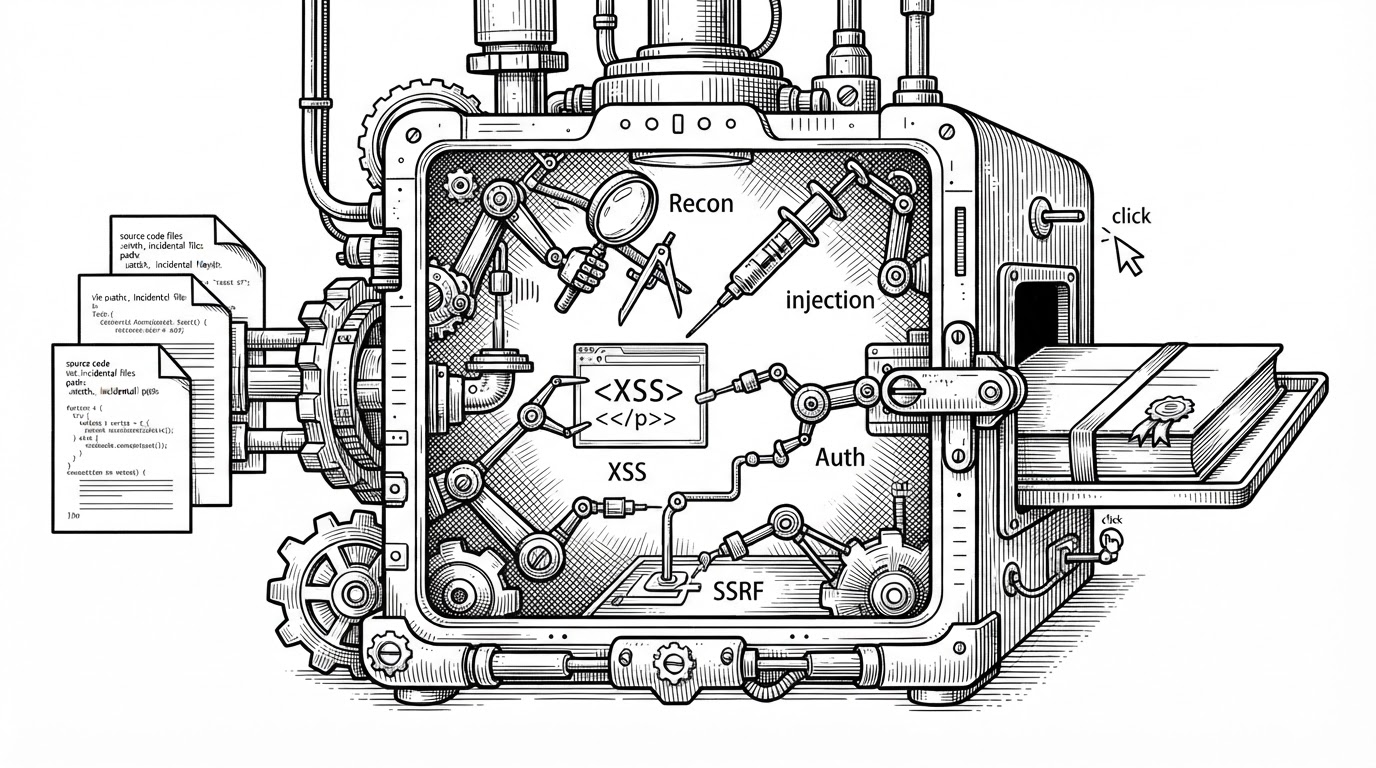
Trapster Community: The Honeypot That Keeps Talking
An open-source deception framework that uses AI, cloned web skins, and async protocol emulation to turn dead-end probes into long, believable attacker conversations.

- Trapster’s real trick is continuity, because it keeps a honeypot believable after the first probe instead of collapsing into a dead end.
- Its AI layer matters less as a gimmick than as a bridge between low-interaction safety and high-interaction realism.
- The framework is modular enough to clone web skins, emulate SSH shells, and still emit structured logs that fit a security stack.
- Compared with older decoys, Trapster sits in a useful middle zone: lighter than a platform bundle and more adaptive than a static canary.
Most honeypots are easy to summarize and easy to spot. They answer the first probe, then expose their limits, and a human attacker or a smarter script moves on. Trapster Community is interesting because it treats that collapse as the bug to fix.
The project’s pitch is simple: keep the conversation alive long enough to learn something useful. That means SSH banners that do not die after one command, HTTP skins that can keep serving believable pages, and logging that captures the whole path without forcing defenders to stitch it together later.
The problem with static deception
Traditional low-interaction honeypots are cheap, safe, and widely deployed for good reason. They catch scans, credential stuffing, and sloppy automation. But the moment someone asks an unexpected question, they tend to stop being a trap and start being a clue.
Trapster Community is a low-interaction honeypot designed to be deployed on internal networks or to capture credentials. It is built to monitor and detect suspicious activities, providing a deceptive layer to network security.
That is the gap Trapster tries to close. Instead of treating a fake service as a static response table, it uses AI-backed fallbacks and templated surfaces to preserve the illusion after the first interaction. The goal is not to win a forensic war. It is to keep the attacker engaged just long enough to reveal behavior.
How Trapster is put together
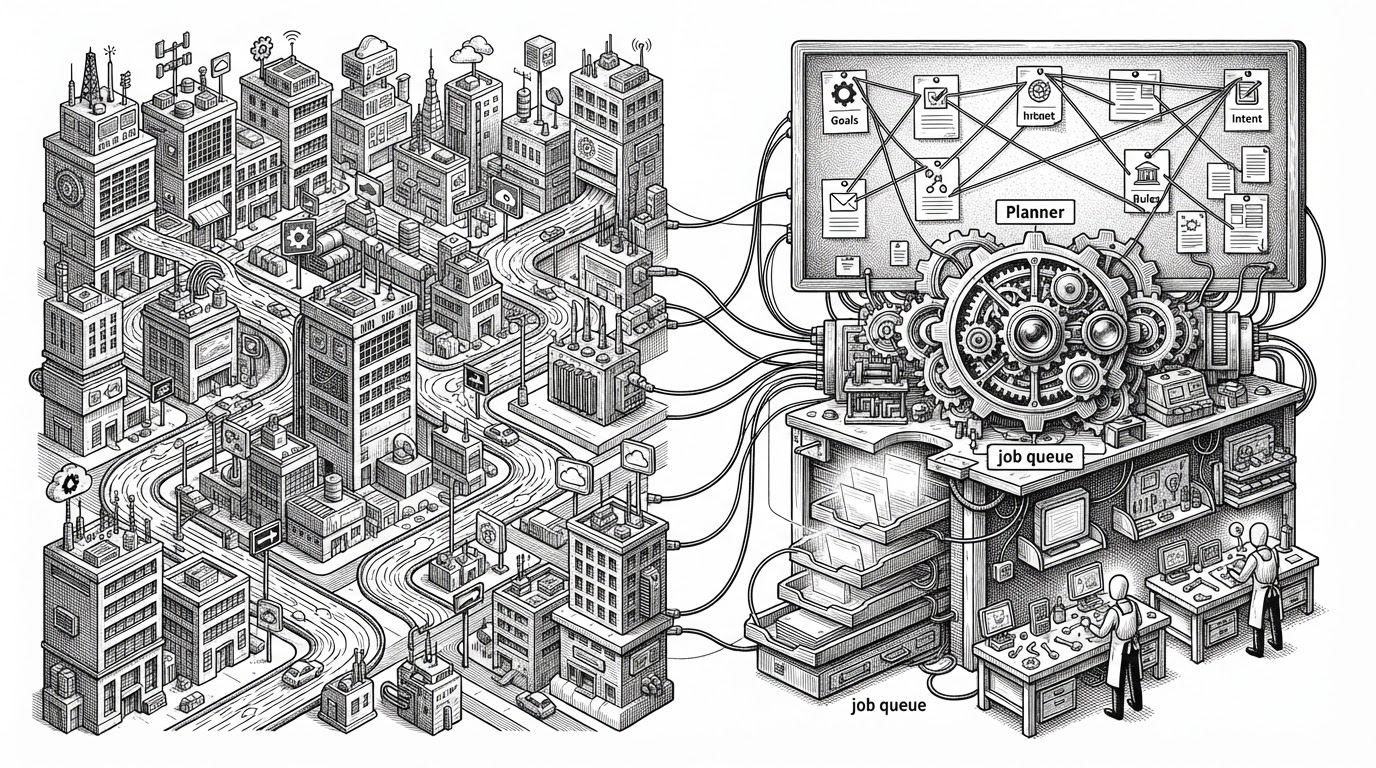
At the center is TrapsterManager, which reads configuration and wires up services dynamically. Under that, a common base layer standardizes server plumbing and logging so each protocol module can focus on its own deception logic.
| Layer | What it does | Why it matters |
|---|---|---|
| TrapsterManager | Loads services from config and binds them to interfaces | Makes the system modular instead of hard-wired |
| BaseProtocol | Captures source IP, raw bytes, and metadata | Ensures every interaction is visible even before protocol logic kicks in |
| Protocol modules | Specialize SSH, HTTP, DNS, LDAP, and more | Keeps each fake service believable in its own way |
| AI fallback | Generates plausible continuation when canned behavior runs out | Prevents the illusion from ending at the first odd command |
Why SSH and HTTP are the interesting parts
The SSH module is where Trapster becomes more than a banner grabber. It can present a shell with fake system context, plausible directory listings, and output that looks consistent enough to keep a human exploring instead of immediately fingerprinting the host.
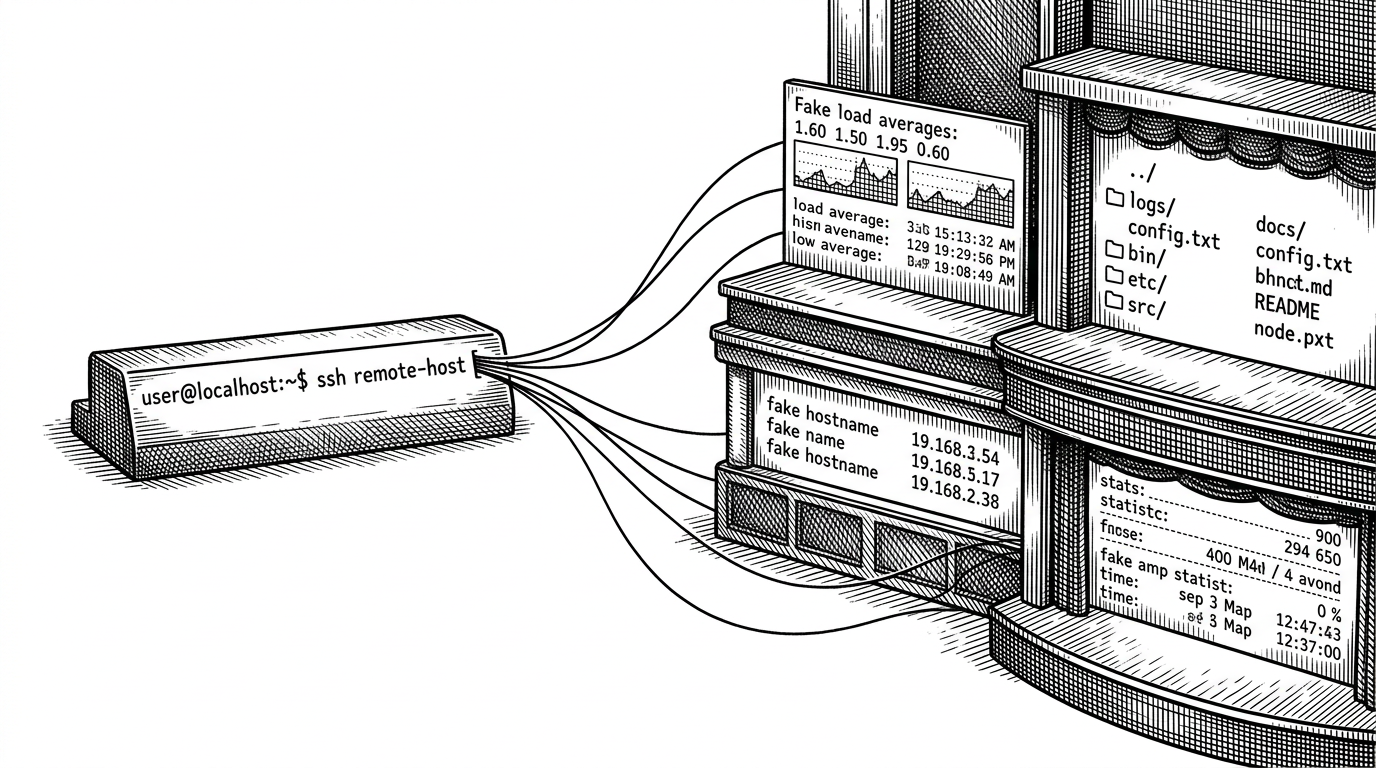
HTTP works the same basic trick with a different costume. YAML and Jinja2 let the project clone internal-looking web surfaces, while sandboxed template handling helps keep that clone flexible without turning it into an injection playground. If a request falls outside the canned path, an HTTP agent can generate a believable response instead of a blunt error.
services:
  - type: http
    bind: 0.0.0.0:80
    skin: fortigate
    template_dir: trapster/data/skins/fortigate
    ai_fallback: true
  - type: ssh
    bind: 0.0.0.0:22
    shell_profile: ubuntu-22.04
    ai_fallback: true
That combination matters because it changes the attacker’s experience from “this is fake” to “this may still be worth exploring.” The more the shell or page can keep its own internal story straight, the harder it becomes to dismiss the system after a single odd response.
Why the logging layer is a quiet advantage
Trapster’s logging looks boring next to AI-generated shells, but it is one of the strongest product signals in the repo. ECS support means the output can flow into an existing security stack with less custom parsing and less glue code.
| Project | Primary strength | Tradeoff | Best fit | Trapster’s edge |
|---|---|---|---|---|
| Cowrie | Mature SSH/Telnet honeypot | Narrower protocol focus and older Twisted stack | Teams that want a proven SSH decoy | Trapster is more modern and more adaptive |
| OpenCanary | Simple multi-service canary | More static responses | Fast deployment and low maintenance | Trapster keeps the conversation going |
| T-Pot | Broad honeypot platform | Heavier operational footprint | Security teams that want an all-in-one bundle | Trapster is lighter and purpose-built |
| Trapster Community | AI-backed deception with cloning | You still need to shape believable targets | Internal threat hunting and credential capture | It bridges static decoys and active interaction |
Why this matters for internal threat hunting
Trapster’s best use case is not internet theater. It is the internal network, where an attacker already has some context and the difference between a static canary and a believable asset can decide whether you get a log line or a useful sequence of behavior.
That is why the project’s web cloning and SSH realism matter together. A fake VPN portal can draw curiosity. A fake shell that keeps answering can show what the attacker tries next. Put them in the same environment and you get a richer picture of movement, tooling, and intent.
Our reengineered approach leverages the asyncio library, breaking away from the norm of Twisted, to deliver a customizable framework for honeypots.
The bigger story is where this kind of project sits in the security market. Open source used to mean a static decoy with a narrow role. Trapster shows how quickly that category is expanding once AI and async infrastructure get folded into the baseline.
What changes if honeypots can keep talking?
If the trap can stay coherent, defenders can ask better questions. How did the attacker move? What did they try to resolve? Which command sequence did they trust enough to continue? The project’s value is not that it knows everything. It is that it avoids saying too little, too soon.
That is what makes Trapster feel like a hinge point. It takes a familiar security primitive and gives it continuity, which is a more important upgrade than protocol count or dashboard polish. A honeypot that keeps talking is a honeypot that can keep learning.