AI-Video-Assistant: The Pipeline That Turns YouTube Chaos Into Searchable Answers
A hybrid transcription and RAG system that routes English and Hinglish differently, chunks around API limits, and keeps working when video, audio, and retrieval all get messy.
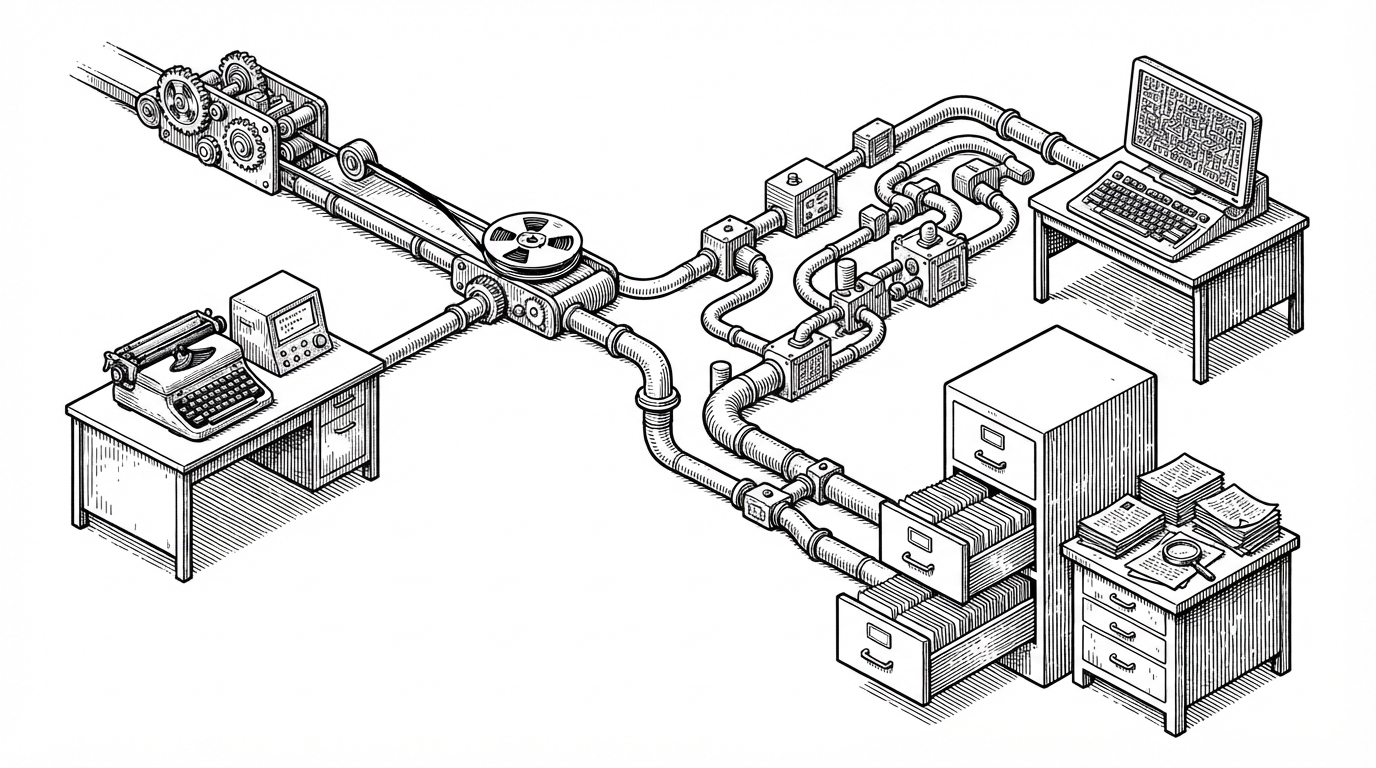
- AI-Video-Assistant is built around reliability, not novelty, because it has to survive YouTube friction, long audio, and multilingual speech before it can answer anything.
- The cleverest part is routing English and Hinglish through different transcription paths instead of pretending one model is enough.
- Its chunking strategy turns a hard API limit into a manageable pipeline step, which is why the system keeps working on long inputs.
- The RAG layer matters only after ingestion is clean, which makes the repo feel more like infrastructure than a chatbot.
The app’s real job is not summarization. It is survival.
Most video assistants start with the answer. This repo starts with the mess. YouTube downloads can fail, speech can switch languages mid-sentence, and long audio can trip API limits or local memory ceilings. AI-Video-Assistant treats those failures as the real problem, then builds a pipeline that can route around them.
That is why the project feels more like a video intelligence layer than a demo. It does not just summarize. It turns brittle inputs into a transcript you can trust enough to search, extract from, and question.
One transcript path is not enough
The most interesting design choice is the transcription router. English is handled locally with Whisper. Hinglish goes to Sarvam AI, which is better suited to code-switched speech but comes with tighter request limits. The repo does not force both through one path and hope for the best.
This matters because transcription is not a single task here. It is a routing problem. The system has to decide which model is likely to succeed, then normalize both paths into a common transcript layer for downstream retrieval.
def transcribe_all(audio_path, language_hint):
    if language_hint == "hinglish":
        chunks = chunk_audio(audio_path, seconds=25)
        parts = [transcribe_chunk_sarvam(c) for c in chunks]
        return stitch_transcript(parts)
    return transcribe_whisper_local(audio_path)
The clever part is the chunking strategy
Sarvam’s short request window forces a second layer of engineering. The repo slices audio into smaller pieces, transcribes each one, and stitches the results back together. That sounds mundane until you realize it is the difference between a working feature and a dead end.

That is the practical insight the repo teaches. API constraints are not edge cases to be hidden. They are architectural facts to design around. This codebase makes that visible instead of burying it inside one big transcription call.
YouTube is the first adversary
Before the model ever sees audio, the download layer has already done real work. The project uses yt-dlp with practical settings like proxy support, user-agent variation, and client arguments that help it get past bot checks. It also uses FFmpeg-backed audio processing to prepare files for later steps.
| Tool type | Strength | Weakness | Where AI-Video-Assistant differs |
|---|---|---|---|
| Generic YouTube summarizer | Fast summary output | Often breaks on long or messy inputs | Adds a resilient download and transcription layer first |
| English-only transcript tool | Simple and predictable | Fails on Hinglish and code-switching | Routes speech by language instead of forcing one model |
| Naive RAG demo | Easy to prototype | Depends on clean ingestion that rarely exists | Treats ingestion, chunking, and retrieval as one system |
RAG only becomes useful after the transcript is clean
Once the transcript exists, the retrieval layer gets to do the work people usually expect from the whole product. rag_engine.py uses LangChain Expression Language to keep the chain modular, while Chroma stores embeddings for later retrieval. Questions pull back the most relevant snippets instead of scanning the entire transcript every time.
That separation is a strength. The extractor and retriever do not need to know how the audio was downloaded or chunked. They only need a transcript that is already sane. The repo keeps those concerns apart, which makes the code easier to change without breaking the whole stack.
retriever = vectordb.as_retriever(search_kwargs={"k": 4})
chain = build_rag_chain(llm=mistral, retriever=retriever)
answer = chain.invoke({"question": user প্রশ্ন})
This is a Streamlit app that acts like a product
The frontend is not an afterthought. The Streamlit app ships with custom CSS, strong visual styling, and a deliberate presentation layer. That matters because the project is asking users to trust a pipeline that spans downloads, speech models, storage, and retrieval. The interface needs to feel more serious than a notebook demo.
Even if the visual style is bold, the underlying product choice is conservative: make each step inspectable, keep the workflow legible, and let the user move from video to transcript to question without losing context.
What it beats, and what it does not
AI-Video-Assistant is strongest where most template demos are weakest. It handles multilingual speech, it respects service limits, and it keeps the ingestion pipeline honest. It does not try to be a general platform or a universal answer engine.
| Category | What they usually optimize for | Main limitation | AI-Video-Assistant advantage |
|---|---|---|---|
| Generic summarizer | A quick abstract | Little control over failure modes | Better path handling before summarization |
| English-only video tool | Straightforward transcription | Poor support for code-switching | Separate English and Hinglish routing |
| Template RAG demo | A working chat loop | Weak ingestion resilience | A full pipeline from download to retrieval |
That is the useful comparison. The repo is not competing on breadth. It is competing on fit for a messy, multilingual, real-world workflow.
Why this architecture matters
The lesson here is bigger than video. Good AI products often look intelligent because they are disciplined about boundaries. They know when to chunk, when to route, when to store, and when to retrieve. AI-Video-Assistant is a compact example of that thinking.
If you want a one-line read on the project, it is this: the repo treats video understanding as a reliability problem, not just a model problem. That is why it feels useful instead of merely impressive.