BrandCrew: The AI Marketing Team Built Like a Unix System
It runs on Bash, Markdown, Cron, Telegram, and Playwright. That simplicity is the point: BrandCrew turns a content workflow into a readable, editable, human-in-the-loop machine.
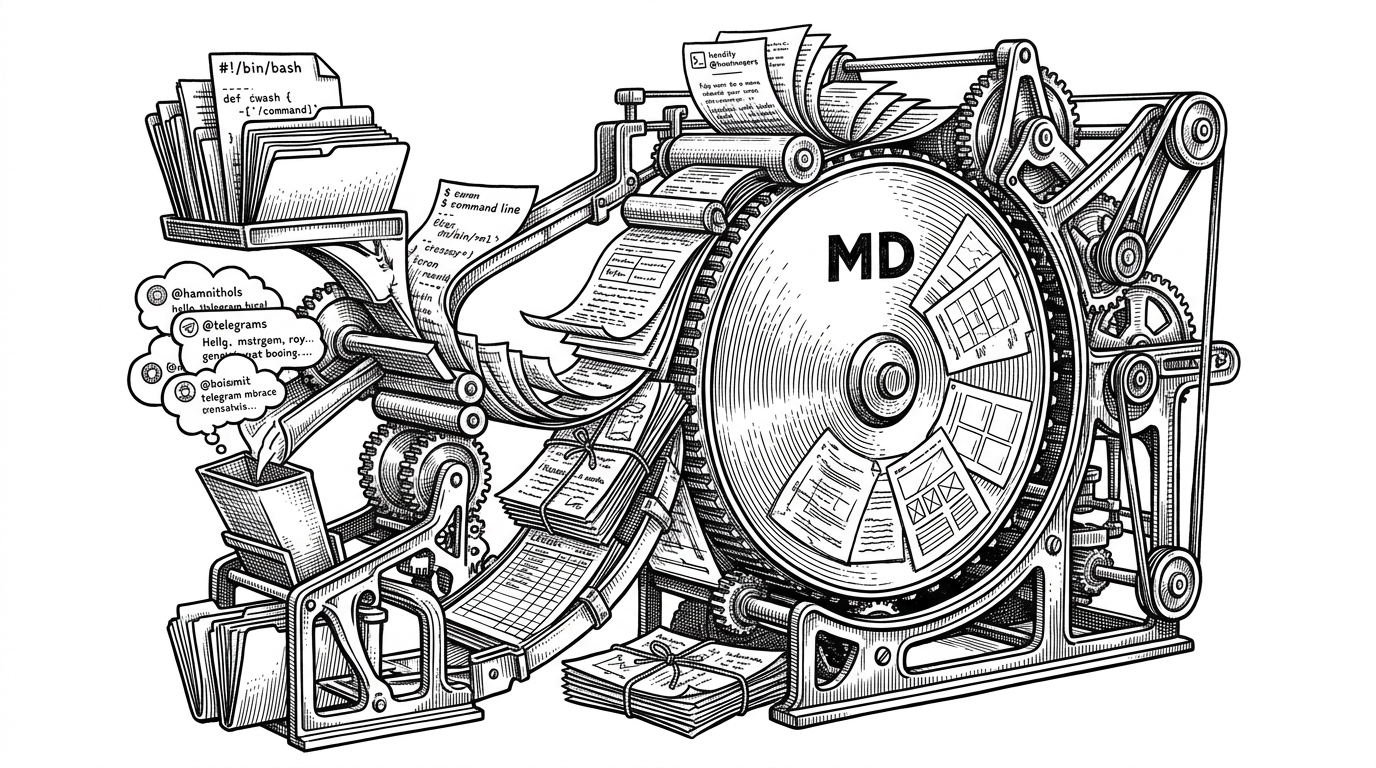
- BrandCrew’s core move is to make memory legible, with editable Markdown files standing in for an opaque agent brain.
- The project replaces orchestration sprawl with Bash, Cron, and Claude Code, which makes the system easier to inspect and repair.
- Telegram is not just a chat surface here, it is the control room that keeps humans inside the loop without a custom web app.
- Playwright and HTML turn design into a deterministic rendering problem, which gives the system brand consistency that text-to-image tools usually miss.
BrandCrew is easy to misunderstand if you only look at the agent count. The real story is not that it assembles a marketing team. It is that it refuses to hide how the team works.
Its most interesting choice is also the least flashy one: long-term memory lives in Markdown files on disk. That means strategy, voice, and performance lessons stay editable, versioned, and portable instead of trapped inside a vector layer or a framework abstraction.
The brain is just Markdown
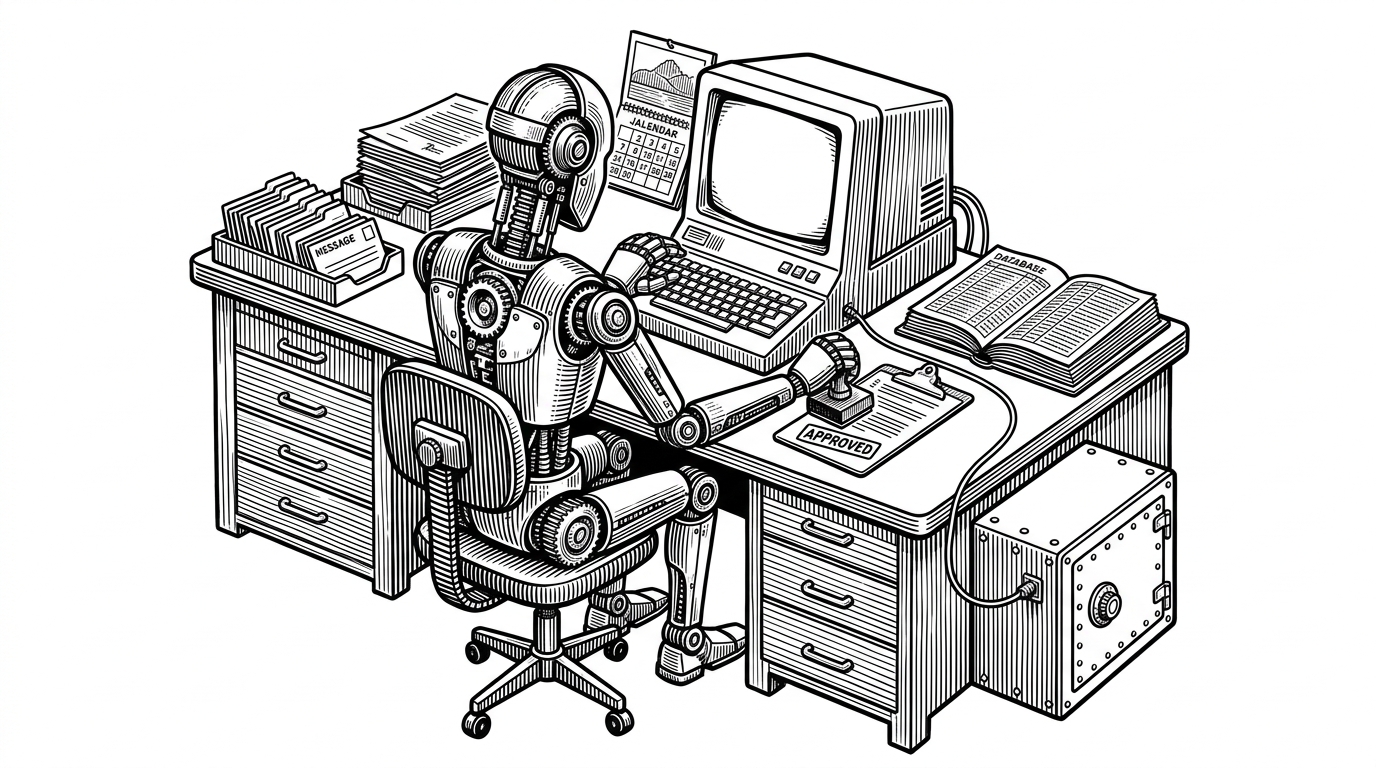
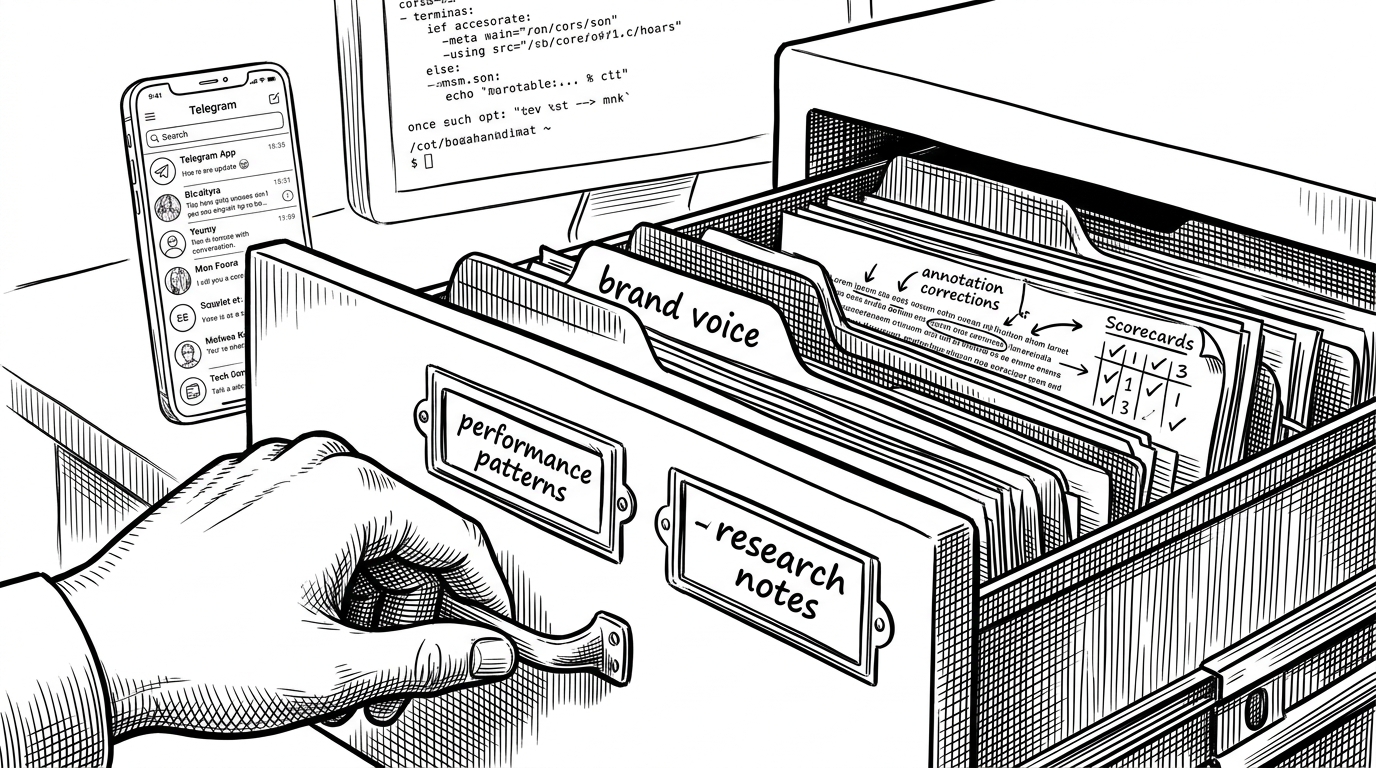
The repository’s filesystem-as-memory design is the project’s sharpest idea. The marketing director reads prior results, distills them into reference files like performance-patterns.md, and other agents consult those files before they act.
The agents don't have memory. They have files — shared knowledge files that get updated based on feedback, read by the agents that need them, and version-controlled in this repo.
Why the orchestrator is missing
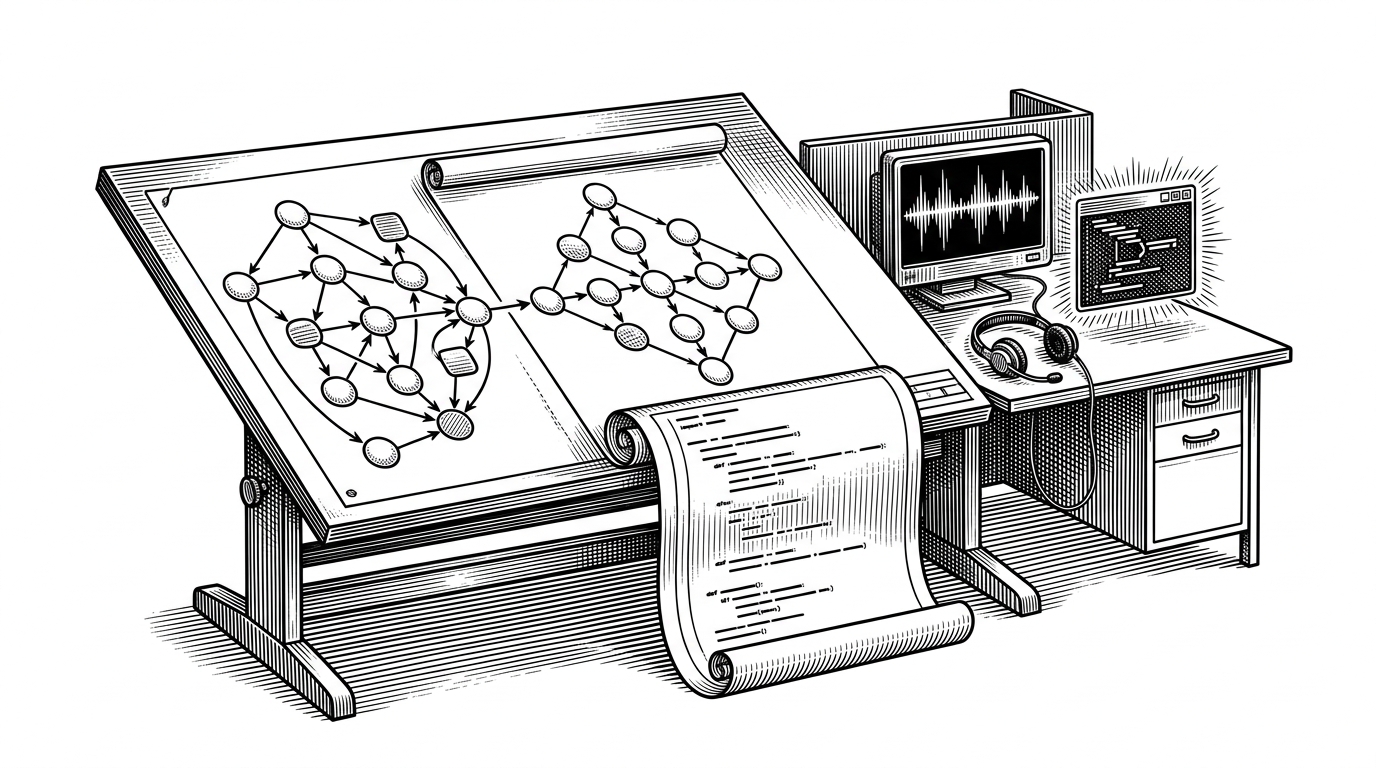
BrandCrew does not lean on LangGraph or CrewAI to coordinate the work. Instead, Bash scripts, Cron, and Claude Code handle the handoffs. That is not a stunt. It is a portability decision.
The upside is legibility. Each agent behaves like a Unix utility: it takes inputs, writes outputs, and exits. If something breaks, you can inspect a file or a script instead of spelunking through a framework runtime.
| Approach | Coordination model | Memory model | Design output | Human control | Main tradeoff |
|---|---|---|---|---|---|
| BrandCrew | Bash, Cron, and files | Markdown reference files | HTML templates plus Playwright | Telegram approvals and selections | Less general, more opinionated |
| Framework-heavy agent stack | Framework runtime and graph logic | Often opaque or embedded | Usually text-first | Usually a custom UI | More abstraction, more moving parts |
| Generic AI content tool | Prompt workflow | Session state or hidden memory | Often probabilistic images or templates | Limited review loop | Easier to start, harder to trust |
That tradeoff matters because marketing systems fail in boring ways. They drift in voice. They lose learned lessons. They make it hard to tell why a draft changed. BrandCrew’s structure tries to make every one of those failures visible.
The workflow feels like a small agency
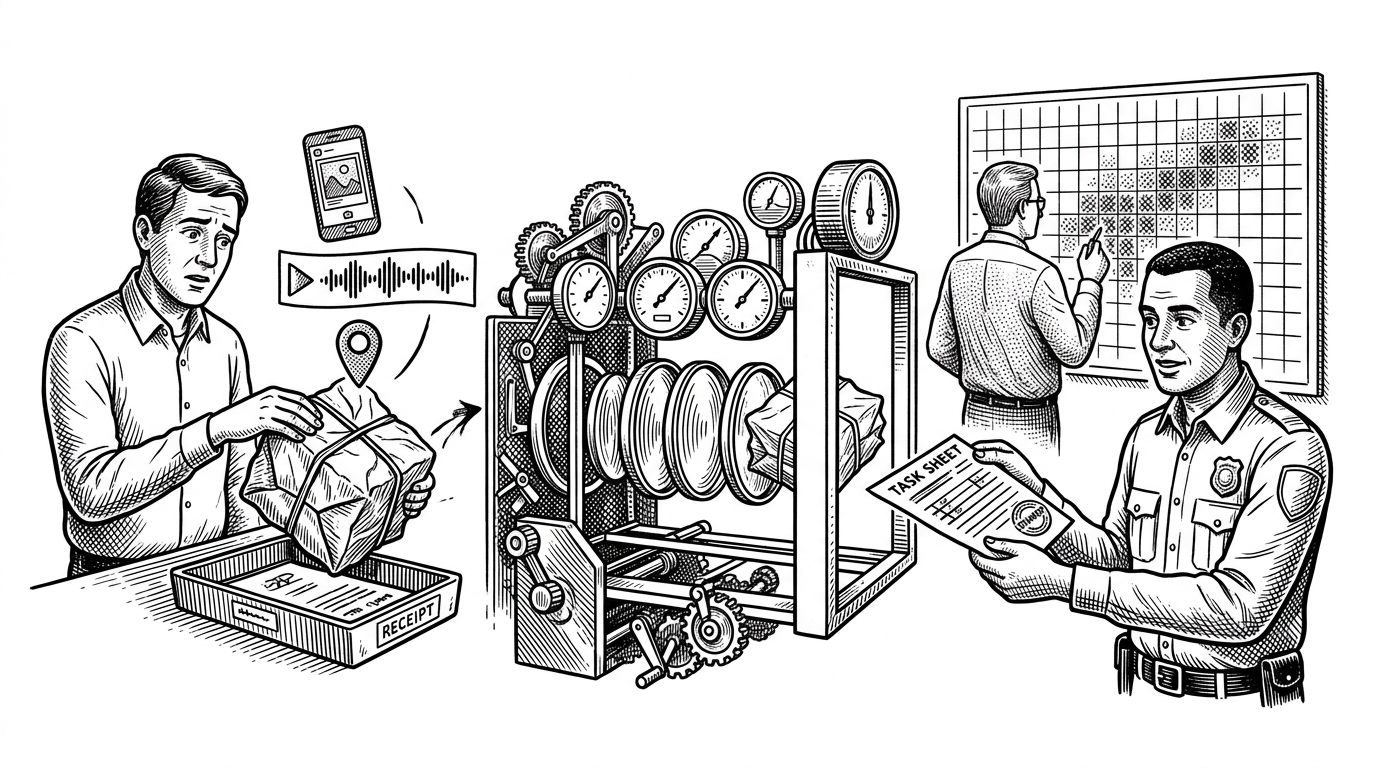
The pipeline is staged like a real content shop. Research feeds strategy. Strategy feeds ideation. Ideation feeds writing. Writing feeds design. Design feeds delivery. Each phase has its own inputs and outputs, which keeps the system from collapsing into a single vague prompt.
That structure also explains the repo’s discipline. Agents are specialized, but they are not free-floating. They are constrained by shared files, scheduled execution, and a clear order of operations.
| Stage | What it does | What keeps it honest |
|---|---|---|
| Research | Collects source material and signal | Logs and source files |
| Strategy | Turns results into guidance | Markdown memory files |
| Writing | Drafts the content | Voice and quality rules |
| Design | Renders the visual | HTML templates and Playwright |
| Delivery | Sends work to the user | Telegram approval flow |
Telegram is the control room
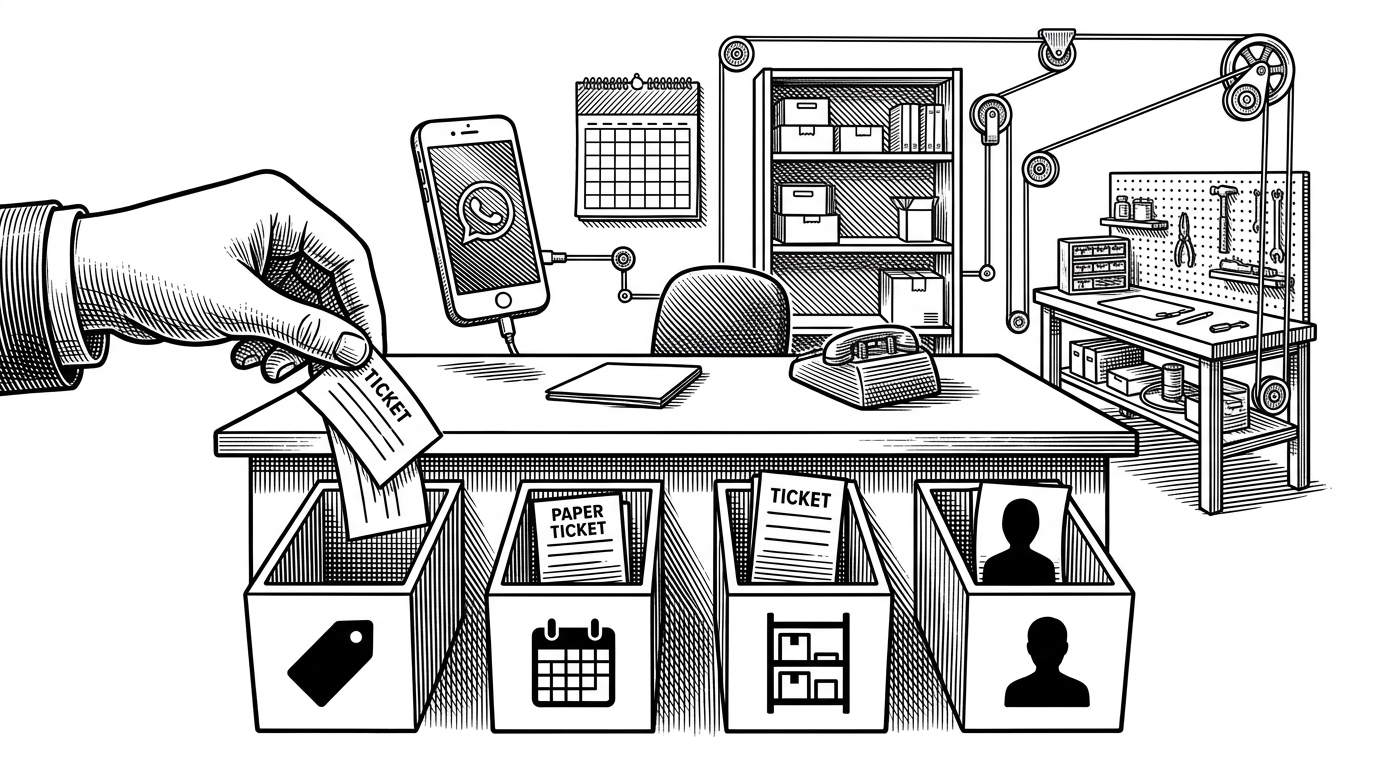
Telegram is the most productful part of the system because it removes the need for a bespoke dashboard. The bot becomes the human interface for selecting ideas, approving drafts, and reviewing designs.
The clever bit is state. A small bridge file, bot_state.json, tells the bot whether the next message should be treated like normal chat or like a command selection. That makes a chat app behave more like an operating console.
It is a practical design choice. The backend stays headless, but the human still has a simple place to interrupt, steer, and approve.
Design is rendered, not generated
BrandCrew’s social media designer does not depend on probabilistic image generation to produce marketing visuals. It uses HTML and CSS templates, then captures the result with Playwright. That is a quiet but important differentiator.
For B2B content, typography, spacing, and brand consistency matter more than novelty. A rendered template gives you repeatability, which is exactly what a reusable marketing system needs.
| Method | Strength | Weakness |
|---|---|---|
| HTML plus Playwright | Exact layout and brand fidelity | Requires template discipline |
| Text-to-image generation | Fast variety | Typography and consistency are unreliable |
| Manual design | Highest art direction | Slow and expensive |
The real moat is the quality gate
BrandCrew does not trust the first draft. The Content Editor scores output against a rubric before anything reaches the user. That matters because autonomy without critique is just faster noise.
This is the project’s self-correcting loop. Output is not the finish line. It is another input into the system’s memory and standards.
Where BrandCrew fits in the market
Compared with framework-heavy systems, BrandCrew is narrower and easier to reason about. Compared with generic content tools, it is far more explicit about the workflow, the memory model, and the human approval points.
That makes it appealing to a specific builder: someone who wants an operating system for marketing, not a blank canvas for agent experimentation.
| System | Best at | Less good at |
|---|---|---|
| BrandCrew | Legible autonomous content ops | General-purpose agent orchestration |
| LangGraph or CrewAI | Flexible multi-agent composition | Opinionated marketing workflow out of the box |
| Generic AI tools | Quick prompt-based output | Persistent learning and controlled handoffs |
What this project is really proving
BrandCrew makes a strong case that useful autonomy does not require a magical black box. Sometimes the best agent architecture is a disciplined pile of files, scripts, and review loops.
That is why the project feels unusual. It is ambitious, but not abstract. It is automated, but not opaque. And it gets more interesting the less mystical it becomes.