Better DeepSeek Teaches a Chatbot to Speak in Tags
No API, no SDK, no tool-calling endpoint. Just a browser extension that reads the model's plain text and does what it says.
- Better DeepSeek turns DeepSeek Chat into a tool-using agent by reading tags the model emits as ordinary text.
- Every generated file, deck, and chart is assembled in your browser, not on DeepSeek's servers.
- One JavaScript codebase compiles into four bundles that run on Chrome, Firefox, and an Android WebView.
- The entire project depends on a website it does not control, so one deploy from DeepSeek can silence it.
The Model Doesn't Know It Has Hands
Ask Better DeepSeek to build you a spreadsheet and the model types something unusual back. Not a table. A tag.
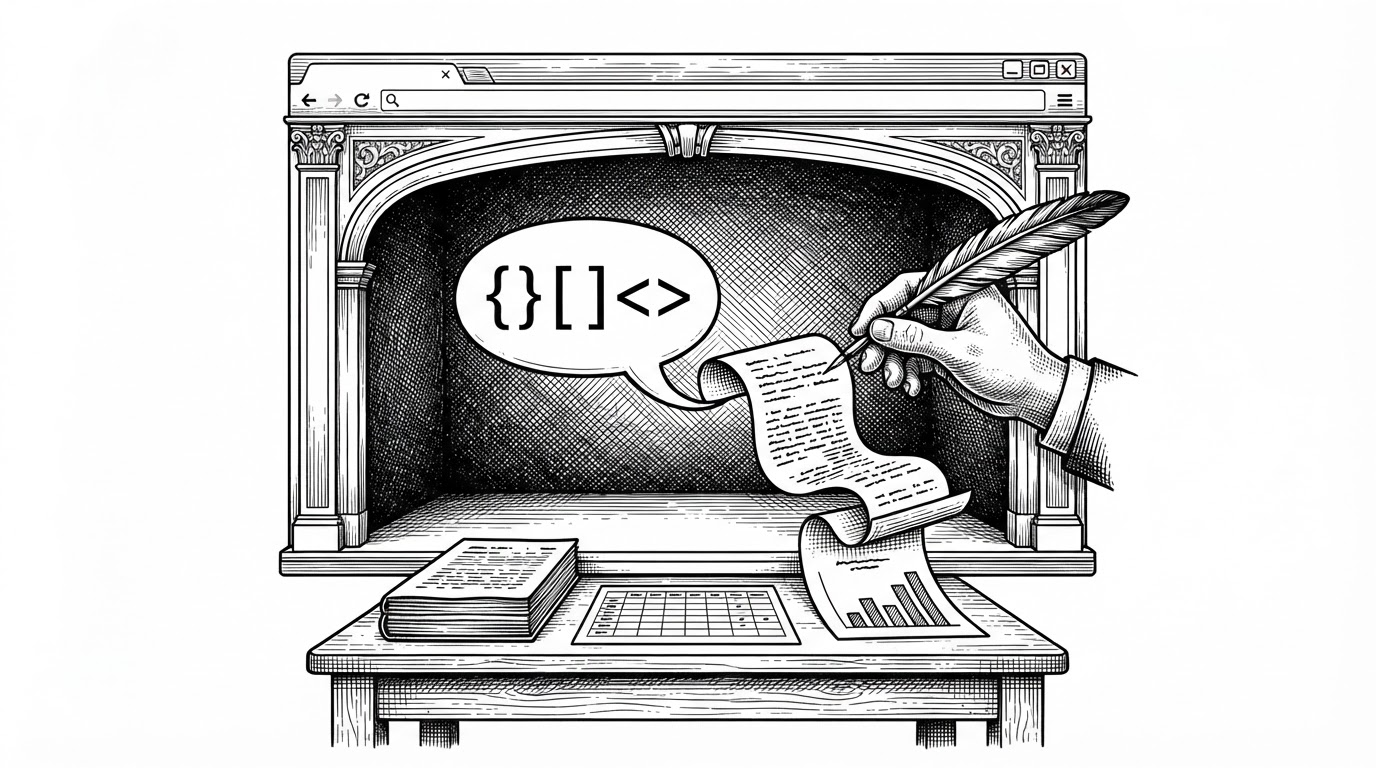
DeepSeek Chat exposes no tool-calling surface to the page. There is no function registry, no JSON schema, no endpoint the browser can call. So Better DeepSeek builds one out of text.
The extension intercepts the request your browser sends to chat.deepseek.com and stacks hidden layers on top of it: a system prompt, your saved memory, a persona, any loaded skills. Somewhere in there is an instruction that reads like a job description. Emit <BDS:create_file> when the user wants a file. Emit <BDS:pptx> for a deck. The model has no idea it is being handed tools. It just follows the prompt.
Sure, here's a project plan.

<BDS:create_file>
{
  "filename": "plan.md",
  "content": "# Q3 Roadmap\n\n- Ship the parser\n- ..."
}
</BDS:create_file>
On the way back, the extension watches the reply stream for those tags. When one appears, it parses the tag and does the work. The model writes text. The page builds the file. The model never learns it had hands.
A Reply Is a Program
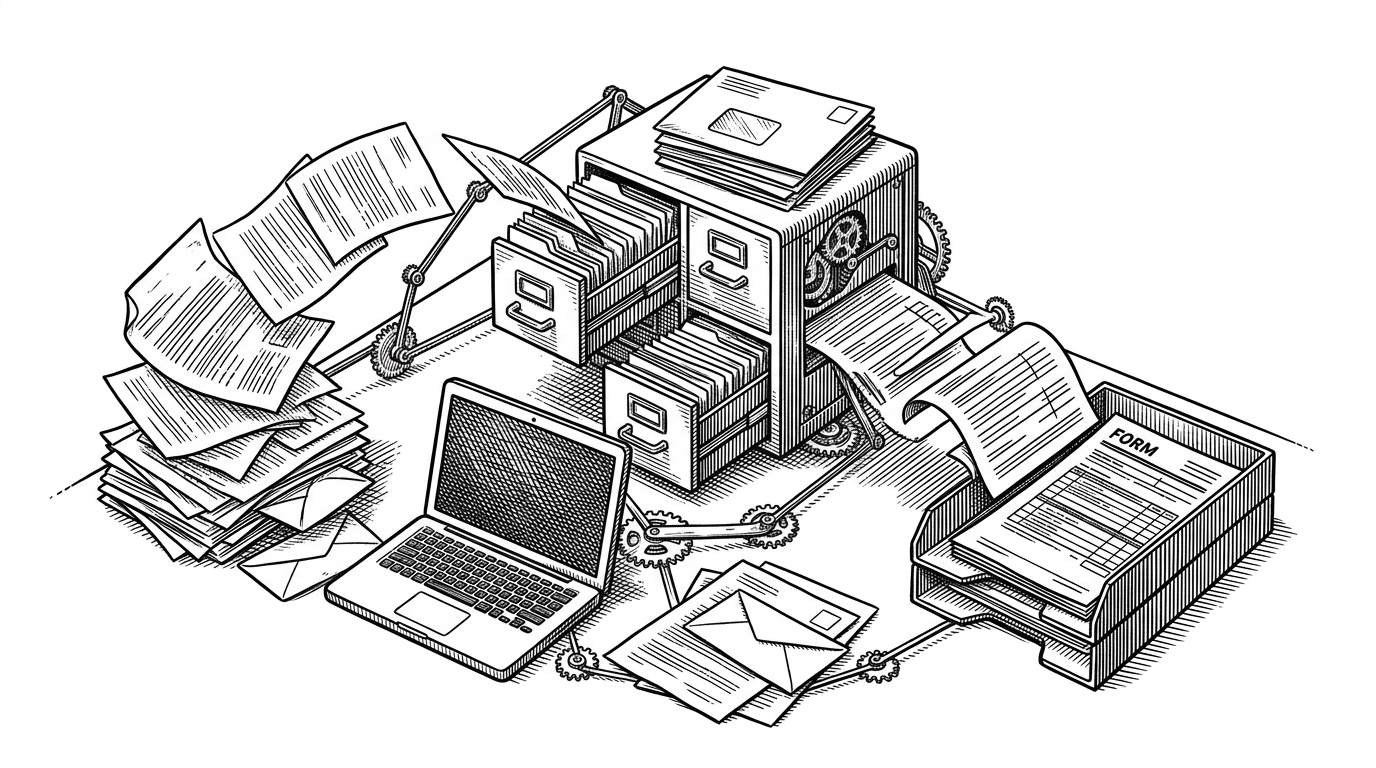
Once you see the tag, the rest of the system is a pipeline. Your message leaves the composer and gets wrapped. A DOM observer watches the reply stream. A parser registry dispatches by tag name. An injector renders a card in the page. The artifact lands in a workspace, and in LONG_WORK mode the library fflate zips the whole set for download.
The tag names read like a small standard library: create_file, pptx, excel, docx, chart, memory_write, plus auto tags like AUTO:REQUEST_WEB_FETCH and AUTO:REQUEST_GITHUB_FETCH. Each one maps to a parser and an injector. The tag is the API.
The Workbench
All those tags add up to something that feels less like a chat and more like a workbench.
- 4 bundles from 1 codebase (content, background, injected, sandbox)
- 3 hosts (Chrome MV3, Firefox MV3, Android WebView)
- 4 languages runnable in-browser (Python, JS, Lua, Ruby)
- MIT licensed
Persistent local memory. Custom system prompts. Personas. A slash-command registry. An API playground that talks to api.deepseek.com with your own key. In-browser execution of Python, JavaScript, Lua, and Ruby. An MCP client over HTTP. And DeepCode, an experimental mode that inspects a connected workspace and hands a plan to DeepSeek Harness.
All data (settings, skills, memories, characters) is stored locally using chrome.storage.local.
None of it requires leaving chat.deepseek.com. That is the point. The workbench is bolted onto the site you already use, not offered as a replacement for it.
The Fork in the Road
The honest comparison is not "is this good." It is a fork: would you rather augment the site you already use, or move to a client you control?
| Better DeepSeek | Open WebUI | LobeChat | Cherry Studio | TypingMind | |
|---|---|---|---|---|---|
| Integration point | Augments chat.deepseek.com in place | Separate self-hosted app | Separate chat app | Separate desktop app | Separate commercial app |
| Where tools run | In your browser, client-side | Server-side | Server-side / in-app | In-app | In-app |
| Customization | Hidden system prompts, local memory, personas, skills | Provider-native assistants and knowledge bases | Provider assistants and plugins | Provider assistants and knowledge bases | Provider assistants and prompts |
| Coupling risk | Bound to a third-party frontend | Stable application boundary | Stable application boundary | Stable application boundary | Stable application boundary |
| Data location | Browser storage, per project documentation | Self-hosted | Self-hosted or vendor cloud | Local or vendor cloud | Vendor cloud |
Feature parity across these tools varies by release and should be checked against current documentation.
One Codebase, Three Hosts
The build is where the ambition shows. build.js runs four sequential Vite builds into one dist folder: content, background, injected, sandbox. Every one runs with tree-shaking disabled, because aggressive tree-shaking strips the side-effect code that registers event listeners and bridge communication.
// treeshake: false
// to avoid aggressive tree-shaking that strips side-effect code
// like event listeners, DOM mutations, and bridge communication
Each bundle is an IIFE with inlined dynamic imports, because a content script cannot load ES modules the way a page can. Non-ASCII characters are escaped to ASCII. And a resolve.alias swaps bds-platform-globals between a Chrome build and an Android build that routes chrome.* calls through a native bridge.
One codebase. Four bundles. Three hosts. The Android shell is Kotlin, with a WebView and a speech bridge, shipped as a signed APK. The content code is written against chrome.* and rarely branches on platform, because the polyfill sits at the boundary instead.
Who Built It
The repository credits EdgeTypE as the top contributor and WhiteLicorice second, from commit activity alone. No verified real names, interviews, or social accounts were found. The project states its own boundary plainly.
"Better DeepSeek" is an unofficial, independent, and community-driven open-source extension. It is NOT affiliated with, endorsed by, sponsored by, or officially connected to DeepSeek or DeepSeek AI in any way.
That is all the public record supports. The rest of the story is the code.
The Coupling Tax
Here is the structural problem. A tool this capable, built on someone else's frontend, is always one deploy away from silence. It happened.
An update released today by DeepSeek has broken Better DeepSeek, whether intentionally or unintentionally. We have released an urgent fix.
The note leaves open whether the change was intentional. The maintainer also offered to step back if asked.
If this update was intentionally released by the DeepSeek team to discontinue Better DeepSeek, please feel free to contact me via GitHub or a similar platform. I am open to discussion and will respectfully comply if removal is requested.
There is a second concern. A community discussion warns that web-side DeepCode usage and detectable BDS tags could risk account flagging. That is a concern raised by users, not a confirmed outcome.
The trade-off is the whole story. Better DeepSeek is elegant, powerful, and fragile for exactly the same reason: it lives inside a page it does not own. The tag trick is what makes it work, and the borrowed frontend is what makes it breakable. You get both, or neither.