marketingskills: Compiling Strategy into the Development Loop
How a modular library of "Agent Skills" is turning technical IDEs into autonomous growth departments.


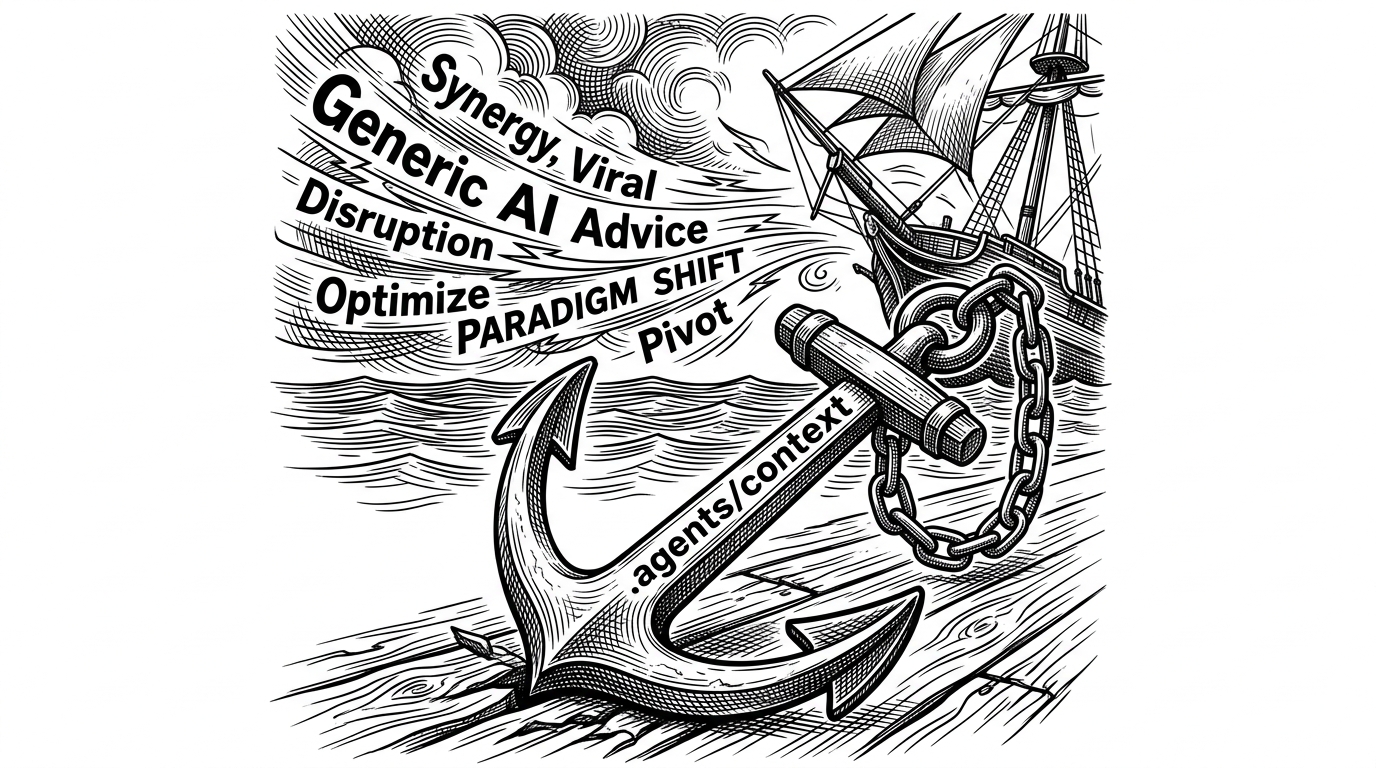
The `product-marketing-context.md` is a great way to handle context. However, at the moment it installs it to `.claude/`, which all skills reference. This isn't ideal for people who don't use Claude. As this package supports installing with skillkit, it'd be ideal to make this context directory be tool agnostic. Perhaps something more generic like `.agents/`.
- The library codifies marketing strategy into a standardized and executable format within the developer's IDE.
- A mandatory product marketing context file prevents AI hallucinations by anchoring agent suggestions to business reality.
- Markdown-based skill manifests function as state machines that enforce specific rules and negative constraints on agent behavior.
- The move to a generic directory structure establishes an agent-agnostic standard for growth engineering tasks.
The Anchor: Solving the Hallucination of Generality
The "AI Agent" hype often focuses on code generation or generic chat. marketingskills is the first major project to treat marketing strategy as a standardized, executable library. It effectively moves the "Chief Marketing Officer" role from a separate department into the developer's IDE.
By codifying high-level strategy—CRO, SEO, Positioning—into a modular "Skill" spec, it allows a coding agent to not just write code, but to justify it against business goals and implement the tracking to prove it works. It is the "Standard Library" for the Growth Engineer.
The most unique technical constraint is the mandatory product-marketing-context.md. Generic AI marketing fails because it lacks business reality. This repo forces the agent to "anchor" itself to a specific product context before making any suggestions. The "Initial Assessment" phase has the agent scan the codebase to build its own source of truth.
Markdown as a Logic Gate
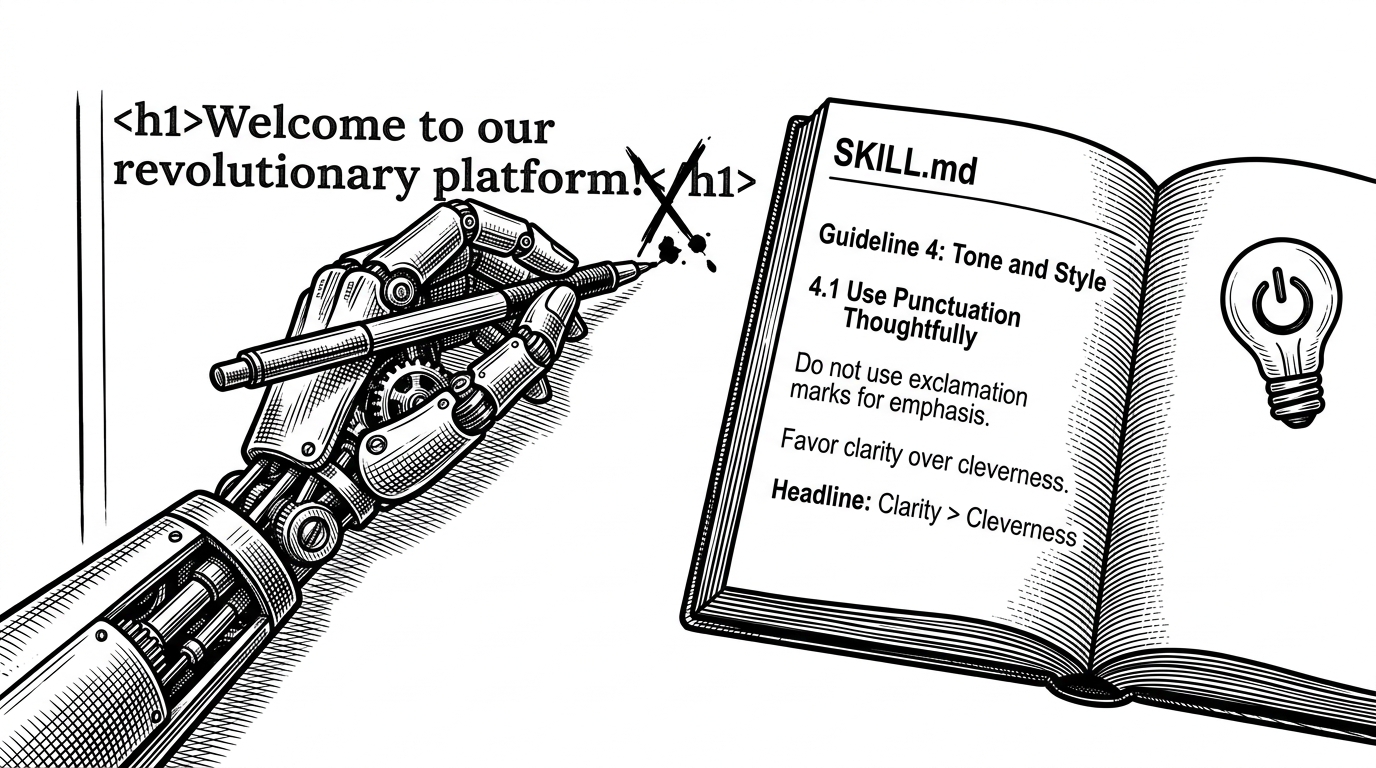
The architecture relies on a Hub-and-Spoke model of Skill manifests. A "Skill" is more than a prompt—it's a state machine for the agent. The SKILL.md structure functions like linter rules for prose, utilizing "Trigger" logic, "Rules," and "Negative Constraints" (e.g., "Remove exclamation points").
From Strategy to git push
The repo enables a "Conversion Loop": Page CRO to Copywriting to A/B Test Setup. This is Growth Engineering in practice—how the agent moves from strategy (an SEO audit) to execution (modifying a .tsx file based on statistical power calculations) to verification (analytics tracking).
| Feature | Traditional Prompting | Marketing SaaS | Agent Skills (marketingskills) |
|---|---|---|---|
| Context Awareness | Low (Requires manual copy-pasting) | Medium (Requires manual setup) | High (Automated via .agents/context) |
| Execution Capability | None (Cannot change code) | Limited (API/Integration bound) | High (Direct IDE integration) |
| Maintenance | Hard (Prompts get lost) | Medium (Vendor lock-in) | Easy (Version controlled in Git) |
| Portability | Low | None | High (Agent-agnostic standard) |
The Agent-Agnostic Standard
The project represents a shift from Claude-specific tools to an agent-agnostic standard, formalized by the move to the .agents/ directory. This ensures compatibility across platforms.
This standardization allows integration with tools like MCP/Composio for tool-calling, turning the AI from a strategist into an executor capable of writing to HubSpot or configuring analytics platforms.

Hey @davidstackio — thanks for the great suggestion! This has been fully implemented in PR #68