EveryInc/claude_commands Turns Claude Code into a Process Engine
A compact command library that replaces ad hoc prompting with repeatable workflows, tool-backed rituals, and experiment logs for serious coding work.
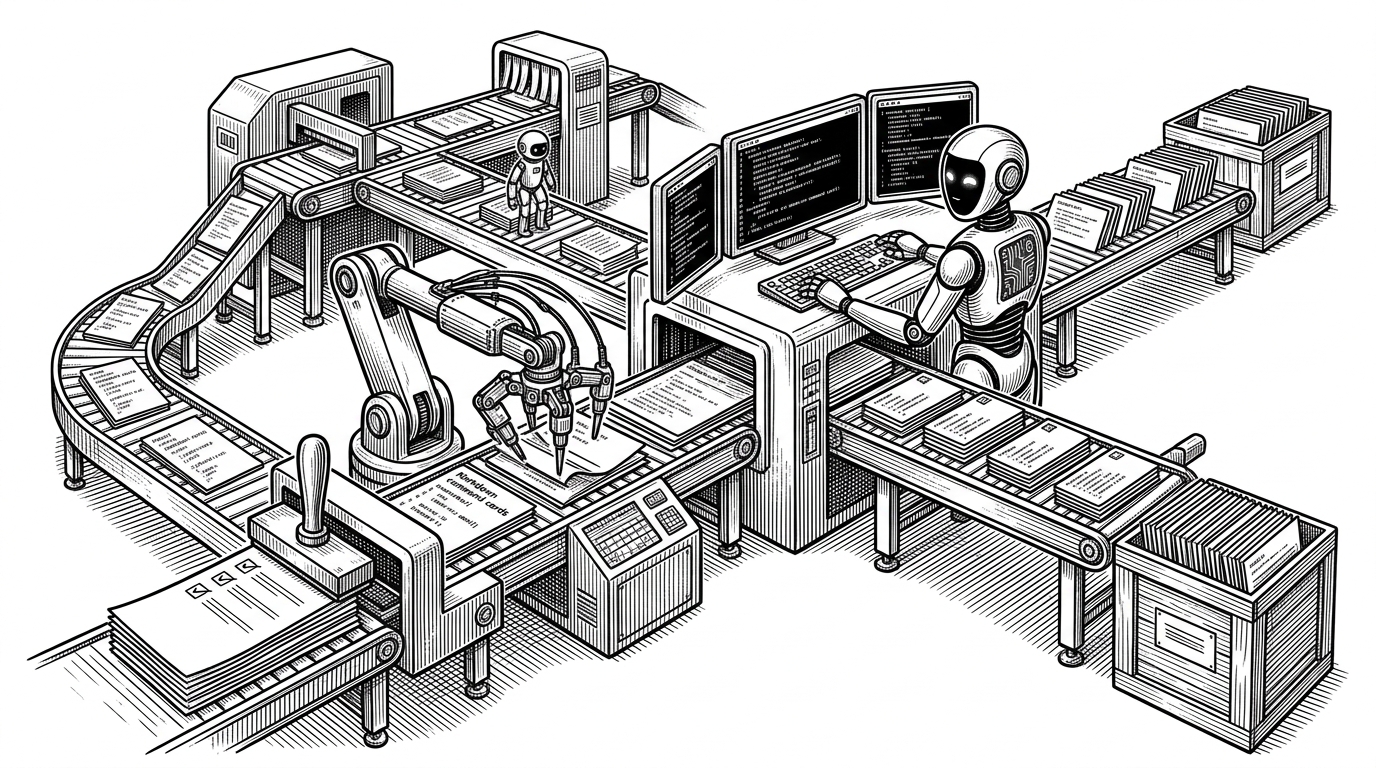
- This repository treats Claude Code less like a chat window and more like a workflow engine that has to follow an operating procedure.
- Its most original move is experiment-driven development, which forces the model to log, test, and revise before it can claim progress.
- The command set is small on purpose, and that restraint makes the system easier to trust than sprawling agent harnesses.
- The real lesson is that deterministic tools do more for AI coding quality than better wording ever will.
The command library that teaches Claude how to behave
The surprise in EveryInc/claude_commands is not that it helps Claude Code do more. It is that it tries to make Claude behave more like a disciplined engineer. The repository turns prompting into procedure, then uses that procedure to control the order of work.
That matters because most AI coding failures are workflow failures. The model starts answering before it has the right context, or it edits before it has measured the problem. This repo is built to slow that down just enough to make the output more reliable.
Who built it, and what problem it solves
EveryInc built a small command library for developers who already know the pain of ad hoc prompting. Chat is fast, but it is hard to audit, hard to repeat, and easy to drift away from the actual task. This repo answers that with templates, numbered steps, and tool-backed routines that live inside Claude Code instead of around it.
The shape of the project says a lot. It feels less like a content dump and more like a working manual for a single toolchain, which is exactly why it is useful.
This repository contains prompts that help Claude Code work through software engineering tasks systematically. Each template provides a structured approach for specific development scenarios.
The sharpest idea: experiment-driven development
The most revealing file is 01_experiment_driven_development.md. It makes Claude start with an experiment log before it touches the code, which changes the whole posture of the task. The assistant is not just asked to solve a bug. It is asked to create evidence, test an idea, record what happened, and only then adjust course.
That is a small shift with a large effect. The repo is trying to replace improvisation with a loop: observe, log, revise, repeat. The odd motivational trick in that command is memorable, but the deeper point is stricter. The assistant is being forced into an engineering cadence instead of a conversational one.

How the rest of the repo turns rituals into a system
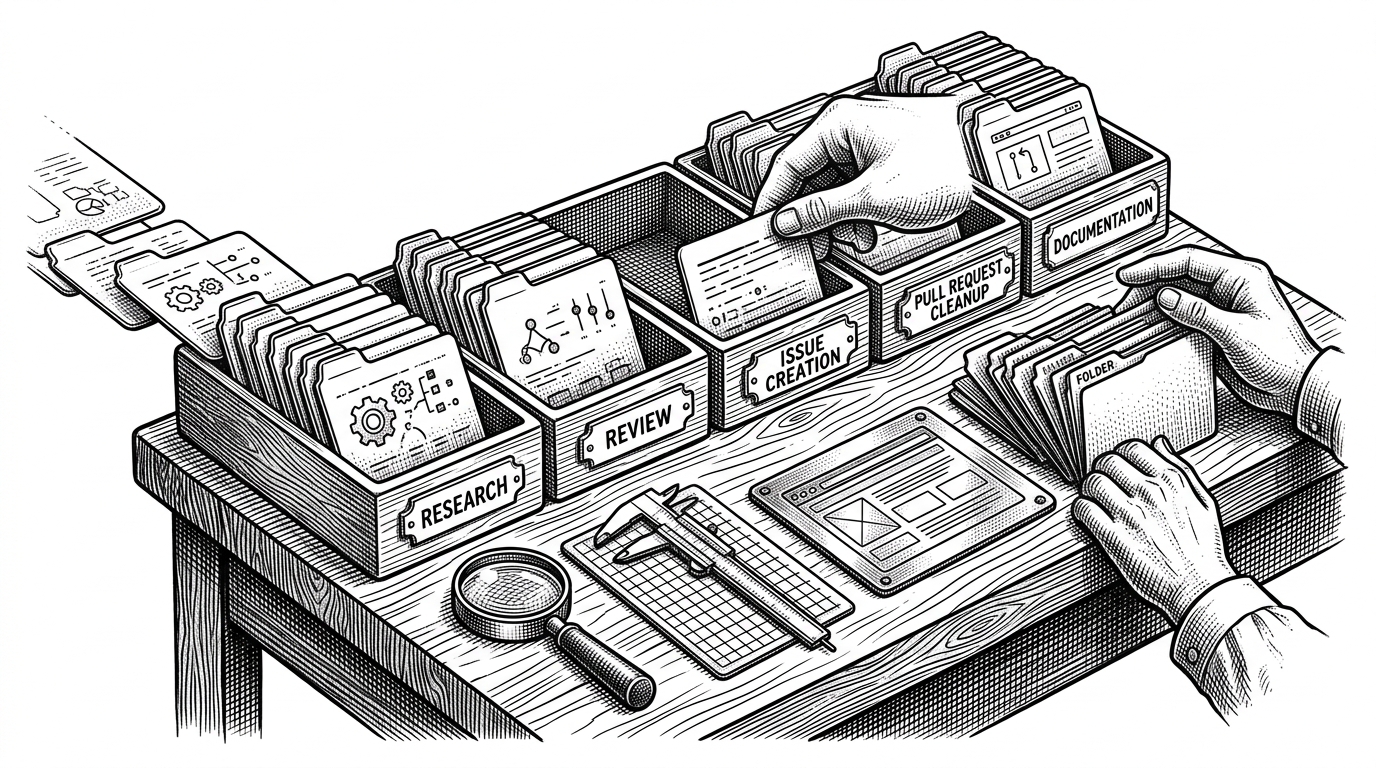
The rest of the repository extends the same idea into other parts of the engineering workflow. Some commands gather context, some review pull request comments, some help create issues, and some translate design feedback into implementation checks. The point is not breadth for its own sake. The point is to make common tasks repeatable enough that Claude can work them the same way every time.
The structure reinforces that. Markdown is doing the job of a domain-specific language, while the agents/ folder adds role-based behavior through YAML frontmatter and model assignments. In other words, the repo does not just name tasks. It defines how the assistant should think while doing them.
00_meet_claude.md
01_experiment_driven_development.md
05_resolve_pr_comments.md
06_help_me_market.md
agents/
  codebase-researcher.md
design-implementation-reviewer.md- 00_meet_claude.md sets the model's operating context before it starts.
- 05_resolve_pr_comments.md turns PR cleanup into a structured review pass.
- agents/codebase-researcher.md treats reverse engineering as a first-class workflow.
- agents/design-implementation-reviewer.md connects Figma, browser inspection, and code review.
Why deterministic tools matter more than better wording
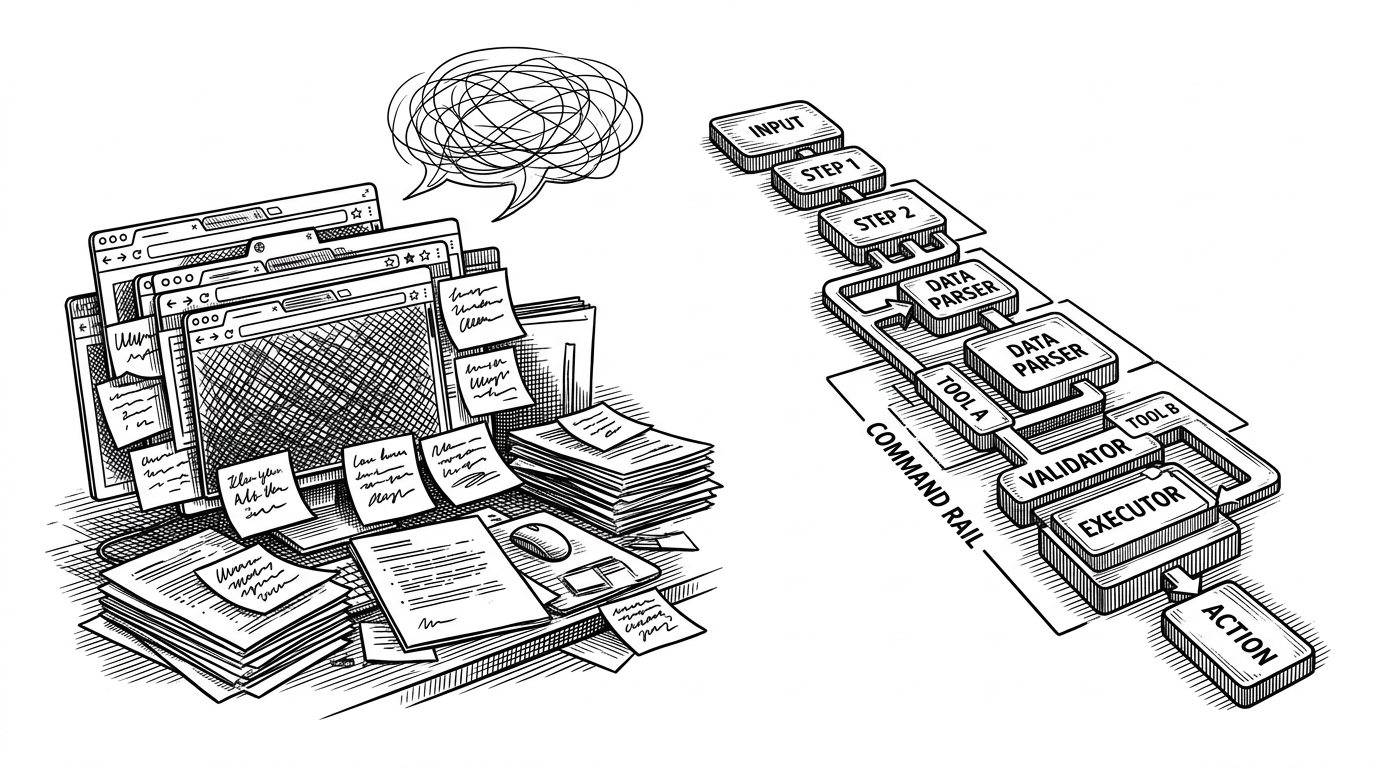
The repo earns trust by binding prompts to tools that do real work. gh makes GitHub actions explicit, rg makes search precise, jq keeps JSON structured, and Puppeteer lets Claude inspect the actual interface instead of guessing from a description. That is a different posture from simply asking for a better answer.
Once the process is backed by deterministic tools, Claude has less room to wander. The model still reasons, but it does so inside a narrower, more legible workflow. That is the real advantage here, and it is why the repository feels more like an operating system than a prompt pack.
| Mode | What it optimizes | Tool dependence | Trade-off |
|---|---|---|---|
| Ad hoc prompting | Fast starts and flexible brainstorming | None | It drifts when the task gets real |
| EveryInc/claude_commands | Repeatable engineering workflows | High, on purpose | It is narrow, but the narrowness is the point |
| Large agent harnesses like Everything Claude Code | Broad orchestration across tools and surfaces | Very high | More power usually means more setup and complexity |
Where it sits in the landscape
Compared with ad hoc prompting, this repo is slower to adopt but much easier to trust. Compared with a broad harness like Everything Claude Code, it is smaller, tighter, and more opinionated. That trade-off is the point. It is not trying to be the whole stack, only the part that makes Claude Code behave like a process-driven teammate.
That makes it a strong fit for teams that want a practical operating manual instead of a platform. You can read the repo, understand the rules, and see how the assistant is expected to behave without unpacking a giant system.
What teams should steal from it
The best lesson here is not about prompts. It is about governance. If you want AI to help with serious software work, encode the process first, then let the model operate inside it. Make the assistant collect evidence, use tools, and leave a trail that another engineer can review later.
That is what makes EveryInc/claude_commands interesting. It treats Claude Code like a junior engineer with a checklist, not a magic box. That difference is small in syntax and huge in outcome.