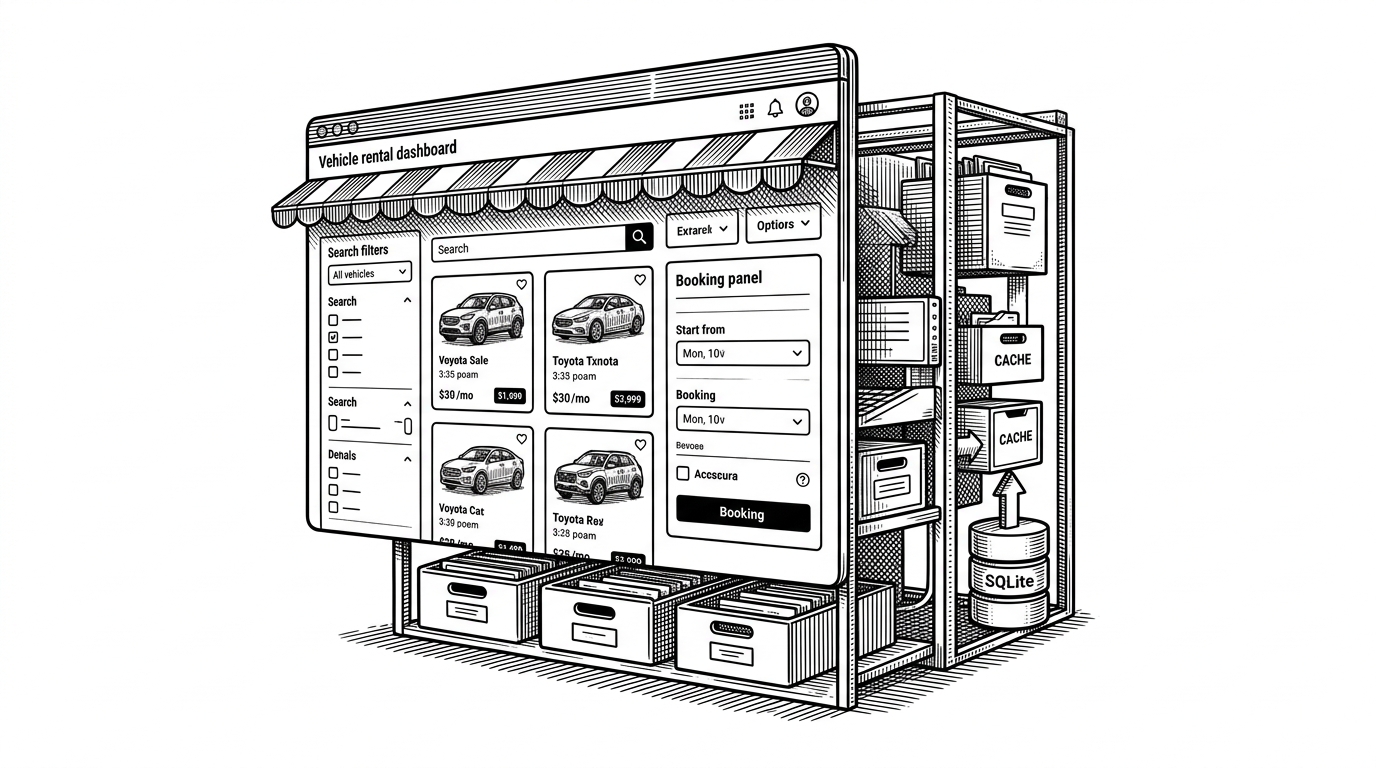
Inside CodeAlpha_Simple-e-commerceStore: the e-commerce app that treats persistence like a button, not a service
A portable Express and vanilla JS storefront built on `sql.js`, server-side sessions, and explicit save-on-change database writes. It is a tidy teaching repo, and a useful lesson in both simplicity and risk.

- CodeAlpha_Simple-e-commerceStore is most interesting as a transparency exercise, because it makes persistence visible instead of outsourcing it to hidden infrastructure.
- Its `sql.js` database model keeps SQLite in memory and then flushes to disk, which makes the whole store easy to install and easy to reason about.
- The cart and identity layers live in server sessions, while orders cross into durable storage, so the app separates temporary behavior from committed commerce.
- The same plainness that makes the code easy to learn also exposes security risk, especially where raw SQL string interpolation replaces parameterized queries.
The surprise in this repo is not the storefront. It is the storage model. `sql.js` keeps SQLite in memory, and the application writes the database back to disk after mutations, so persistence becomes an explicit step instead of a background service.
That choice changes how you read the whole codebase. There is no heavy framework hiding the mechanics, no native database binding to install, and no abstraction layer to mentally unwrap before you can see where data goes.
The store that runs like a notebook, not a server
The repository reads like a teaching demo on purpose. Express handles routes, vanilla JavaScript handles the browser, `express-session` holds identity, and `bcryptjs` protects passwords. The center of gravity is still the database, but it is a database you can see and trace.
That makes the project unusually portable. There are no build tools, no frontend framework, and no native SQLite driver. The stack is small enough that a beginner can follow the request path without losing the plot.
Simple E-Commerce Store A full-stack e-commerce web application built with Express.js and SQLite.
| Typical store stack | This repo |
|---|---|
| Native SQLite driver or external database service | `sql.js` in Node with manual save-to-disk |
| Client-heavy cart state or browser storage | Server-side session cart |
| Framework-driven UI | Vanilla JS and direct fetch calls |
| Hidden persistence behavior | Explicit write after mutation |
How the data moves
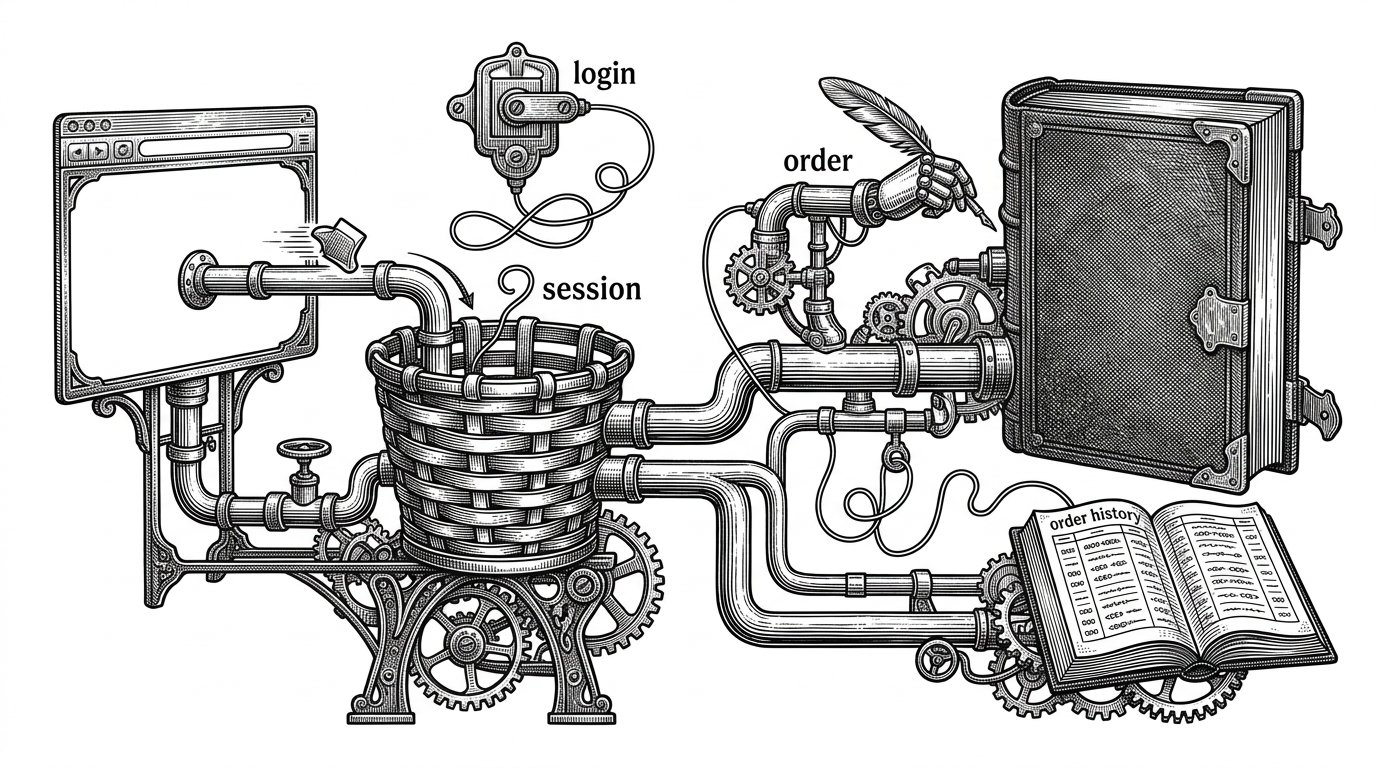
A login request sets `req.session.userId`. An add-to-cart request changes `req.session.cart`. A checkout request writes order rows, then `saveDb()` exports the in-memory database to disk. The request flow is simple enough to fit in your head, which is exactly why the repo teaches well.
The cart lives in session, not in the browser
This is one of the smartest choices in the project. `req.session.cart` keeps cart state on the server, so the browser is not the source of truth. That avoids the fragility of client-only cart storage and keeps the state attached to the authenticated session.
| Cart strategy | Strength | Tradeoff |
|---|---|---|
| Browser LocalStorage | Easy to start with | Cart lives on the client and can drift |
| Server session cart | Consistent with auth | Depends on session lifetime and server state |
| Persistent cart table | Durable across sessions | Adds more schema and more complexity |
The tradeoff is equally clear. A session cart disappears with the session, so this is not a loyalty-engine design. It is a clear educational design, one that keeps the moving pieces visible.
The part that makes beginners understand it, and security people wince
The repo’s readability comes with a real cost. The technical research shows raw SQL string interpolation in places where parameterized queries should be used. That is not a minor style issue. It is the difference between a tutorial and a safe production pattern.
This is where the article stops flattering the simplicity and starts respecting the lesson. Beginners can see how the query works because the query is plain text. Security reviewers can see the problem for the same reason.
| Readable pattern | Safer production pattern |
|---|---|
| Template literals in SQL strings | Prepared statements with parameters |
| Quick to inspect in a tutorial | Harder to misuse under untrusted input |
| Good for learning the data shape | Better for defending the data boundary |
What this project teaches better than a polished framework stack
This repository is not trying to outgrow its label as a simple store. It is trying to show the shape of a store. That is useful because it strips away framework noise and makes the core commerce loop legible: authenticate, stage a cart, commit an order, persist the result.
For a developer learning full-stack mechanics, that clarity matters more than polish. For a founder or PM, it is a reminder that architecture is also pedagogy. The stack you choose teaches the next person what the app thinks is important.