PredMaint_System: PredMaint System: The Predictive Maintenance Repo That Closes the Loop
A digital twin, a hybrid anomaly engine, and a work-order schema turn machine telemetry into maintenance operations, not just prettier dashboards.
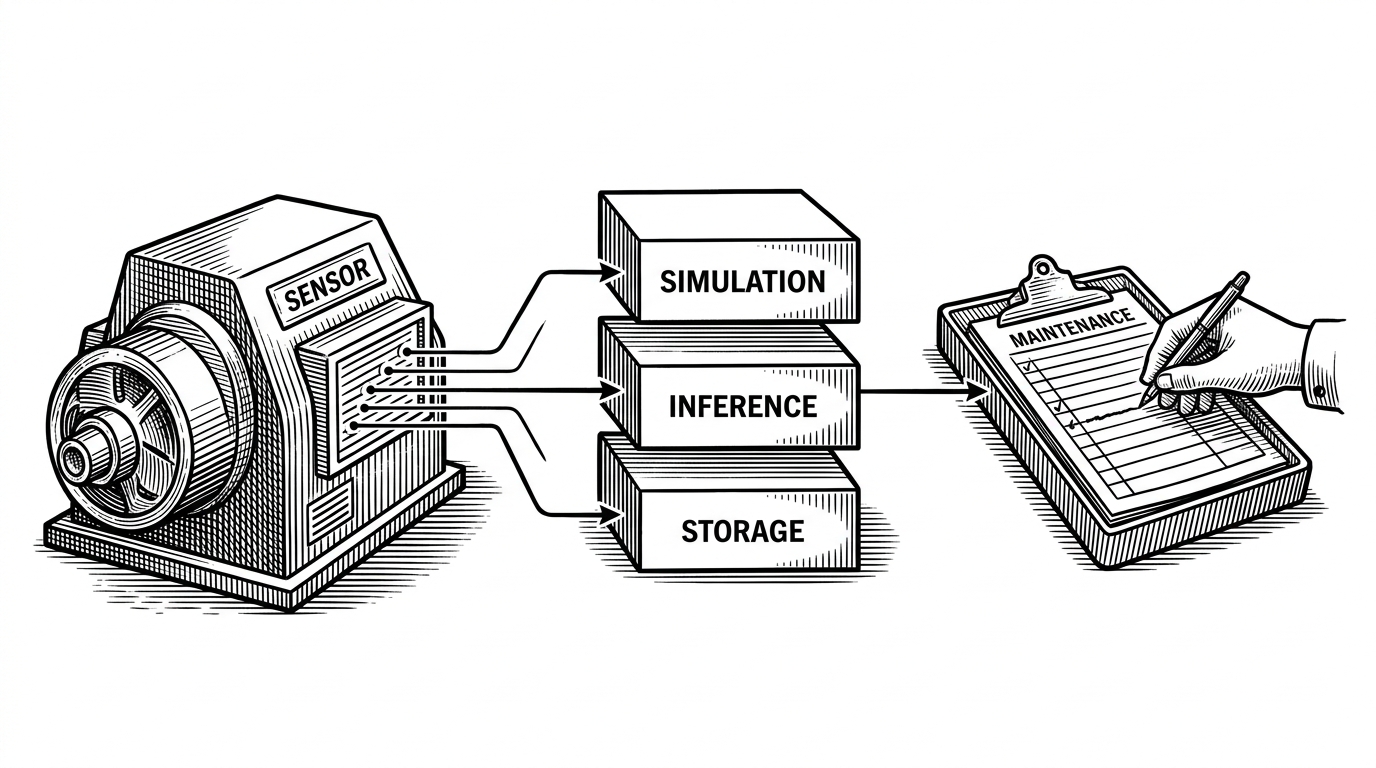
- PredMaint System matters because it treats predictive maintenance as a closed operational loop, not as a model in isolation.
- Its real strength is not a single classifier but a layered decision stack that combines rules, anomaly detection, and supervised inference.
- The simulator is doing more than generating fake data, because it creates believable degradation that makes the system useful for testing and trust.
- SQLite and graceful fallbacks keep the project portable, but they also make clear that this is a single-server prototype rather than factory-scale infrastructure.
The Factory Nervous System
Most predictive maintenance repos stop when they can label a failure. PredMaint System keeps going. It simulates sensor data, scores it, writes state to SQLite, and pushes the result into a live maintenance workflow.
That is the whole story. The interesting unit is not the model. It is the loop between machine, inference, storage, and human verification.
Why the Loop Matters More Than the Model
A failure score has no value on its own. It becomes useful when it changes state: a machine becomes broken, a work order opens, and someone can confirm the cause later. That is why fields like threshold_sensitivity, work_orders, and root_cause_verified matter more than a nicer chart.
| Question | Dashboard-only demo | PredMaint System |
|---|---|---|
| What is the output? | A chart or score | A maintained operational state |
| What triggers action? | Usually a visual threshold | Rules, anomaly detection, and classification |
| Where does the result go? | A screen | SQLite state and work orders |
| Can a human verify it? | Often no | Yes, through workflow state |
| Does it support feedback? | Rarely | It points toward future retraining |
That is also the subtle product insight here. The repo treats maintenance as a workflow with memory, not a one-off prediction event.
Inside the Inference Stack
The backend’s intelligence layer is deliberately layered. In ml_engine.py, obvious rule violations are checked first, novelty is detected next, and supervised classification comes last. The order matters because industrial systems need something that is explainable when the input is messy and the stakes are real.
def run_inference(sample):
    features = calculate_features(sample)

    if features['temperature'] > 100 or features['vibration'] > vibration_limit:
        return {
            'status': 'alert',
            'reason': 'rule_violation'
        }

    novelty = isolation_forest.predict([features_vector])
    failure_type = classifier.predict([features_vector])

    return {
        'status': 'watch' if novelty == -1 else 'ok',
        'failure_probability': classifier_proba,
        'failure_type': failure_type
    }
This is a belt-and-suspenders design. The rules catch obvious problems. Isolation Forest catches unfamiliar patterns. The classifier adds a failure label when the system has enough signal to make one.
| Layer | What it catches | Why it exists |
|---|---|---|
| Rules | Obvious threshold violations | Fast, explainable, cheap |
| Isolation Forest | Unknown or unusual behavior | Catches novelty before labels exist |
| Supervised classifier | Known failure patterns | Turns features into a failure type |
The Digital Twin Is a Failure Generator, Not a Demo Toy
The simulator matters because it makes failure gradual. In simulator.py, four machine types, including pump, lathe, compressor, and motor, do not simply flip from healthy to broken. Their readings drift, jitter, and degrade over time.
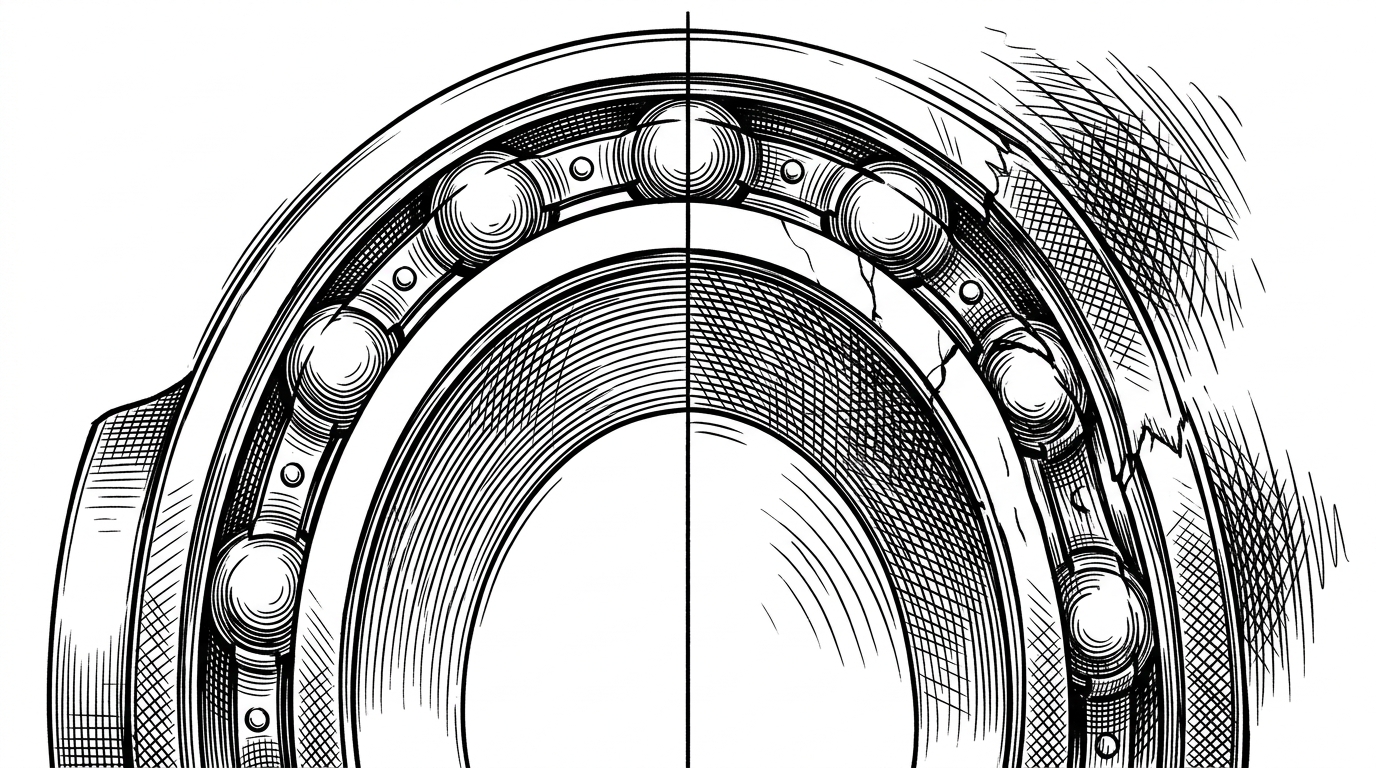
That choice changes everything. A gradual drift gives the inference stack something to detect, gives users something believable to watch, and gives the UI a story instead of a flashing red light.
Fallbacks, Portability, and the Single-Server Constraint
There is a nice practical detail in the ML engine: if scikit-learn is missing, the project does not die. It falls back to a statistical detector. That is a rare and useful form of humility in an open-source ML repo.
| Design choice | Benefit | Trade-off |
|---|---|---|
| SQLite | Zero-config portability | Single-server limits |
| WebSockets | Live updates without polling | Needs a persistent connection |
| Fallback anomaly logic | Graceful degradation | Less model sophistication |
| In-memory caches | Fast state access | Not durable at scale |
So yes, this is robust for a lab or demo environment. It is not yet a factory-scale deployment stack. The code itself makes that boundary visible.
How It Compares to Typical Predictive Maintenance Projects
Compared with notebook-only projects, PredMaint System is more complete. Compared with enterprise CMMS or IoT platforms, it is much lighter and easier to understand. That middle position is what makes it interesting.
| Project type | Strength | Weakness |
|---|---|---|
| Notebook-only PdM | Fast experimentation | Stops at the model |
| Enterprise CMMS or IoT platform | Operational depth | Heavy to adopt |
| PredMaint System | End-to-end prototype | Not built for large-scale production |
It sits in the useful middle zone. That is not a compromise. It is a clear editorial identity.
What the Repo Suggests About the Future
The code hints at an obvious next step: use verified root causes as training data, move event fanout to something like Redis, and harden persistence beyond a single node. In other words, make the feedback loop durable.
That is the real promise here. PredMaint System already treats maintenance as a living process. The next version just has to make the memory stronger.