kasdra-mart: KasdraMart: The MERN Store That Thinks Like a Delivery Network
A full-stack e-commerce app where orders do not just get placed. They get assigned, routed, and pushed through a last-mile workflow built for customers, admins, and delivery personnel.

- KasdraMart stands out because it treats delivery as a core product flow, not a post-checkout footnote.
- The third role, a dedicated delivery user, turns a standard store into a three-sided operations system with clearer handoffs.
- The backend couples assignment and status changes so logistics, permissions, and order state move together.
- The stack and security choices make the repo feel closer to a production prototype than a classroom demo.
Why KasdraMart Feels More Like Dispatch Than Checkout
Most e-commerce demos stop when the order is placed. KasdraMart keeps going. The interesting move is the delivery-person role, which gives the app a workflow that looks less like a storefront and more like a local dispatch desk.
That changes the whole product shape. Instead of just browse, cart, pay, the repo has a handoff loop: create the order, assign it, route it, and complete delivery. That is a more realistic model for hyperlocal commerce than a generic shop template.
The Third User Role Most E-Commerce Clones Ignore
The app does not stop at customer and admin. It adds isDeliveryBoy, which means the system has to serve three different users with three different jobs. That is a bigger shift than it sounds like, because roles now shape both access and workflow.
| Area | Standard store clone | KasdraMart |
|---|---|---|
| User roles | Customer and admin | Customer, admin, and delivery personnel |
| Order lifecycle | Placed, then tracked generically | Assigned, routed, and advanced through delivery stages |
| Operational view | Admin console only | Admin console plus delivery dashboard |
| Workflow depth | Checkout-centric | Dispatch-centric |
| Security posture | Basic auth patterns | JWT, bcrypt, Helmet, rate limiting, validator middleware |
| Real-world fit | Online catalog with orders | Hyperlocal fulfillment with handoff logic |
What Happens When an Order Gets Assigned
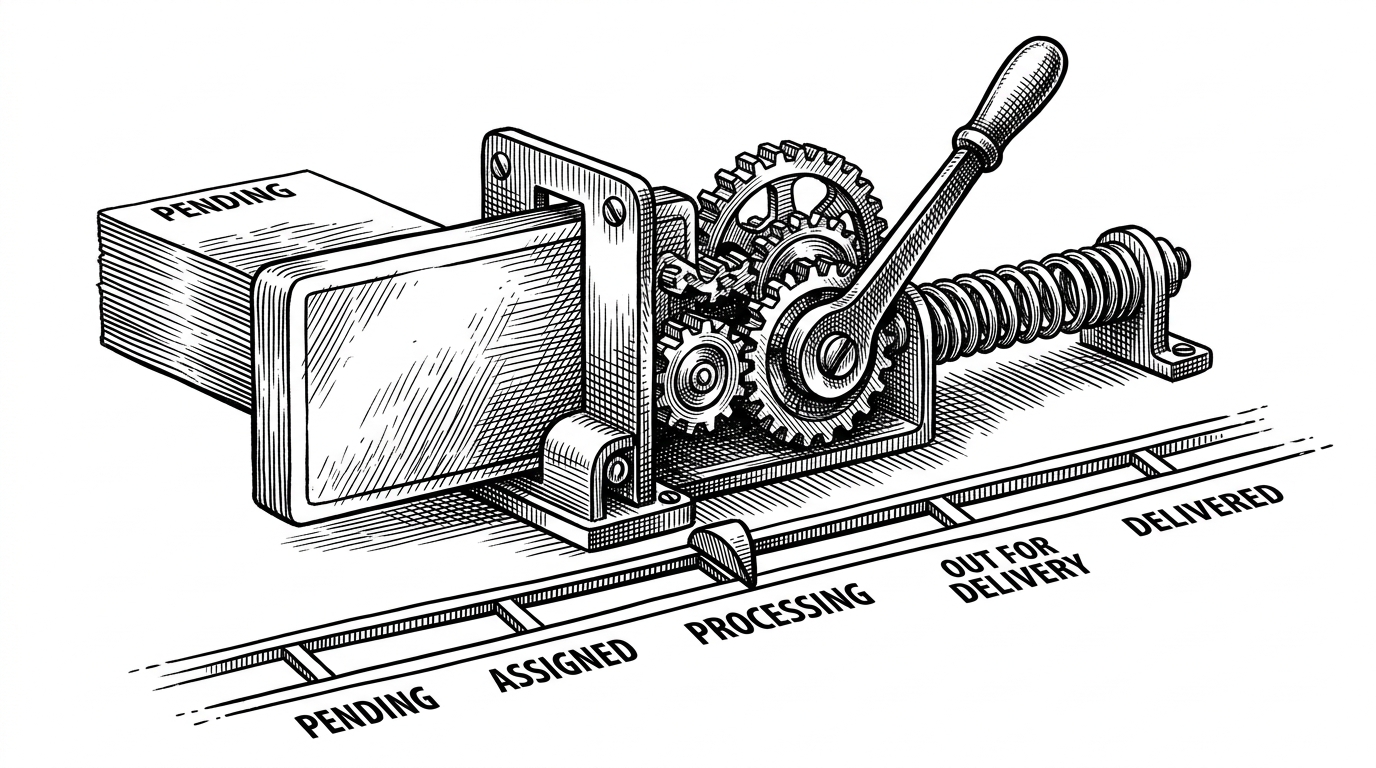
The backend’s most revealing move is the coupling between assignment and status. In the research notes, assignDeliveryBoy does not merely attach a user to an order. It also moves the order into Processing, which means the state machine is aware of the operational handoff.
// Conceptual flow reflected in the order controller
const assignDeliveryBoy = async (req, res) => {
  // 1. find the order
  // 2. attach the delivery user
  // 3. move status to Processing
  // 4. persist both changes together
};
That is a small detail with a big effect. It makes the order lifecycle explicit, and it keeps the delivery dashboard honest. If a rider can see an order, the system has already decided that the order belongs in the fulfillment pipeline.
How the Client Keeps State Without Redux
KasdraMart keeps its client state lean with React Context instead of a heavier global store. AuthContext, CartContext, and WishlistContext split the app into focused slices, which keeps the logic easy to trace in a project this size.
The important part is persistence. Login state lives in localStorage, so the navbar, protected routes, and role-based views can respond immediately after refresh. That is a practical choice for an app that depends on who you are as much as what you bought.
A Backend That Looks Built for Production, Not a Tutorial
This is where the repo stops feeling like a classroom clone. The server adds Helmet, rate limiting, JWT auth, bcrypt password hashing, validator middleware, and a Vercel-aware CORS rule. Those pieces do not make the app novel, but they do make it harder to break.
| Defensive layer | What it does | Why it matters here |
|---|---|---|
| Helmet | Sets safer HTTP headers | Reduces exposure on a public API |
| Rate limiting | Caps repeated requests | Helps against brute-force and noisy clients |
| JWT auth | Verifies user identity | Supports role-based access across customer, admin, and delivery views |
| bcrypt | Hashes passwords | Avoids storing credentials in plain text |
| validator middleware | Checks input before processing | Keeps order and auth payloads sane |
| Dynamic CORS | Allows approved Vercel origins | Matches modern preview-deploy workflows |
The signal is not that any single tool is exotic. The signal is that the backend assumes real traffic, real permissions, and real mistakes.
Why the Stack Choices Matter Here
The stack lines up with the product shape. React 19 and Vite support fast iteration. Tailwind 4.x and Framer Motion give the UI an app-like finish. Express 5, MongoDB, Cloudinary, and Multer cover the server, media, and storage side without unnecessary ceremony.
That combination makes sense for a commerce app that depends on images, responsive dashboards, and frequent status updates. KasdraMart is not trying to be a monolith. It is trying to stay nimble while still looking like a real operations tool.
KasdraMart vs. the Usual E-Commerce Template
| Dimension | Usual starter store | KasdraMart |
|---|---|---|
| Core metaphor | Digital storefront | Dispatch network |
| Primary flow | Browse to checkout | Browse to assignment to delivery |
| Roles | Customer and admin | Customer, admin, and delivery personnel |
| State management | Generic UI state | Context-driven state tied to auth and roles |
| Order behavior | Static status labels | Status changes triggered by assignment |
| Operational realism | Low | High for hyperlocal fulfillment |
That is why the repo is more interesting than a feature checklist suggests. It is not only an e-commerce app. It is an attempt to model the handoff after payment, which is where many real systems earn their complexity.