data-federation-mesh: The Anti-Data Lake: Unpacking NVIDIA DFM
How a clever Python DSL and a Pydantic-powered compiler reverse the modern data stack to process petabytes of climate data exactly where it lives.

- DFM reverses the standard data engineering playbook by shipping compute logic directly to federated data silos.
- It compiles standard Python code into a distributed routing graph using Pydantic to generate Intermediate Representation.
- Built on NVIDIA Flare, the system orchestrates peer-to-peer data processing for petabyte-scale scientific computing like Earth-2 climate models.
The Physics of Data Gravity
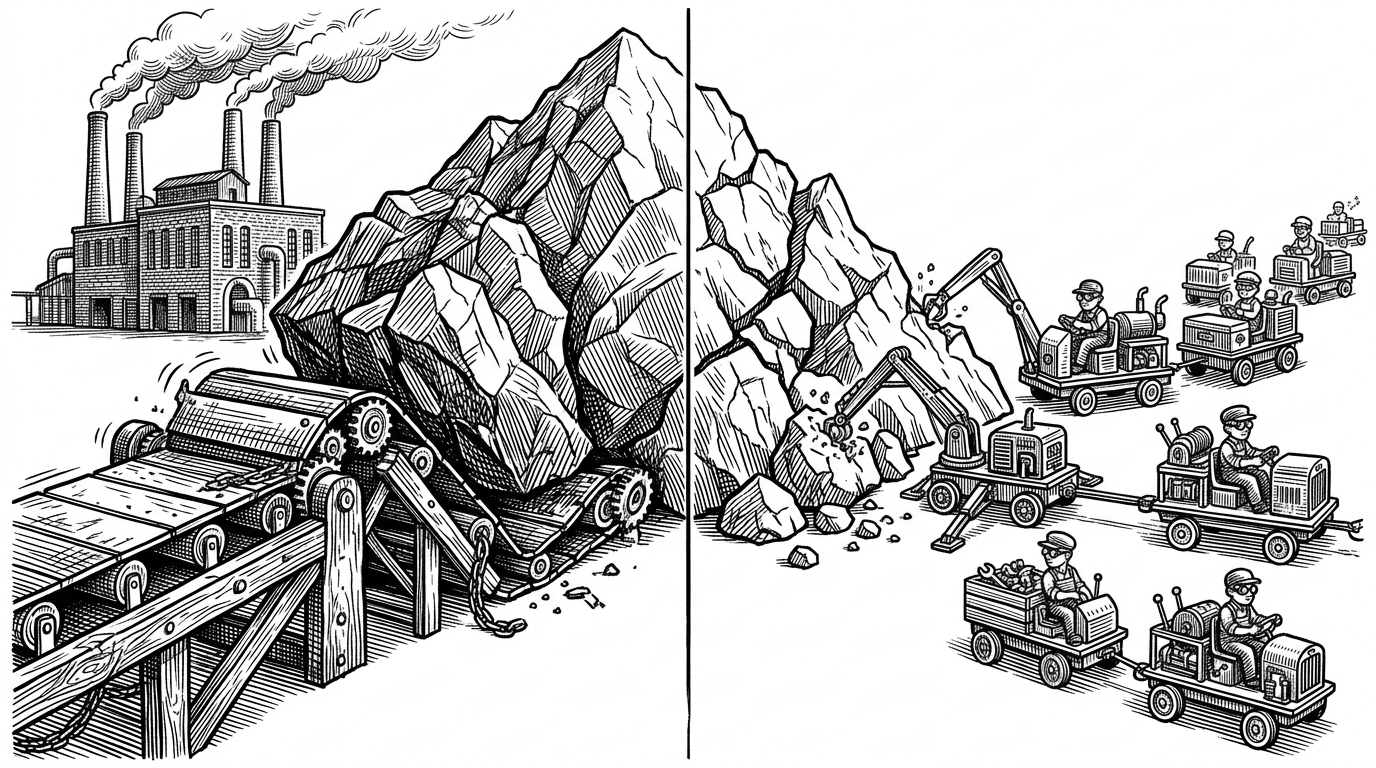
The era of the centralized data lake is breaking under the weight of data gravity. For petabyte-scale scientific computing like climate modeling, moving data to the compute layer is physically and economically unviable. Datasets from global weather models like GFS and ECMWF are too massive to pipe across the internet into a central Snowflake or S3 bucket.
NVIDIA Data Federation Mesh (DFM) provides the escape velocity for this problem. It acts as an orchestrator that assumes data is permanently stuck in regional silos. Instead of extracting and transforming the data, DFM packages the execution logic and ships it directly to the edge.
Reversing the ETL Pipeline
DFM represents an anti-cloud architecture. The standard data engineering playbook relies on Extract, Transform, and Load (ETL) pipelines to pull information into a single unified warehouse. DFM leaves the data entirely alone.
By deploying logic to the data source, organizations bypass massive egress fees and latency bottlenecks. The architecture guarantees that raw, sensitive data never leaves its host environment, which is a critical requirement for international meteorological organizations and private enterprise data alike.
Compiling Python to the Mesh
The technical magic of DFM lies in how it translates standard Python into distributed network instructions. The framework implements a declarative Domain Specific Language (DSL) using Python context managers. When a developer writes pipeline operations, DFM captures them without executing them eagerly.
Under the hood, DFM leverages Pydantic to transform this captured Python Abstract Syntax Tree into a strictly typed, JSON-serializable Intermediate Representation (IR). This multi-pass compiler prunes unnecessary data movement and generates a final network graph.
with Pipeline(name="weather_analysis") as pipeline:
    # Operations are captured symbolically, not executed
    raw_data = fetch_gfs_data(region="NA")
    processed = compute_anomalies(raw_data)
    save_results(processed, destination="central_hub")
The P2P Engine Room
While the DFM compiler acts as the planner, NVIDIA Flare serves as the execution engine. Flare provides the peer-to-peer communication and job management required to orchestrate the mesh.
The resulting Network Intermediate Representation (NetIR) instructs each federated site exactly what operations to run and where to route the resulting data. Data is chunked into TokenPackage objects, which serve as the atomic units of work streaming across the decentralized network.
Federation vs. Virtualization
DFM occupies a specific niche between pure data virtualization and specialized machine learning frameworks. While tools like Trino excel at federating SQL queries by pulling data to worker nodes, DFM strictly enforces edge processing for arbitrary Python compute.
| Feature | NVIDIA DFM | Trino / Presto | TensorFlow Federated |
|---|---|---|---|
| Primary Goal | Arbitrary distributed compute | Distributed SQL querying | Distributed model training |
| Data Movement | Strictly edge-processed | Pulls data to worker nodes | Edge-processed weights only |
| Developer Interface | Python DSL | SQL | TensorFlow API |
| Target Workload | Pipeline orchestration | Analytics & BI | Machine Learning |