nvidia-cloud-functions: NVIDIA Cloud Functions: The Serverless Blueprint for GPU-Native AI Infrastructure
A meta-repo that shows how NVIDIA is rethinking functions, tasks, autoscaling, and observability for GPU workloads that are too heavy for ordinary serverless systems.
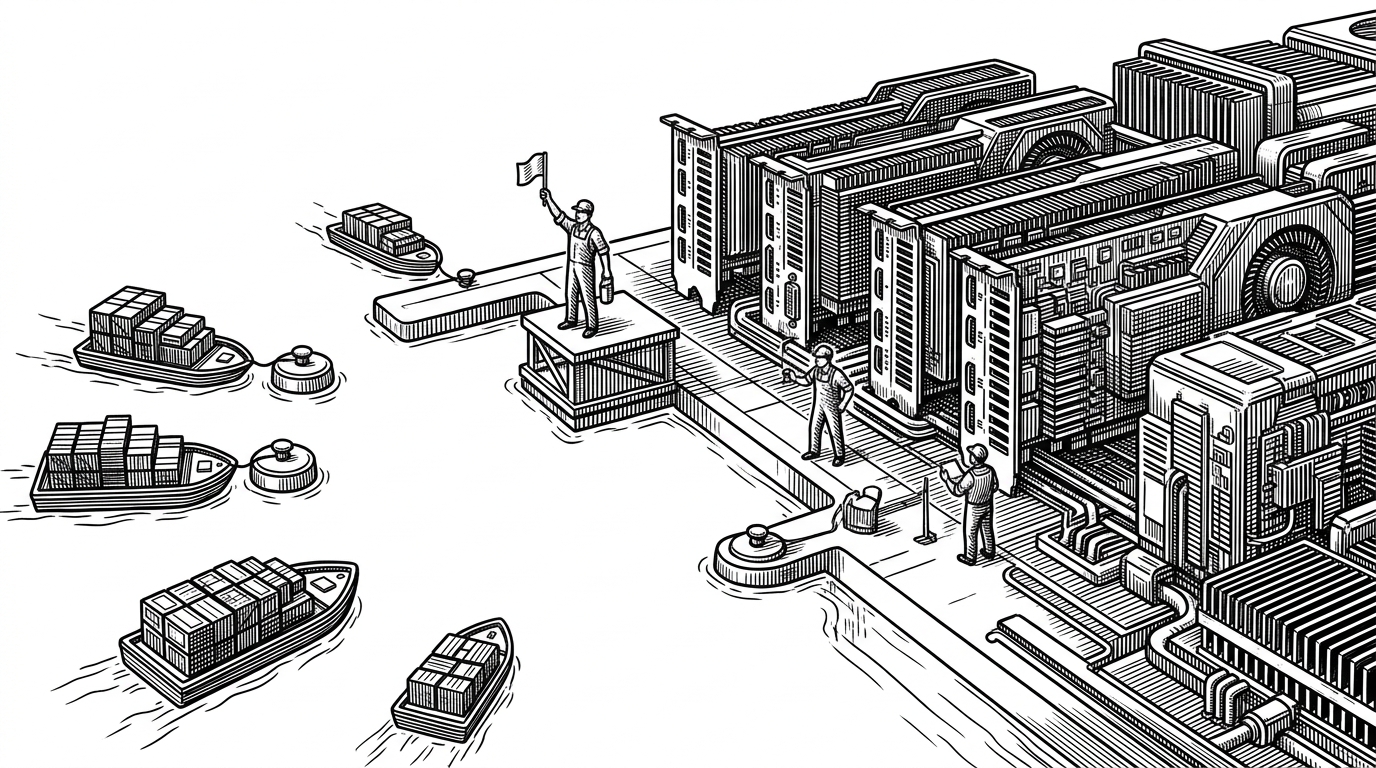
- NVIDIA Cloud Functions is less a function runtime than a GPU control-plane blueprint that treats readiness, warm state, and scarce memory as first-class scheduling signals.
- The repo’s most revealing choice is a pull-based work model over NATS, which avoids flooding GPU workers before they are ready to execute.
- Its public repository is a coordination surface, not the whole product, and that makes the README, issue templates, and linked components part of the architecture.
- NVCF occupies a narrow but important niche between generic serverless, Kubernetes inference stacks, and closed model APIs: managed GPU serverless for enterprise AI workloads.
The serverless trick is that workers pull
Most serverless systems assume the hard part is dispatch. For GPUs, the hard part is readiness. A model may need to load huge weights, reserve memory, and stabilize before it can handle real traffic without falling over.
That is why NVCF’s pull-based model matters. Instead of blasting work at every available node, the system lets workers ask for jobs when they are actually ready. That is a quiet design choice with loud consequences for cold starts, queue pressure, and GPU contention.
The architectural instinct here is different from ordinary cloud functions. It does not try to pretend a 40 GB model behaves like a stateless HTTP handler. It treats GPU capacity as something you negotiate with, not something you can spam.
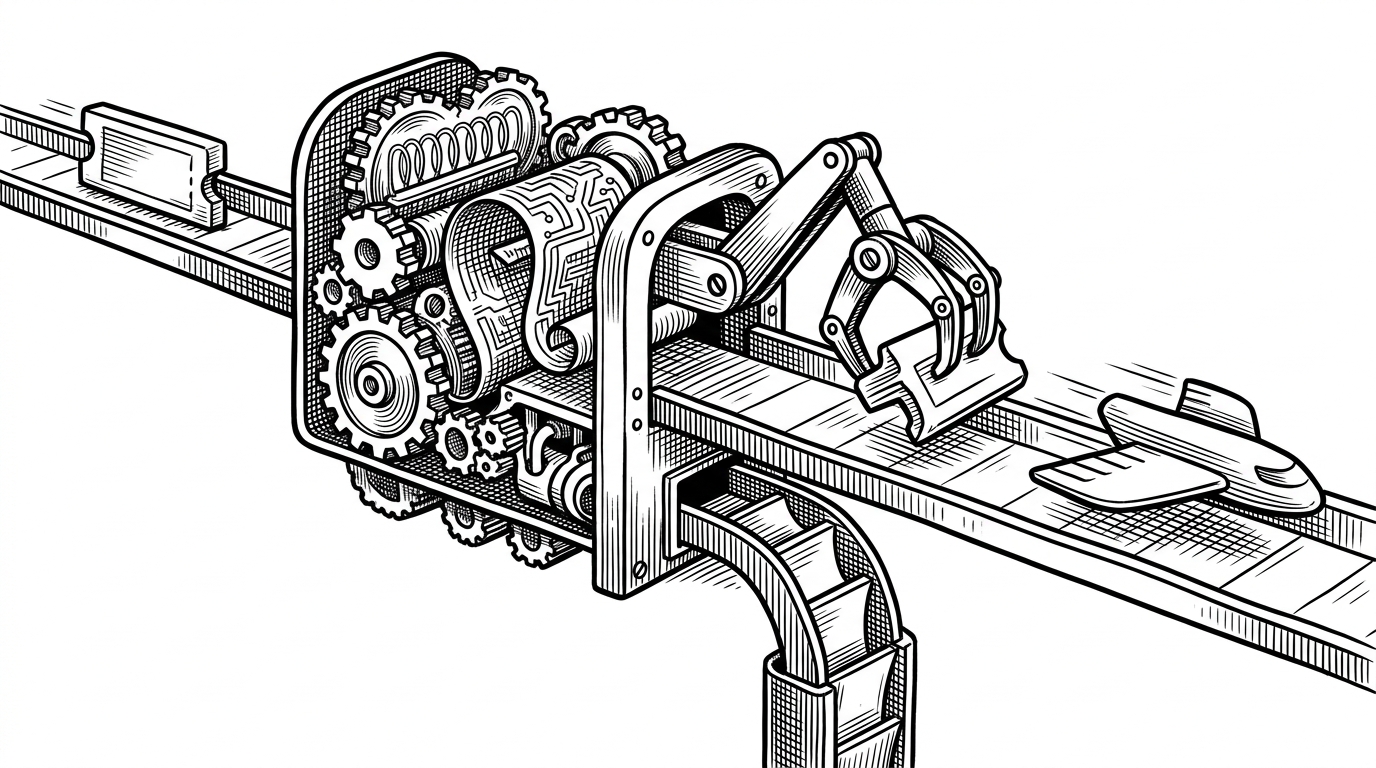
NVCF is not just a repo. It is a control-plane map
The GitHub repository is a public map of a system, not the system itself. That matters because the repo is organized around the boundaries of a platform: issue templates, architecture docs, a service registry, and links into other component repos.
The README is the most revealing artifact. It does not read like a product brochure. It reads like a control-plane index, with each named service responsible for a specific slice of the GPU serverless stack.
NVIDIA Cloud Functions (NVCF) is a platform for deploying, managing, and invoking GPU-accelerated functions at scale.
That single sentence is broad, but the surrounding files narrow it down. The repo’s job is to show how NVIDIA wants the platform understood: as a distributed system with a managed surface, not as a monolithic service.
What each service is doing
The service registry in the README makes the platform legible. Each component points to a distinct operational layer, and together they describe a managed GPU runtime with a surprisingly clean division of labor.
| Service | Role | Why it matters |
|---|---|---|
| nvcf-nvca | Cluster agent | Owns GPU resource lifecycle on the ground. |
| nvcf-invocation-service | Invocation front door | Routes requests into a pull-based work model over NATS. |
| nvcf-nvct-service | Task service | Separates quick functions from long-running jobs. |
| nvcf-go | Shared Go client and tooling | Signals a performance-oriented implementation base. |
| nvcf-self-hosted-charts | Helm deployment layer | Makes the platform portable outside a single hosted setup. |
| byoo-otel-collector | Bring-your-own telemetry | Lets customers keep observability under their own control. |
| nvcf-otelconfig | Telemetry configuration | Standardizes tracing and metrics across services. |
The pattern is layered, not sprawling. Agent, invocation, task handling, observability, and deployment each get their own place. That is a strong signal that NVIDIA is designing for operational separation, not just code ownership.
Why NVIDIA chose this shape
GPU functions are expensive in ways ordinary serverless functions are not. They are sensitive to model size, startup latency, memory pressure, and contention across tenants or workloads. The platform shape has to reflect those constraints.
That is why NVCF looks like a control plane for AI infrastructure rather than a classic FaaS framework. It is built for NIMs, inference jobs, and longer tasks like engine builds or fine-tuning, where scale-to-zero is useful but not sufficient on its own.
The self-hosted charts and Bring Your Own Observability pieces are especially telling. They suggest NVIDIA wants portability without giving up platform control. That is a very enterprise answer to a very expensive problem.
NVCF vs the rest of the stack
NVCF sits in a narrow niche. It is not trying to replace general-purpose serverless, Kubernetes inference frameworks, or closed model APIs. It is aiming at the overlap of managed experience, GPU awareness, and enterprise control.
| Platform model | Workload type | GPU awareness | Scale-to-zero behavior | Model ownership | Cluster burden | Best fit |
|---|---|---|---|---|---|---|
| AWS Lambda, Cloud Functions, Azure Functions | General-purpose functions | Limited or indirect | Strong for CPU-style workloads | Customer code, not model hosting | Low | Event-driven app logic |
| KServe, BentoML, Seldon | Model serving on Kubernetes | Variable and operator-dependent | Possible, but cluster-managed | Customer-owned models | Medium to high | Teams that want Kubernetes control |
| OpenAI, Anthropic, Gemini APIs | Managed model endpoints | Invisible to the user | Abstracted by provider | Provider-owned models | None | Fast access to frontier models |
| NVCF | GPU-native inference and tasks | Core design point | Built for GPU readiness, not just idle shutdown | Customer and NVIDIA model workflows | Lower than self-managed Kubernetes | Enterprise AI workloads on NVIDIA hardware |
The comparison makes the niche clear. NVCF is not the broadest platform, but it is one of the most opinionated. It assumes that GPU capacity, model warmup, and managed deployment belong in the same conversation.
What the repo signals about NVIDIA’s platform strategy
The governance details matter here. Apache-2.0, DCO sign-off, issue templates with component-specific routing, and a consistent telemetry story all point to a product that is open enough to invite adoption but controlled enough to stay enterprise-friendly.
That is also what makes the repo strategically interesting. It is not a loose community experiment. It looks like the public face of a carefully staged platform rollout, with the control plane exposed first and the deeper machinery revealed through linked services.
In plain terms, NVIDIA seems to be doing two things at once: opening the architecture and keeping the operating model intact. That is a hard balance to pull off, and the repo makes the effort visible.
The practical takeaway
If you are building AI infrastructure, the lesson is not to copy NVCF line for line. The lesson is to respect the constraints it assumes. A GPU system needs scheduling logic that understands readiness, warm state, and long-lived jobs.
That means your architecture should not treat every request as equal. Some work belongs in a short-lived function path. Some work belongs in a task lane. Some work should only be handed out when the worker can actually absorb it.
NVCF is a case study in making that distinction explicit. It is not just serverless for GPUs. It is an attempt to redesign serverless around the physics of AI infrastructure.