Sepia: The Open-Source Skill That Repairs AI Writing at the Structural Level
Instead of swapping words, Sepia rewrites narrative flow, paragraph logic, and stylistic over-completeness to make machine-generated prose feel less machine-shaped.

De-AI writing at the layer that actually gives AI away. Fiction gets its narrative architecture repaired before anyone touches word choice; professional documents (release notes, PR replies, postmortems, tickets, technical articles) each get rules matched to their venue.
- Sepia argues that AI writing is usually broken at the level of structure, not vocabulary.
- Its three-pass workflow repairs narrative shape, paragraph-level question flow, and surface style in that order.
- The project is opinionated about calibration, which means aiming for human irregularity instead of anti-AI caricature.
- The wrapper pattern matters because one canonical skill file keeps the same logic portable across agent platforms.
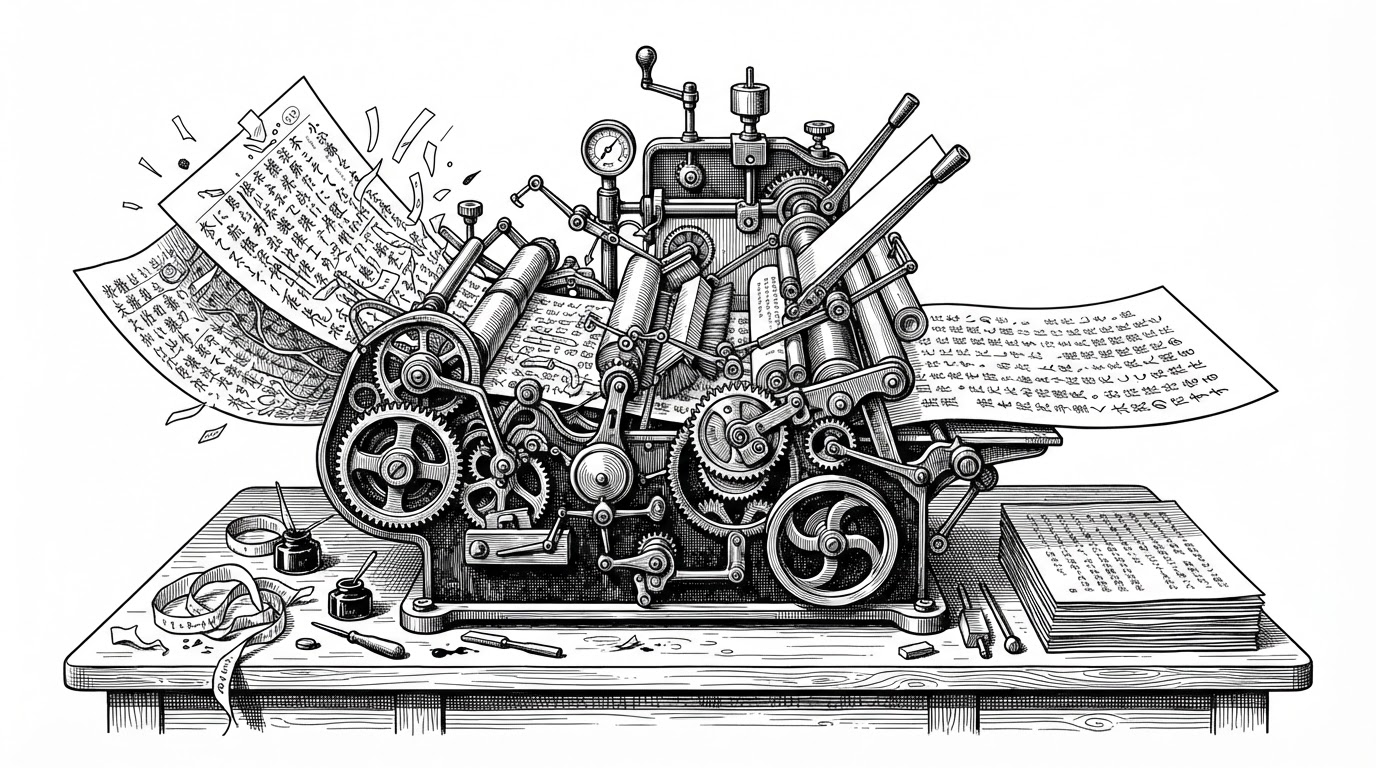
Most “humanizer” tools start at the wrong layer. They hunt for giveaway words, obvious hedges, and the occasional em dash, then declare victory when the prose looks less synthetic on the surface. Sepia takes a harder position: the real fingerprint is usually structural, not lexical.
That difference changes everything. If AI prose feels uncanny, it is often because the whole piece is too tidy, too linear, and too exhaustively resolved. Sepia treats that as a repair problem, not a vocabulary problem.
The Real Problem Is Not Vocabulary
That README line is the project’s thesis in plain language. Sepia does not ask, “How do we make this sound less AI?” It asks, “Which layer of the draft is actually failing?”
The answer, in Sepia’s model, depends on the genre. Fiction gets narrative repair. Professional prose gets venue-specific rules. The common thread is that prose is calibrated to context, not flattened into a generic anti-slop style.
Sepia’s Core Idea: Calibrate, Don’t Invert
The strongest idea in the repo is also the simplest: do not invert AI into a cartoon of human writing. Calibrate prose toward the human distribution. That means accepting slack, asymmetry, and the occasional rough edge instead of sanding everything into a uniformly polished blur.
Narrative features alone achieve 93.2% macro-F1 for human vs. AI detection... AI stories over-explain themes and favor tidy, single-track plots while human stories frame protagonist' choices as more morally ambiguous and have increased temporal complexity.
That research premise matters because it shifts the target. If AI prose is detected by structural regularities, then a successful repair tool has to intervene where those regularities live: the arc of the piece, the rhythm of paragraphs, and the order in which ideas are allowed to appear.
How the Three-Pass Repair Loop Works
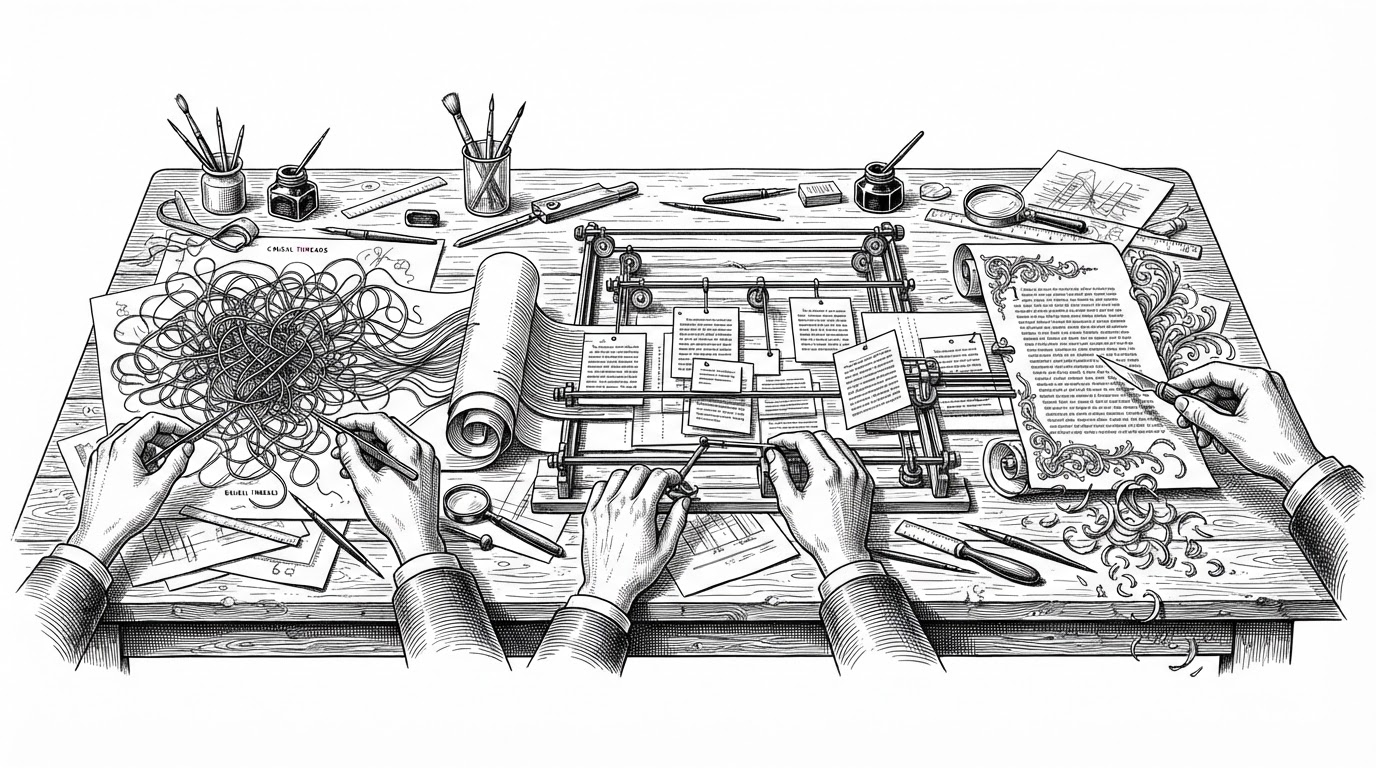
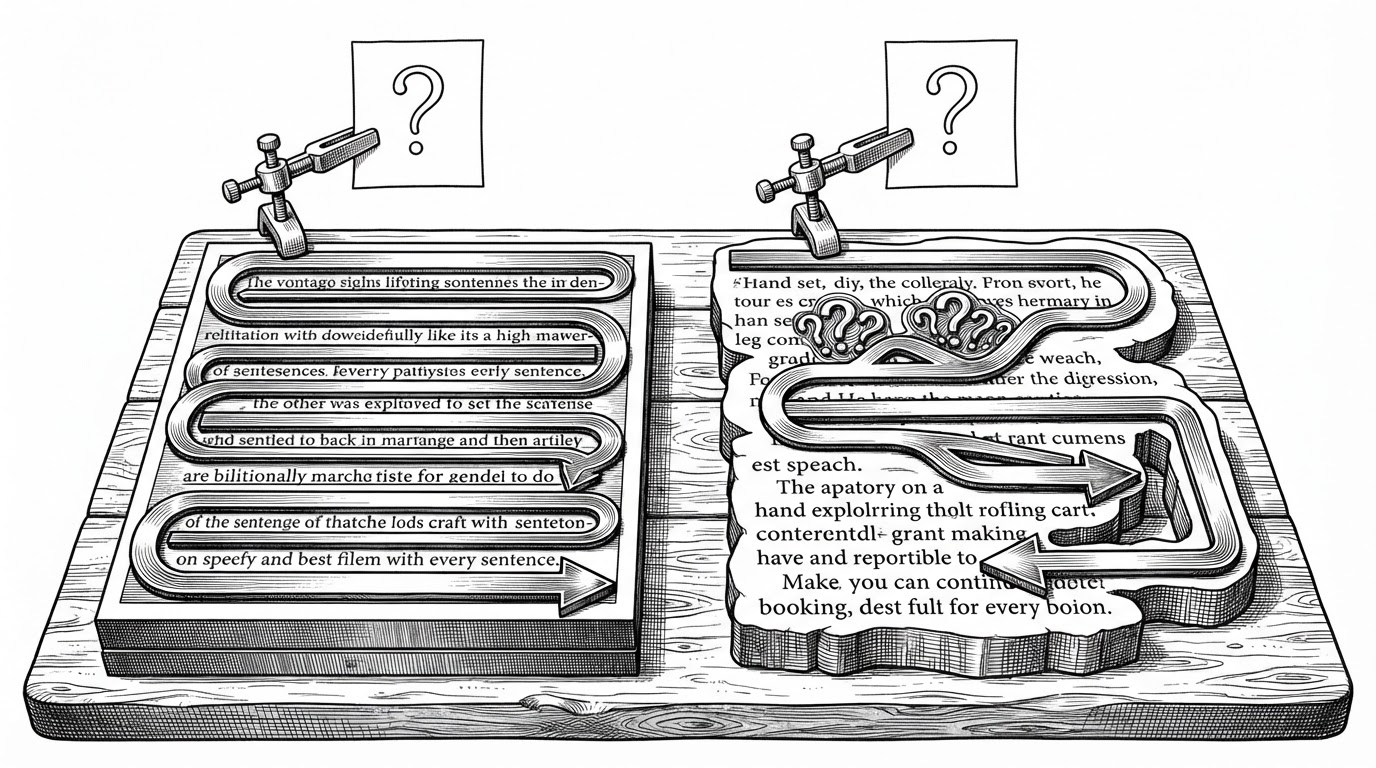
Sepia’s central mechanism is a three-pass protocol. The narrative pass looks for the big shape of the piece. The discourse pass checks whether each paragraph is answering a real question. The style pass cleans up what remains after the deeper repairs are done.
| Pass | Primary target | What it changes | What it tries to avoid |
|---|---|---|---|
| Narrative pass | Story shape | Causal tidiness, single-track plots, over-closed arcs | A story that reads too inevitable |
| Discourse pass | Paragraph logic | Question flow, transitions, paragraph rhythm | Smooth but template-like sequencing |
| Style pass | Surface residue | Word choice, repetition, leftover over-explanation | A fake “humanizer” finish |
The order is the point. If you polish style too early, you can hide the fact that the piece is still structurally robotic. Sepia repairs from the inside out, so surface cleanup becomes the last mile, not the whole journey.
The QUD Check Is the Hidden Trick
The hidden move is the Question Under Discussion check. Sepia asks, paragraph by paragraph, what question the text is actually answering. That matters because machine-written prose can sound coherent while still moving in a flat, predetermined sequence.
That observation is accurate because Sepia is not using the same repair logic for every kind of writing. It separates text by venue and intent. A paragraph in a postmortem should not be shaped like a paragraph in a story, and Sepia acts like it knows that.
This is also why the repo feels more like an editorial system than a prompt pack. QUD is a test for discourse quality, but it is also a way to disrupt the overly smooth cadence that many LLM drafts default to.
Why the Wrapper Pattern Matters
Sepia is packaged as a canonical `SKILL.md` with thin wrappers around it. The `sepia-write`, `sepia-review`, `sepia-refactor`, and `sepia-recreate` folders do not reinvent the logic. They point back to the same source of truth.
skills/
  sepia/
    SKILL.md
    references/
      narrative-pass.md
      discourse-pass.md
      style-pass.md
  sepia-write/
    SKILL.md -> ../sepia/SKILL.md
  sepia-review/
    SKILL.md -> ../sepia/SKILL.md
  sepia-refactor/
    SKILL.md -> ../sepia/SKILL.md
  sepia-recreate/
    SKILL.md -> ../sepia/SKILL.md
That design is more than neat packaging. It prevents platform drift. If the same logic is meant to run inside Claude Code, Codex, Grok Build, and other agent environments, duplication would eventually bend the behavior. One canonical file keeps the repair philosophy intact.
The wrapper pattern also clarifies intent. Each operation is a mode of use, not a separate product. That makes the project portable without making it vague.
| Dimension | Surface humanizers | Sepia |
|---|---|---|
| Primary target | Words and obvious AI markers | Narrative architecture and discourse flow |
| Unit of change | Sentence-level paraphrase | Paragraph and structure-level repair |
| Failure mode | Looks rewritten but still feels machine-shaped | May leave some roughness, but the draft feels less scripted |
| Best for | Quick cleanup | Serious revision and agent-native workflows |
Research-Backed, Not Prompt-Decorated
Sepia stands out because it tries to operationalize research, not merely cite it. StoryScope is not decorative background reading here. It supplies the structural logic behind the repair passes, especially the focus on tidiness, temporal shape, and over-explained causality.
The highlight of the sepia skill is that it's based on research (StoryScope, arXiv:2604.03136) and adjusts the narrative structure, fluency, and sentence style. You can compare and see which model performs best, especially for Chinese. I suspect it will be Gemini, plus the Chinese open-source models.
The practical effect is a tool that behaves like an editorial workflow with a research citation stack behind it. The project is not saying every sentence must be made weird or ragged. It is saying that prose quality can be diagnosed by looking at deeper narrative regularities first.
That is a sharper claim than most anti-slop tools make. It is also more useful. If the bug is structural, then the fix should be structural too.
Where Sepia Fits in the Anti-Slop Landscape
Compared with vocabulary filters and tone rewriters, Sepia belongs in a different category. It is closer to an architectural editor than a paraphraser. That is why it matters to developers and writers who care about the shape of the output, not just the surface polish.
| Tool type | What it fixes | What it misses |
|---|---|---|
| Surface humanizer | Vocabulary giveaways and repetitive phrasing | The underlying narrative and discourse pattern |
| Prose cleaner | Hedges, filler, em dashes, obvious AIisms | Over-closed arcs and template-like paragraph flow |
| Sepia | Structure, question flow, and final style | It may be less instantly flashy than simple rewrite tools, by design |
The broader implication is simple. If AI writing keeps improving at the sentence level, the next frontier is not better synonyms. It is better control over how ideas unfold across a piece.