yomiyasu: The Linter That Treats AI Japanese Like Code
A deep look at a zero-dependency Agent Skill that catches AI slop, restores missing subjects, and rewrites Japanese without losing intent.
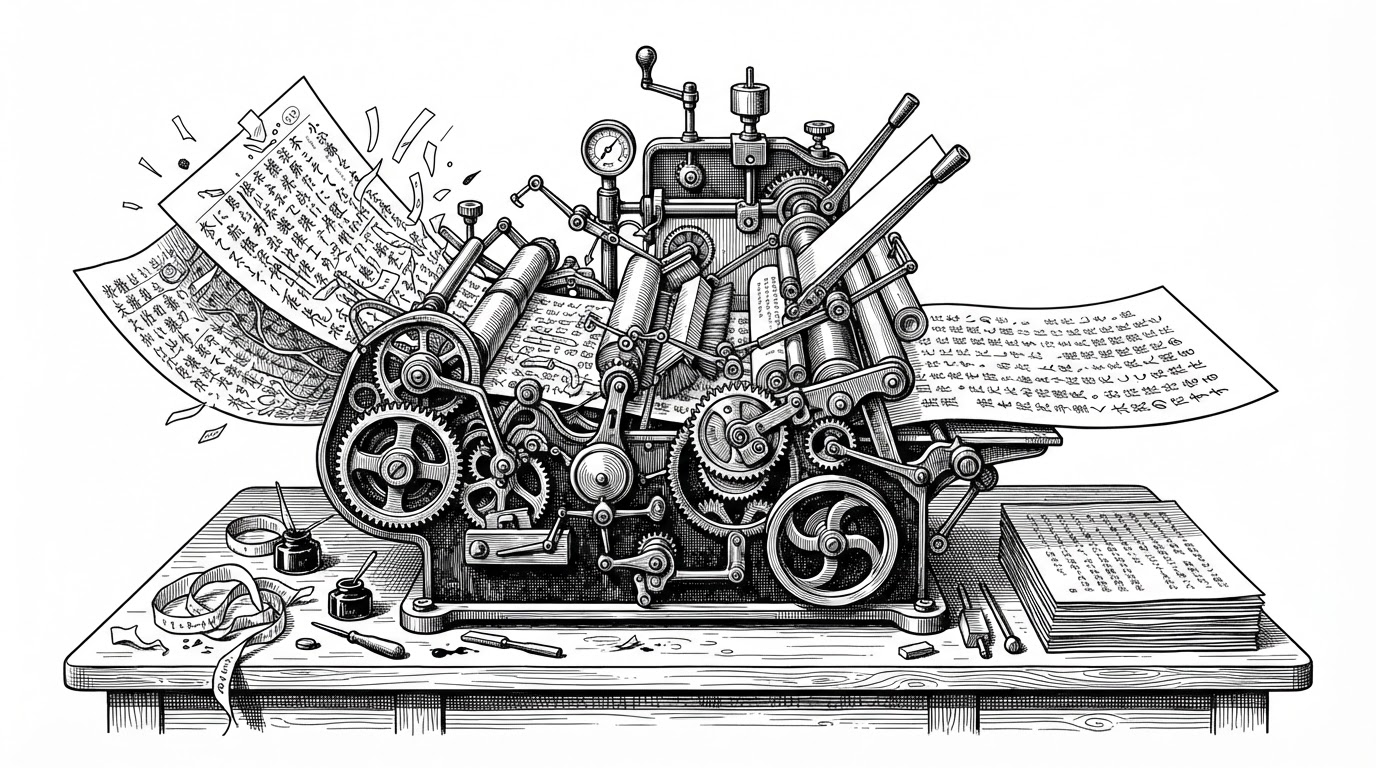
- yomiyasu treats AI Japanese as a semantic maintenance problem, not a taste contest.
- Its core promise is meaning preservation, with stance and certainty checked before style changes land.
- The tool is narrow by design, using deterministic linting and diff checks instead of another opaque judge model.
- That makes it useful where ordinary humanizers are risky: technical docs, specs, PRs, and reports.
Japanese AI text can fail in ways that feel obvious and hard to name at the same time. It gets abstract, decorates itself with tired metaphors, drops the actor from the sentence, and leaves behind a stiffness that reads like nobody actually meant what was written.
yomiyasu starts from a sharper premise: if the failure modes are predictable, the fix can be too. The repo turns prose cleanup into a deterministic workflow, with rules for stance, meaning preservation, slop detection, and semantic diffing.
Why Japanese AI text sounds wrong
The project is aimed at a very specific kind of bad output. Not grammar errors in the usual sense, but the uncanny prose that comes from large models trying too hard to sound polished while saying very little.
That matters more in Japanese than it does in many other languages. Subjects are often omitted, role relationships are implied, and a bad rewrite can quietly change who did what to whom. The result is text that looks smooth but loses its spine.
従来の「単語を禁止する手法」から改善し、統語構造(誰が何をどうした)の復元と、比喩動詞の具体化に特化しています。
What yomiyasu actually does
The repo is not a generic grammar checker and not a full creative rewrite engine. It is a skill for refining AI-generated Japanese into prose that reads naturally in technical docs, design specs, PRs, and reports.
Its structure makes that scope visible. The repository centers on a skill definition in SKILL.md, supported by Python scripts for linting and diff checks, plus a corpus of test texts and domain-specific references.
skills/yomiyasu/
  SKILL.md
scripts/
  yomiyasu_lint.py
  yomiyasu_diff.py
tests/corpus/
references/
The zero-dependency choice matters. The scripts stick to the Python standard library, which makes the project portable enough to slot into CI, editor workflows, or agent environments without pulling in a larger stack.
Meaning preservation is the real feature
The most important idea in the repo is not surface cleanup. It is the contract that the rewrite must preserve four things: assertion, weight, certainty, and function.
That turns editing into a checkable semantic task. A sentence can become shorter, clearer, or less awkward, but it should not silently change from a recommendation into a rule, or from a cautious explanation into a confident directive.
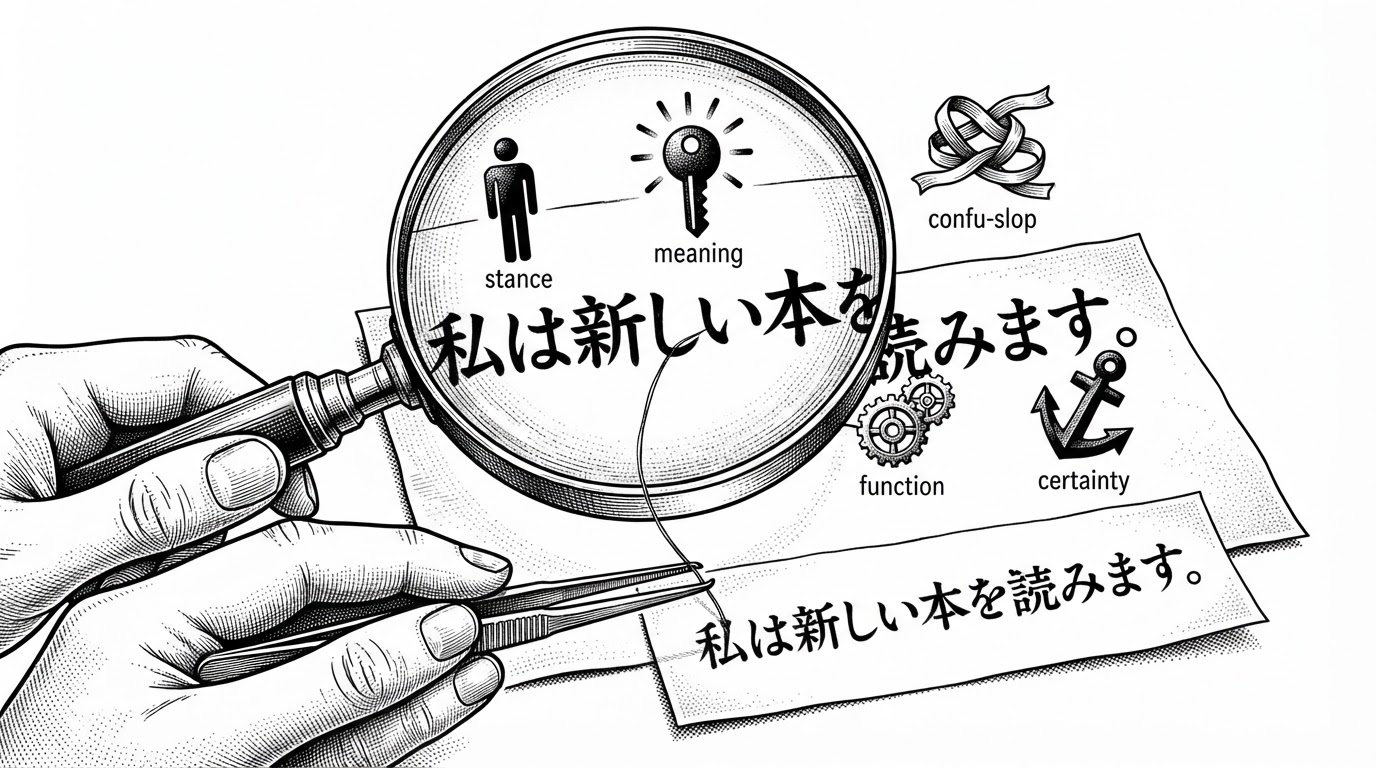
How the linter spots AI slop
yomiyasu_lint.py behaves like a static analyzer for prose. It does not pretend to understand everything. It watches for patterns that repeatedly show up in AI writing and flags them with deterministic heuristics.
The signals are specific. Slop words get caught. Over-decoration gets measured. Negative parallelism, front-loaded fillers, and repetitive sentence endings are treated as smells, not as absolute errors.
| Pattern | Why it flags | What it means |
|---|---|---|
| Slop words | They often pad weak statements with fake concreteness | The sentence may sound vivid without adding information |
| Over-decoration | Too much bolding or list structure can mirror AI summary habits | The prose may be performing clarity instead of achieving it |
| Negative parallelism | Forms like "AではなくB" can become a repetitive crutch | The sentence may be leaning on contrast instead of direct explanation |
| Front-loaded fillers | Openers like "結論から言うと" can announce certainty before substance | The sentence may be rehearsed rather than earned |
| Monotonous endings | Repeated sentence endings flatten rhythm | The prose starts to sound machine-made |
That makes the linter feel less like a style coach and more like a customs officer. It inspects the surface for telltale baggage, then leaves the bigger semantic call to the rewrite and diff steps.
AI生成の日本語を自然な日本語へ推敲するAgent Skill / Agent Skill for Refining AI-Generated Japanese into Natural Japanese
Why the diff step matters
The second guardrail is yomiyasu_diff.py. If the linter is the scanner, the diff step is the safety review that asks whether the rewrite changed the job the sentence was doing.
It tracks markers and logic transitions so the tool can notice when a rewrite has quietly lost obligation, softened certainty, or invented a transition that was never there. That is the part many humanizers miss.
This is where the project feels genuinely engineering-led. It assumes that prose cleanup can introduce bugs, and it treats those bugs like bugs.
Why this beats generic humanizers
The comparison is not really about features. It is about editorial intent.
| Tool | Primary goal | What it catches | What it misses | Why it matters |
|---|---|---|---|---|
| textlint | Rule-based Japanese cleanup | Surface issues and configurable style violations | Semantic drift and stance errors | Useful, but mostly textual rather than intent-aware |
| Generic humanizer | Make text read more naturally | Fluency problems and awkward phrasing | Whether the rewrite still means the same thing | Can improve polish while blurring meaning |
| yomiyasu | Refine AI Japanese without losing intent | AI slop, missing subjects, stance shifts, semantic drift | Open-ended creative rewriting | Targets the exact failure mode of machine-written Japanese |
That narrowness is the selling point. yomiyasu is not trying to become the everything tool. It is trying to be the right tool for a very specific class of Japanese prose that needs both cleanup and trust.
The project’s real bet
The larger idea is simple and strong. Some of the best AI writing tools will not look like chat interfaces at all. They will look like linters, diff viewers, and semantic guardrails.
yomiyasu makes that argument concrete in Japanese. It encodes editorial judgment as a reproducible system, which is a more durable idea than asking another model to vaguely improve another model.
That is why the project resonates. It does not promise magic. It promises a workflow that can be inspected, tuned, and trusted.