byterover-cli: The memory layer that keeps coding agents from forgetting the project
ByteRover CLI turns scattered agent sessions into a portable context tree that can survive tools, resets, and task switches.
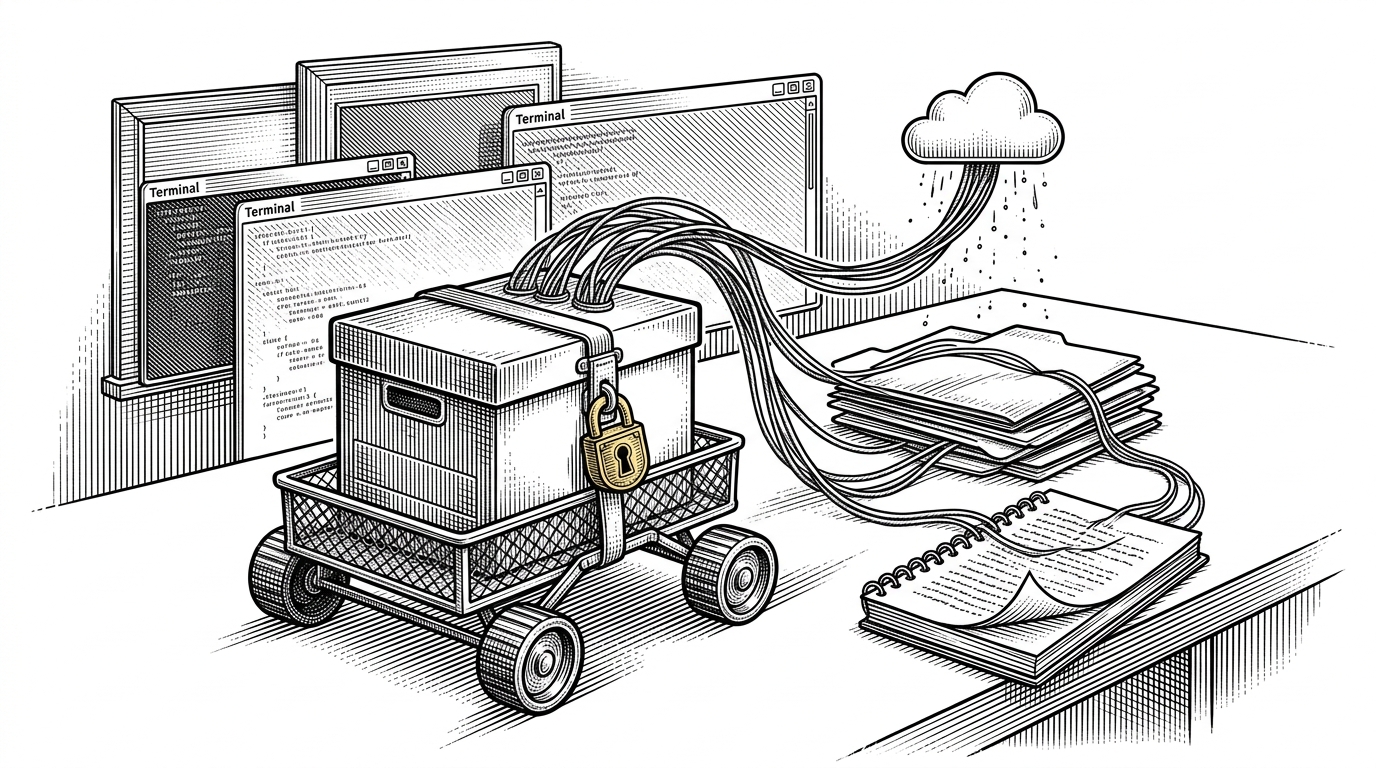
- ByteRover treats memory as a project asset, not as disposable chat history.
- Its context tree gives agents structure that simple vector search cannot express.
- The repo is built like a real platform, with clean service boundaries, a TUI, and integration layers that can swap underneath the core.
- Its most interesting frontier is feedback, where retrieval can improve based on how tasks actually perform.
Coding agents are fast at producing answers and bad at remembering the work they already did. They can inspect a repo, propose a fix, and come back later with no durable sense of what the team decided, what broke, or which shortcut was rejected for a reason. ByteRover CLI, published as brv, is built to make that amnesia less expensive.
The project is not trying to be another chat wrapper. It tries to sit between the codebase and the agent, then preserve the useful parts of a session as structured memory that can be reused by a different tool, a different model, or a different day.
ByteRover CLI (`brv`) gives AI coding agents persistent, structured memory. It lets developers curate project knowledge into a context tree, sync it to the cloud, and share it across tools and teammates.
Why the memory problem matters
The pain point is not token limits alone. It is continuity. When an assistant forgets the shape of a codebase, the user becomes the memory layer, re-explaining naming, architecture, and constraints every time the session resets.
ByteRover's answer is a context tree. Instead of reducing everything to a pile of semantically similar chunks, it encourages project knowledge to be curated into an explicit structure. That matters when the relationship between ideas is the real information, not just the text inside them.

What makes ByteRover different
The repository reads like a platform, not a one-off utility. The code is split into a strict TypeScript domain layer and an infrastructure layer, with the CLI built on @oclif/core, the terminal UI built on ink and react, and integrations flowing through provider SDKs, MCP, and socket-based coordination.
That separation is not cosmetic. BaseAgent validates configuration before services start, CipherAgent orchestrates sessions through tool, prompt, and session managers, and the service initializer acts as the composition root that wires memory, filesystem, and tool providers together.
The terminal experience also matters. The interactive loop is event-driven rather than purely linear, which lets the UI keep a clear boundary between thinking, tool use, and response rendering. That choice turns the CLI into a real product surface instead of a thin command dispatcher.
The HyperAgents paper showed persistent memory + performance tracking are the two most valuable capabilities for self-improving agents. Connecting them closes the feedback loop: entries correlated with better task outcomes rank higher, and synthesis reflects on what's working vs. not.
ByteRover vs. the usual memory stack
The easiest way to understand ByteRover is to compare it with the two memory patterns most teams already know: chat history and vector search. Both help, but both leave a gap when the work spans sessions and tools.
| Memory model | What it stores | Trade-off | Best fit |
|---|---|---|---|
| Chat log | Full conversation transcript | No structure or reuse | One-off sessions |
| Vector search | Embedded snippets | Fast recall, weak relationships | Loose knowledge bases |
| ByteRover context tree | Curated project knowledge and relationships | Requires an explicit curation workflow | Long-lived coding agents |
ByteRover's value is not that it stores more text. It is that it preserves the shape of the project. A routing decision, a naming convention, and a failed attempt at a refactor are more useful when they remain linked to the files and sessions that produced them.
The interesting part is the feedback loop
The current direction of the repo points beyond storage. The upcoming work around human-in-the-loop review, performance-weighted retrieval, and curated memory suggests a system that does not just remember more, but remembers better.
That is where ByteRover becomes more than a helper for vibe coding. If the agent can learn which memories actually improve outcomes, then memory stops being a passive archive and starts becoming part of the control system.