The Visual IDE for the Apple Intelligence Era: Inside Signals
How a pure Swift architecture turns local LLMs into a drag-and-drop playground for agent orchestration.

- Signals bypasses cloud APIs entirely by orchestrating Apple Foundation Models locally via Swift 6 concurrency.
- The visual node-based editor uses a directed graph and topological sorting to make execution states and token costs tangible.
- A from-scratch Retrieval-Augmented Generation engine teaches semantic search math using native TF-IDF instead of external vector databases.
The AI agent industry defaults to Python, cloud APIs, and massive vector databases. Frameworks like LangChain and CrewAI dominate the conversation, abstracting away the underlying mechanics into dense codebases. Signals takes a radically different approach. It is a visual, drag-and-drop IDE for agentic workflows that runs entirely locally on iOS, built as a pure Swift 6 playground.
The Canvas: Building Agents like Lego
The most striking thing about this project is that it makes invisible AI compute tangible on an iOS screen. Users connect Triggers, Agents, Tools, and Control blocks to form a Turing-complete visual grammar. Within Models/Block.swift, branching logic is handled by enums that allow for functional routing. This turns a simple linear pipeline into a complex logic flow.
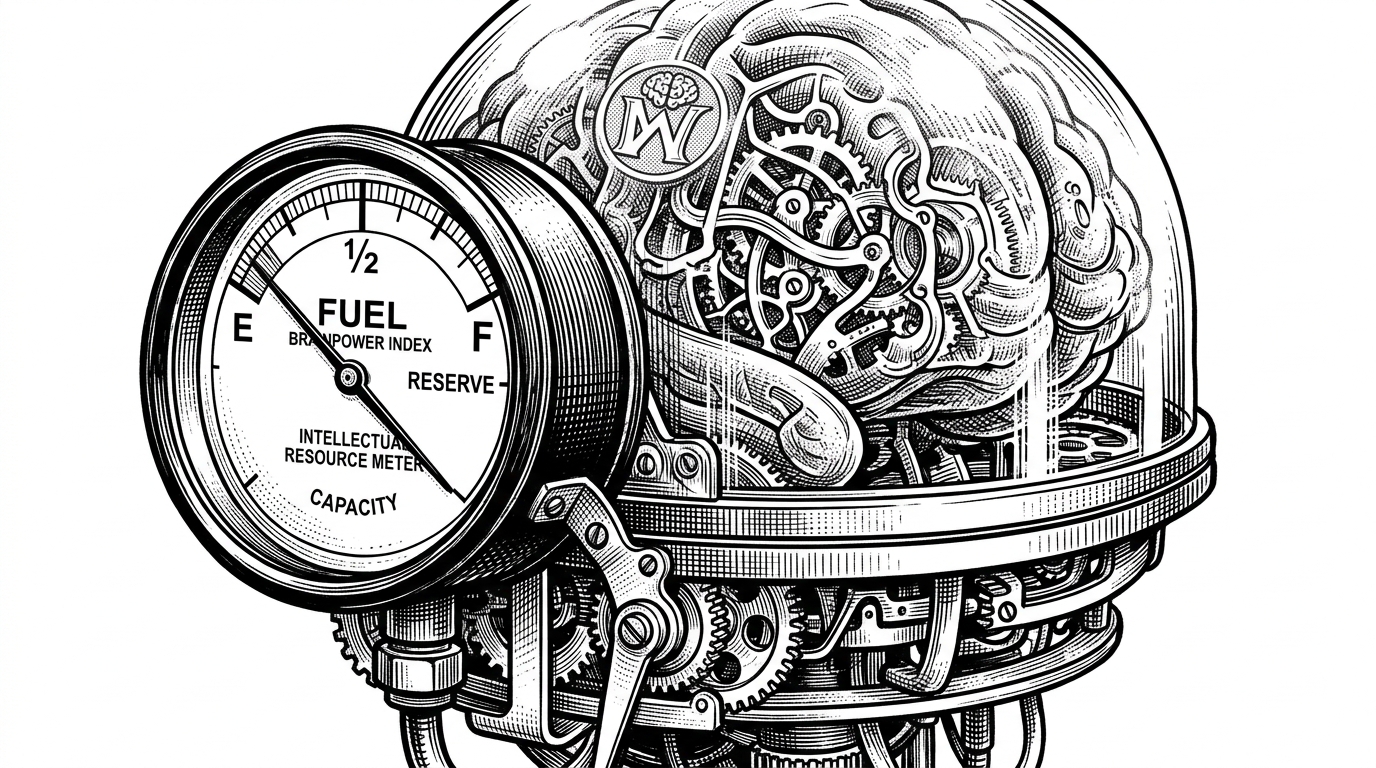
To ground the abstract concept of compute resources, Signals introduces the concept of Fuel. The execution engine tracks token usage and represents it visually as a depleting resource, making the cost of LLM reasoning immediately obvious to the user.
Orchestrating Apple Silicon
The central orchestrator lives in Engine/ExecutionEngine.swift. It treats the user's canvas as a directed graph. By implementing a Topological Sort, the engine determines the exact execution sequence of the visual blocks. Data flows through an execution context map, where the output of one block becomes the input for the next.
Exposing the ReAct Loop
The project handles both deterministic logic and probabilistic logic within the same graph. The ReActPersonalAgentEngine.swift implementation uses the LanguageModelSession from Apple's Foundation Models. It defines a system prompt that forces the model to use specific tools to persist user data, managing a multi-turn conversation where the agent autonomously decides when the interview is complete.
| Feature | Standard Python Frameworks | Signals IDE |
|---|---|---|
| Execution Environment | Cloud / Server | Local (iOS 18+) |
| Orchestration Interface | Code-based (Python) | Visual Node Graph |
| RAG Backend | External Vector DB (Pinecone) | Native Swift TF-IDF Math |
| AI Integration | API Wrappers (OpenAI) | Apple Foundation Models |
Math Over Middleware: A Zero-Dependency RAG
Perhaps the most audacious architectural choice is found in Engine/RAGEngine.swift. Instead of relying on a heavy vector database like Pinecone, Signals implements a from-scratch Retrieval-Augmented Generation system. It uses Term Frequency-Inverse Document Frequency (TF-IDF) and Cosine Similarity to rank knowledge cards against a user query.
By implementing this natively in Swift, the app demystifies how semantic search works at a mathematical level. It proves that for personal AI and educational tools, you do not always need a massive cloud infrastructure.