KVTC: The Open-Source KV Cache Codec That Treats LLM Memory Like Media
A RoPE-aware compression pipeline uses PCA, adaptive bit allocation, and entropy coding to shrink transformer memory without treating every token like it deserves full precision.
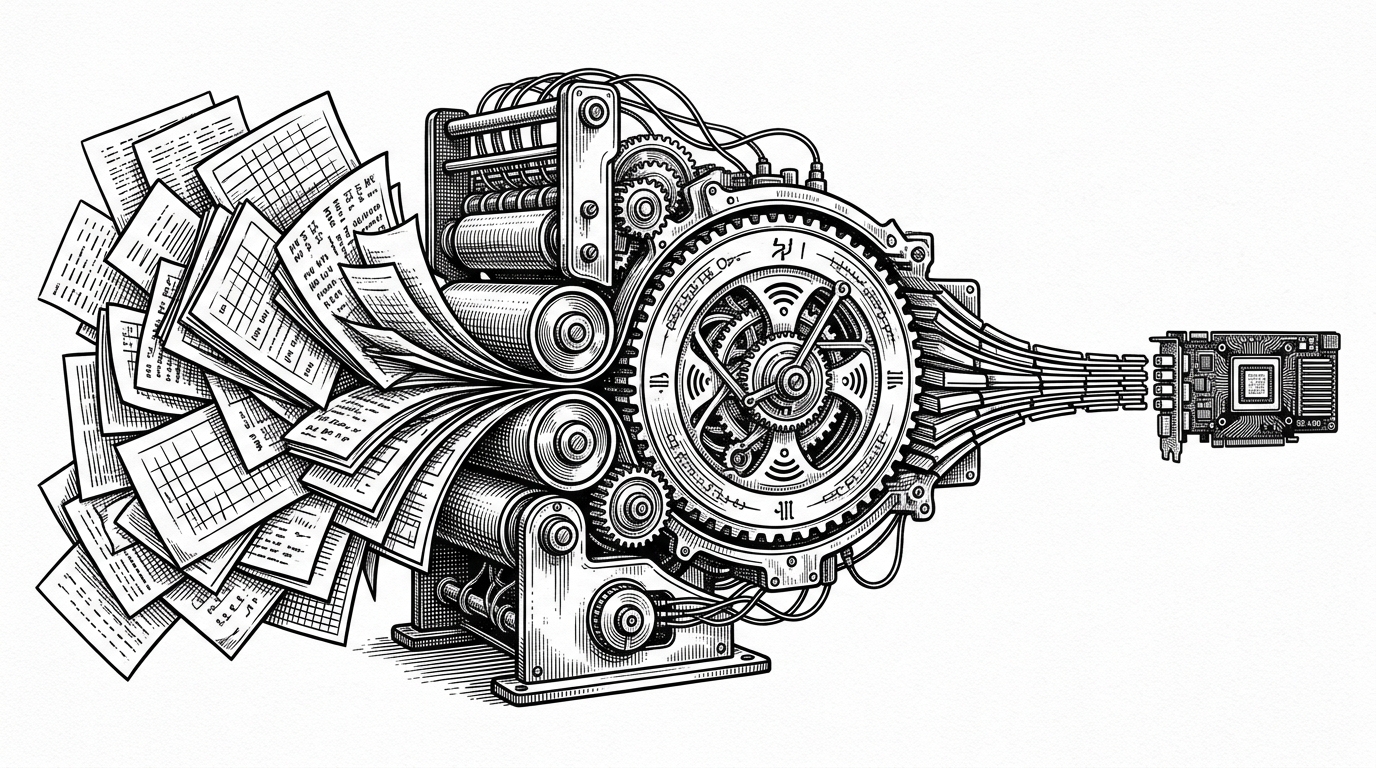
- KVTC treats KV cache as compressible signal data, which turns memory bottlenecks into a representation problem rather than a pure hardware problem.
- Its core move is RoPE-aware transform coding: undo the positional rotation, fit a PCA basis, allocate bits unevenly, then entropy-code the result.
- The project is more ambitious than uniform quantization because it compresses the structure around the values, not just the values themselves.
- That ambition comes with more complexity, but it also opens a path toward long-context inference on consumer GPUs.
The KV Cache Was the Bottleneck All Along
Long-context inference does not fail because transformers run out of cleverness. It fails because the KV cache grows linearly, and linear growth is merciless. Every extra token demands more memory, and memory is the first wall you hit on real hardware.
KVTC is interesting because it refuses to treat that wall as fixed. The repo implements the open-source version of NVIDIA’s KV Cache Transform Coding idea, which compresses the cache between inference phases so generation itself does not pay the full cost.
First open-source KVTC implementation (NVIDIA, ICLR 2026) -- 8-32x KV cache compression via PCA + adaptive quantization + entropy coding.
That matters because the hardware story is changing. The repo is built around the idea that a consumer GPU should not be excluded from long-context work just because it cannot brute-force every cache entry in full precision.
This Repo Thinks Like a Codec, Not a Quantizer
Most cache compression schemes start with a simple question: how do we store fewer bits? KVTC asks a different one: what coordinate system makes the cache easiest to compress? That shift is the whole paper cut. It is also the whole point.
The mental model is closer to JPEG than to a generic tensor shrinker. First you normalize the signal. Then you find the structure. Then you spend bits unevenly. Then you squeeze the encoded residue one more time with entropy coding.
How the Pipeline Works
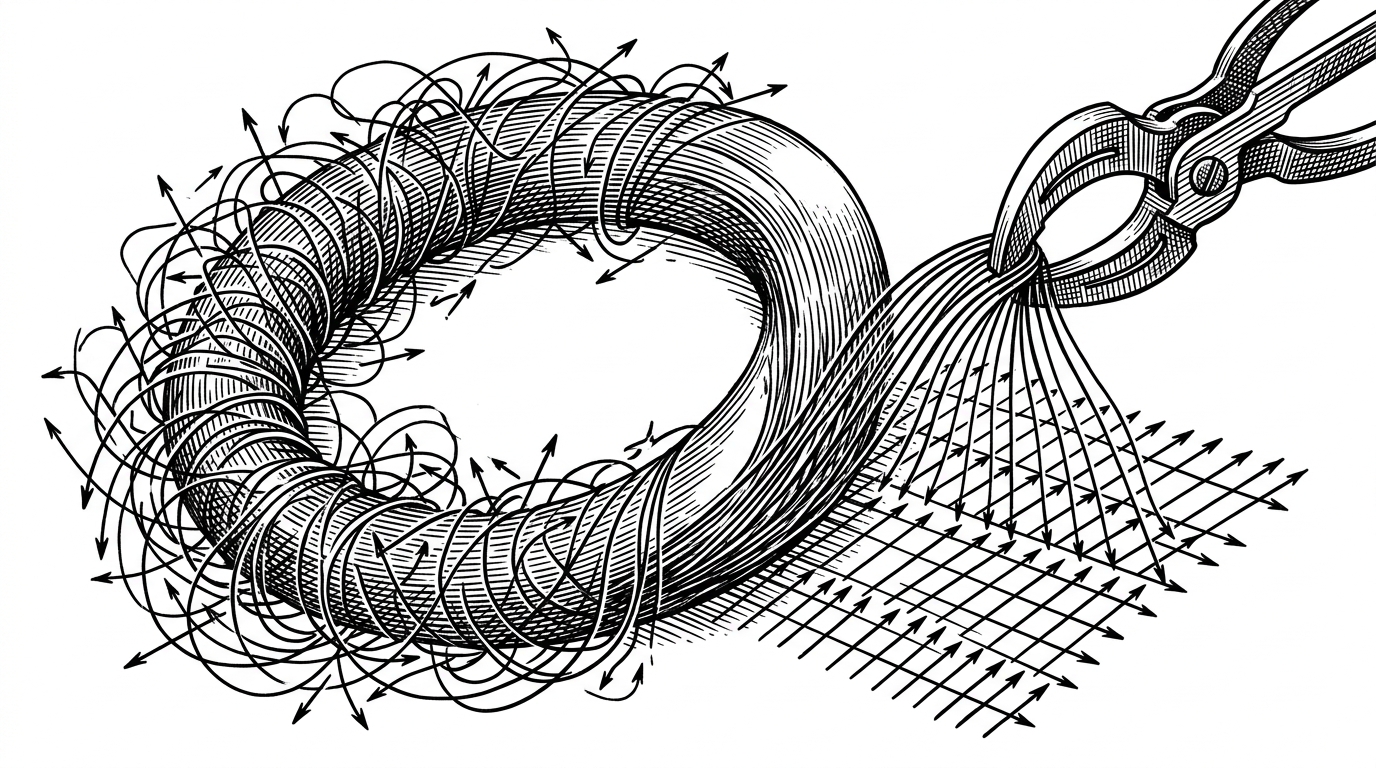
The implementation is organized like a signal-processing stack. The cache is split into three regions: sink tokens at the front, a middle section that gets compressed, and a recent window that stays in high fidelity. That keeps the hottest context intact while the bulk of the history gets transformed.
The core flow is straightforward once you see it: RoPE undo → PCA transform → bit allocation → quantization → entropy coding. The codebase wraps that logic in metadata-heavy containers like CompressedSection, because reconstruction needs scales, zero points, bit widths, and other bookkeeping to reverse the process cleanly.
@dataclass
class CompressedSection:
    data: bytes
    scales: torch.Tensor
    zero_points: torch.Tensor
    bit_widths: torch.Tensor
    metadata: CompressionMetadata

# Pipeline shape
keys = apply_rope_inverse(keys, positions)
projection = pca_transform(keys)
packed = quantize_with_budget(projection)
bitstream = rans_encode(packed)
Why RoPE Has to Be Reversed First
This is the smartest part of the design. RoPE is useful because it encodes position directly into the vectors, but that same rotation makes the cache look less stationary than it really is. PCA wants stable structure. Rotating the data first hides it.
So KVTC reverses the rotation before fitting the low-rank basis. In plain terms, it puts the signal back into a shared frame before asking where the redundancy lives. That is not a cosmetic choice. It is the difference between compressing a pattern and compressing noise.
Bit Budget Is Not Fair, and That Is the Point
Uniform bit-width is the lazy answer. It assumes every layer and every slice of the cache is equally hard to compress, which is rarely true. KVTC instead uses adaptive budgeting, including dynamic programming in the reference path and greedier variants in the faster path.
The repo’s logic is simple but sharp: some layers tolerate compression well, others do not. So the budget should move toward the hard parts and away from the easy ones. That makes the system feel less like a static format and more like an allocator.
What stands out is the philosophy split. KVTC is a transform-coding bet. It assumes the representation itself should be massaged before compression. Most alternatives are closer to direct quantization or cache management. They reduce size, but they do not try to reinterpret the memory signal as aggressively.
rANS Makes the Last Mile Smaller
Once the values are quantized, KVTC does not stop. It applies entropy coding with rANS, which is the kind of move that tells you the repo is serious about squeezing the tail end of the distribution. If some codes appear more often than others, the compressor should profit from that.
That is where the project stops looking like an isolated research trick and starts looking like a full codec stack. The output is not just smaller because it is lower precision. It is smaller because the representation, the allocation, and the encoding all cooperate.
KVTC Versus the Rest of the Field
The comparison is not only about ratios. It is about what kind of problem each project thinks it is solving. KVTC is betting that the right abstraction is transform coding. TurboQuant and the broader family of cache compressors are making different bets about simplicity, speed, and implementation burden.
That is why KVTC feels both exciting and slightly overbuilt. It is a research prototype with real ambition. It wants to compress memory like a media pipeline, not just trim it like a storage optimization.
Where KVTC Fits
If your priority is a conceptual model that could push compression harder, KVTC is the more interesting story. If your priority is a lighter implementation path, the simpler quantization approaches may still be the better engineering choice. The repo is honest about that tension, and that honesty is part of its appeal.
The Tradeoff Is Real
KVTC asks more of the system than plain quantization does. It needs calibration, extra metadata, and a stronger understanding of the model’s structure. That is the price of a bigger idea.
But the payoff is also bigger. If memory can be compressed by restoring structure before packing it, then long-context inference stops looking like a raw VRAM arms race. It starts looking like a representation problem with room for better math.