Rushi98500/full-stack-assignment: The Async Pipeline That Turns Document Processing Into a Live Story
Upload once. Then watch Celery, Redis, and SSE carry the document through staged extraction, progress updates, and human review without freezing the UI.
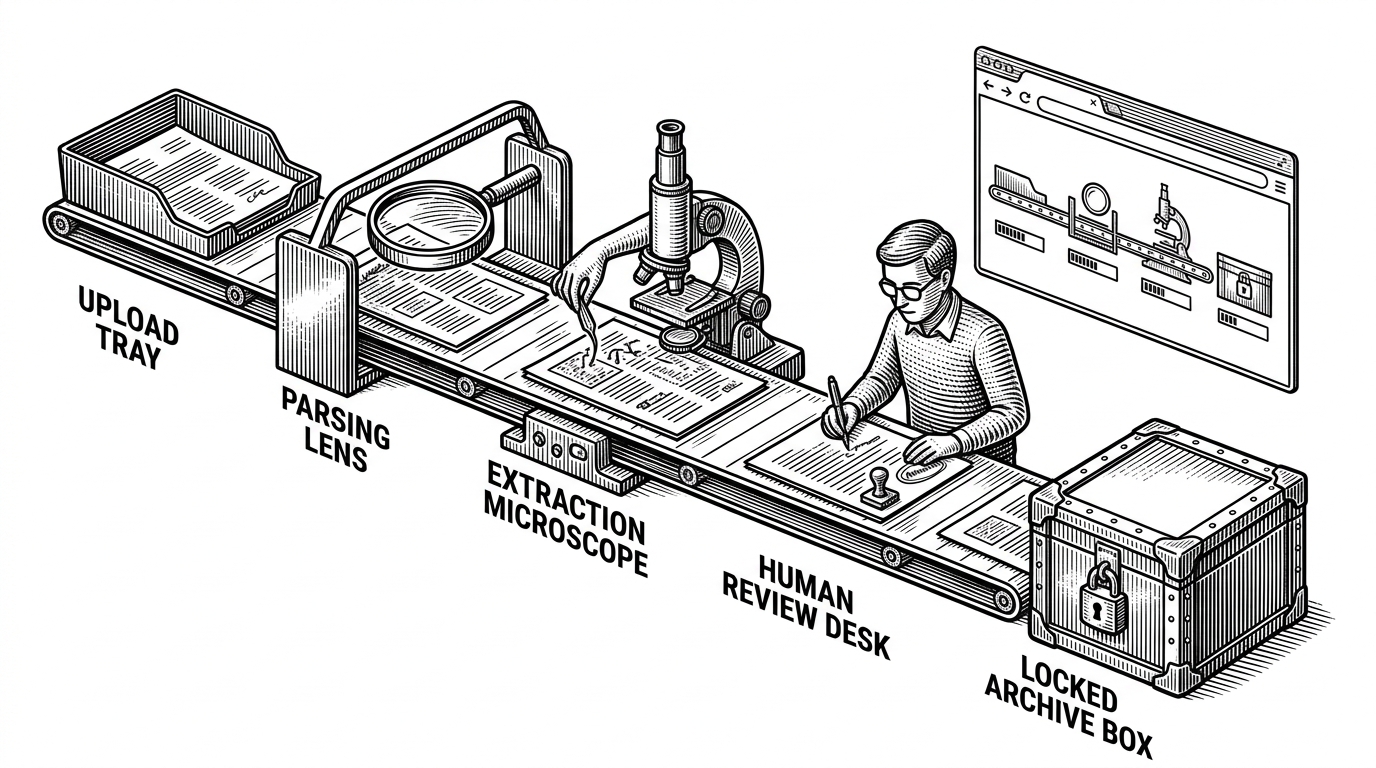
- The repo’s real value is not document extraction itself, but the way it makes a long-running job legible in the browser.
- Celery, Redis Pub/Sub, and SSE work together to turn backend state changes into a live user experience instead of a guessing game.
- The stage machine, with explicit progress markers, gives both users and developers a clearer mental model than a generic pending or success flag.
- Separating raw_result from reviewed_result bakes human review into the data model, which is the right move when automation is not the final authority.
The best feature here is not a feature in the usual sense. It is the feeling that the app is paying attention. You upload a document, and instead of vanishing into a spinner, it moves through named stages that the browser can follow.
That matters because long-running work has a trust problem. If the UI is silent, users assume something broke. If the UI narrates progress, even slowly, the system feels dependable.
A full-stack assignment project
Why async matters here
This repo is built around a simple truth: document processing takes time. Parsing, extraction, storage, and review are not the kind of work you should force through a request-response cycle.
So the architecture splits the job into two experiences. The backend does the work in stages, while the frontend receives live updates and mirrors the job state as it changes.
Inside the stage machine
At the center is a task flow that behaves like a state machine. The worker advances a document through explicit milestones, and each milestone updates both the stage name and the progress value.
# Simplified from the worker flow
stages = [
    ("document_received", 5),
    ("document_parsing_started", 15),
    ("field_extraction_completed", 80),
    ("review_ready", 95),
    ("finalized", 100),
]

for stage, progress in stages:
    document.current_stage = stage
    document.progress = progress
    db.commit()
    publish_progress_sync(document_id, {
        "stage": stage,
        "progress": progress,
    })
That is a small detail with a big payoff. Progress is not just decorative. It becomes a contract between the worker and the UI, and it gives operators something they can debug.
How the browser stays in sync
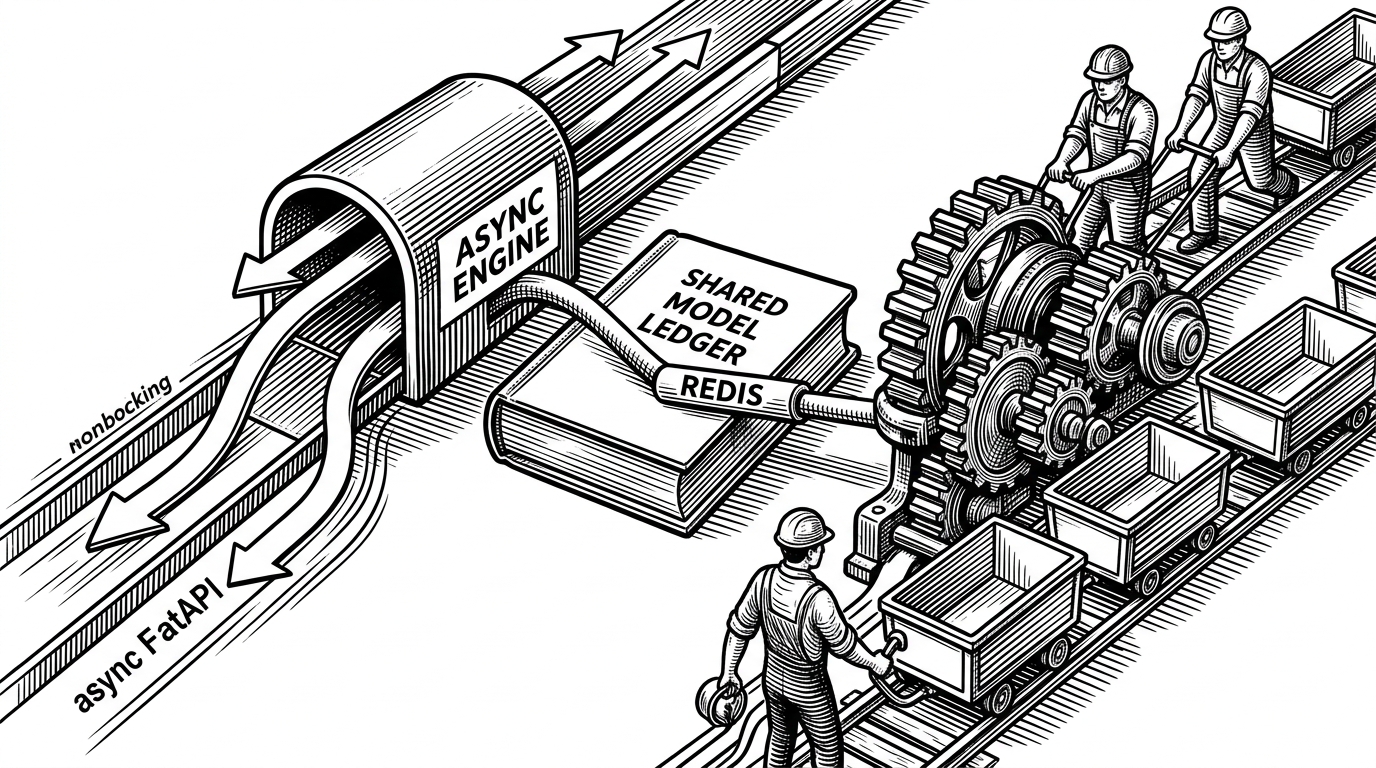
The real-time loop is the most teachable part of the repo. A worker publishes progress into Redis Pub/Sub, an SSE endpoint streams those messages, and the frontend listens through EventSource.
That gives the UI one clean job: mirror the server’s state without guessing. No frantic polling, no stale progress bars, no waiting for a full refresh cycle to tell the truth.
const source = new EventSource(`/api/documents/${documentId}/progress`);

source.onmessage = (event) => {
  const update = JSON.parse(event.data);
  setStage(update.stage);
  setProgress(update.progress);
};

source.onerror = () => {
  source.close();
};
Why raw_result and reviewed_result both matter
The schema makes a quiet but important admission: automated output is not the same thing as approved output. That is why the model separates raw_result from reviewed_result.
This is the right shape for human-in-the-loop systems. The machine can extract, structure, and suggest. A person can still confirm what should count as final.
What this beats
| Approach | What the user sees | Where it fails | Why this repo is better |
|---|---|---|---|
| Polling-only dashboard | Periodic updates with gaps | Feels laggy and uncertain | SSE keeps the UI in step with the backend |
| Opaque background job | A spinner and a hope | Users cannot tell if anything is happening | Named stages make work legible |
| Binary status UI | Pending or done | Hides the real work between start and finish | Granular progress supports trust and debugging |
The trade-off is clear. This architecture is more involved than a basic CRUD app, but it buys something the simpler versions cannot: user legibility. For long-running work, that is the point.
The assignment-level caveat
Some of the steps are mocked, and some delays are synthetic. That does not weaken the lesson. It means the repo is a scaffold for a real pattern, not a pretend production system.
The important part is already visible. The project shows how to make asynchronous work feel immediate, coherent, and reviewable.