awesome-llm-apps: Awesome LLM Apps: The Repo That Turns Agent Frameworks Into Shipping Patterns
A dense, runnable catalog of AI agent templates, RAG pipelines, and artifact-generating workflows that shows how modern LLM apps actually get built.
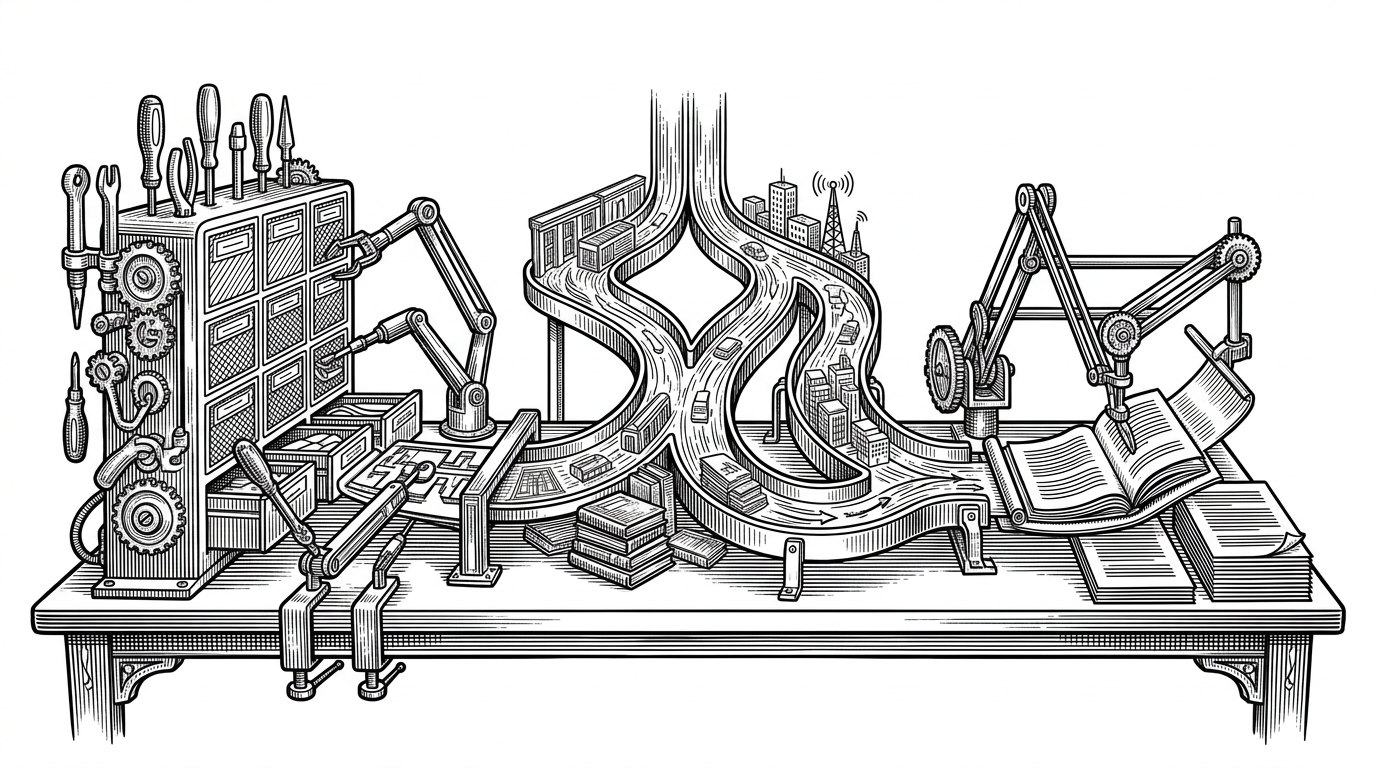

Discover practical and creative ways LLMs can be applied across different domains, from code repositories to email inboxes and more.
- This repository is best understood as a pattern library for shipping LLM products, not as a directory of demos.
- Its most important move is to show agents producing finished artifacts, which pushes the category beyond chat.
- By placing Agno, AG2, and Google ADK side by side, it becomes a Rosetta Stone for agent design choices.
- The repo’s practical value comes from how quickly it turns a problem into a runnable, product-shaped starting point.
This Is Not an Awesome List. It Is a Pattern Library
Most awesome repos point outward. This one points inward. Awesome LLM Apps is not a pile of references, it is a catalog of runnable templates that compress the distance from idea to prototype.
That matters because LLM development still has a Day 1 problem. People do not need more theory about agents, RAG, or orchestration. They need a starting shape they can clone, customize, and ship.
The Most Interesting Pattern: Agents That Produce Finished Artifacts
The repo’s sharpest idea is not another chat workflow. It is the leap from answers to deliverables. In the sales intelligence examples, the system does not stop at a summary. It can generate something closer to a finished business artifact, including structured HTML and styled output.
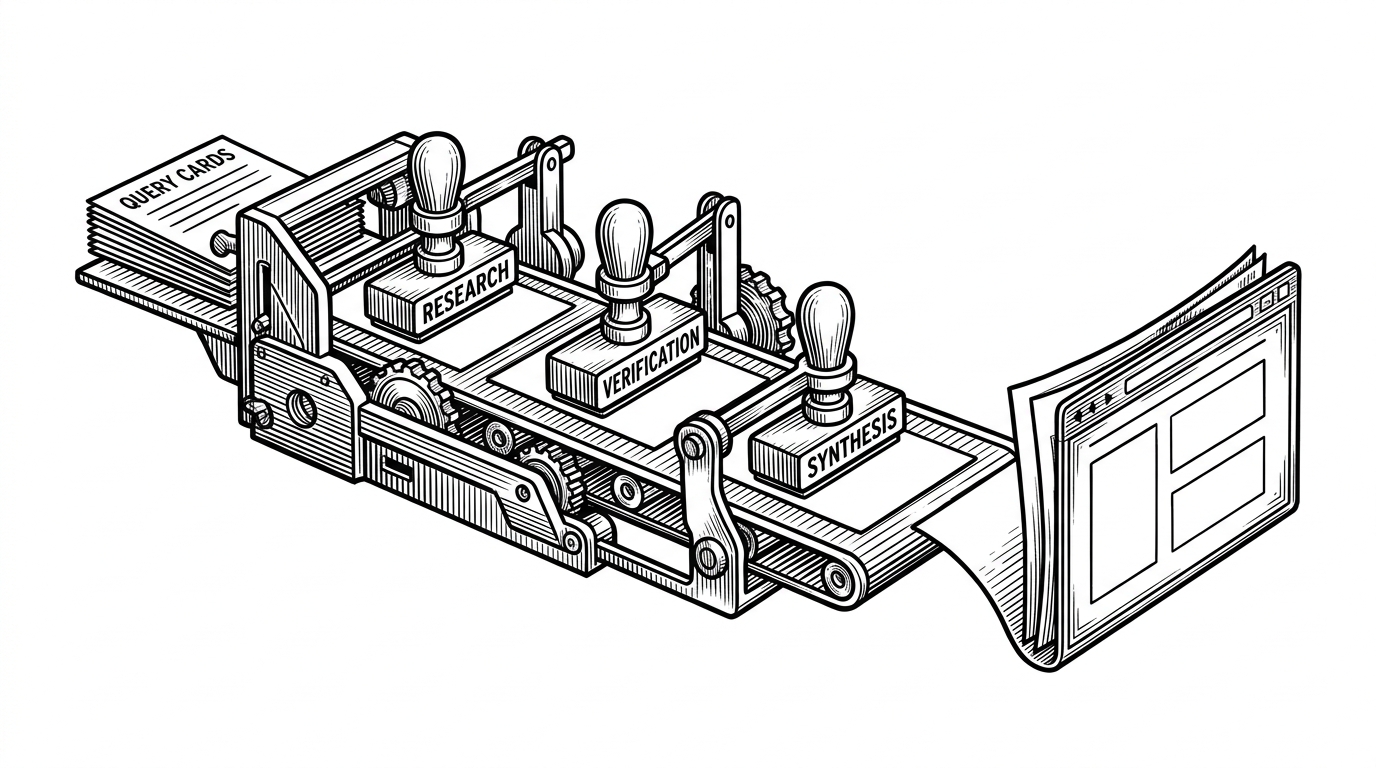
That is the important shift. The LLM is not only the responder. It is the drafting engine behind a workflow that has checkpoints, branches, and output contracts.
# Conceptual shape of the pattern
query -> triage -> research -> verification -> synthesis -> artifact

if evidence_is_insufficient:
    research_again()
else:
    render_final_output()
Three Ways to Build an Agent System
The repository becomes especially useful when you compare its frameworks side by side. Agno, AG2, and Google ADK are not just implementation details. They are three different coordinate systems for the same problem.
| Framework | Core pattern | What it optimizes for | Why it matters here |
|---|---|---|---|
| Agno | Orchestrator-worker | Delegation across specialist agents | Shows how a central team lead can assign work without collapsing into a single monolith. |
| AG2 | Triage and verification pipeline | Routing and evidence quality | Makes the control flow legible, especially when the system must choose local or web research. |
| Google ADK | Sequential intelligence pipeline | Staged refinement into an artifact | Pushes the output from reasoning into something that looks finished and reusable. |
Seen this way, the repo is not promoting one stack. It is showing the same problem solved three ways. That is rarer and more valuable than another framework tutorial.
Orchestration, Routing, and Verification
The technical heart of the repo is in the control logic. The travel planner example uses an orchestrator-worker shape, where a manager agent delegates pieces of the job to specialists such as destination, hotel, and scheduling agents.
The research pipeline takes a different path. A triage agent classifies the request, routes it toward local retrieval or web search, and then hands the result to a verifier that checks whether the evidence is good enough to move forward.
That verifier matters. It turns a one-pass demo into a system with a quality gate. If the evidence is thin, the pipeline can loop back instead of pretending certainty.
| Pattern | Strength | Trade-off |
|---|---|---|
| Orchestrator-worker | Clear delegation | Can centralize too much judgment in one controller |
| Routing pipeline | Simple to reason about | Depends on a good triage decision |
| Verification loop | Improves output quality | Adds latency and complexity |
That is why these examples feel more like software architecture than prompt engineering. The prompts matter, but the control structure matters more.
Why the Repo Feels More Like Product Design Than Framework Docs
A lot of agent material teaches you how to wire tools together. This repo goes further by showing how those tools become product-shaped experiences. The output is not just a response surface. It is a workflow that can end in a report, a battle card, a planner, or a domain-specific assistant.
That shift also changes the supporting cast. The useful details are no longer only model names and prompts. They include Dockerfiles, migrations, logs, reproducibility, and the boring infrastructure that makes a template feel real.
| Generic tutorial | Awesome LLM Apps |
|---|---|
| Explains one pattern in isolation | Shows many runnable patterns across use cases |
| Ends at a demo | Ends at a usable starting point |
| Treats agents as prompt tricks | Treats agents as product systems |
| Focuses on the idea | Focuses on the shipping shape |
That is why the repo stands out in a crowded category. It does not ask whether agents are interesting. It assumes they are, then shows what useful ones look like.
What Makes It Worth Cloning
If you want to build with agents, the best first move is not inventing a novel framework. It is stealing a well-shaped pattern and adapting it to your domain. This repo gives you that shape in multiple forms.
Start with the template that is closest to your problem. If you need delegation, copy the orchestrator pattern. If you need routing, copy the triage pipeline. If you need a structured business output, copy the artifact generator and replace the domain logic.
| If you need... | Copy first |
|---|---|
| Specialist coordination | Agno agent team templates |
| Evidence-based routing | AG2 triage and verification flow |
| A polished deliverable | Google ADK sequential artifact pipeline |
That is the practical edge. The repo is not trying to be the one true stack. It is a library of proven starting positions.