hermes-agent-orange-book: The Manual for Agents That Learn Their Own Skills
A bilingual Orange Book that turns Hermes Agent’s memory, feedback, and skill-creation loop into a practical mental model for builders who are done with prompt-only agents.
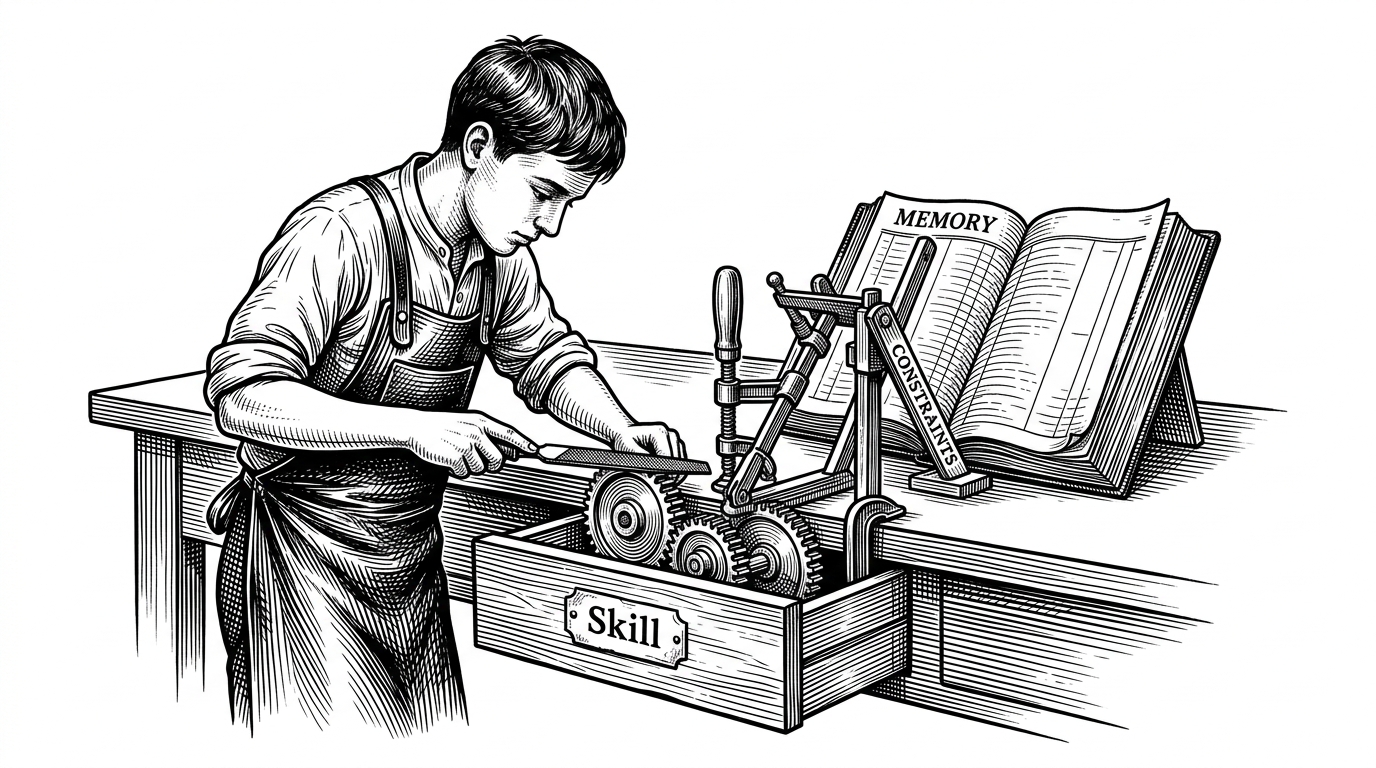

Hermes Agent is an open-source AI Agent framework released by Nous Research in February 2026. Unlike OpenClaw and Claude Code, it takes a fundamentally different approach: a built-in self-improving learning loop, three-layer memory system, and automatic Skill creation and evolution.
- Hermes Agent is framed as a framework that turns repeated work into reusable skills instead of leaving every task trapped in a single session.
- The Orange Book matters because it translates a fast-moving agent stack into a legible system that builders can actually learn.
- Memory and skills are separate stores in this model, and the distinction is the key to understanding why Hermes claims compounding behavior.
- This repo is a documentation product that functions like an on-ramp, not a software library that runs the agent itself.
Why Hermes Is Not Just Another Agent
The hook is simple: Hermes is trying to make an agent that learns from use. The Orange Book says the framework has a self-improving learning loop, bounded memory, and automatic Skill creation, which means the system is designed to turn a successful run into something it can reuse later. That is a different claim from "the agent can call tools."
The repo exists because that claim is hard to hold in your head. Its job is to make the framework legible, then give readers a path from concept to practice.
What the Orange Book Actually Is
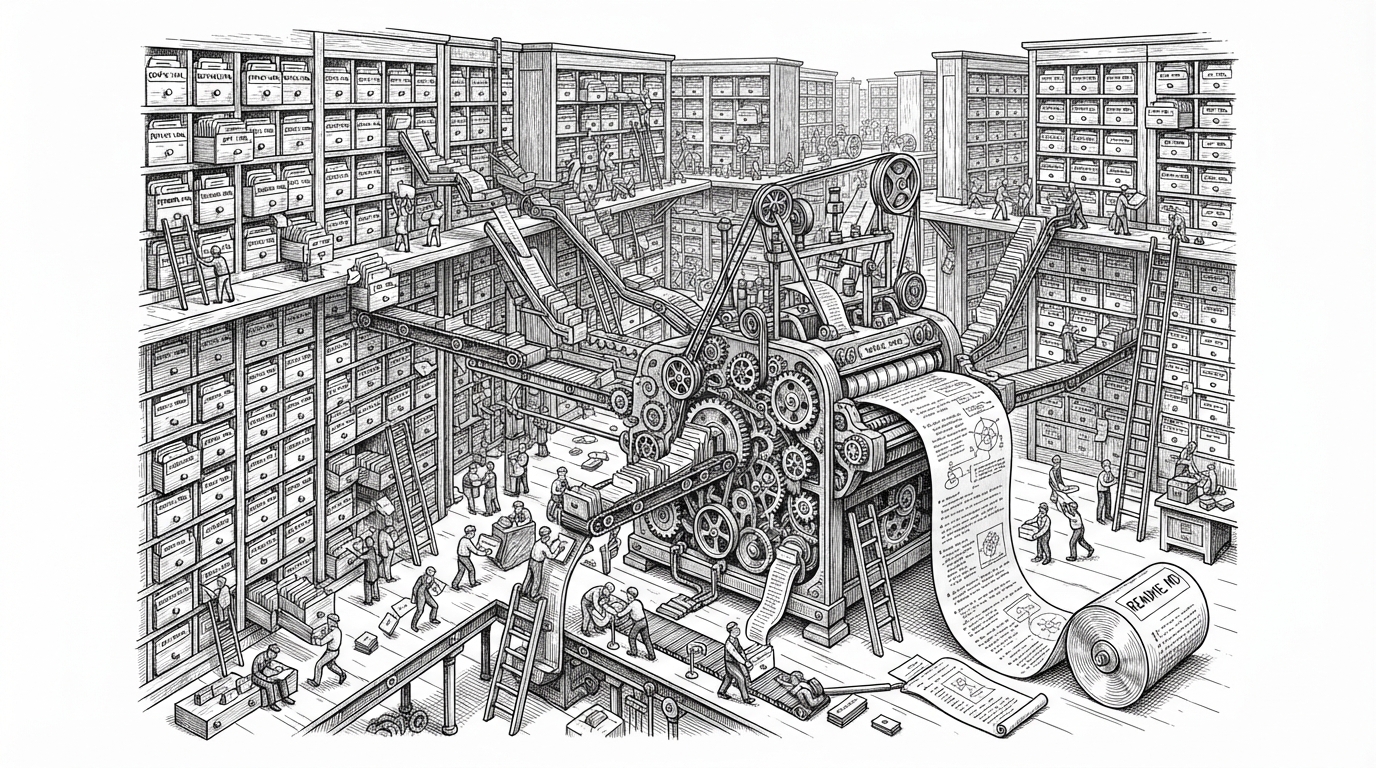
This repository is a publishing surface, not a runtime. It ships bilingual PDFs, screenshots, README landing pages, and a permissive-but-restrictive CC BY-NC-SA license, which makes the project feel closer to a product manual than a codebase.
| Dimension | Orange Book repo | Software repo |
|---|---|---|
| Primary output | A teachable manual | Executable code |
| Main job | Distribution and comprehension | Runtime behavior |
| Audience | Builders learning Hermes | Developers shipping Hermes |
| Success signal | Readers understand the model | The system works in practice |
That distinction matters. The article is about a documentation project that behaves like a product layer, because the book is what makes a dense agent framework approachable enough to spread.
The Hidden Architecture Behind the Guide
The Orange Book translates Hermes into a boundary map. Short-lived session work happens first. Useful facts can be written into memory. Successful procedures can be promoted into Skills. The important part is that memory and skills are not the same thing.
Skills Are the Real Unit of Reuse
This is the article’s core. Hermes does not just remember what happened. It tries to codify what worked. That makes a Skill feel less like a prompt template and more like a procedural artifact: something the agent can load, configure, and improve over time.

That is why the framework feels bigger than a chat wrapper. It treats repeated action as a candidate for codification, which is closer to a working environment than a session-only assistant.
Why the Comparison Matters
Hermes lands in a different category from the usual agent tools. Claude Code is terminal-first and session-centric. Cursor Agent is IDE-centric. OpenClaw leans into orchestration and a broad skill library. Hermes, by contrast, is built around memory and self-improvement.
| System | Memory persistence | Self-improvement | Self-hosting | Workflow bias |
|---|---|---|---|---|
| Hermes Agent | Three-layer memory | Yes | Yes | Background automation and compounding behavior |
| Claude Code | Session-only | No | No | Terminal coding |
| Cursor Agent | Limited project context | No | No | IDE workflows |
| OpenClaw | Manual configuration | Limited | Yes | Multi-agent orchestration |
The point is not to crown a winner. It is to show that Hermes is optimized for long-lived behavior, while the others are better fits for session work or editor-native coding.
HuaShu’s Distribution Strategy
The author’s move is as important as the framework’s design. HuaShu positions the Orange Book series as free, practical guidance for AI tools, which makes the repo feel like part of a broader educational engine rather than a one-off download.
That framing matters because it explains why the repo is useful even if you never run the framework yourself. The book is the on-ramp, and the on-ramp is part of the product.
What This Repo Says About AI Documentation
The deeper lesson is about how AI ecosystems now ship. A polished PDF, bilingual access, screenshots, and GitHub-native distribution can do real product work. In fast-moving categories, documentation is no longer a side effect. It is part of the launch surface.
Hermes Agent may be the framework. The Orange Book is what makes the framework legible enough to matter.