agent-sdk-workshop: Anthropic’s Agent SDK Workshop Turns Agent Design Into a Set of Switches
A hands-on repo that teaches Claude Agent SDK by revealing tools, subagents, and memory one layer at a time, so readers learn orchestration before syntax.
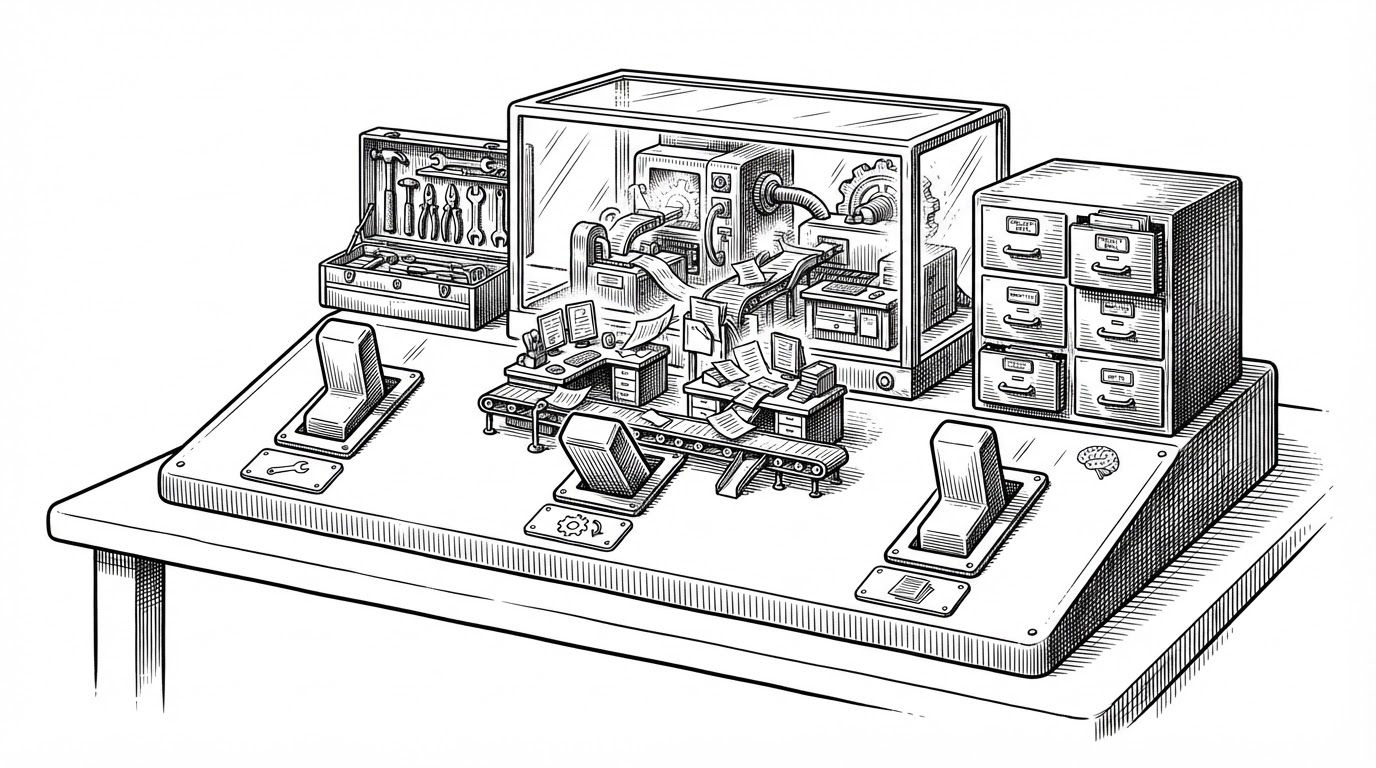
- The workshop teaches agent design as progressive reveal, not blank-page construction.
- Its real lesson is that the SDK behaves like a harness around the model, with configuration shaping what the agent can do.
- Subagents matter because they turn delegation into a first-class primitive instead of a prompt trick.
- Local mock data keeps the learning loop deterministic, so the workshop can teach production patterns without live API drift.
Most agent tutorials make you start with nothing. This repo starts with something working, then lets you turn on tools, subagents, and memory one layer at a time. That changes the lesson from “how do I wire this up?” to “what actually changes when capability enters the system?”
No code writing required. You flip switches, pick from component lists, and write prompts. The SDK does the rest.
Why This Workshop Feels Different
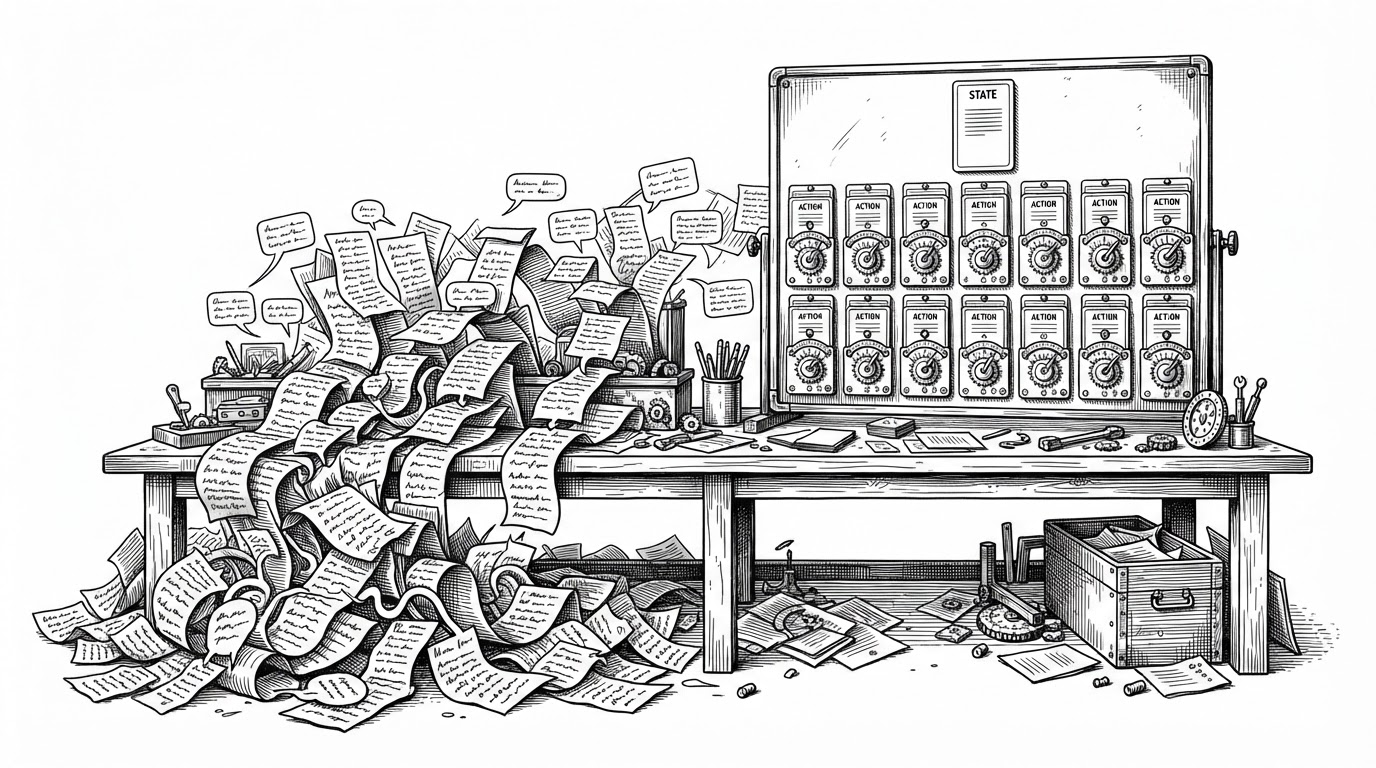
The clever part is pedagogical, not decorative. Instead of hiding complexity behind a polished demo or scattering it across a dozen files, the workshop turns the agent into a controlled experiment. One flag changes behavior. Another adds delegation. Another makes the agent remember what happened before.
That makes the repo unusually legible for busy engineers. You can see the shape of the harness before you worry about prompt polish. And that matters, because most agent failures are not model failures. They are orchestration failures.
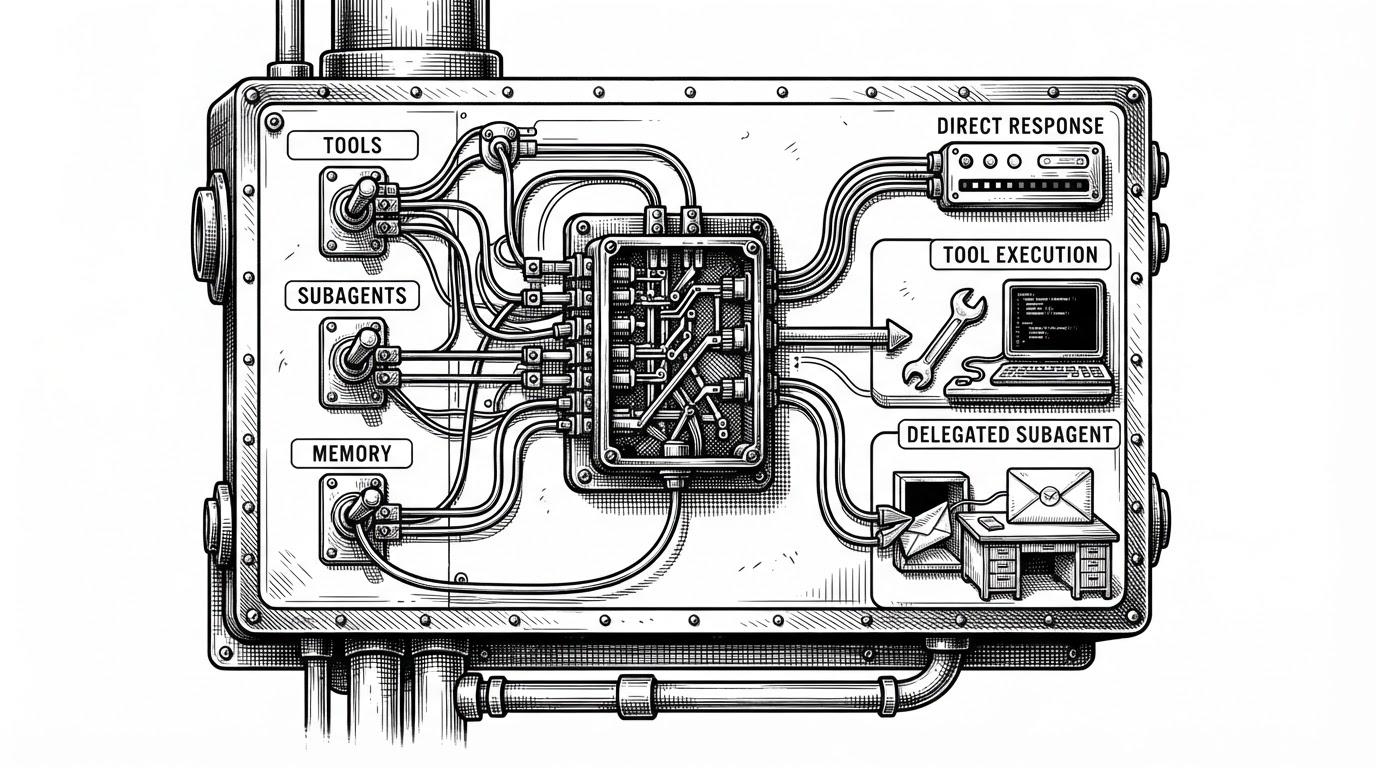
The Switchboard: Tools, Subagents, and Memory
| Mode | What the reader sees | What the agent can do |
|---|---|---|
| Blank tutorial | A file full of imports and setup | Everything depends on getting the wiring right first |
| This workshop | A working agent with toggles | Capability appears one layer at a time |
| Tool toggle on | The agent can query mock services | It stops guessing and starts grounding answers |
| Subagent toggle on | The main agent delegates tasks | Work gets split into specialized roles |
| Memory toggle on | Past context persists across turns | The agent can reuse state instead of re-deriving it |
What agent.py Is Really Doing
The technical core sits in build_options(). That function assembles a ClaudeAgentOptions object from feature flags in config.py, then hands those options to the client runtime. The important idea is not the syntax. It is that the workshop makes the agent’s behavior a function of configuration, not a pile of one-off prompt tricks.
def build_options():
    options = ClaudeAgentOptions()

    if ENABLE_TOOLS:
        options.allowed_tools = research_server.tools

    if ENABLE_SUBAGENTS:
        options.agents = [researcher, fact_checker]

    if ENABLE_MEMORY:
        options.hooks = [memory_hook]

    return options

client = ClaudeSDKClient(options=build_options())
That structure is why the workshop lands. The main agent does not become magical. It becomes inspectable. You can trace the path from prompt to options to runtime behavior, then watch the same request change shape when a tool or subagent is present.
the 'harness' (the AI layer of rules, hooks, skills, LSP, MCP, and subagents) matters as much as the model
Why Subagents Matter More Than They First Look
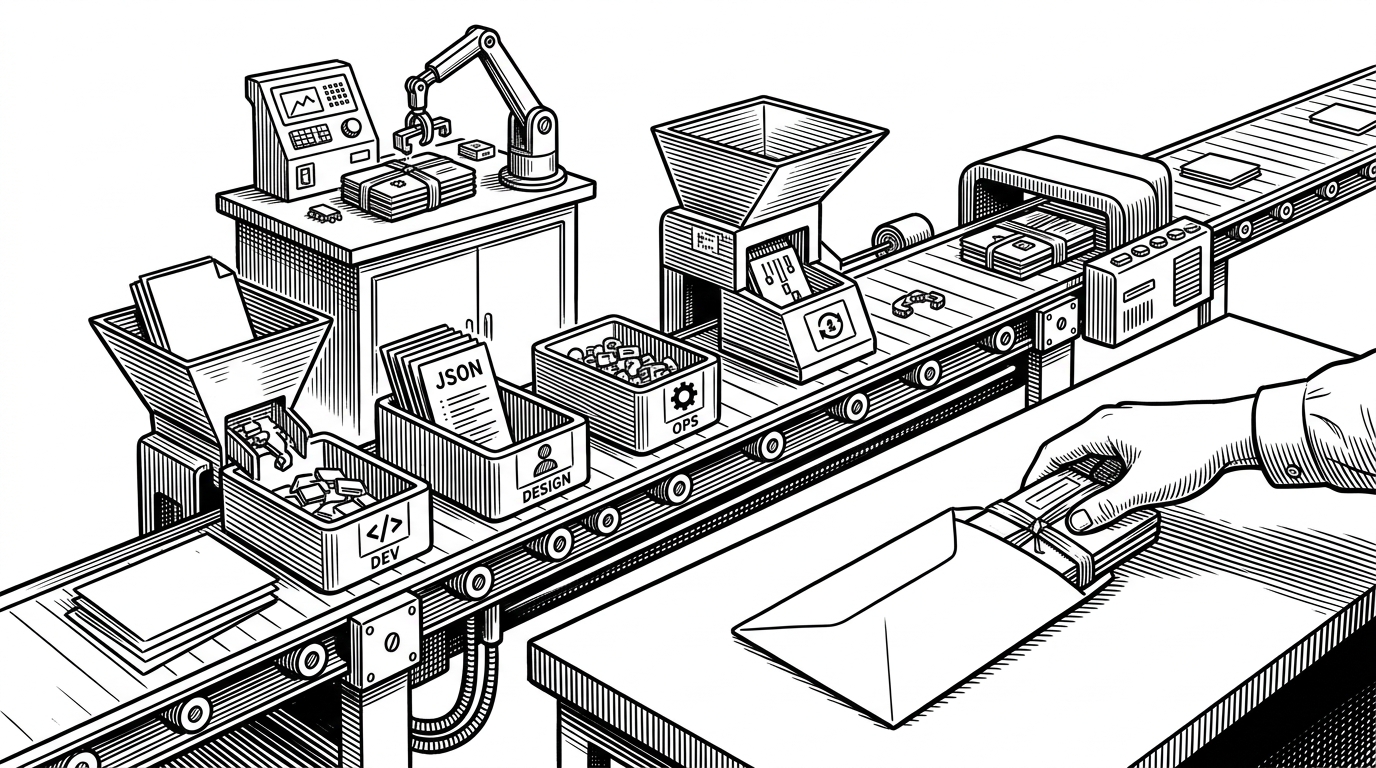
Subagents are the repo’s strongest delegation lesson. They are not a novelty layer pasted on top of chat. They are a way to give the main agent specialized workers with narrower jobs, separate prompts, and their own tool access.
That separation changes reliability. A monolithic agent has to do everything in one context. A subagent can be asked to research, verify, or summarize without dragging the whole conversation into every step. In practice, that is closer to how teams work.
| Pattern | Strength | Trade-off |
|---|---|---|
| Single prompt chain | Simple to start | Gets brittle as the task grows |
| Single-agent plus tools | Good grounding | Still centralizes every decision |
| Main agent plus subagents | Cleaner delegation and better role separation | More moving parts to understand |
| Workshop’s staged reveal | Easiest way to learn the above | Less like a production template, more like a teaching harness |
Why Local Mock Data Is a Feature, Not a Shortcut
The workshop uses static JSON in mock_data/ and data/ to keep the learning loop stable. That is not a compromise. It is the point. A live API can be useful later, but it obscures the lesson when you are trying to understand how tools, delegation, and memory change the agent’s behavior.
Deterministic data makes the demo repeatable. The same input produces the same output, so the reader can isolate the effect of each switch. For a workshop, that is more valuable than realism.
| Data source | Benefit | Cost |
|---|---|---|
| Live external API | Real-world freshness | Network noise and unpredictable results |
| Local mock JSON | Stable workshop behavior | Less realism in the moment |
| Workshop’s choice | Fast feedback for learners | Requires a later step into production integrations |
How the Guided Demo Becomes a Real Workflow
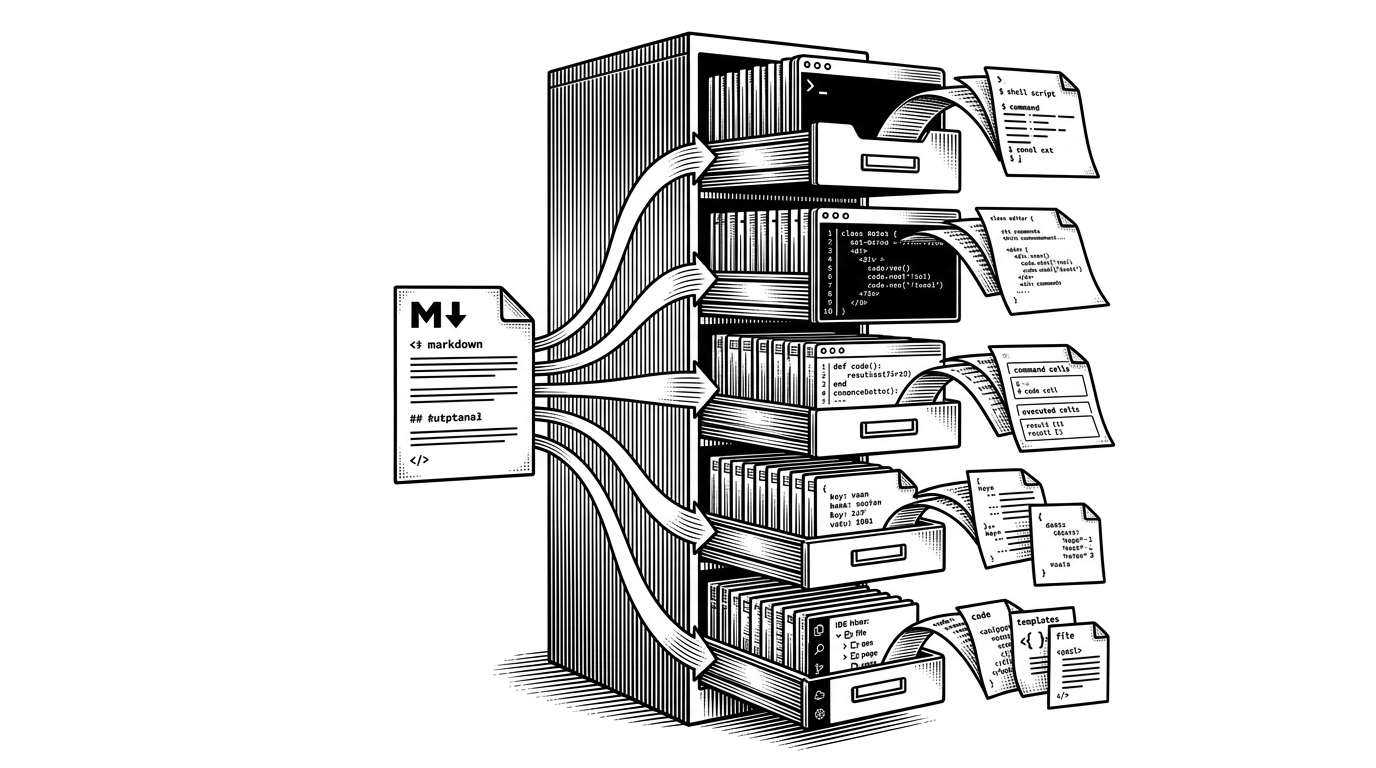
The repo does not stop at a single guided demo. It moves from a monolithic teaching path into breakouts for roles like SRE, customer support, and chief of staff, then into extend templates for custom integrations. That progression matters because it shifts the user from observing primitives to composing systems.
In other words, the workshop is not just teaching features. It is teaching a workflow for assembling agents from reusable parts. Once that clicks, the SDK stops feeling like a prompt wrapper and starts feeling like an operating harness.
Where This Fits in the Agent Framework Landscape
Compared with broader orchestration frameworks, the workshop is unusually strong at teaching the harness layer. LangGraph is often the answer when you need explicit graphs and stateful routing. OpenAI’s Agents SDK emphasizes handoffs in its own ecosystem. This repo is different: it teaches how Claude’s agent runtime becomes legible when you expose configuration, hooks, and delegation directly.
| Approach | Best at | What this workshop adds |
|---|---|---|
| LangGraph | Explicit workflow graphs | A clearer mental model for Claude-native orchestration |
| OpenAI Agents SDK | Vendor-specific multi-agent patterns | A hands-on path into Claude Agent SDK primitives |
| General tutorials | Getting started quickly | A stronger explanation of the harness layer |
| This workshop | Teaching composition through reveal | A repeatable way to understand tools, subagents, and memory |
That is the main value here. The repo is not trying to win a framework bake-off. It is trying to make the model’s surrounding machinery visible, which is the part most teams underestimate.