Appwrite Arena: The Benchmark That Tests Whether AI Can Learn Your API Before It Hallucinates
A domain-specific LLM arena that compares base-model memory, skill-file retrieval, and cost per answer across a fast-moving backend platform.
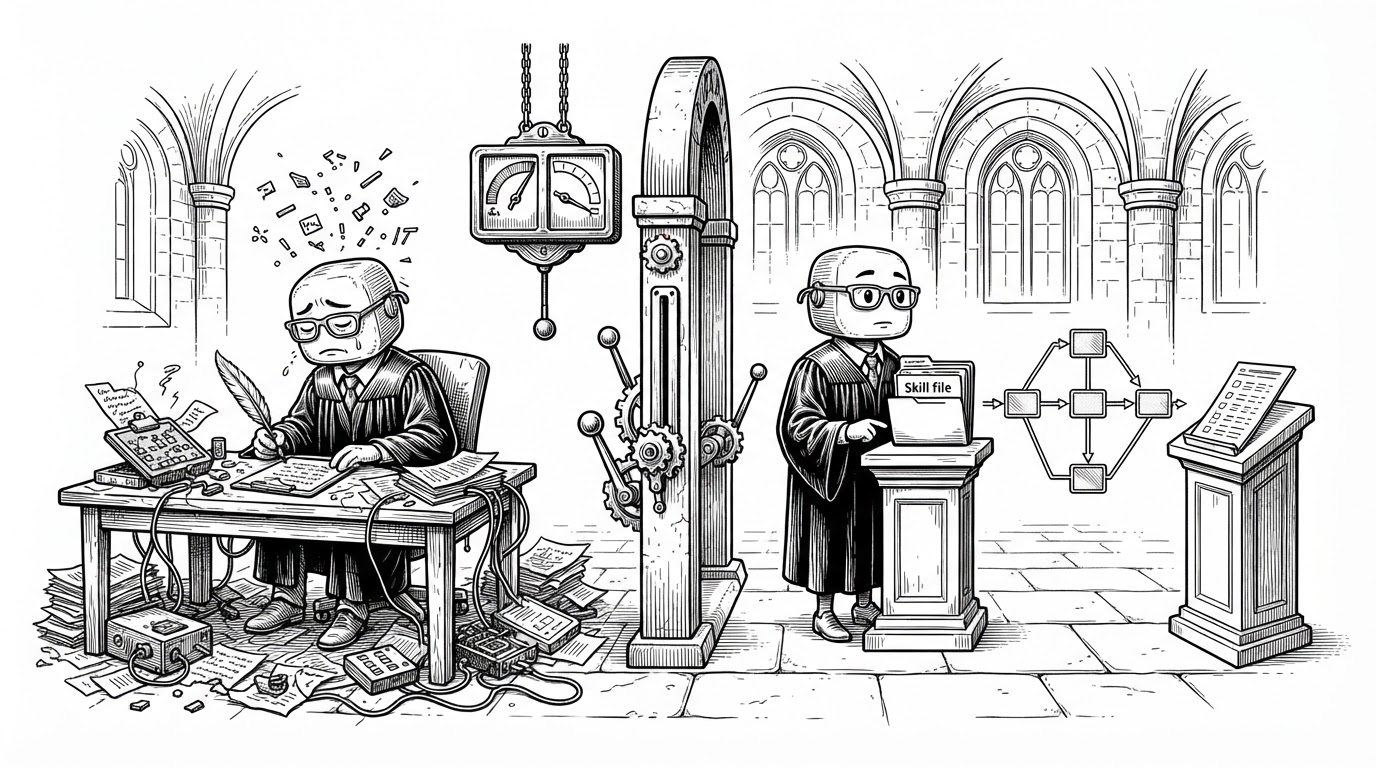
- Arena is less about ranking models in the abstract than about testing whether documentation access changes their behavior on a real API surface.
- The benchmark splits the problem into two worlds, without skills and with skills, which makes the value of Appwrite's docs measurable.
- Its runner, judge, and question schema are built to keep answers structured enough to score while still leaving room for free-form technical work.
- Cost is part of the result, so the right model is the one that is good enough for the task, not just the one with the highest score.
Appwrite Arena starts from a familiar frustration. A generic model can write code that looks plausible, then drift into invented endpoints, stale patterns, or subtle Appwrite-specific mistakes the moment the task gets real. That is not a benchmark problem in the abstract. It is a shipping problem.
AI coding agents are everywhere. They write your functions, scaffold your database schemas, and wire up authentication flows. But here's the question nobody was answering: which AI model actually knows Appwrite best? We built Appwrite Arena to find out.
That framing matters because Arena is not trying to crown a universal winner. It is trying to answer a narrower, more useful question: can a model work inside a living API ecosystem if the docs are available, and how much does that help? The benchmark turns documentation into a variable you can test.
Why Arena is different from a normal benchmark
Most coding benchmarks freeze the world. Arena does the opposite. It tests a moving product surface, then splits evaluation into Without Skills and With Skills so the team can separate raw model memory from documentation-assisted performance.
| Dimension | Without Skills | With Skills |
|---|---|---|
| What the model gets | Base training data only | Base data plus Appwrite skill files |
| What it measures | General memory and prior exposure | Ability to use documentation as working context |
| Failure mode | Hallucinated or stale API details | Ignoring or misusing the docs |
| Best use | Baseline comparison | Practical developer readiness |
That split is the project’s core move. It turns the benchmark from a leaderboard into a product tool. If skills materially improve outcomes, then the docs are not just helpful. They are part of the interface.
Inside the runner: how the benchmark keeps models honest
The engine lives in the benchmark runner, which loops through model calls with a hard cap on tool use. In practice, that means the system gives a model room to think, call tools, and stream partial answers, but it does not let it wander forever.
for (let round = 0; round < MAX_TOOL_ROUNDS; round++) {
  const result = await callModelRaw(messages, tools)

  if (result.type === 'final') break
  if (result.type === 'tool_call') {
    const skill = await read_skill(result.name)
    messages.push(skill)
    continue
  }

  if (result.type === 'partial' && result.tokenLimitHit) {
    preservePartialOutput(result.text)
    break
  }
}
The resilience detail is easy to miss, but it is the kind of thing that separates a demo from infrastructure. If a model hits a token limit after producing a useful partial answer, the runner still tries to salvage the run instead of discarding it. That keeps the benchmark closer to real usage, where partial progress still matters.
How Appwrite turns docs into a tool
The clever part is not that the benchmark includes documentation. It is how it includes it. Appwrite loads skill files, parses Markdown with frontmatter, and exposes them through a callable read_skill tool. That simulates agentic doc access instead of stuffing a giant blob into the prompt.
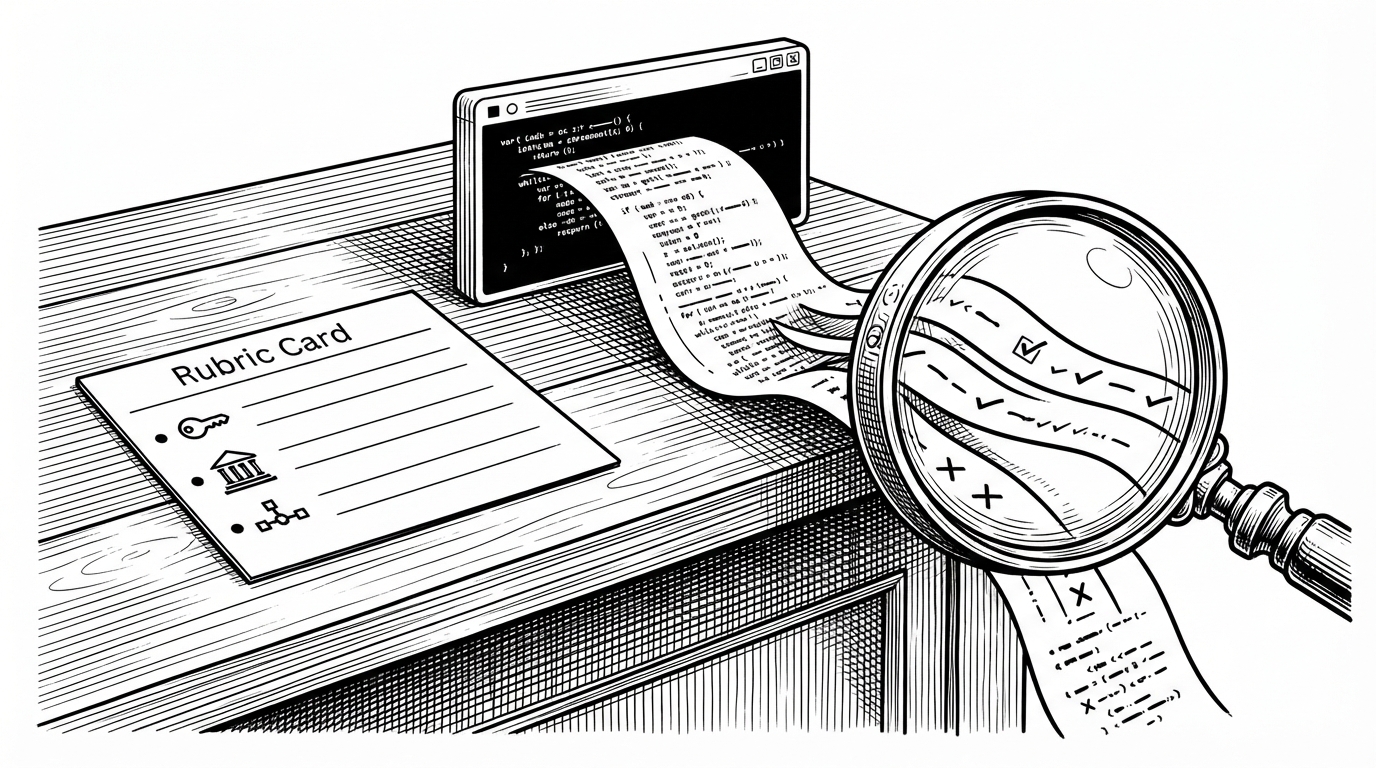
That distinction matters. A model reading the right document is not the same thing as a model memorizing the right answer. Arena is testing whether the assistant can turn retrieval into better action, which is much closer to how developers actually use AI.
Why the judge matters as much as the models
Free-form answers need a judge because string matching breaks down fast once the question asks for reasoning or explanation. Arena uses an LLM-as-judge pattern with a rubric, so the evaluator can check for required technical points instead of just surface similarity.
| Evaluation mode | Best for | Weak spot |
|---|---|---|
| Multiple choice | Facts with a single correct answer | Can miss partial understanding |
| Rubric-scored free form | Explanations and technical reasoning | Depends on the quality of the rubric |
| LLM judge | Flexible answers at scale | Needs a strong, consistent evaluator |
The point is not that the judge is perfect. The point is that it is explicit. Once the rubric is part of the system, the benchmark can score open-ended answers without pretending that technical nuance will collapse into one correct string.
Questions are code, not content
Arena stores questions as typed objects, which keeps the benchmark maintainable as the Appwrite surface changes. Multiple-choice questions can be scored deterministically. Free-form questions carry rubric text so the judge knows which technical details must appear in a good answer.
type Question =
  | {
      type: 'mcq'
      prompt: string
      choices: Record<string, string>
      answer: string
    }
  | {
      type: 'freeform'
      prompt: string
      rubric: string
      referenceAnswer: string
    }
That design sounds small, but it is a big maintainability win. New services, renamed features, and updated SDK behavior can be added as structured entries instead of improvised text files. In a benchmark this specific, the schema is part of the product.
The real scoreboard is score plus cost
Arena does not stop at accuracy. It also tracks pricing, then folds that into a value view so the team can compare score against cost per token. That changes the question from "which model won" to "which model is worth using for this workload".
| Lens | What it rewards | Why it matters |
|---|---|---|
| Raw score | Best technical answer rate | Useful for capability comparison |
| Cost-adjusted value | Good-enough answers at lower spend | Useful for production decisions |
| Combined view | Performance plus efficiency | Useful for platform strategy |
This is the part that feels most operational. A model that is marginally better but dramatically more expensive may be the wrong answer for support tools, internal copilots, or documentation workflows. Arena bakes that reality into the scoreboard instead of hiding it in a footnote.
What Appwrite Arena says about the future of niche benchmarks
General benchmarks are saturated. Domain benchmarks are where teams can still learn something real. If your API changes often, if your docs matter, and if your users are now bringing AI assistants into the workflow, then a project like Arena becomes less like marketing and more like defensive infrastructure.
That is the bigger lesson here. Open-source ecosystems do not need to wait for a universal benchmark to tell them whether AI tools are usable. They can build their own arenas, measure their own surfaces, and make documentation part of the product contract.