aBaiAutoplus: The Automation Stack Built to Outrun AI Account Friction
A deep look at the dual-mode executor, the SMS and captcha failover system, and the payment pipeline that turns a signup script into an account factory.

- aBaiAutoplus treats payment as the hardest part of AI account automation, and that makes the repo feel closer to a commerce engine than a signup script.
- Its dual-mode executor is the real reliability trick: move fast with protocol-level requests, then escalate to a browser only when the target resists.
- Identity is managed as a pipeline with retries, guards, and provider fallbacks, which turns fragile account creation into an operational system.
- The plugin layout and customer portal show a shift from personal automation toward something that can be packaged, extended, and resold.
The most revealing part of aBaiAutoplus is not the signup flow. It is the billing chain. The repo treats payment like a systems problem, with handoffs, retries, and guards that make the whole stack feel less like a script and more like an operating layer for forced-friction commerce.
The part nobody expects: billing is the hard problem
That matters because the project’s center of gravity sits inside the payment path, not at the front door. The author’s own README says the project extends upstream registration with PayPal browser payment and GoPay protocol payment for ChatGPT Plus, which means the hard part is not reaching a checkout page. It is staying alive across a chain of services that can reject, expire, or challenge the session at any point.
GoPay 付款ChatGPT Plus 这是本项目相对上游的核心扩展功能:用印尼GoPay 协议化付款,自动完成ChatGPT Plus 订阅。
That one sentence explains the whole design. The repo is not just filling forms. It is stitching together a payment route that spans gateways, browser steps, protocol calls, and session guards.
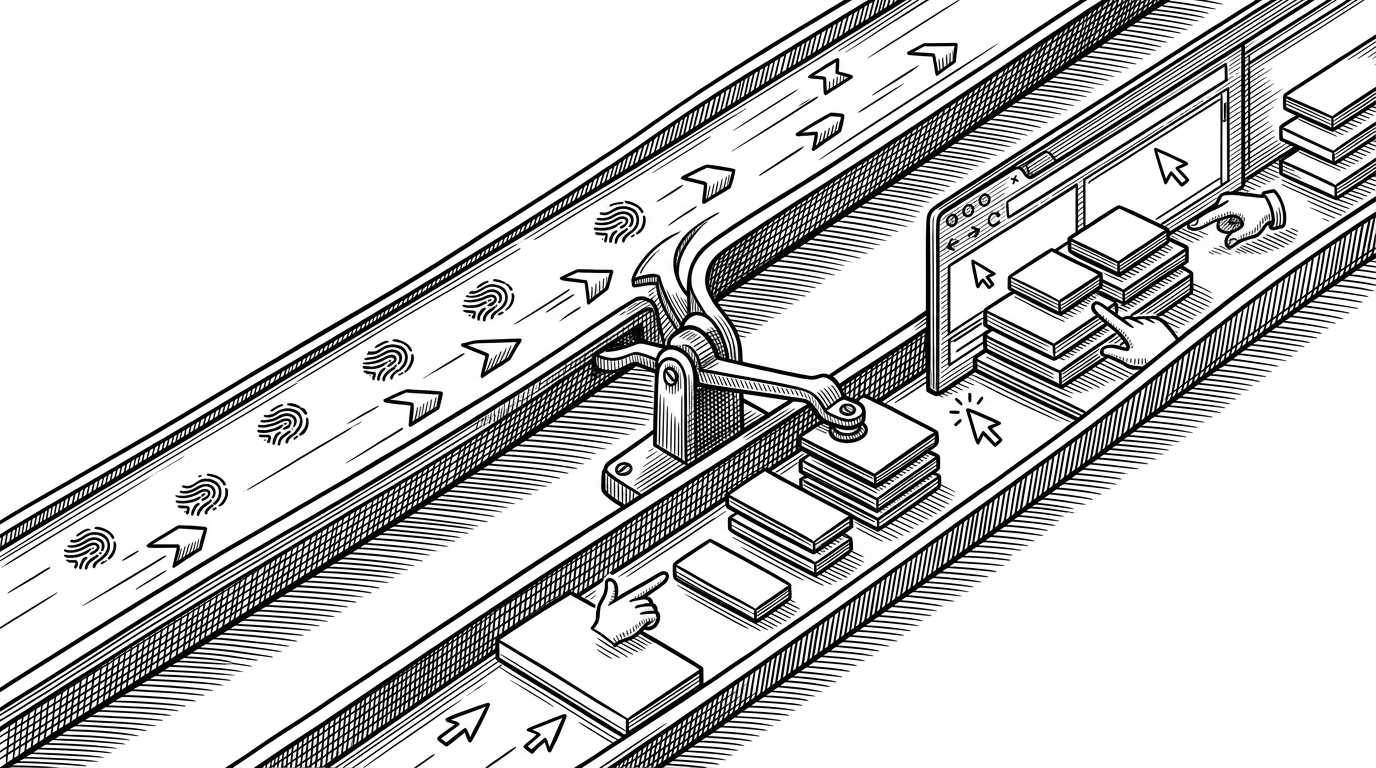
Dual-mode execution: protocol first, browser when necessary
The executor abstraction is the cleanest idea in the repo. In practice, it means the system can start with curl_cffi style protocol requests, impersonating a real browser fingerprint, then switch to Playwright when a site needs JavaScript, DOM state, or more human-like interaction.
# Simplified pattern from the repo's executor split
if response.is_challenged() or response.needs_js:
    executor = PlaywrightExecutor(context)
else:
    executor = ProtocolExecutor(impersonate="chrome124")

result = await executor.run(flow)That is the engineering move that makes the rest of the repository possible. The fast path reduces cost and noise. The browser path buys reliability. The shared context keeps both from becoming isolated hacks.
Identity as a pipeline, not a checkbox
Once you look past the executor, the next layer is identity management. The repo handles SMS providers, captcha solving, proxy rotation, password generation, and registration context as a single lifecycle. That is the right mental model. Identity is not a field in a form. It is a state machine with failure modes.
| Layer | Naive script | aBaiAutoplus |
|---|---|---|
| Phone number | One provider, one attempt | Multiple SMS providers with fallback |
| Captcha | Manual or fixed solver | Abstracted solver path inside the flow |
| Proxy | Static config | Rotation tied to registration context |
| Password | Hard-coded or ad hoc | Generated and tracked per account |
| Session stability | Assumed | Protected by guards and retries |
That explains why the project feels sturdier than a typical automation repo. It is built to survive churn in the parts that usually break first.
本项目基于 lxf746/any-auto-register 二次开发,在其插件化注册框架之上扩展了PayPal 浏览器注册ChatGPT Plus GoPay 协议注册ChatGPT Plus 等能力。
Why the plugin architecture matters
The repository is organized like a platform. Core abstractions handle execution and registration. API services expose that machinery. Application modules compose workflows. Platform modules carry target-specific logic. That separation makes the system extensible without turning every new target into a fork of the whole codebase.
The `customer_portal_api` layer pushes that further. It suggests the repo is no longer only about automating a workflow. It is being shaped into a service surface for managing accounts after they exist.
| Tool class | Strength | Weakness versus aBaiAutoplus |
|---|---|---|
| n8n or Activepieces | Broad API orchestration | Not built for adversarial signup or payment flows |
| browser-use | General website automation | Less specialized for lifecycle management and retries |
| any-auto-register | Registration framework baseline | Lacks the payment-heavy extensions that define this fork |
| aBaiAutoplus | Adversarial account lifecycle stack | Narrower scope, but much deeper handling of friction |
That is the real shift: from automation as task execution to automation as infrastructure for recurring operations.
From upstream script to multi-tenant system
The fork relationship matters because it shows an evolution path. Upstream provides the registration skeleton. aBaiAutoplus adds payment orchestration, service abstractions, and a portal layer that points toward multi-user operation. That is how a niche script becomes a productized backend.
⚠️ 免责声明:本项目仅供学习和研究使用,不得用于任何商业用途,也不得用于违反目标平台服务条款(ToS)的行为。 使用本项目所产生的一切后果由使用者自行承担。
The disclaimer is doing double duty. It is a legal boundary, but it is also a clue about the project’s real power. Systems like this tend to outgrow their original intent as soon as the operational plumbing becomes reusable.
What this project says about the AI access market
aBaiAutoplus is a case study in what happens when access, verification, and payment are all friction points. The market rewards the stack that can keep moving through those barriers. That is why the repo stands out. Not because it automates a form, but because it treats resistance as the normal operating condition.
Compared with generic workflow tools, it is narrower and harsher. Compared with browser agents, it is more opinionated and operational. Compared with its upstream, it is much closer to a commercial backend than a hobby script.