notebook-to-api: The Compiler That Tries to Turn Jupyter Chaos Into a Governed Service
It does not just wrap notebook code in FastAPI. It statically infers dependencies, classifies cells, injects security, and generates the scaffolding for a production-facing API.
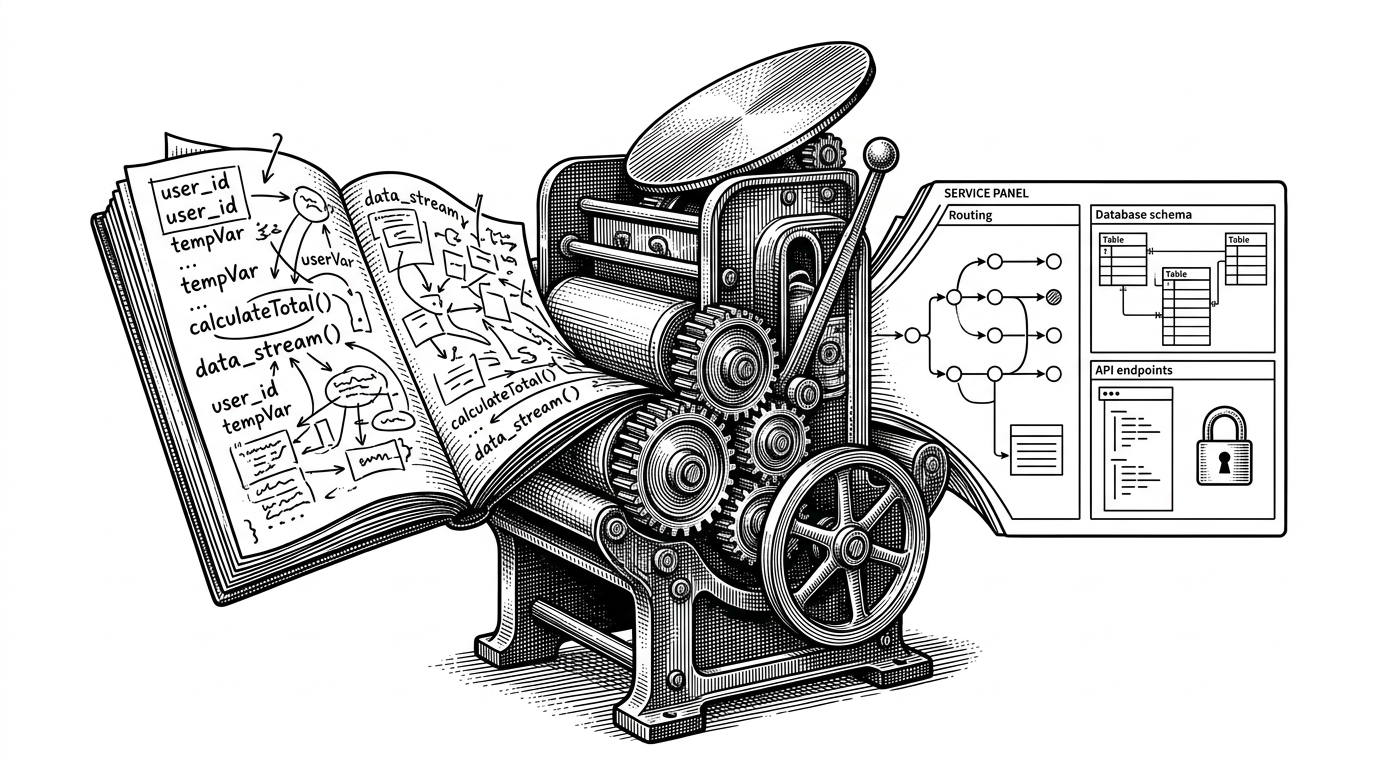
- notebook-to-api treats a notebook as raw source code that must be analyzed, ordered, and compiled before it can become a service.
- Its most interesting move is static reconstruction of execution intent from cell contents, not a simple notebook wrapper.
- Governance is not bolted on at the end here, because the generated service includes security, auditing, and operational scaffolding from the start.
- The architecture is ambitious, but the same engine-heavy design that makes it extensible also raises the risk of abstraction sprawl.
The easiest way to misunderstand notebook-to-api is to think it is a deployment helper. It is more aggressive than that. The repo treats a Jupyter notebook like a program that still needs to be compiled, normalized, secured, and wrapped in service boundaries before anyone should call it production-ready.
The notebook is not the product. The compiler is.
That framing matters because notebooks are optimized for exploration, not reliability. Cells run out of order. State leaks between them. Dependencies are implicit, and intent is often spread across comments, imports, and side effects. notebook-to-api steps into that mess and assumes the real job is to recover structure before generating an API.
In other words, the repository is not just translating code into endpoints. It is trying to infer what the code means, then emit a service that preserves enough of that meaning to be useful outside the notebook.
How notebook-to-api reconstructs order from notebook disorder
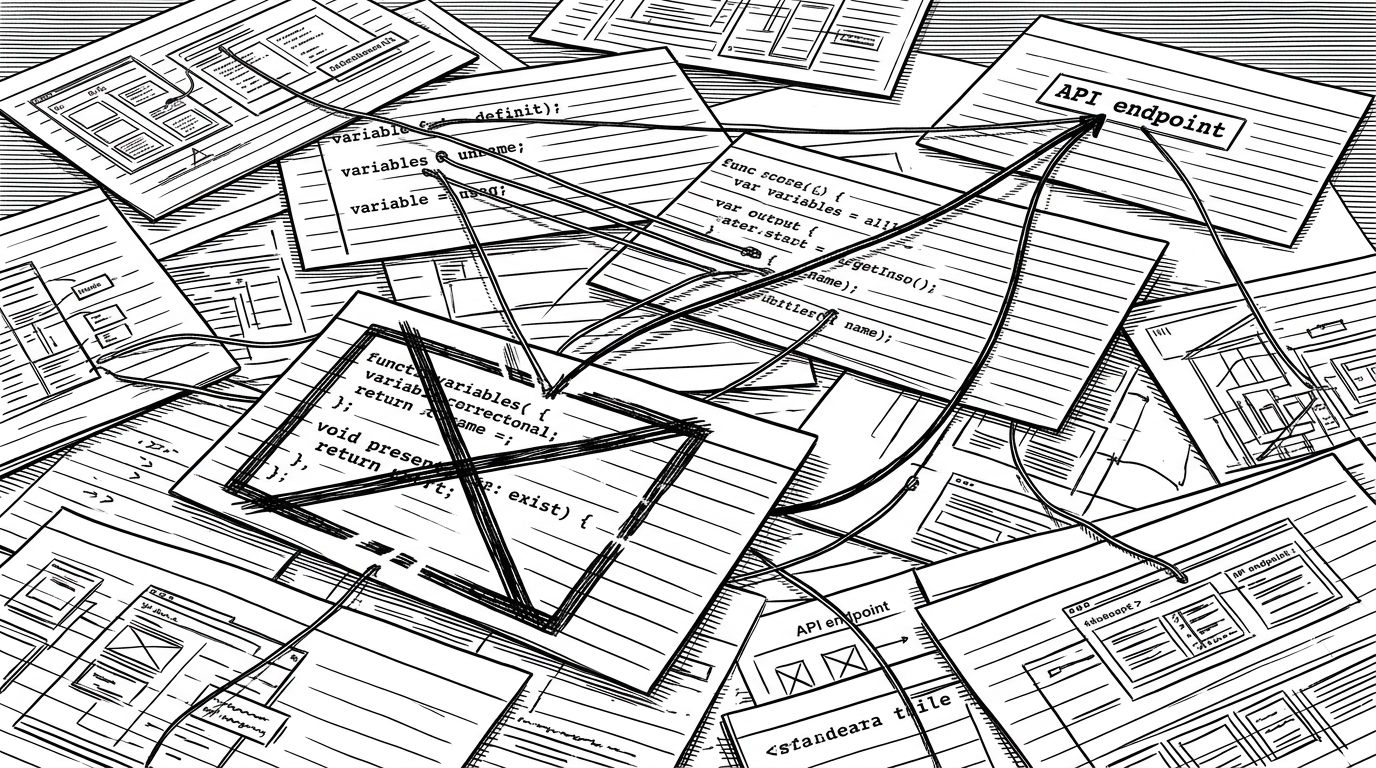
The repo's analyzer layer does the hard work. According to the codebase structure, backend/analyzer/ uses AST parsing, variable tracking, and dependency graphs to understand how cells relate to one another. That matters because notebook order is not trustworthy. A cell can be executed before the cell that defined its inputs, and the saved notebook can still look valid.
The key idea is that variables create edges. If Cell B loads a symbol defined in Cell A, the analyzer can build a dependency edge even if the notebook was executed in a weird sequence. That lets the pipeline reconstruct a more credible execution order than the notebook metadata alone would give you.
From cells to service: what the compiler emits
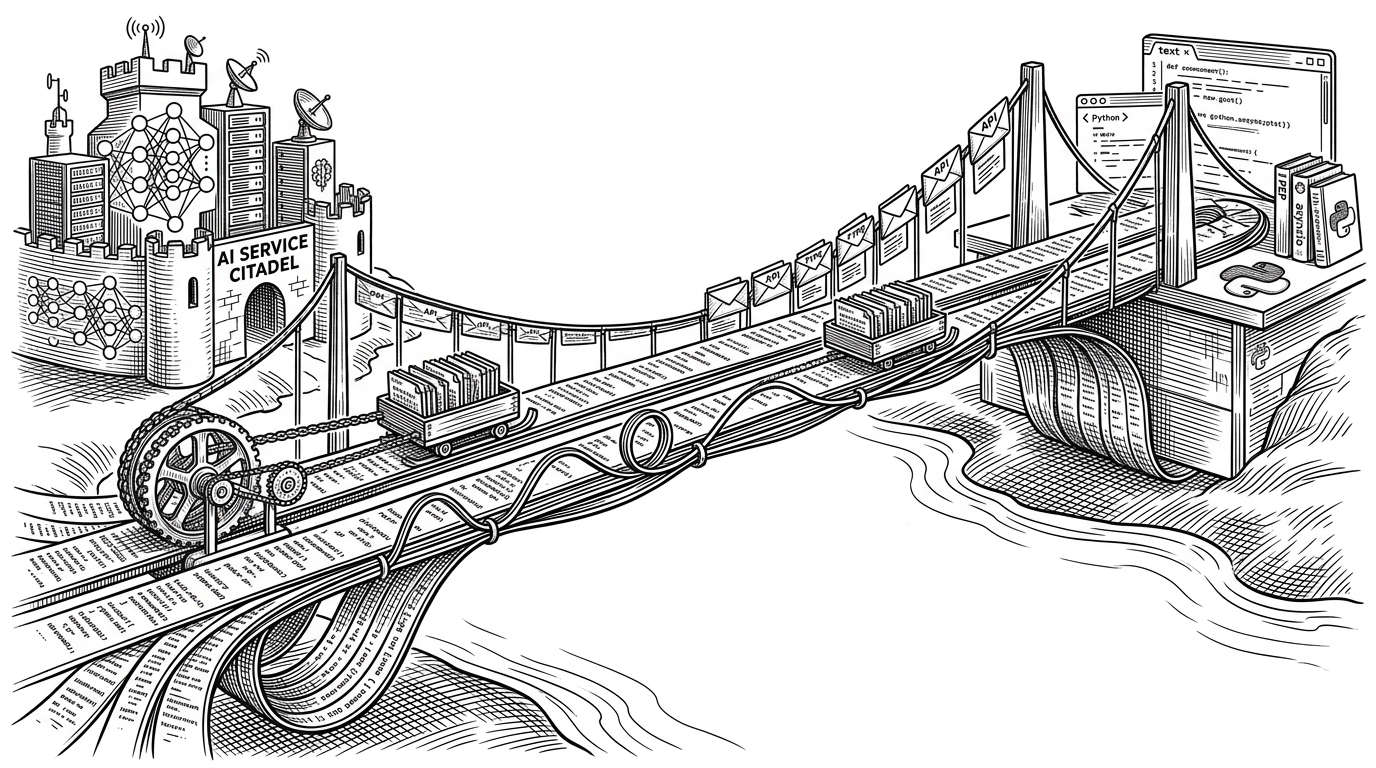
Once the notebook has been understood, the generator layer turns that understanding into artifacts. The research points to a split between runtime/notebook_module.py, which holds the notebook logic, and app.py, which wraps that logic in a FastAPI service. Around that core, the system can generate requirements, Pydantic models, OpenAPI metadata, and Docker scaffolding.
| Path to production | What it optimizes for | What it leaves exposed |
|---|---|---|
| Manual handoff | Human judgment and flexibility | Ambiguity, rework, tribal knowledge |
| Simple wrapper API | Speed and demoability | Execution order, hidden state, weak governance |
| notebook-to-api | Static reconstruction and generated service contracts | Abstraction overhead and dynamic Python edge cases |
That comparison is the point. A thin wrapper gets you an endpoint. A compiler-style pipeline tries to get you a service with a shape, a contract, and enough generated infrastructure to survive contact with production expectations.
Why governance shows up so early
The most surprising part of the repo is how early governance appears in the stack. The research mentions API key injection, custom OpenAPI security schemes, redaction rules, and CLI commands like doctor, prune, and replay. That is not an afterthought. It suggests the system assumes the hard part is not just shipping code. It is making notebook-derived services inspectable and controllable.
That is a useful correction to a familiar pattern. A lot of tools optimize for the first successful request. notebook-to-api appears to optimize for the question that comes next: can we trust this thing, can we audit it, and can we safely keep it running?
| Capability | What it signals | Why it matters |
|---|---|---|
| API key injection | Access control is first-class | The generated service is meant to face real users |
| OpenAPI security schemes | Contracts are machine-readable | Clients and gateways can integrate cleanly |
| doctor / prune / replay | The system is inspectable | Operators can verify or recover behavior |
| redaction rules | Sensitive data is expected | Notebook-derived code may carry secrets or PII |
The engine pattern: elegant modularity or abstraction overhead?
The architecture uses a lot of specialized engines and analyzers. On paper, that is a strength. It keeps notebook understanding, generation, cloud, AI, and observability separate enough to evolve independently. In practice, it also raises a familiar risk: when everything becomes an engine, the system can start to read like a framework built for its own future rather than for a narrow first use case.
This is the right tension to notice. The repo's structure suggests serious ambition, but ambition can easily outrun integration. A clean module boundary is good. Too many layers of abstraction can make the actual control flow harder to reason about than the notebooks the tool was supposed to tame.
| Design choice | Upside | Cost |
|---|---|---|
| Many specialized engines | Extensibility and separation of concerns | Harder to trace end-to-end behavior |
| Single monolithic compiler | Simple mental model | Less room to grow |
| Heuristic analyzers | Practical coverage for notebook code | False positives and missed dynamic behavior |
The tradeoff: static analysis buys safety, but not omniscience
Static analysis is the right instinct here because it avoids executing arbitrary notebook code during compilation. But Python notebooks are full of dynamic patterns that static tools only partially understand. Functions built with getattr, globals mutation, monkey patching, runtime imports, and hidden notebook state can all break the illusion that code can be cleanly inferred from syntax alone.
That does not make the approach weak. It makes it honest. notebook-to-api seems designed around the idea that partial certainty is still better than blind execution, as long as the system is explicit about what it can and cannot infer.
# The underlying pattern, simplified
for cell in notebook_cells:
    defs = track_definitions(cell)
    uses = track_usages(cell)
    dependency_graph.add_edges(uses, defs)

execution_order = dependency_graph.topological_sort()
service = generate_fastapi_service(execution_order)
What this repo is really betting on
The real bet is bigger than notebook-to-API conversion. It is the claim that notebook workflows can be made serviceable if a system can infer structure, impose contracts, and surround the result with governance. That would shrink a long-standing gap between exploratory data work and production systems.
If that bet holds, the notebook stops being a dead end. It becomes a source format. The value is no longer just the model or analysis inside the notebook. The value is the ability to compile that work into something operational without pretending the notebook was already production code.