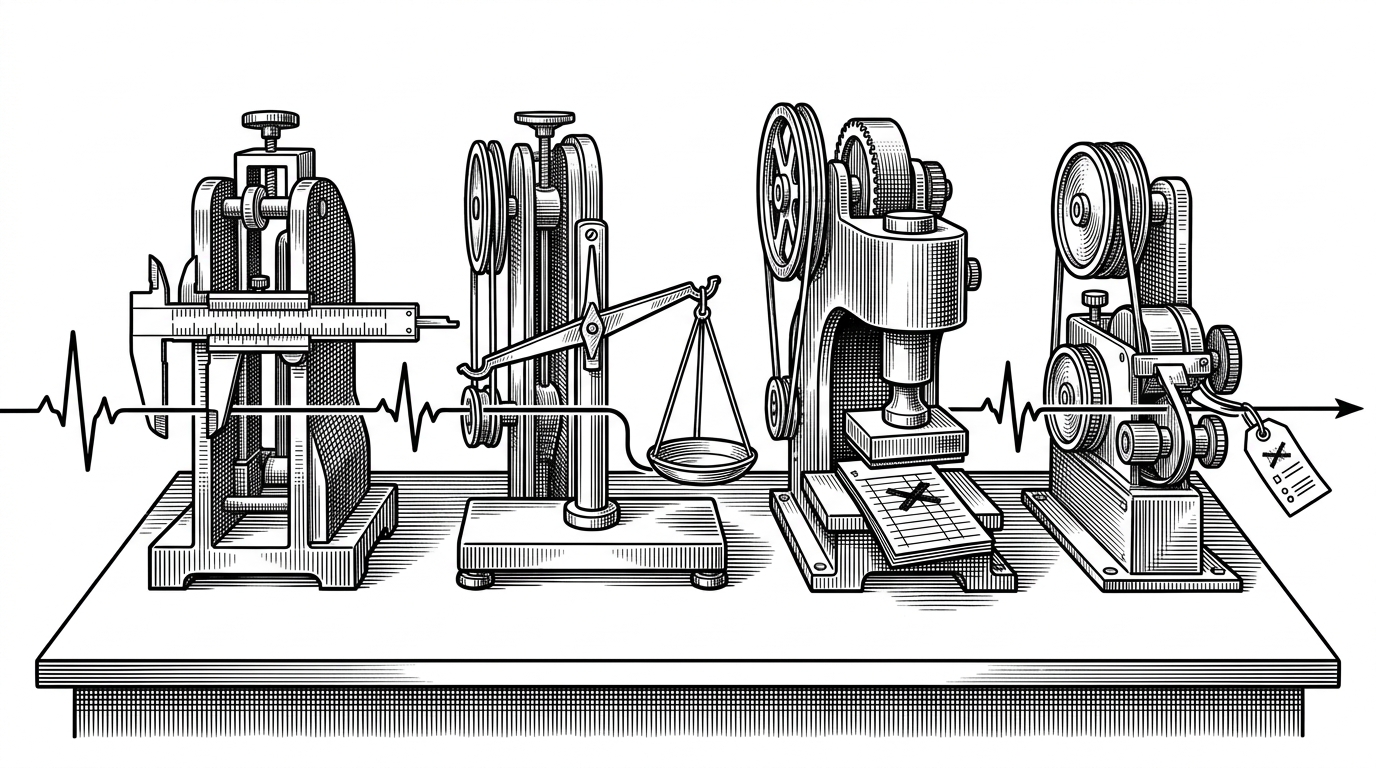
nothing-ever-happens: Nothing Ever Happens: The Polymarket Bot That Turns Anti-Hype Into a Trading Strategy
A contrarian Python system scans standalone markets, filters out sports and crypto noise, and buys NO with the kind of defensive engineering you only build after trading against a fragile exchange.
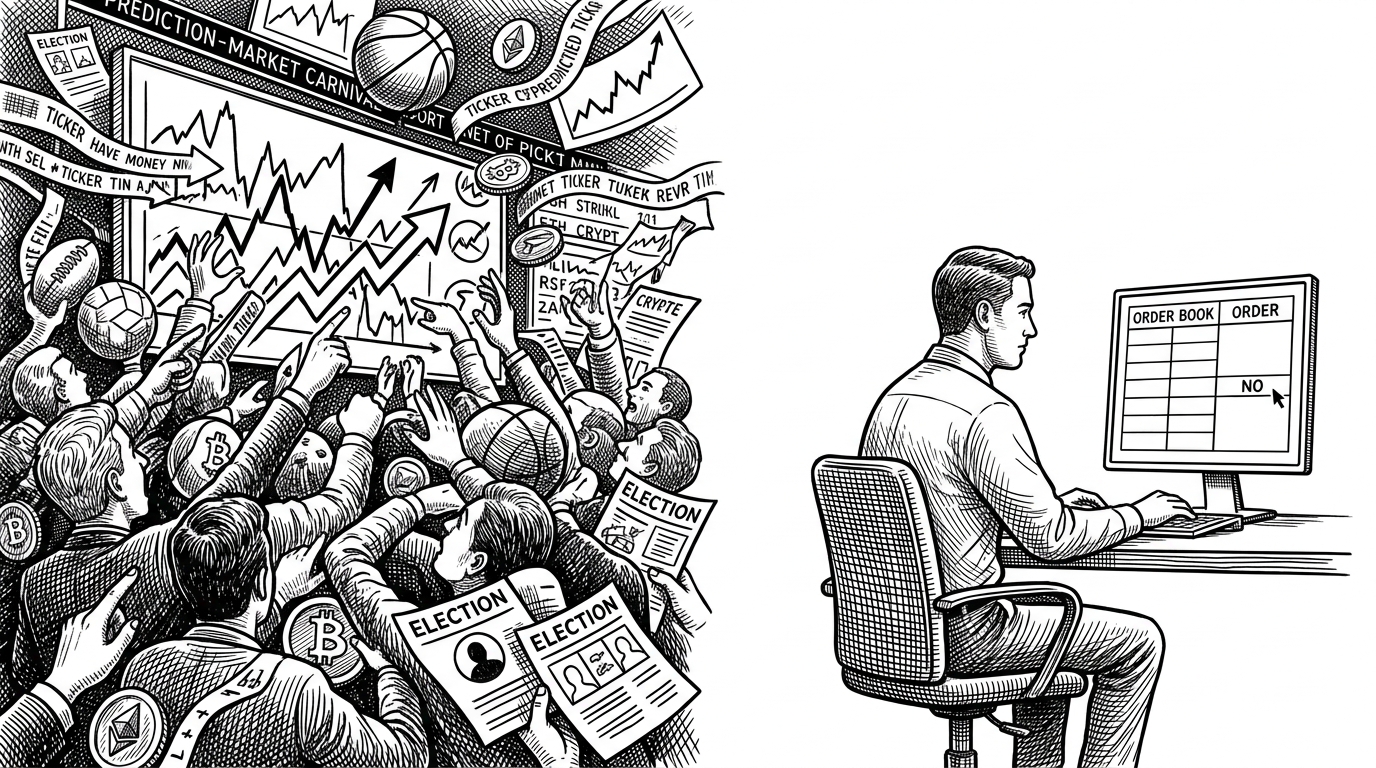
- The bot is a belief system rendered as software: it turns internet skepticism into a narrow strategy that buys NO on standalone markets.
- Its edge comes from selection, not breadth, because it filters aggressively for noisy markets where overconfidence is most likely to be mispriced.
- The engineering is defensive on purpose, with a simulator, a live exchange abstraction, ledgering, and restart recovery that treat failure as normal.
- What looks like a small script is actually a full operational loop for surviving fragile APIs without losing state or discipline.
The machine for saying “probably not”
The novelty here is not that a bot trades Polymarket. It is that the bot behaves like a thesis with a wallet attached. It assumes that hype, outrage, and narrative momentum regularly outrun reality, then searches for standalone markets where that overconfidence can be sold by buying NO.
That narrowness matters. This is not a generic trading framework with a plug-in strategy. It is a purpose-built machine for one contrarian bet, and every layer of the codebase reinforces that bias instead of broadening it.

How the filter turns culture into a market screen
The strategy starts by excluding whole categories of noise. Sports, crypto, and obvious finance chatter are pushed out first, along with keyword matches that signal a market is too crowded, too reflexive, or too easy to confuse with pure sentiment.
What remains is the interesting part: standalone events where the crowd often confuses attention for probability. The code does not try to be universally smart. It codifies a very specific kind of vibe check and then forces the market list to pass it.
Why the bot needs two exchanges, not one
The repository separates live execution from paper execution on purpose. The live Polymarket client is for actual orders. The simulator is not a toy mock. It tries to behave like the exchange, including slippage and balance constraints, so the strategy can rehearse against something that resembles reality.
| Dimension | Live exchange | Paper exchange |
|---|---|---|
| Role | Places real orders on Polymarket | Replays the strategy against simulated market conditions |
| Risk | Capital is actually at stake | No capital risk, but execution behavior is preserved |
| Value | Production trading | Strategy rehearsal and regression testing |
| Failure mode | API quirks, latency, stale balances | Only as good as the simulator’s fidelity |
| Why it matters | Catches real-world exchange behavior | Protects the thesis before money is on the line |
That pairing is more than scaffolding. It says the project thinks in terms of operational readiness. A thesis is only useful if it survives the move from notebook logic to exchange reality.
The part that keeps it alive after a crash
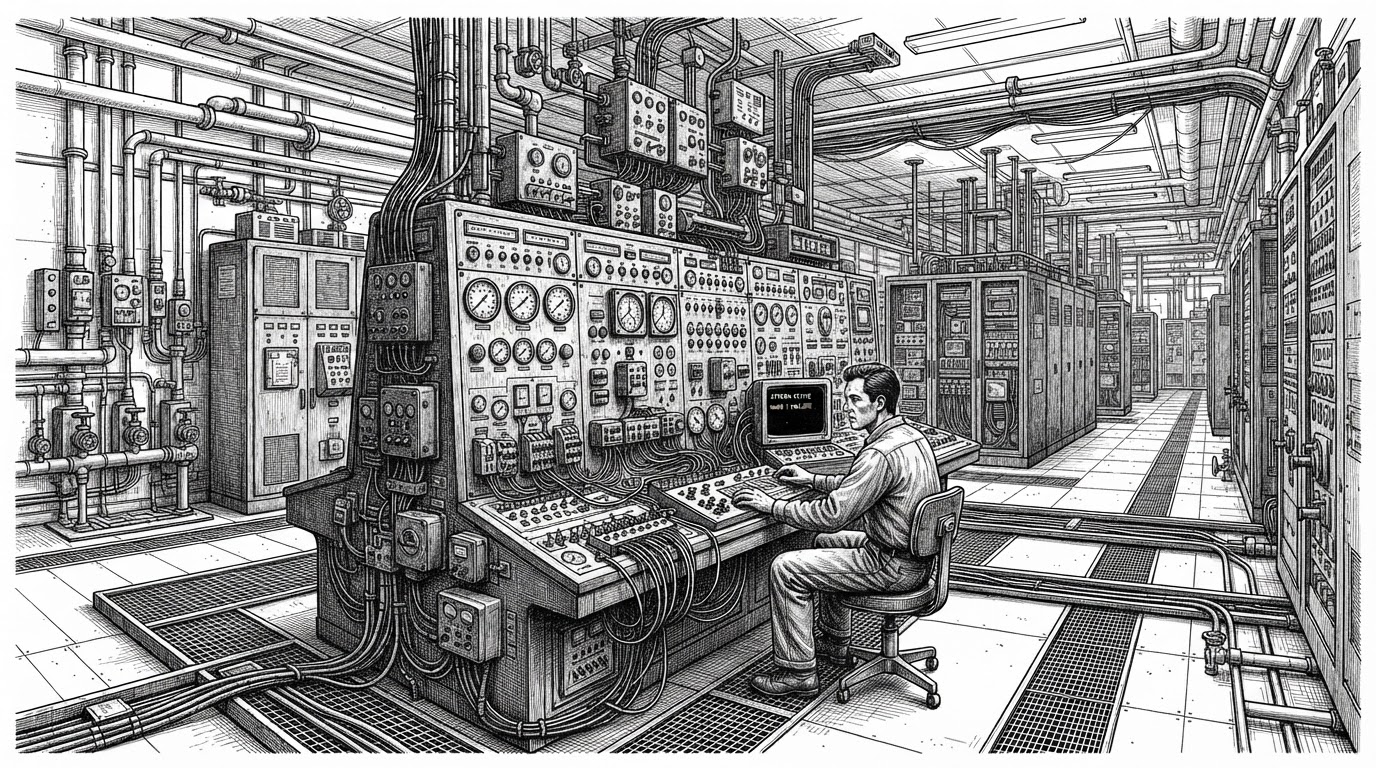
The bot assumes failure. Every order intent and fill gets written to a ledger, and recovery logic reconstructs the risk state after restart so the system does not forget what it already bought, how much it can still lose, or which trades are still live.
# Pseudocode for the recovery loop
ledger.write(order_intent)
fill = exchange.place(order_intent)
ledger.write(fill)
risk_controller.apply(fill)

# After a crash
state = live_recovery.restore_from_ledger()
risk_controller.rehydrate(state)
resume_execution()
That is the difference between a clever script and an operational bot. The code does not just place bets. It preserves intent across interruptions, which is what makes the thesis durable enough to run unattended.
Generating illustration...
The ugly details are the point
The repo’s maturity shows up in the rough edges. Timeout patching reaches into the client internals to raise limits when the exchange is slow. Error-string classification separates transient failures from definitive no-fill conditions. Proxy wallet support keeps the funding model sane.
None of that is glamorous, and that is exactly why it matters. The bot’s edge is not theoretical elegance. It is the accumulated refusal to be surprised by exchange behavior.
| Operational problem | Naive bot | This bot |
|---|---|---|
| Slow or flaky API | Retries blindly or hangs | Patches timeout behavior and keeps moving |
| Crash mid-run | Loses context or double-counts risk | Restores ledgered state before resuming |
| Exchange weirdness | Treats every error the same | Separates transient issues from definitive failures |
| Testing strategy | Mostly unit mocks | Live path plus paper execution with similar semantics |
What this bot is, and what it is not
Compared with a generic trading bot, this repo is narrower and more opinionated. Compared with a backtest-only tool, it is much more operational. Compared with a one-off Polymarket script, it is far more complete about the parts that fail in production.
That is what makes it interesting. The code is not trying to become a platform. It is trying to turn a belief about crowd psychology into a machine that can survive contact with an exchange.
| Tool type | Primary goal | What it usually lacks | Where this repo stands |
|---|---|---|---|
| Generic trading bot | Trade many things | A sharply defined thesis | Highly specialized and thesis-first |
| One-off market script | Get an order out once | Recovery, ledgering, and disciplined risk state | Operationally much more complete |
| Backtest-only research tool | Measure ideas in hindsight | Live execution and exchange reality | Runs both paper and live paths |
| This repo | Monetize anti-hype in standalone markets | Breadth on purpose | Narrow, defensive, and ready for the mess |