opentelemetry-collector-contrib: OpenTelemetry Collector Contrib: The Telemetry Control Plane Hiding in Plain Sight
How a giant Go plugin ecosystem became the standard way to translate, route, and remotely manage observability data across messy real-world infrastructure.
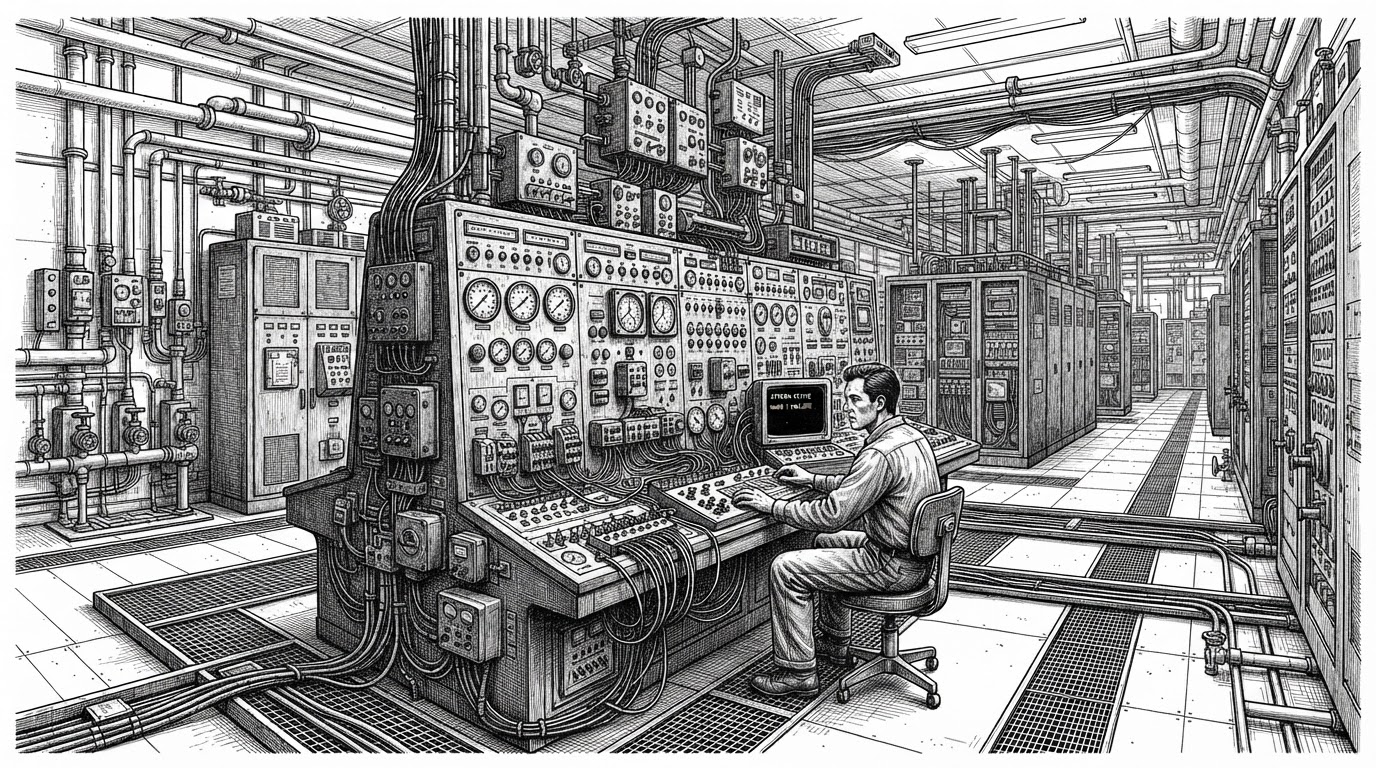
- OpenTelemetry Collector Contrib matters because it turns telemetry collection into a fleet-managed control plane, not just a local agent binary.
- Its real power comes from combining a huge integration ecosystem with the machinery needed to operate that ecosystem safely at scale.
- The repository is engineered like a federation of tiny Go modules, which keeps components decoupled while forcing the build system to do serious coordination work.
- Compared with vendor agents and lighter forwarders, Contrib is optimized for interoperability across logs, metrics, and traces, especially in messy mixed environments.
The collector is no longer just a collector. That is the most important thing to understand about opentelemetry-collector-contrib. The repo is not just a pile of receivers and exporters. It is also becoming the machinery for remotely managing fleets of collectors, with opampsupervisor turning the binary into something closer to an orchestrated substrate than a standalone agent.
The Collector Is Becoming a Fleet Primitive
The leap is subtle until you look at how the pieces fit together. A collector used to mean a process on one host, with one config file, pushing telemetry somewhere useful. Contrib now assumes a harder reality: collectors live everywhere, configs drift, nodes fail, and someone needs to keep the whole system boring under pressure.
That is where opampsupervisor changes the story. It adds a remote management loop on top of the collector, so a management server can push effective configuration through OpAMP, the supervisor can merge it with local overrides, and the runtime can restart or reload without becoming brittle.
A community member cannot be promoted to be a Collector contrib maintainer if, after their promotion, the resulting maintainers group has more than one-fourth (25%) of the members affiliated with the same employer.
Why Contrib Exists at All
Core gives the collector its stable spine. Contrib fills in the real world around it. That means vendor APIs, legacy protocols, cloud services, operational glue, and all the awkward edges that make observability useful in production instead of merely elegant on a slide.
| Project | Best at | Weakness | What it means for Contrib |
|---|---|---|---|
| Telegraf | Broad metrics collection with a huge plugin catalog | Less unified for traces and logs | Contrib wins where teams want one pipeline for all three signals |
| Fluent Bit | Lightweight log forwarding and low resource use | Less of a full telemetry control plane | Contrib trades footprint for broader protocol translation and governance |
| Datadog Agent | Tight vendor-integrated monitoring | Locks teams into one ecosystem | Contrib is the neutral off-ramp that keeps the collection layer portable |
| Grafana Alloy | Programmable observability distribution | Newer and more opinionated config model | Contrib remains the default batteries-included collector distribution |
That combination is why the repo keeps showing up as the boring answer that is actually hard to replace. It is the collector teams reach for when they need Kubernetes metrics, cloud exporter support, Kafka pipelines, and a path that does not force them into a single vendor too early.
A Repo Built Like a Federation
The layout tells you almost everything about the maintenance problem. Receivers, processors, exporters, connectors, and extensions are often split into their own Go modules. That keeps dependency boundaries sharp, but it also means the repository has to coordinate thousands of moving parts without turning into dependency soup.
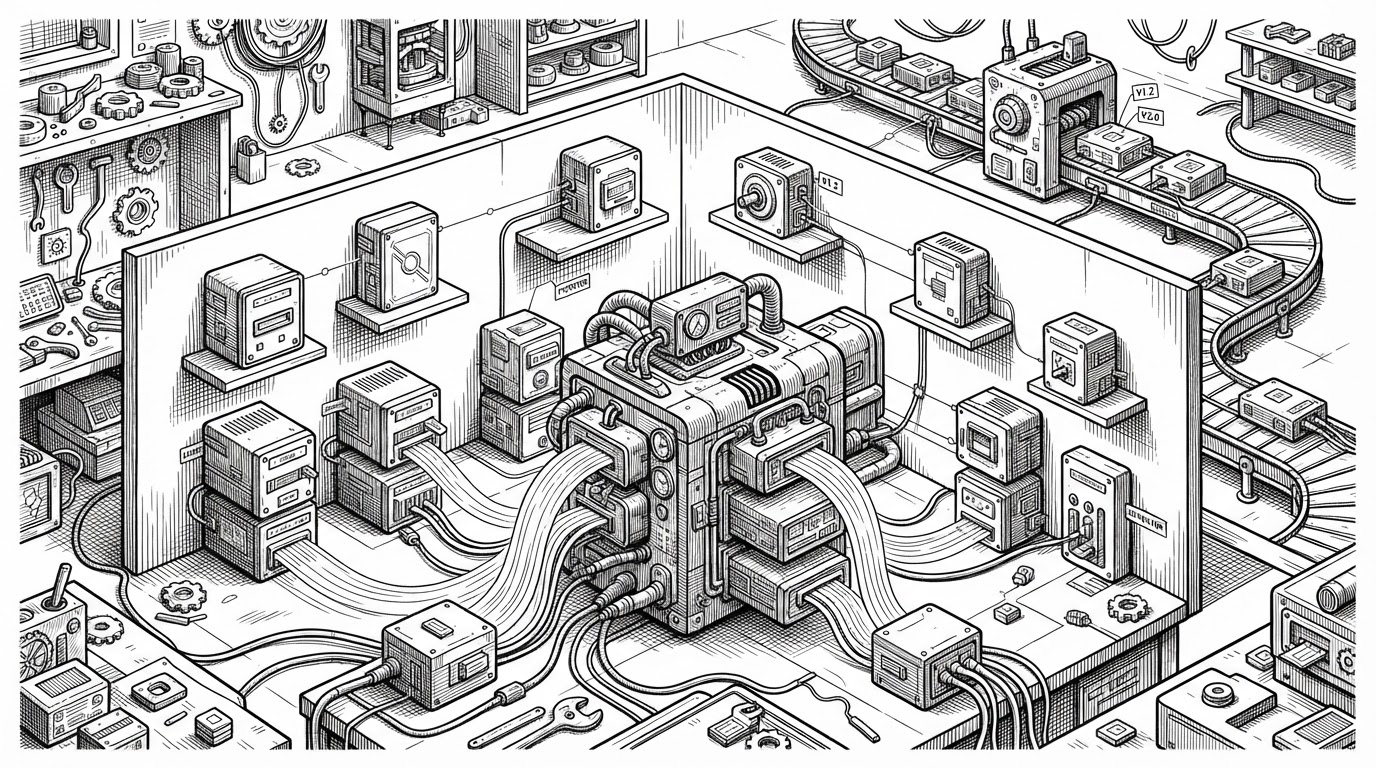
# The repo coordinates many modules instead of one monolith.
find ./receiver/[a-f]* $(FIND_MOD_ARGS)
find ./receiver/[g-l]* $(FIND_MOD_ARGS)
find ./receiver/[m-r]* $(FIND_MOD_ARGS)
find ./receiver/[s-z]* $(FIND_MOD_ARGS)

# Tooling is version-pinned through shared make logic.
GO_TOOL = go tool -modfile=$(TOOL_MODFILE)
That split matters because it lets one broken integration stay broken without dragging the entire platform down with it. It also explains why the repo leans so hard on generated metadata, shared tooling, and automation. Scale here is not a side effect. It is the product.
The Build System Is the Real Operating System
The build scaffolding is where the repository earns its keep. Makefile and Makefile.Common do more than build binaries. They pin tool versions, shard modules across CI runners, and generate the metadata that keeps hundreds of components from drifting into inconsistency.
That matters because a repo this large is not really governed by a single human workflow. It is governed by repeatability. When every contributor can add a receiver or exporter without inventing a new pattern, the build system becomes the quiet force that keeps the whole ecosystem legible.
The Safety Rails That Keep Agents From Becoming Incidents
This is where the remote-management story becomes practical. In opampsupervisor, the supervisor tracks the collector’s lifecycle, manages stop grace periods, watches for reloads, and stores a known-good configuration snapshot so bad updates can be rolled back instead of snowballing into outages.
That kind of defensive plumbing is easy to miss and hard to overstate. Telemetry agents sit in the blast radius of production incidents. If they flap, hang, or die too eagerly, they can make the observability layer vanish right when operators need it most.
The code reflects that reality. Grace periods exist so buffers can flush. Shutdown logic avoids killing processes too aggressively. Reload paths try to preserve continuity. The system is designed to fail in ways that are recoverable, not dramatic.
| Graceful path | Abrupt path | Why it matters |
|---|---|---|
| Config reload with working snapshot | Hard restart with no state | Graceful reload preserves telemetry continuity |
| Stop grace period before shutdown | Immediate process kill | Grace periods let exporters flush buffers |
| Rollback to last known good config | Keep the bad config in place | Rollback prevents a broken fleet-wide rollout |
That is the real hidden job of this repository. It does not just move signals. It keeps signal movement reliable when infrastructure gets messy.
Why This Wins Against Telegraf, Fluent Bit, and Vendor Agents
Contrib is not the smallest option, and it is not always the cheapest one to run. It wins in a different way. It gives teams one place to translate between legacy protocols, cloud services, and the OpenTelemetry data model without locking the collection layer into a single vendor story.
| Project | Best at | Weakness | What it means for Contrib |
|---|---|---|---|
| Telegraf | Metrics breadth and classic plugin ergonomics | Less native for traces and logs | Contrib is the stronger all-signals option |
| Fluent Bit | Tiny footprint and high-performance log shipping | Less of a full telemetry orchestration layer | Contrib is heavier, but more comprehensive |
| Datadog Agent | Integrated SaaS monitoring | Vendor lock-in | Contrib keeps the pipe neutral |
| Grafana Alloy | Opinionated configuration and observability workflows | Still a newer distribution | Contrib remains the broad community baseline |
That is why the repo keeps winning by default in teams that have to live in the middle. If the environment is clean and narrow, lighter tools can be enough. If the environment is messy, multi-cloud, and politically constrained, Contrib becomes the most defensible compromise.
What the Ecosystem Is Really Optimized For
The deepest truth about this repository is that it is optimized for interoperability, not elegance. That is the right trade-off for observability infrastructure. Modern telemetry is fragmented, and someone has to translate between systems without forcing everyone to agree on one stack.
That is what makes Contrib feel less like a collection of plugins and more like a vendor-neutral operating system for telemetry ingestion. It is a layer that can absorb chaos, standardize enough of it to be useful, and still leave teams free to move as their architecture changes.