KRISHI-ASTRA-SETU: The Marketplace That Treats Trust Like Core Infrastructure
A deep look at the manual escrow flow, KYC gating, handover tokens, and evidence-driven rentals behind a rural equipment-sharing platform.
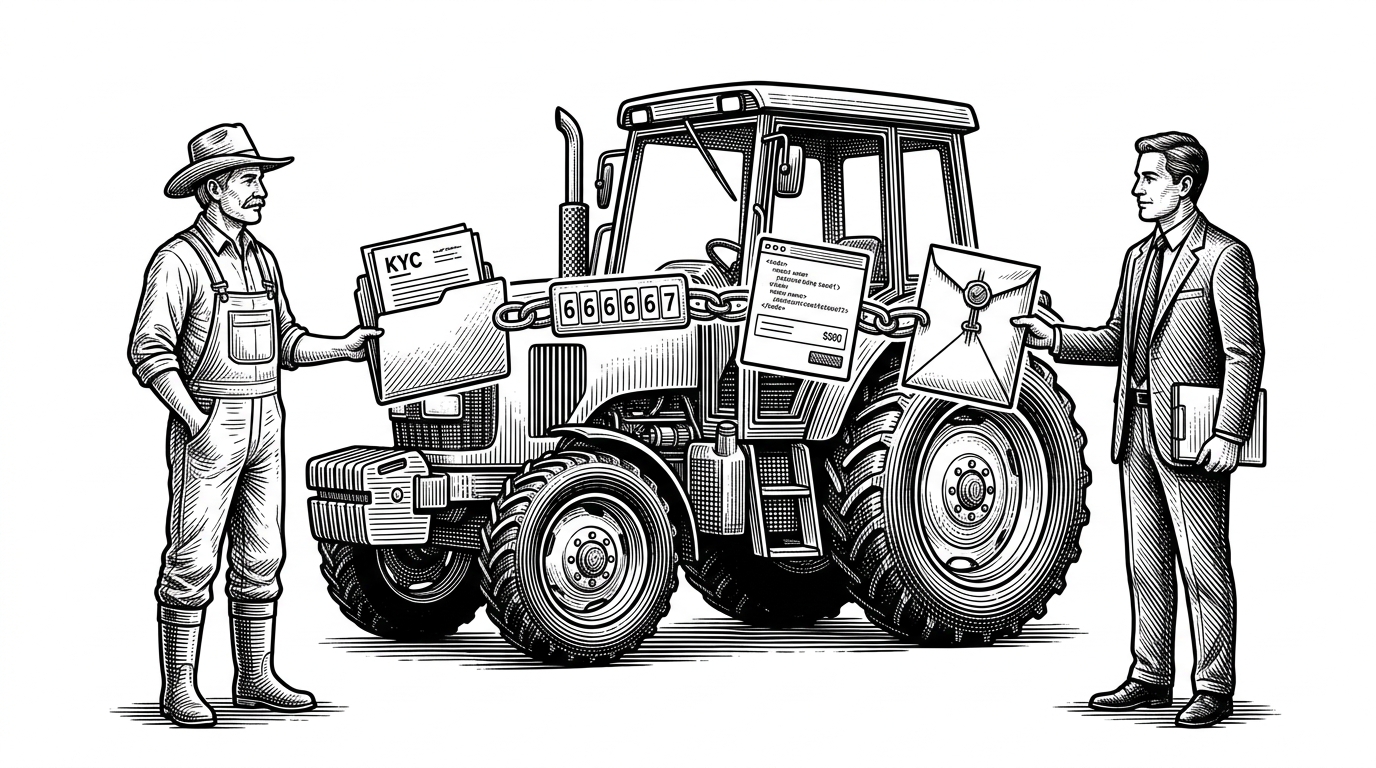
- KRISHI-ASTRA-SETU treats trust as the product, not a side effect, by turning identity checks, handover codes, payment proofs, and return evidence into required transaction steps.
- The repo’s most interesting move is its manual escrow logic, which accepts that rural commerce often needs human verification instead of pretending every payment can be fully automated.
- KYC is modeled as operational state, not a profile field, so verified identity becomes a gate that changes what the user can actually do.
- The stack is classic MERN, but the design choices are unusually pragmatic: localization, evidence capture, and graceful failure handling make the app feel built for a real market, not a demo.
The Real Product Is Trust
KRISHI-ASTRA-SETU is not trying to be another generic agri marketplace. Its real job is to make a high-friction, high-trust rural rental possible when the asset is expensive, the users may not know each other, and the handoff happens in the physical world.
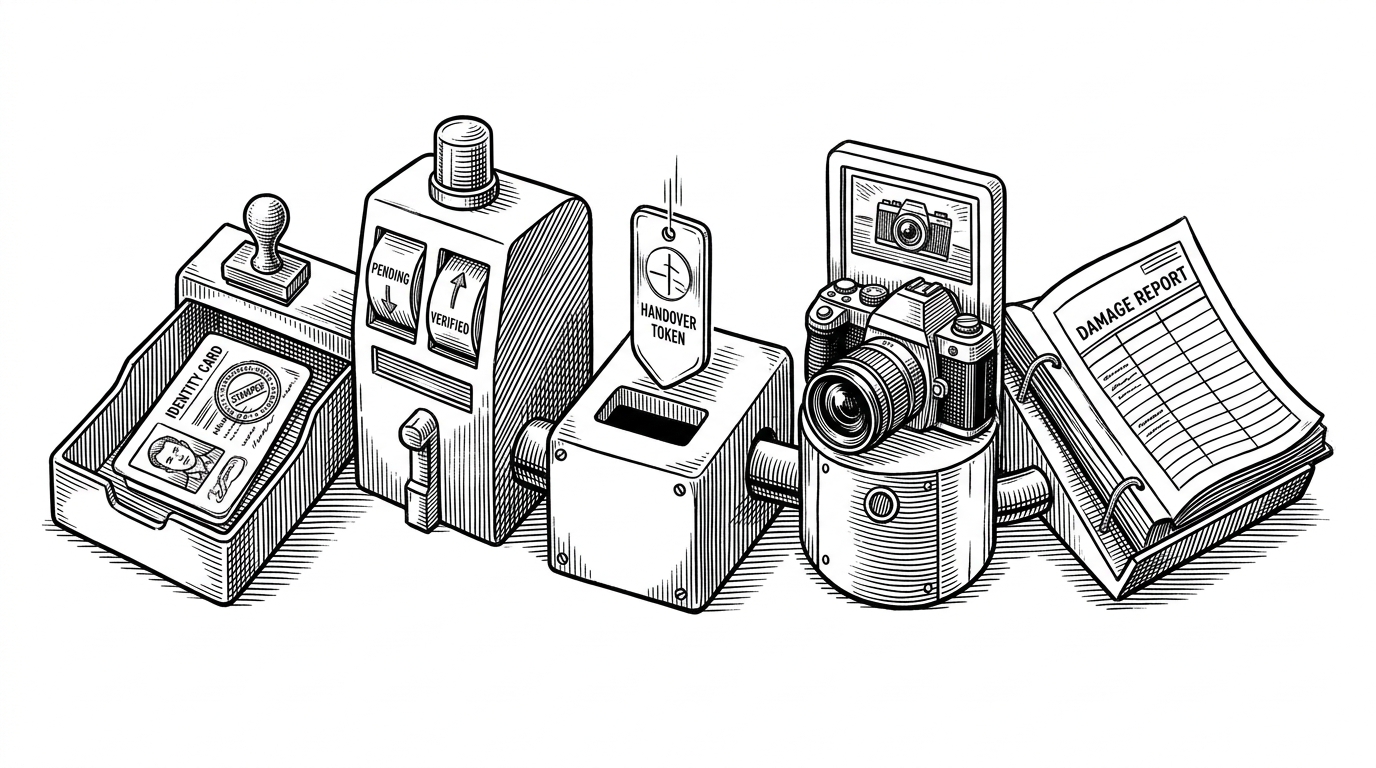
That is why the repo is most interesting when you read it as a trust system. KYC comes first. A six-digit handover token comes later. Payment proof is uploaded before release. Return photos and geo-tags close the loop. The platform is not just matching supply and demand. It is deciding what happened, and whether that is enough to let the next step proceed.
How a Rental Becomes Verifiable
The booking model is where the project stops sounding like a marketplace and starts looking like a transaction engine. The flow is staged, and each stage asks for a different kind of evidence.
A user submits a request. Payment proof is uploaded. An admin verifies it. Only then does the rental move toward handover. At pickup, the handover token acts like a physical confirmation code, which means the app is not just recording intent. It is coordinating proximity.
// Booking state logic, conceptually
const statusFlow = [
  'requested',
  'payment_proof_uploaded',
  'admin_verifying',
  'handover_token_exchanged',
  'rental_in_progress',
  'return_evidence_submitted',
  'completed'
];

function canAdvance(booking) {
  return booking.kycStatus === 'Verified' && booking.paymentProof && !booking.isRejected;
}

function needsManualReview(booking) {
  return booking.status === 'payment_proof_uploaded' || booking.status === 'admin_verifying';
}
Why Manual Escrow Exists Here
The manual escrow pattern is the project’s clearest product decision. Instead of assuming a clean payment gateway and instant settlement, the repo encodes a messier reality: screenshots are used as proof, an admin has to check them, and only then does the transaction continue.
That sounds primitive if you only think in terms of global SaaS defaults. It looks pragmatic if you think about local constraints: payment behavior, support burden, regional operating costs, and the fact that the physical handoff still matters more than the checkout screen. KAS does not hide that friction. It organizes it.
| Project type | Primary job | Trust mechanism | Data it cares about | Where KAS differs |
|---|---|---|---|---|
| Standard marketplace | Sell or rent with low-friction checkout | Automated payment and account reputation | Price, inventory, transaction completion | KAS makes human verification part of the flow |
| Agri AI recommendation tool | Recommend crops or inputs | Model confidence and sensor data | Soil, weather, yield, fertilizer | KAS is about exchange, not prediction |
| Farm ERP | Manage operations and records | Role-based admin control | Assets, planning, accounting | KAS is peer-to-peer and evidence-driven |
| KRISHI-ASTRA-SETU | Rent physical equipment across trust boundaries | KYC, payment proof, handover token, return evidence | Identity, status, geo-tags, photos, damage reports | KAS formalizes the handoff itself |
Identity Is Not a Form Field
The `User` model and auth controller make identity operational. Aadhaar, voter ID, and bank passbook uploads are not decorative profile fields. They are part of a KYC gate that determines whether the user can move through the system at all.
The repository also generates a readable member ID, which is a small but smart detail. It gives the system a membership structure instead of a disposable account structure. That matters in a marketplace where reputation, traceability, and local legitimacy are doing real work.
// Conceptual shape of the identity gate
const user = {
  name,
  mobile,
  district,
  kycStatus: 'Pending',
  documents: {
    aadhaar,
    voterId,
    bankPassbook
  }
};

if (user.kycStatus !== 'Verified') {
  throw new Error('KYC required before booking');
}
The Frontend Refuses to Fail Silently
This is a student-scale repo, but it still makes adult decisions about failure. The frontend includes a custom error boundary, which means runtime crashes are surfaced as useful information instead of a blank screen.
That matters because resilience is part of product quality. If your app handles documents, booking states, and manual review, then a silent crash is not a minor bug. It is a broken workflow. The code shows that the developer understood that.
How It Stacks Up Against Other AgriTech Ideas
KAS does not belong in the same bucket as crop prediction tools, generic classifieds, or farm ERP software. It is closer to a transaction protocol for expensive physical assets. That is a narrower niche, but also a sharper one.
| System | What it optimizes | Main abstraction | What KAS is not |
|---|---|---|---|
| Crop recommendation tools | Better agronomic decisions | Prediction | Not a model that tells farmers what to plant |
| Generic agri marketplaces | Faster posting and search | Listing and checkout | Not just a catalog of equipment |
| Farm ERP | Operational control | Planning and accounting | Not an internal business management suite |
| KRISHI-ASTRA-SETU | Trustworthy equipment exchange | Proof and staged release | Not prediction, and not a passive classifieds board |
What This Repo Gets Right
The strongest thing about KRISHI-ASTRA-SETU is not that it uses a modern stack. It is that the stack serves a real workflow. Localization is present. Validation is strict. Evidence capture is built in. Manual review is not an afterthought.
That combination makes the project feel constraint-aware. It does not romanticize automation. It translates a rural trust problem into software primitives the code can actually enforce. That is the mark of a useful system, even if it is still early-stage.