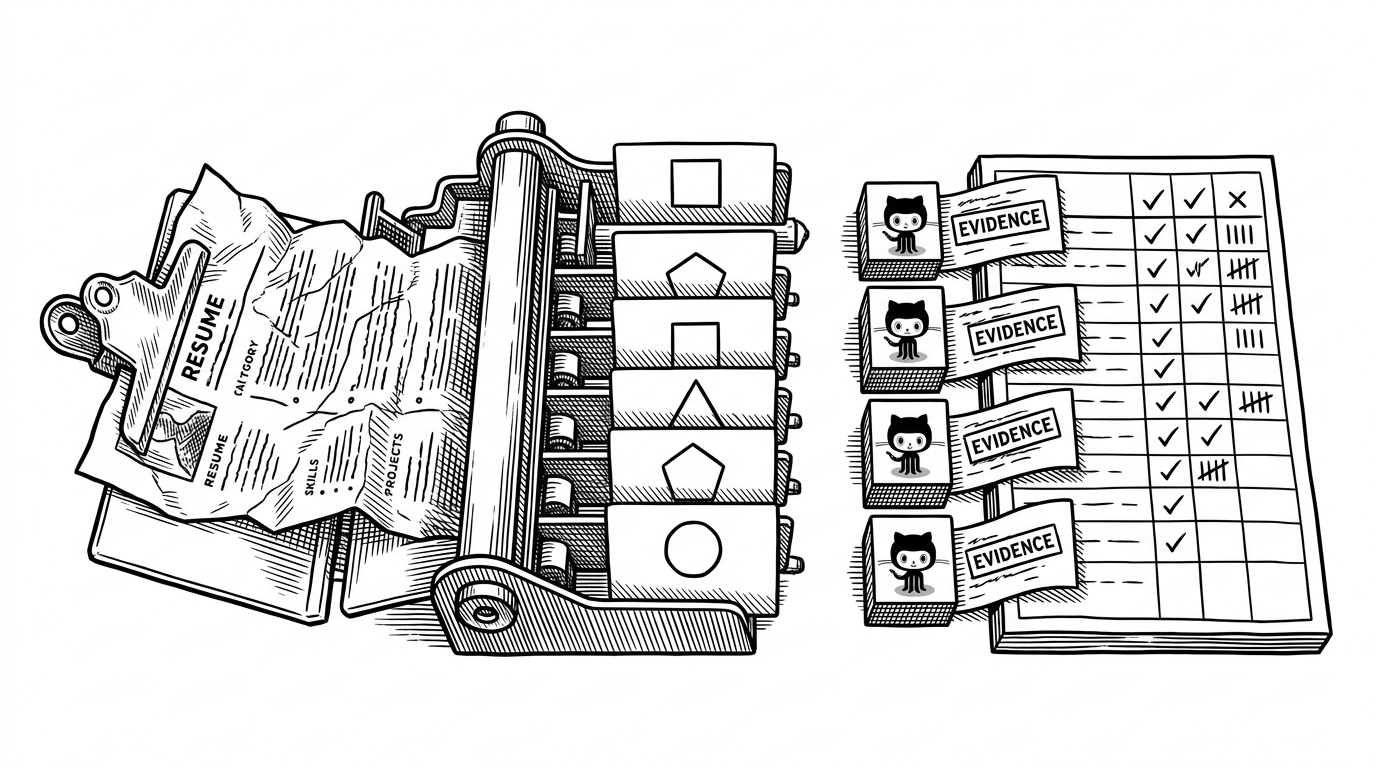
founder-mode-cancer: The Personal Oncology Stack That Treats Cancer Like a Systems Problem
How one repository turns genomic data, single-cell analysis, neoantigen ranking, and structural validation into a patient-owned decision engine for layered cancer treatment.
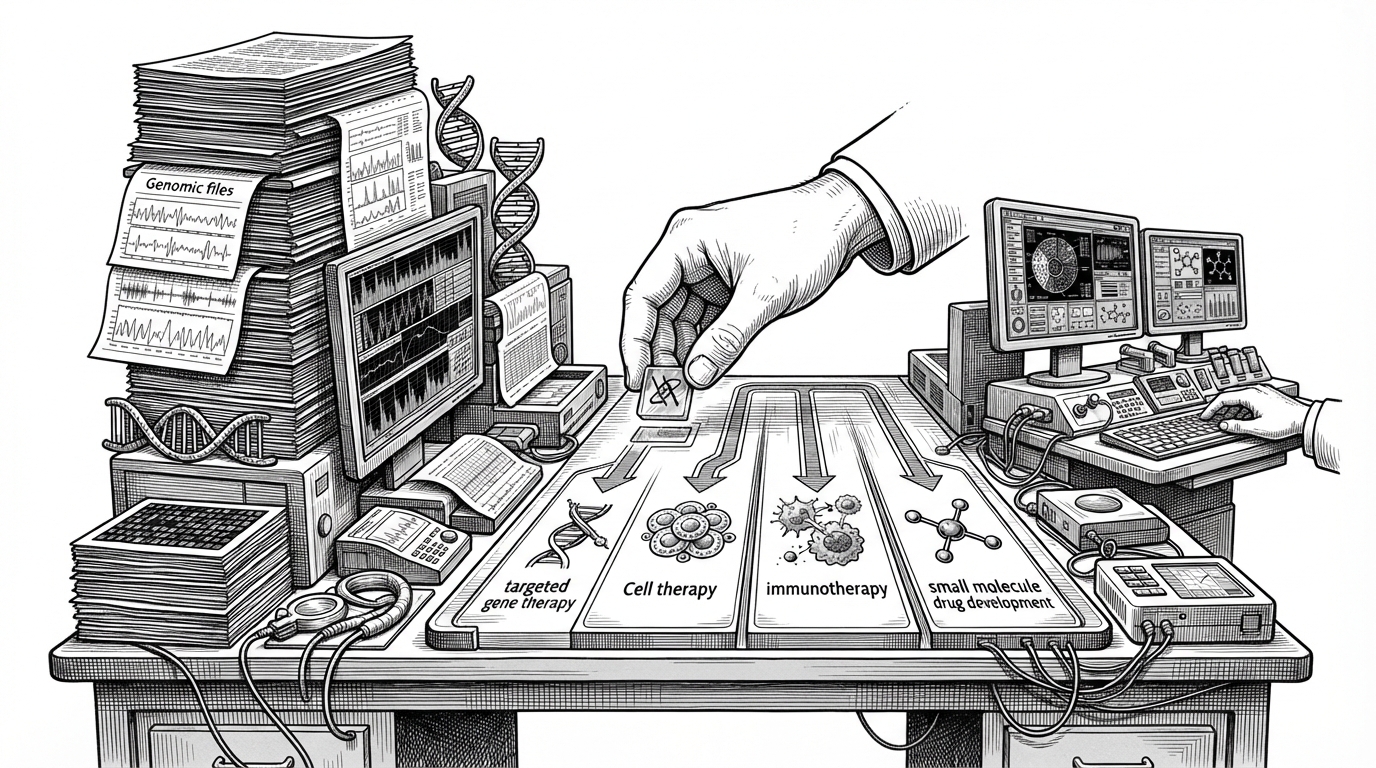
- founder-mode-cancer treats oncology as an orchestration problem, not a search for one magic marker.
- The pipeline narrows uncertainty in stages, then synthesizes several treatment layers instead of recommending a single path.
- Structural validation turns predicted neoantigens into provisional hypotheses until folding confidence makes them worth acting on.
- The repo’s hardware target matters because it pushes precision-oncology workflows toward a smaller, more personal footprint.
The repo is not analysis. It is a treatment thesis.
Most bioinformatics repos stop at analysis. This one keeps going until the analysis becomes a strategy. Its output is not a prettier report or a single ranked list. It is a layered treatment recommendation built for one patient, with the code acting like a clinical operating system.
I quit my day job and started going founder mode on my cancer. And I went all out.
That framing changes how you read the repository. The code is not trying to win a benchmark on a narrow task. It is trying to compress a sprawling cancer workup into a decision engine that can combine diagnostics, target discovery, neoantigen ranking, structural checks, and treatment synthesis.
What Founder Mode means in code
The philosophy shows up in the structure. The repo is built around maximal diagnostics, new treatments, parallel treatment, and scaling for others. That is not just a narrative device. It is a design constraint that keeps the workflow from collapsing back into a linear, doctor-owned protocol.
| Layer | Old model | Founder-mode-cancer |
|---|---|---|
| Diagnostics | One-off tests and waiting | High-volume data acquisition across genomics and single-cell analysis |
| Decision style | Sequential escalation | Parallel treatment layers |
| Risk handling | Trust the first strong prediction | Keep narrowing uncertainty before acting |
| Compute mindset | Institutional-scale assumptions | Consumer hardware plus open tooling |
The six-phase pipeline that turns raw biology into action
The pipeline is simple on paper and ambitious in practice: Acquire, Annotate, scRNA-seq, Neoantigens, ESMFold, Treatment. Each phase removes uncertainty from a different angle. The goal is not to stack more data forever. It is to turn data into something the final recommendation layer can trust.
PHASES = [
    "Acquire",
    "Annotate",
    "scRNA-seq",
    "Neoantigens",
    "ESMFold",
    "Treatment",
]

# Fail-soft design in annotation:
# Prefer VEP when available, but keep a lighter parser path alive.
# Each stage should degrade gracefully instead of breaking the workflow.
That fail-soft approach matters. If a heavyweight annotation dependency is missing, the pipeline can still keep moving. The point is resilience, not purity. For a patient-owned workflow, portability is part of correctness.
The real leap: surface markers and structure, not just mutations
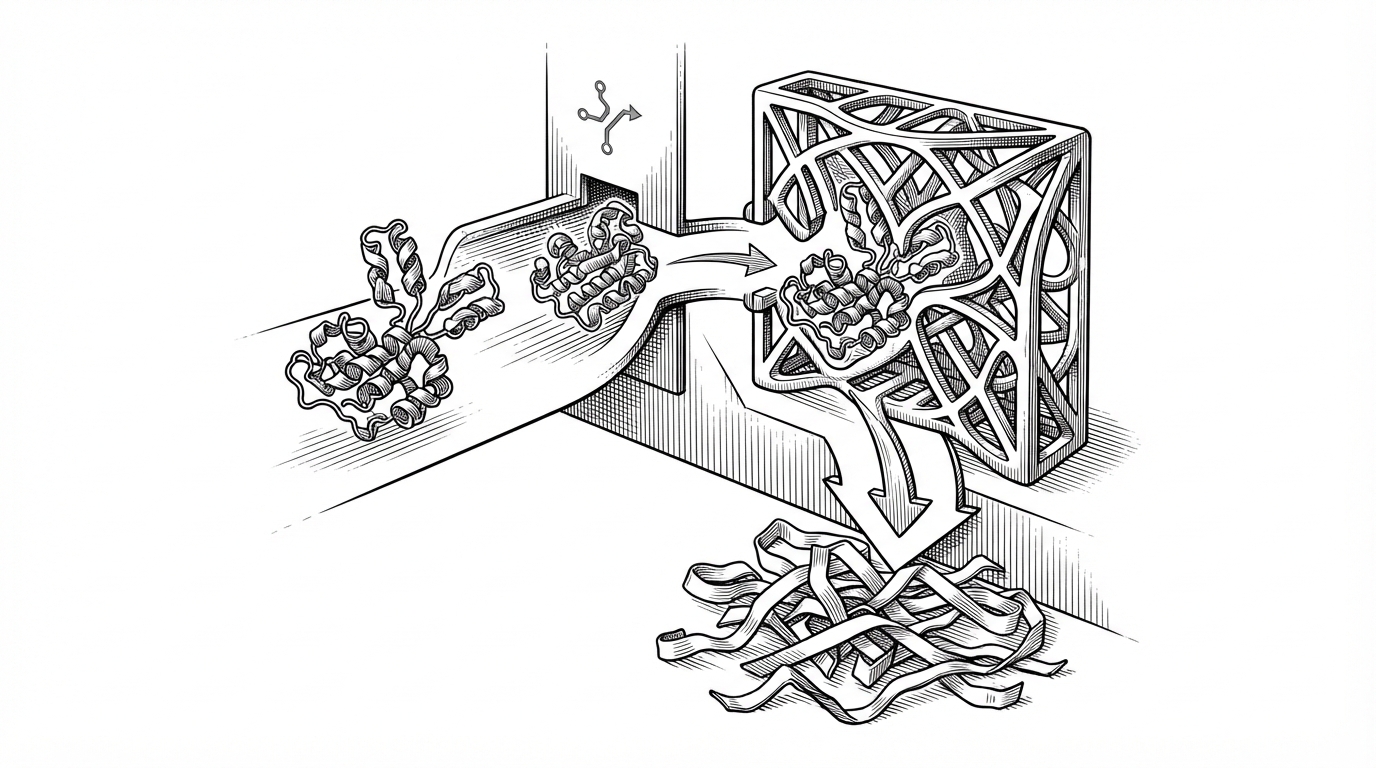
This is where the repo gets interesting. The single-cell analysis phase does not merely count mutations. It looks for visible targets, like FAP and CD276, that can inform surface-level attack surfaces. Then the neoantigen phase moves from affinity to structure, treating a predicted binder as a candidate, not a conclusion.
Why structural validation changes the game
The structural step is the sharpest conceptual upgrade in the whole repo. Many pipelines stop at predicted binding scores. This one asks a stricter question: does the peptide still look credible when the fold is examined? That is why pLDDT thresholds and tiering matter. They turn a ranking into a funnel.
| Criterion | Binding-only pipeline | This repo |
|---|---|---|
| First filter | MHC affinity | MHC affinity plus structure |
| Evidence standard | One score | Tiered confidence |
| Failure mode | False positives survive | Candidates can be demoted before recommendation |
| Output | Ranked shortlist | Treatment synthesis |
Why this can run on a consumer machine
The hardware target is part of the story. Optimizing for an Intel NUC and an RTX 3060 signals a deliberate refusal to treat precision oncology as a privilege of institutional compute. It shrinks the footprint without pretending the biology is small.
| Compute model | Assumption | Implication |
|---|---|---|
| Institutional HPC | Big cluster, dedicated staff | Powerful but gated |
| Founder-mode-cancer target | Compact machine, open tooling | Portable and personally runnable |
| Typical research workflow | Share results after the fact | Iterate locally on your own data |
That does not make the problem easy. It makes the workflow more reproducible for a single person who needs to act on their own data. In a field where infrastructure often decides who gets to ask the question, that is a meaningful shift.
How it compares to the older neoantigen toolchain
| Project | What it is best at | What it leaves to the user | What founder-mode-cancer adds |
|---|---|---|---|
| founder-mode-cancer | End-to-end orchestration | Clinical synthesis and prioritization | Parallel treatment logic, structural validation, patient-owned workflow |
| pVACtools | Comprehensive neoantigen toolkit | Pipeline assembly | More explicit decision layer |
| OpenVax / Vaxrank | Neoantigen ranking | Broader treatment integration | Structure-aware filtering and strategy synthesis |
| NeoDisc | High-accuracy clinical pipeline | Patient-led iteration | Consumer hardware posture and open orchestration |
The comparison is not about winners and losers. It is about scope. The older tools are strong specialists. This repo tries to be the system that coordinates specialists into a single patient-facing plan.
The maintainer, the story, and the public dataset
The skill packages the entire framework into 7 files (1,321 lines) with decision workflows, open-source pipeline references, regulatory navigation, MRD monitoring interpretation, and AlphaFold/RFdiffusion structural biology integration.
Carlos D. Escobar-Valbuena’s role matters because this is not just a code dump. It is a curated framework around a public dataset, a set of workflows, and a specific patient journey. That makes the repository useful in two ways at once: as a record of one case, and as a template for how similar cases might be organized.
The public dataset changes the audience. It moves the project from a private treatment stack to something researchers can inspect, challenge, and extend. That is the most durable part of the release. Not the drama, but the possibility of reuse.