R00TS: A Word Cloud With a Backup Plan
It turns word submission into a ritual, then quietly keeps the ritual intact with local fallback, dataset snapshots, and a DataManager that refuses to let the experience die with the server.
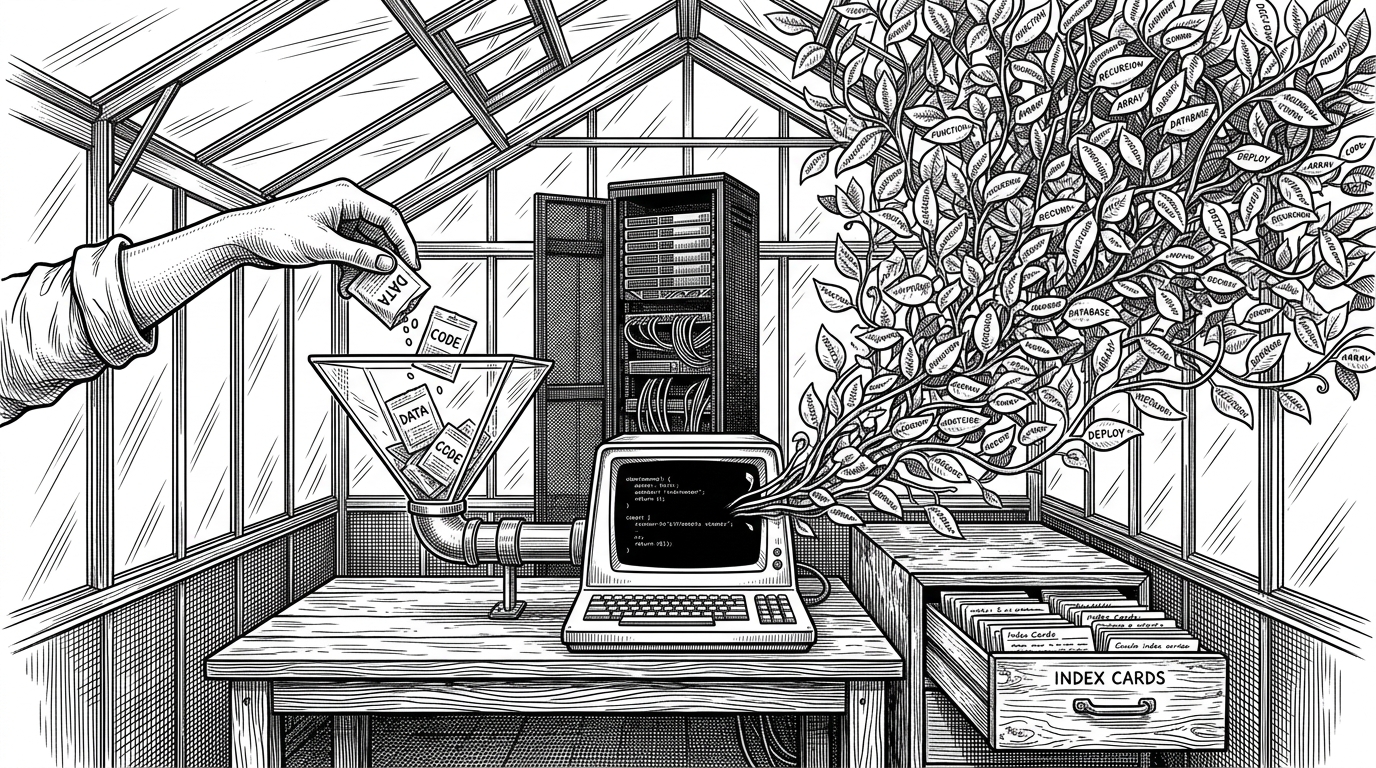
- R00TS succeeds because it treats persistence as part of the experience, not as a backend detail.
- The repo's ritual language is not cosmetic, because the interface, visualization, and dataset export all reinforce the same belief system.
- DataManager is the real center of gravity, since its fetch-first fallback keeps one submission flow alive across network failures.
- The project competes on meaning, not efficiency, which is why it feels like a prototype for participation rather than a conventional app.
Most word cloud apps are forgettable because they treat input as disposable. R00TS does the opposite. It turns a submission into an act with consequences, then backs that feeling with a storage path that survives outages.
The spell still works when the server does not
The first surprise in the repo is not the metaphysics. It is the reliability. The browser asks the API first, but when that path fails, DataManager shifts to localStorage without forcing the user to repeat anything. That means the experience keeps its shape even when the network does not.
Why elder-plinius built a vocabulary garden
The project comes from elder-plinius, a developer whose public work often treats AI systems as cultural objects as much as software. R00TS fits that pattern. It turns language into something you can plant, count, snapshot, and stage again, which is why the interface feels closer to a ritual than a dashboard.
Words as seeds, datasets as harvests
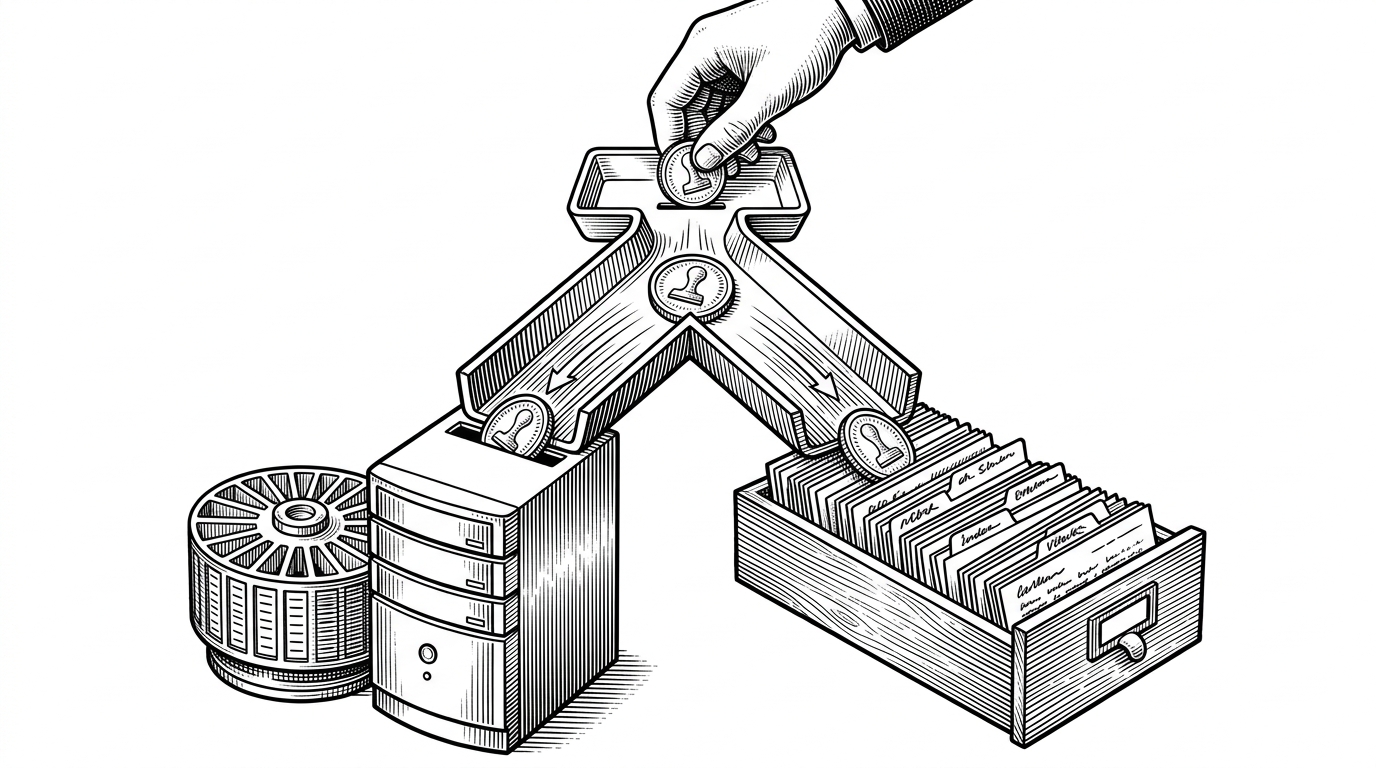
That metaphor is not decorative. The repo counts repeated submissions, grows the visual cloud from frequency, and preserves snapshots of the current state as datasets. A contribution is not just a line item. It becomes part of a living record.
async function addWord(word) {
  try {
    const saved = await api.addWord(word)
    cacheWords(saved)
    return saved
  } catch (err) {
    const words = loadLocalWords()
    words[word] = (words[word] || 0) + 1
    saveLocalWords(words)
    return words
  }
}

function saveDataset(words) {
  localStorage.setItem('dataset', JSON.stringify(words))
}
How DataManager keeps two realities in sync
DataManager is where the idea becomes engineering. It tries the network, keeps the browser state warm, and hands the visualization the same data shape no matter which path succeeded. D3 handles the cloud geometry, while GSAP gives the submission a burst of motion so the user sees the system respond immediately.
The important move is not that the app has a backup. It is that the backup uses the same user action, the same visual response, and the same data model. The experience does not fracture when the server goes away, and that is what gives the project its ritual quality.
What R00TS is really competing with
| Pattern | How it behaves offline | What the user is doing | What the app is trying to make feel real |
|---|---|---|---|
| Normal web form | Blocks or fails | Submitting data | Efficiency |
| Local-first note app | Keeps working locally, syncs later | Capturing private notes | Personal continuity |
| Conventional survey | Usually assumes a live connection | Answering questions | Measurement |
| R00TS | Falls back transparently, then exports snapshots | Planting a word into a shared vocabulary garden | Meaningful participation |
That table is the real frame for the repo. R00TS is not chasing speed or minimal friction in the usual product sense. It is trying to make contribution feel durable, communal, and slightly ceremonial, which is a very different design target.
A concept project with real engineering discipline
R00TS is best understood as a worldview with plumbing. The styling and metaphors do a lot of persuasion work, but the fallback layer is what keeps the idea from collapsing into theater. That combination is the repo's real strength. It makes an act feel symbolic without making the software fragile.