`langgenius/dify-official-plugins`: The Repo That Splits Dify’s Brain in Two
Models, tools, agent strategies, and data sources stop being core code and become governed extensions, with a ReAct parser that turns live model text into action.
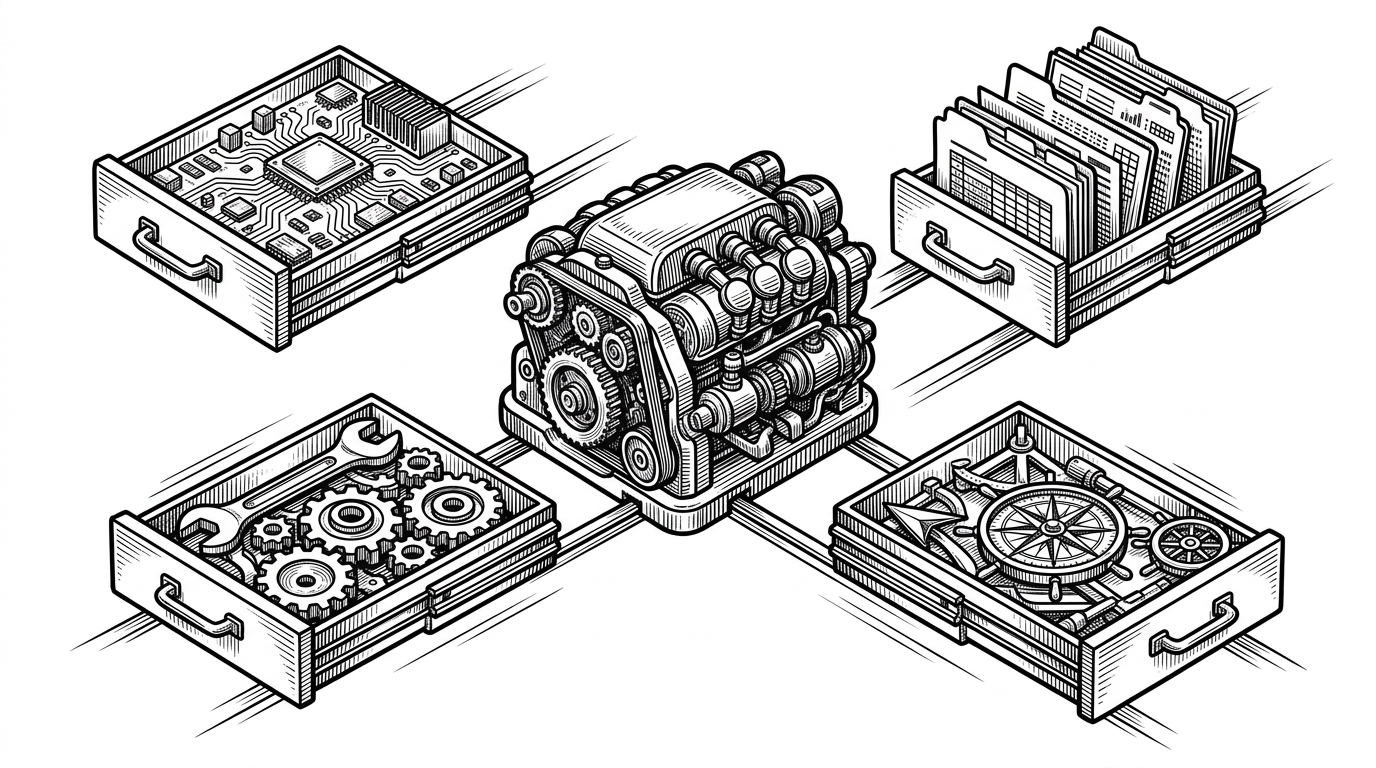
- Dify’s official plugins turn extensibility into a governed boundary instead of a loose pile of add-ons.
- The ReAct parser is the clearest proof that this repo is runtime infrastructure, because it converts streaming model text into executable structure.
- Manifests, permissions, and resource limits keep the plugin layer safe enough for the core to stay stable while integrations change around it.
- The real strategic value sits in data-source plugins, where enterprise systems like S3 and GitHub are brought into RAG without turning the platform into integration spaghetti.
The most interesting thing in this repo is not the catalog of plugins. It is the machinery that lets Dify treat messy, streamed model output as something it can trust. That is the difference between a plugin marketplace and a control plane.
The trick: turning a noisy stream into a ReAct loop
The ReAct parser is the sharpest proof that this repository is doing real runtime work. It does not wait for a clean final blob of text, then try to make sense of it later. It classifies the stream as it arrives, keeps internal state, and decides when a thought becomes an action.
Dify is an open-source platform for developing LLM-powered AI applications, designed to help developers and businesses efficiently build, deploy, and manage AI-driven solutions.
That is why the implementation details matter. The parser uses prefix matching, not naive parsing, because provider output is rarely polite. It also strips away artifacts such as stray thinking tags, so the loop keeps moving even when the model stream is only half-formed. In other words, Dify is not pretending language models are tidy. It is building around their mess.
Why Dify pulled its extension layer out of the core
The plugin split is an architectural bet. Dify moved models and tools out of the main repository and into official plugins so the core can stay stable while the surface area around it keeps changing. That is a clean answer to a very unclean problem: model APIs evolve, connectors break, and agent behavior shifts under your feet.
Dify's models and tools were originally stored in the main Dify repository. However, starting from Dify v1.0.0 (February 2025), all models and tools have been migrated into plugins and are now stored in this repository.
That split is not just organizational. It creates a line between the stable product and the volatile edges. Models, tools, agent strategies, and data sources each get a dedicated plugin shape, which makes the platform feel less like a monolith and more like a governed operating layer.
The contract that keeps the split safe
plugin = Plugin(DifyPluginEnv(MAX_REQUEST_TIMEOUT=240))

if __name__ == "__main__":
    plugin.run()
The entry point is deliberately small, which is the point. Each plugin runs as its own process or container, then talks back to Dify through the plugin SDK. That makes the extension layer easier to isolate, version, and limit without dragging the core into every integration decision.
The real guardrails live in the manifest. The repo uses manifest-driven contracts to declare minimum Dify versions, supported architectures, permissions, and resource limits. In the cot agent path, for example, the strategy asks for model and tool permissions because it needs to orchestrate both, but that power is still bounded by the plugin runner.
API selection is now fully controlled by `api_protocol`.
That kind of constraint sounds boring until a platform starts scaling. Then it becomes the difference between a plugin ecosystem and a permissionless mess. The contract gives Dify room to add new protocols, new providers, and new behaviors without forcing every consumer to relearn the core.
Data sources are where the abstraction gets real
The most concrete plugins are the data-source connectors. The S3 and GitHub integrations show the real job of the layer: get private, messy, rate-limited enterprise data into the retrieval pipeline without turning the main product into a pile of bespoke adapters. Pagination, credential handling, and document normalization are all part of the job.
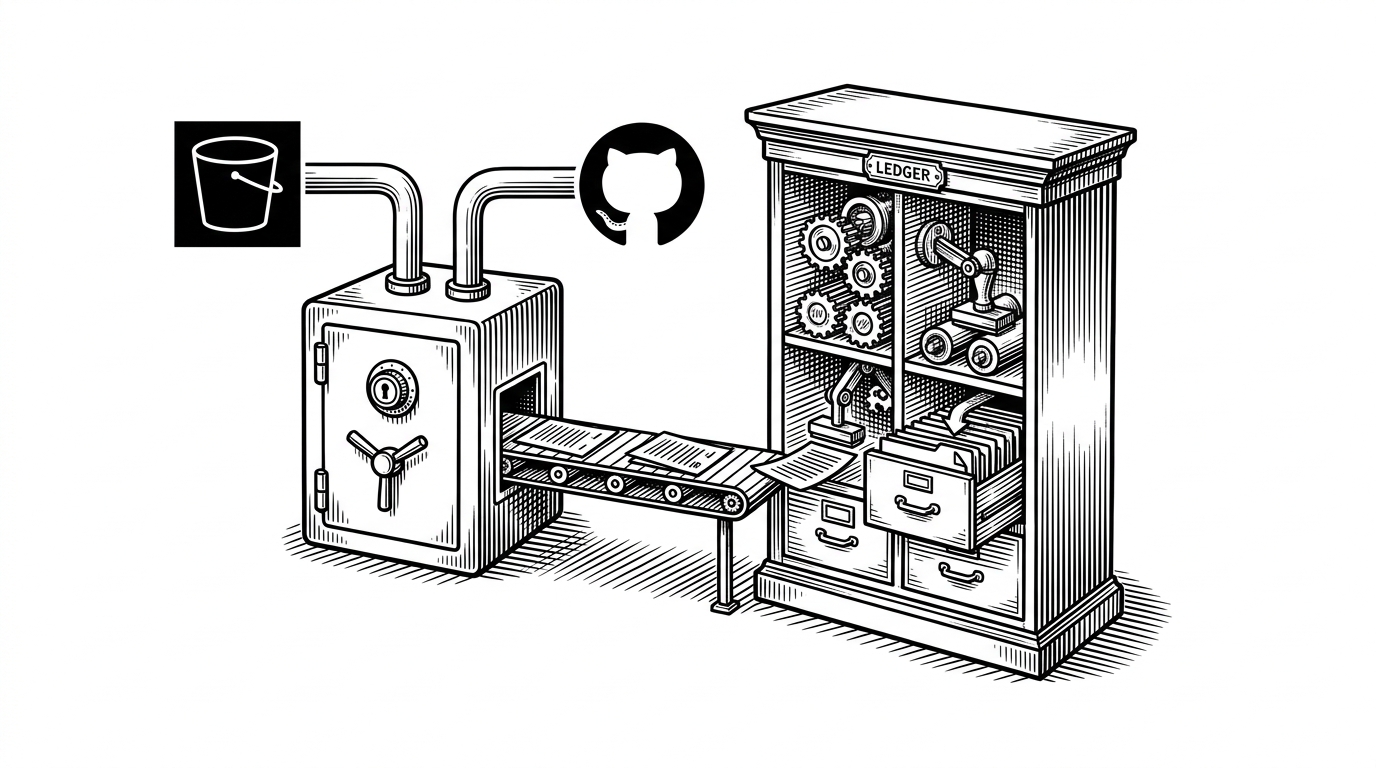
This is where the abstraction stops being theoretical. A plugin layer only matters if it can absorb real-world friction, and these connectors are all friction. The value is not just that they exist. It is that they live outside the core, where they can evolve without destabilizing the rest of the platform.
What Dify built, and what it is not
| Platform | Primary abstraction | Extensibility model | Governance | Best fit |
|---|---|---|---|---|
| Dify official plugins | A plugin layer for models, tools, strategies, and data sources | Manifested, official plugins that run through the Dify plugin SDK | High. Permissions, versions, and runtime limits are explicit | Teams that want an open-source app platform with guardrails |
| LangChain | A programming framework for LLM apps | Code-first libraries and integrations | Low to medium. Governance is mostly up to the app team | Developers who want maximum flexibility |
| Flowise | A visual builder on top of LangChain | Drag-and-drop flows with connectors | Medium. Easier than raw code, but still workflow-centric | Teams that want fast prototyping in a UI |
| LlamaIndex | RAG and data ingestion tooling | Indexing and retrieval components | Medium. Strong on data, less on product governance | Data-heavy retrieval systems |
| OpenAI Assistants API or Azure AI Studio | Managed platform primitives | Closed extensions inside a vendor surface | High inside the vendor boundary, low outside it | Teams that prefer hosted convenience over control |
The key difference is not the number of integrations. It is where control lives. Dify pushes control into an official, versioned plugin boundary. LangChain gives you the building blocks. Flowise gives you a visual workflow. LlamaIndex goes deep on retrieval. Proprietary platforms give you convenience inside a fenced garden.
The real design lesson
The lesson here is bigger than Dify. If a platform expects its ecosystem to change quickly, then extensibility has to be designed like a product surface, not treated like a bag of hooks. Dify’s official plugins are a good example of that discipline. The core stays calm. The volatile parts get a home. That is how you build a system that can grow without collapsing under its own integrations.