Exo: The Local AI Cluster That Turns Macs Into a Frontier-Model Machine
How a Python-and-Rust orchestration layer, topology-aware sharding, and RDMA over Thunderbolt let Exo run oversized models on consumer hardware without forcing developers to rewrite their apps.

This is the biggest EXO release to date. We wanted to make sure we address the stability issues users were running into on previous versions and we think we've achieved that with this release.
- Exo’s real breakthrough is not local inference, but local inference that treats a cluster as one topology-aware machine.
- Its stack is deliberately split: Python coordinates, Rust discovers and connects devices, and MLX executes the model work on Apple Silicon.
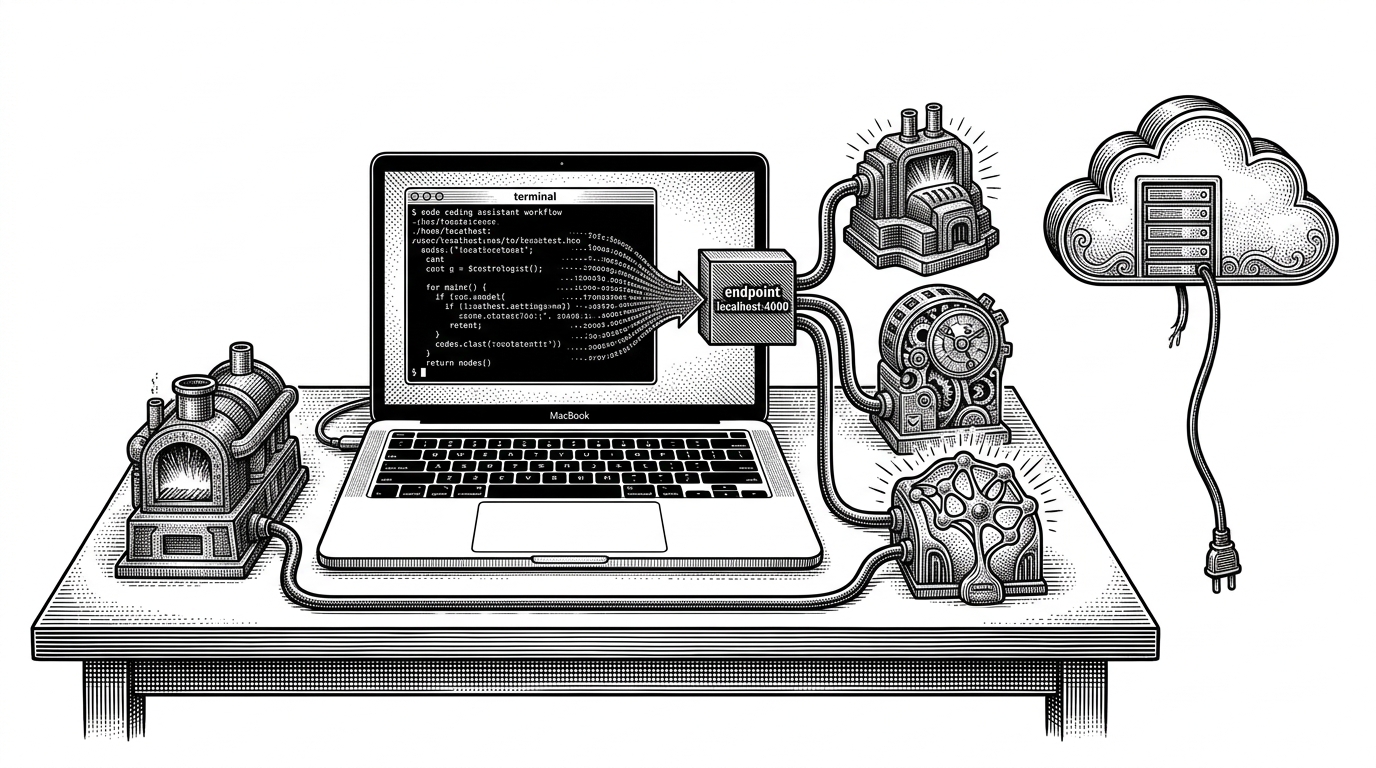
- The adapter layer matters because it lets existing OpenAI, Claude, and Ollama workflows point at Exo without a rewrite.
- Exo is best understood as orchestration and placement software, not just another model runner.
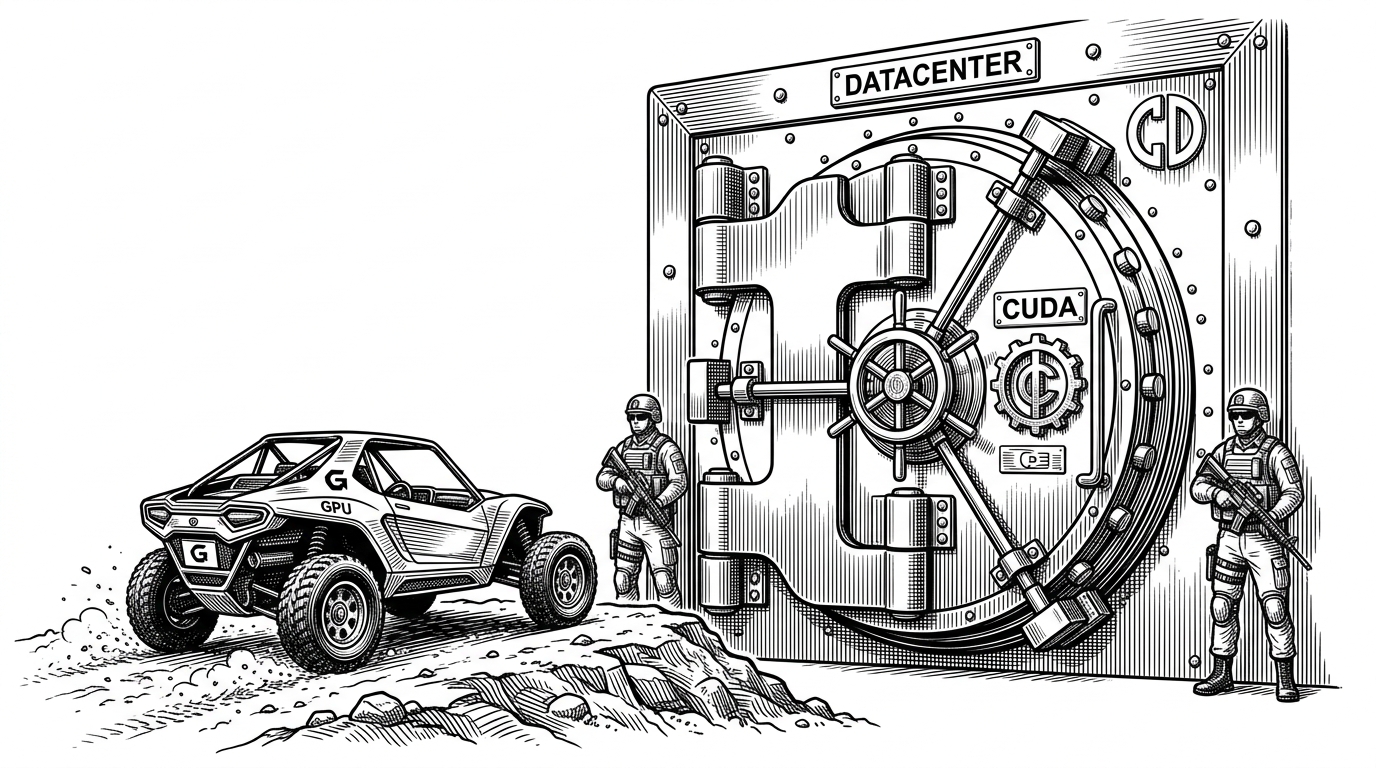
Exo is built for one unusually specific promise: take a handful of consumer Macs and make them act like a single inference appliance. That matters because the bottleneck is no longer just model quality. It is whether the hardware in front of you can hold the weights, move the tokens, and stay usable when the model is bigger than any one box.
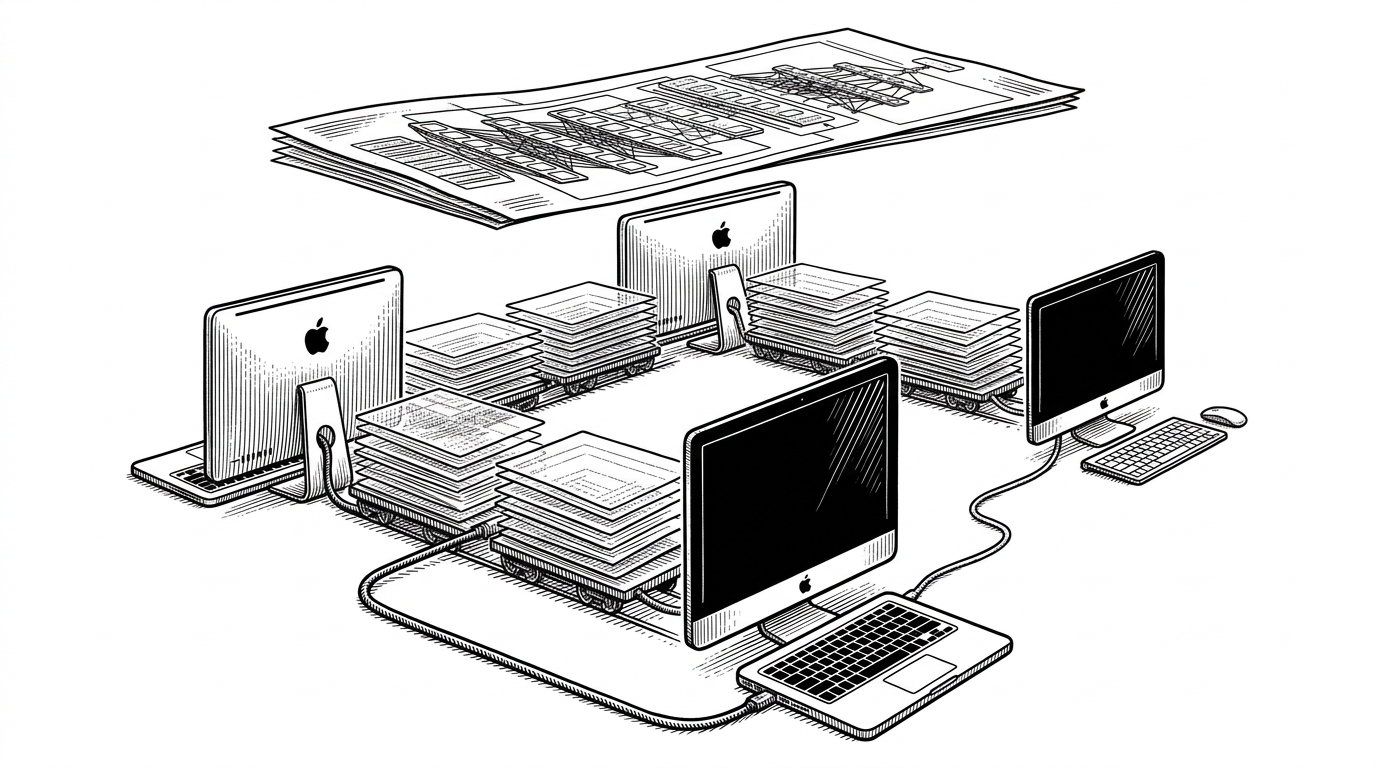
exo connects all your devices into an AI cluster. Not only does exo enable running models larger than would fit on a single device, but with day-0 support for RDMA over Thunderbolt, makes models run faster as you add more devices.
The Trick Is Topology-Aware Sharding
The Stack: Python Orchestrates, Rust Moves the Packets
The codebase is disciplined in a way that distributed systems often are not. Python handles orchestration and the higher-level request flow. Rust handles the networking and peer discovery through `libp2p`, then exposes that machinery back to Python through bindings. MLX and MLX Distributed do the actual Apple Silicon inference work.
Client app -> Exo API adapter -> Python orchestration -> shard planner -> Rust networking / device discovery -> MLX execution on each node -> streamed tokens back to the clientThat split is the story. Exo is not asking Python to do everything, and it is not asking Rust to become the product layer. It puts each language where it is strongest, then stitches them together into one control plane.
Why the Adapter Layer Matters
Exo becomes useful the moment it stops being a lab demo and starts behaving like infrastructure. The adapter layer lets it impersonate familiar APIs, so existing apps can talk to it with minimal friction. That is a bigger deal than it sounds. Compatibility is how a cluster of Macs becomes something developers can actually route traffic to.
| Project | Main focus | Multi-device clustering | API compatibility | Best fit |
|---|---|---|---|---|
| Exo | Clustered local inference on consumer hardware | Yes, topology-aware | OpenAI, Claude, Ollama | Running oversized models locally |
| Ollama | Simple local model serving | No native cluster story | Ollama API | Single-machine local use |
| llama.cpp | Highly optimized inference runtime | No orchestration layer | Used by other tools | Fast local inference backend |
| MLX Distributed | Apple Silicon distributed execution | Yes, but lower-level | No user-facing adapters | Backend building block |
The practical effect is simple. A developer can point an existing workflow at Exo and keep moving. The app does not need to know whether the model is running on one Mac Studio or four.
What Exo Is Optimizing For, and What It Is Not
Exo is not trying to be the broadest local AI toolkit, and that restraint is part of its identity. It is tuned for clustered Apple Silicon, local interconnects, and models large enough to make placement decisions matter. If you want a universal runner for every chip and every deployment shape, this is not that. If you want to make a local cluster feel like a single machine, it is exactly that.
| Question | Exo answers yes | Exo answers no |
|---|---|---|
| Can several Macs act like one inference box? | Yes | No |
| Does topology change the sharding plan? | Yes | No |
| Is it mainly a single-device local runner? | No | Yes |
| Does it hide the cluster behind familiar APIs? | Yes | No |
The Culture Behind the Codebase
The repository reads like a team trying to keep complexity from spiraling. Strict typing, explicit schemas, and a bias toward immutability show up in the surrounding scaffolding. That matters here because distributed inference is exactly where casual codebases become impossible to reason about.
The larger signal is cultural. Exo treats engineering discipline as a feature, not a preference. That is how a project that touches networking, scheduling, model metadata, and model execution avoids becoming a pile of one-off hacks.
Why Exo Feels Like a New Category
Exo sits in a narrow but important gap. It is part local AI runner, part distributed systems experiment, and part developer platform. The difference is that it makes clustered inference feel operational, not theatrical. That is the shift: from a clever setup to an infrastructure choice.
That is also why Exo stands apart from the better-known local tools. Ollama simplifies local serving. llama.cpp powers fast inference. MLX provides the Apple Silicon backend. Exo sits above them in the stack, deciding how to turn devices into a coherent cluster and how to expose that cluster through familiar interfaces.