The Spreadsheet-Powered Face: Dissecting Face-Recognizer
How an unusual weight-loading strategy turns a complex Inception network into a transparent, educational anatomy lesson.
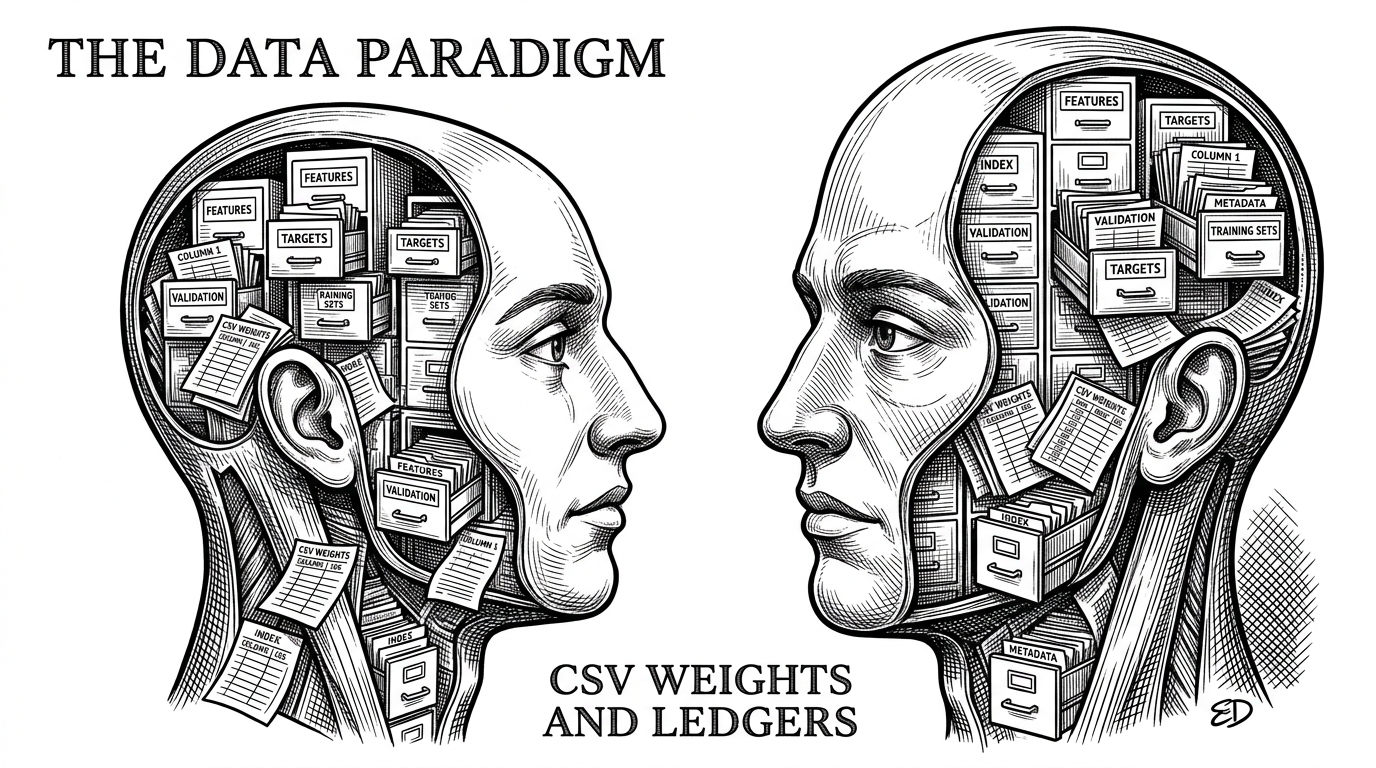
- The repository decomposes a professional FaceNet model into hundreds of human-readable CSV files to demystify neural network weights.
- An Inception-based architecture uses 1x1 convolutions to compress facial features into a dense 128-dimensional vector.
- The system identifies individuals by calculating the Euclidean distance between these geometric embeddings.
- A hybrid pipeline combines legacy OpenCV Haar Cascades for fast face detection with deep learning for accurate recognition.
Most modern AI explainers treat neural networks as black boxes. You `import` a library, pass in an image, and get a result. The weights—the millions of learned parameters that actually do the thinking—are hidden inside opaque `.h5` or `.pth` files. They are binary blobs, mathematically complex but visually impenetrable.
The `hgayan7/Face-Recognizer` repository takes a radically different approach. It explodes a professional-grade FaceNet model into hundreds of human-readable CSV files. By storing every bias, mean, and variance as a discrete spreadsheet, it provides a rare, dissected view of a Siamese Network.
A Model in Pieces
The most striking feature of the repository is the `weights/` directory. Instead of a single compiled model file, you find a granular collection of CSVs with names like `inception_3a_1x1_bn_b.csv`. This isn't how you build for production speed, but it is precisely how you build for profound understanding.
The utility script `fr_utils.py` acts as the surgeon, stitching these disparate files back into a cohesive Keras model. It iterates through the layers, reading the raw floating-point values from the text files and injecting them into the network's tensors. This manual loading process demystifies the architecture, showing exactly where the math lives.
The Inception Squeeze
To turn a face into a searchable identity, the system relies on `inception_blocks_v2.py`. This file defines the structural backbone of the network, implementing the Inception module pattern. It's an elegant solution to a complex problem: how do you capture facial features that might vary in size or position depending on how close the person is to the camera?
The Inception architecture solves this by using parallel convolutional layers of varying filter sizes ($1 \times 1, 3 \times 3, 5 \times 5$). More importantly, it uses $1 \times 1$ convolutions to aggressively reduce the dimensionality of the data before applying the more expensive larger filters. It’s a computational squeeze that forces the network to find the most essential features.

Geometry as Identity
The output of this massive convolutional squeeze is surprisingly small: a 128-dimensional vector. In this system, a face isn't a string of text or a name classification. It is a specific coordinate in a high-dimensional room.
The core logic of the `FaceRecognizer.ipynb` notebook relies on this geometric interpretation. To verify an identity, the system calculates the Euclidean distance between the live embedding and a stored embedding. If the distance is below a threshold (typically 0.7), the faces match. It's a Siamese Network approach, driven by the concept of Triplet Loss: minimizing the distance between images of the same person while maximizing the distance to everyone else.
The Hybrid Pipeline
Before the deep learning can happen, the system must find the face. The repository employs a hybrid approach, mixing traditional computer vision with modern neural networks. It uses a legacy OpenCV Haar Cascade XML file (`haarcascade_frontalface_default.xml`) to rapidly scan the image and crop out the bounding box of the face.
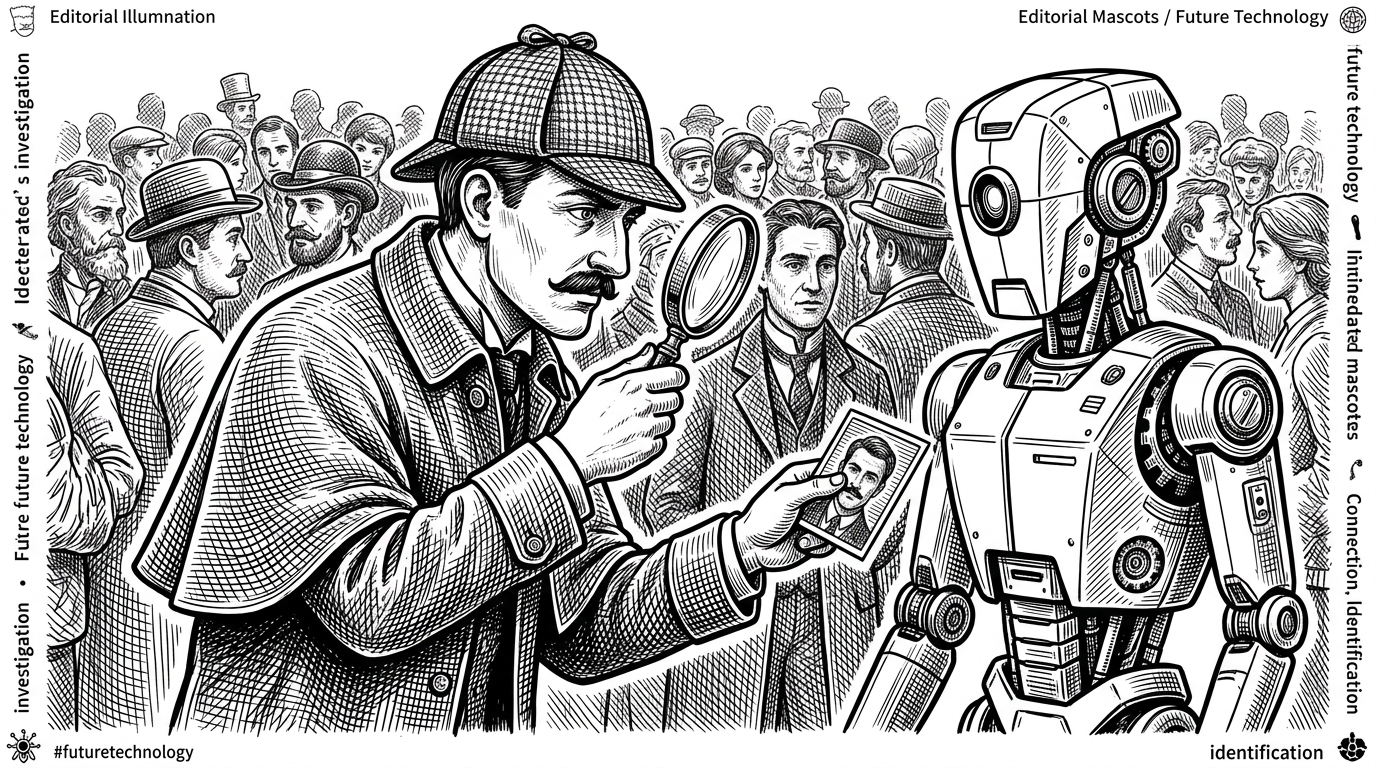
This hand-off between the fast, lightweight Haar Cascade and the heavier, accurate Inception network creates a functional real-time pipeline. It's an educational bridge, showing how academic deep learning concepts map onto practical webcam implementations.
| Approach | Transparency | Load Time | Best Use Case |
|---|---|---|---|
| CSV Weights (Face-Recognizer) | High (Human-readable) | Slow (Parsing text) | Education, Auditing |
| Standard Keras (.h5) | Low (Binary blob) | Fast | Production APIs |
| dlib (C++ Binaries) | None | Very Fast | High-performance edge |