The CPU Strikes Back: Unpacking huggingface/optimum-intel
How a single boolean flag hides a massive C++ compiler, turning standard processors into viable LLM inference engines.

In this blog post, we'll explain how you can accelerate inference with SetFit by 7.8x on Intel CPUs, by optimizing your SetFit model with 🤗 Optimum Intel.
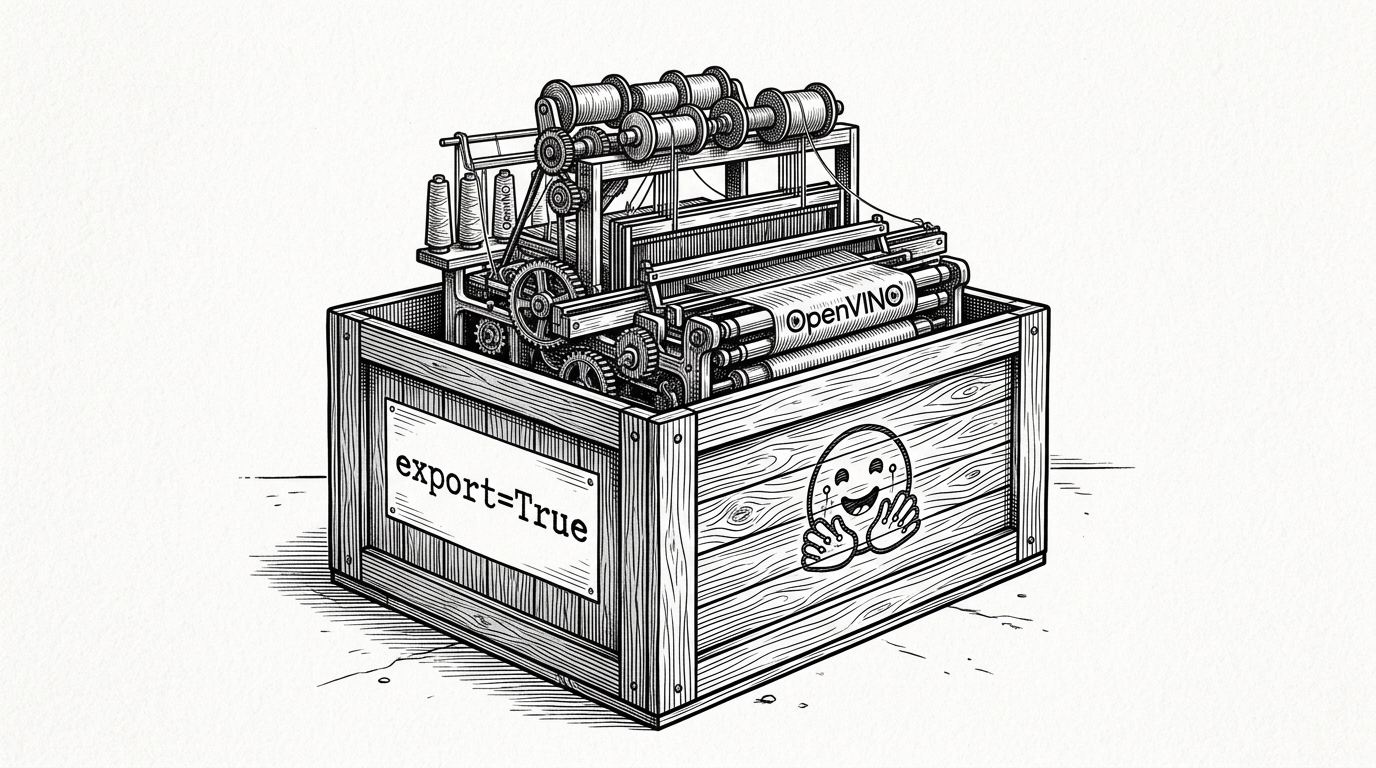
- Optimum Intel bypasses the need for specialized C++ knowledge by embedding the OpenVINO compiler behind a standard Hugging Face `export=True` flag.
- The library drastically reduces inference latency by converting models to a 'Stateful' architecture, locking the Key-Value cache inside the C++ runtime.
- A defensive 'Dummy Object' pattern prevents the massive, multi-gigabyte Intel dependencies from crashing the Python environment if they fail to load.
- Jupyter Notebooks function as the strict source of truth for the project, directly wired into the CI/CD pipeline to prevent documentation drift.
The One-Flag Compiler
AI inference today is practically synonymous with a desperate scramble for NVIDIA GPUs. Intel CPUs, while ubiquitous, are often dismissed as too slow for production Large Language Models (LLMs). huggingface/optimum-intel changes this narrative not by introducing a new, complex workflow, but by hijacking the one developers already use.
🤗 Optimum Intel is the interface between the 🤗 Transformers and Diffusers libraries and the different tools and libraries provided by OpenVINO to accelerate end-to-end pipelines on Intel architectures.
The magic trick is the API. You don't write C++ or learn the intricacies of the OpenVINO API. You use standard Hugging Face syntax. By changing AutoModel to OVModel and adding a single export=True flag, the library intercepts the model. It compiles the PyTorch model into an OpenVINO Intermediate Representation (IR)—a highly optimized C++ graph—and loads it into a specialized runtime.
# Standard PyTorch
from transformers import AutoModelForCausalLM
model = AutoModelForCausalLM.from_pretrained("gpt2")

# Optimum Intel (Compiled for OpenVINO)
from optimum.intel import OVModelForCausalLM
model = OVModelForCausalLM.from_pretrained("gpt2", export=True)
Winning the LLM Memory War
The most significant technical hurdle in LLM inference on CPUs isn't just raw compute; it's memory bandwidth. During text generation, the model must maintain a Key-Value (KV) cache of previous tokens. In a standard PyTorch setup, this massive state is passed back and forth between the Python interpreter and the underlying C++ runtime for every single generated token. This creates a severe bottleneck.
optimum-intel solves this via a "Stateful" model architecture. Inside modeling_decoder.py, the library patches the model to hold the KV cache entirely within the OpenVINO C++ graph. The Python boundary only ever sees the tiny text tokens, drastically reducing latency and memory overhead.
Defensive Dependency Management
Integrating with hardware-specific toolkits is inherently fragile. optimum-intel relies on massive Intel libraries like the Neural Network Compression Framework (NNCF) and Intel Extension for PyTorch (IPEX). If a user lacks one of these multi-gigabyte dependencies, a naive implementation would crash the entire library on import.
To prevent this, the repository employs a "Dummy Object" pattern. The __init__.py files aggressively lazy-load dependencies. If a toolkit is missing, the namespace is populated with dummy classes. These classes only throw descriptive ImportError messages if explicitly executed, ensuring the broader library remains functional.
Notebooks as the Source of Truth
A look at the repository's language breakdown reveals an unusual structural choice: there is more code written in Jupyter Notebooks than in standard Python files. These notebooks aren't merely tutorials; they are the primary documentation and the strict source of truth.
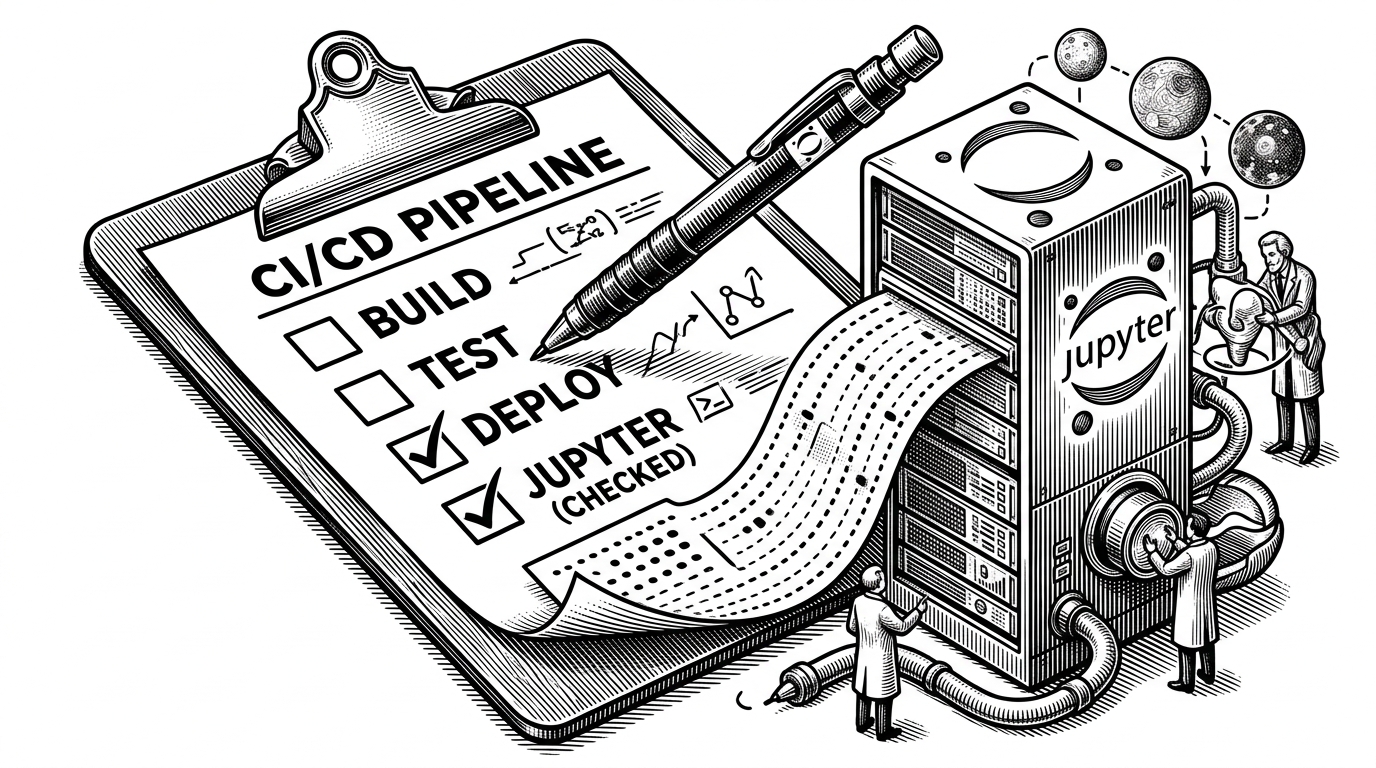
Because the notebooks are wired directly into the CI/CD pipeline via GitHub Actions, documentation drift is structurally impossible. If an API change breaks a tutorial, the build fails.
The Pragmatic Infrastructure
The choice to use optimum-intel is ultimately a pragmatic calculation regarding Total Cost of Ownership (TCO).
For organizations heavily invested in CPU infrastructure, or those facing severe GPU availability constraints, this library provides a viable path to production LLM inference without migrating entirely to a new hardware stack.
| Feature | Optimum Intel | Vanilla PyTorch | NVIDIA TensorRT |
|---|---|---|---|
| Target Hardware | Intel CPUs/NPUs | Hardware Agnostic | NVIDIA GPUs |
| API Complexity | Native Hugging Face | Low | High / Custom |
| KV Cache Handling | Internal Stateful Graph | Python Tensors | PagedAttention |
| Primary Use Case | Cost-effective CPU deployment | Research & Prototyping | Maximum GPU throughput |