SnapTrack: Engineering the Zero-Latency Nutrition Layer
How a full-stack serverless architecture on Cloudflare Workers turns AI vision into a frictionless daily utility.
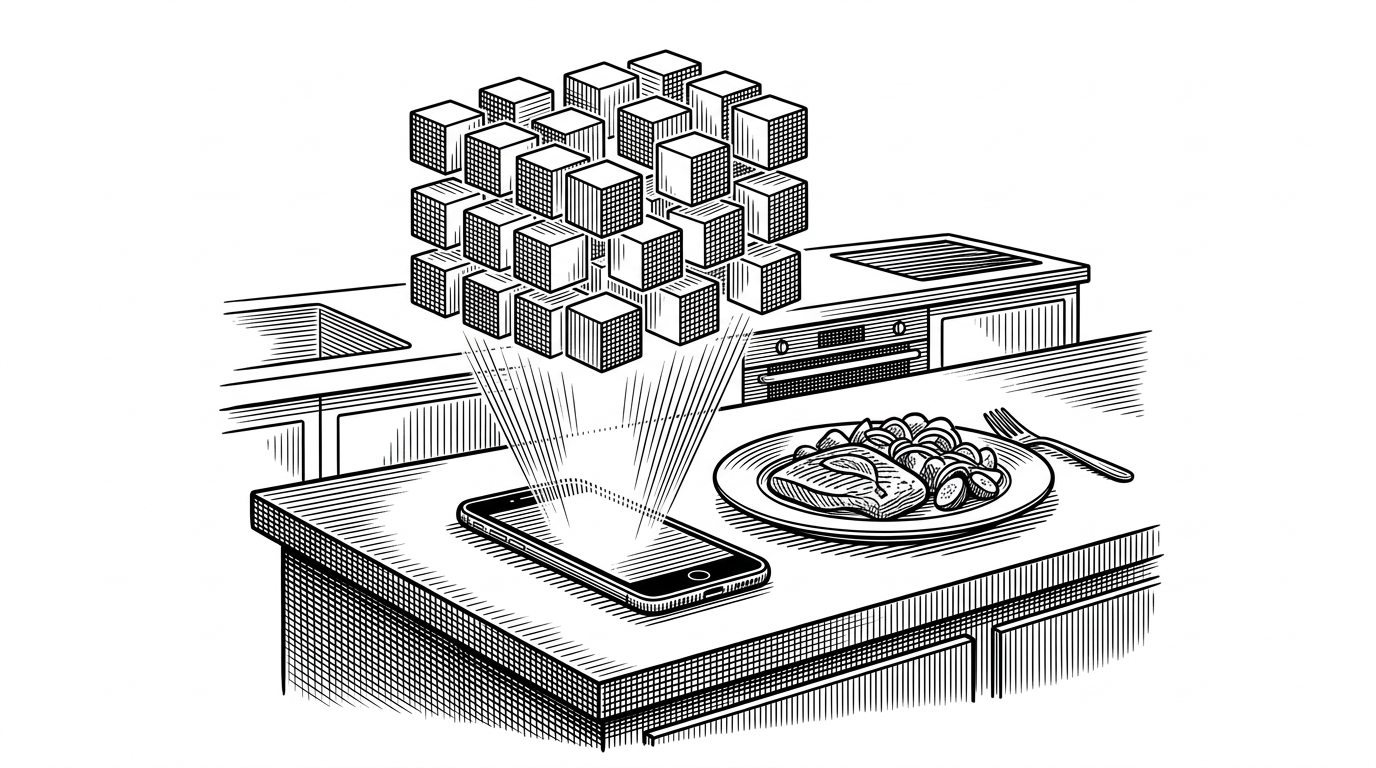
- SnapTrack achieves sub-200ms latency by running the entire backend and database on the network edge via Cloudflare Workers and D1.
- A vision-to-SQL pipeline uses Llama 3.2 to instantly parse meal images into structured JSON data.
- Client-side compression via the Canvas API prevents serverless timeouts by optimizing image payloads before they hit the backend.
- The application aggregates activity data from Strava to provide a real-time energy balance sheet alongside nutritional tracking.
The Death of the Loading Spinner
Most health and fitness applications suffer from a heavy UX tax. They are bloated, 100MB downloads plagued by slow splash screens and heavy API round-trips. When tracking a daily habit, latency is the enemy. Friction kills the intent to log data before the user even reaches the input screen.
SnapTrack represents a technical defiance of the heavy app trend. It is a masterclass in edge-first architecture, designed to act as a silent, frictionless utility. By moving the entire backend logic to the network edge, it achieves near-instantaneous global performance.
Architecture at the Edge
Instead of reaching for the standard Next.js and Vercel playbook, SnapTrack leverages Cloudflare Workers. The backend logic runs entirely within V8 isolates distributed globally. This eliminates the traditional centralized server bottleneck.
Data storage follows the same philosophy. The project abandons centralized Postgres for Cloudflare D1, an SQLite database built for the edge. This guarantees that whether a user logs a meal in Tokyo or London, the database read and write happen locally.
Teaching LLMs to Count Calories
The most compelling technical feature is the vision-to-SQL pipeline. A user snaps a photo of their meal, and an 11B-parameter model running on the edge parses it into JSON. It is then committed to the D1 regional database before the user can even blink.
This relies on the Llama-3.2-Vision-Instruct model. The prompt engineering is ruthless, forcing a strict JSON-only response to act as a structured data parser. Because AI vision is an estimation tool, SnapTrack handles potential hallucinations via a confidence-score UI. If the model is uncertain, the interface gently prompts the user for manual verification.

The Weight of an Image
Serverless architectures have strict payload limits. A raw 5MB photo from a modern smartphone would easily trigger a timeout or exhaust the worker budget. SnapTrack solves this entirely on the client side.
Before any upload occurs, the frontend uses the browser Canvas API to aggressively resize and compress the image. The worker only ever receives optimized, 800-pixel-wide representations. This client-side processing protects the backend infrastructure and keeps the application blisteringly fast.
| Architecture | Compute Layer | Database | Average Latency |
|---|---|---|---|
| Traditional App | Node/Express (Centralized) | PostgreSQL | 2000ms+ |
| SnapTrack | Cloudflare Workers (Edge) | Cloudflare D1 (SQLite Edge) | < 200ms |
Beyond the Manual Log
SnapTrack does not just log intake; it calculates a holistic energy balance sheet. A dedicated worker pulls activity data directly from Strava. This transforms the app from a simple calorie counter into a comprehensive fitness aggregator.
Identity management in this distributed environment is handled by better-auth. This ensures seamless, cryptographically verified sessions across the edge network without sacrificing the speed that makes the application viable.