foundation: World Factbook: Turning a Clumsy Government Dataset into a Native CLI
Ian Fisher’s Python tool compresses a sprawling reference source into a fast, scriptable interface for terminal users and other developers.
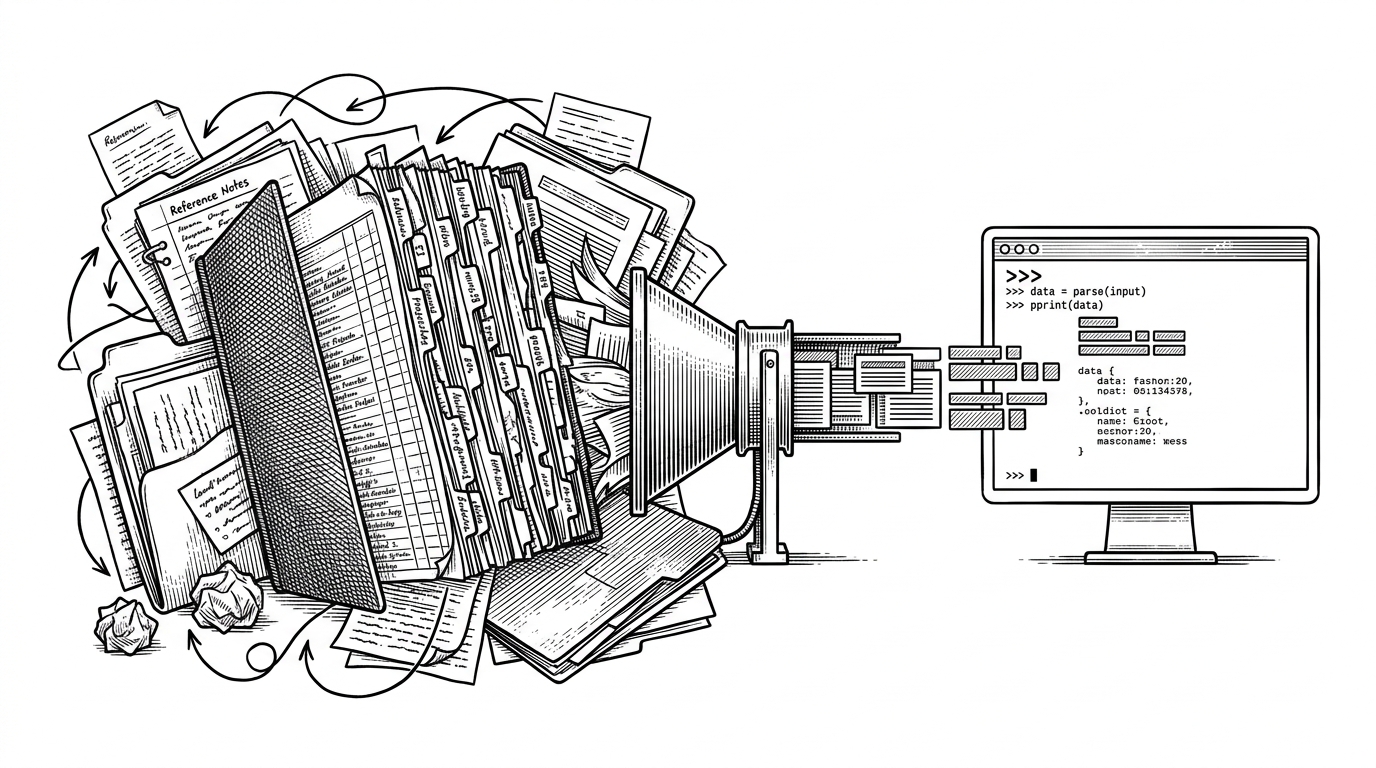

I wrote a command-line tool for the CIA World Factbook. The Factbook has a lot of great data, but the CIA's website makes it very difficult to access. My tool parses the Factbook and provides a simple interface for querying it.
- World Factbook matters because it turns a hard-to-use public reference source into a local developer tool.
- Its real value is not the CLI alone, but the adapter layer that absorbs scraping and normalization work for everyone else.
- The repo sits in a useful middle ground between raw website, bespoke scraper, and full database export.
- Its product discipline comes from a small surface area with a clear job: make Factbook data feel native.
The Internet’s Reference Book, Repackaged for a Terminal
The CIA World Factbook is valuable, but awkward. It is a sprawling reference source built for reading, not for composing in a shell or importing into a script. Ian Fisher’s World Factbook turns that friction into something local, queryable, and repeatable.
That is the interesting move here. The repo is not trying to replace the Factbook. It is trying to make the source behave like a tool developers can reach for without thinking about scraping, page structure, or one-off parsing code.
What the Repo Actually Gives You
World Factbook serves two audiences at once. In the terminal, it answers quick questions. In Python, it becomes a library you can wire into other scripts and workflows. That dual shape is what makes it more than a convenience wrapper.
| Approach | Friction | Stability | Developer experience | Best for |
|---|---|---|---|---|
| Official CIA site | Low for reading, high for reuse | Moderate, but human-oriented | Good for browsing, poor for automation | Human lookup |
| DIY scraper | High upfront, high maintenance | Brittle when markup changes | Flexible, but every team pays the tax | Custom one-offs |
| World Factbook | Low after install | Centralized and reusable | Terminal-first, script-friendly | Fast queries and integration |
from world_factbook import Factbook

fb = Factbook()
print(fb.country("france").population)
The point of that interface is not novelty. It is reduction. A public dataset that normally asks you to navigate a website or write a scraper now looks like a small, reliable library call.
The Part That Matters: Data Adapter, Not Just Scraper
The core contribution is an adapter layer. Raw Factbook content is human-shaped, nested, and inconsistent in the way large reference sources often are. The project normalizes that mess into something a command line and a Python API can both consume.
That matters because it centralizes the pain. If the source layout shifts, users do not patch their own scripts. They update the package. That is the hidden product promise of good data adapters: fewer local repairs, fewer duplicate parsers, less drift across teams.

Why This Design Beats DIY Scraping
| Option | What you own | What breaks | Why it hurts |
|---|---|---|---|
| Official website | Nothing to maintain | Your workflow | It is designed for reading, not reuse |
| DIY scraping | All parsing logic | Markup changes | Every team re-learns the same lesson |
| World Factbook | A stable interface | The upstream source, once | It concentrates maintenance in one place |
This is where the repo earns its niche. It is not a giant platform, and it does not need to be. It reduces a public dataset to a shape that is useful, predictable, and scriptable.
That is also why the comparison is sharper than it first looks. The competition is not another polished product. It is the friction of doing nothing, or the maintenance cost of doing it yourself.
A Small Repo with Strong Product Discipline
The codebase has the feel of a utility built by someone who values narrow interfaces. The idea is simple, but the discipline is in the packaging: one job, one source, two access modes, and a stable way to ask questions.
- The CLI lowers the cost of a single lookup.
- The library lowers the cost of reuse.
- The adapter lowers the cost of maintenance.
- The small surface area keeps the project understandable.
That is a good shape for a personal tool. It is also a good shape for infrastructure that other people might quietly rely on. When a repo makes context switching disappear, it becomes part of the workflow instead of another thing to remember.
Why It Sticks
World Factbook is a reminder that good developer tools do not always add power by adding features. Sometimes they add power by removing context. Here, a messy reference source becomes local, queryable, and boring in the best possible way.
That is the real win. Not the fact that the data exists, but that the path to using it finally feels native.