`ultrathink-engineer-manifesto`: The Repo That Turns Claude-Era Engineering Into Doctrine
A single-file open-source manifesto that borrows Agile’s structure, treats cognitive bandwidth as the new unit of work, and reframes AI-native development as orchestration, not code entry.

- The manifesto treats reasoning depth, not typing speed, as the scarce resource in AI-era engineering.
- Its biggest move is rhetorical: it borrows the Agile Manifesto's value-pair format to make a new role feel legitimate.
- The single-file HTML implementation is not just simple, it reinforces portability, permanence, and forkability.
- The repo pushes readers away from vibe coding and toward orchestration, where the human edits intent, constraints, and verification.
This is not a repo. It is a declaration.
The first thing to understand about ultrathink-engineer-manifesto is that it is trying to rename the job. It does not sell a library or a CLI. It argues that in the Claude era, the scarce asset is thinking budget, and the human's job is to spend it well.
The project sits in the orbit of sigridjineth and the broader instructkr tooling ecosystem, which makes the message feel less academic and more insurgent. This is a builder's manifesto, but it reads like policy.
Why it borrows the grammar of the Agile Manifesto
The format is the tell. The page speaks in value pairs, just like the Agile Manifesto, so the reader feels the old authority before parsing the new claims. That is a sharp move, because manifestos do not only argue with words. They argue with structure.
That mirror matters because it changes the reader's posture. You are not browsing a gadget. You are being asked to accept a new social contract for software work, one where the model expands execution and the human curates intent.
I always tell people I do agentic engineering, and then maybe after 3:00 AM I switch to vibe coding, and then I…
The hidden lever is thinking budget
The manifesto's most important idea is the ladder of think, megathink, and ultrathink. Whatever one makes of the branding, the underlying claim is serious: long-horizon tasks need more reasoning room, more context discipline, and more orchestration than a normal prompt loop provides.
That is why the document keeps circling back to cognitive expansion. It treats context windows like scarce workspace, not free magic. The model is not a replacement for judgment. It is a way to extend the range over which judgment can operate.
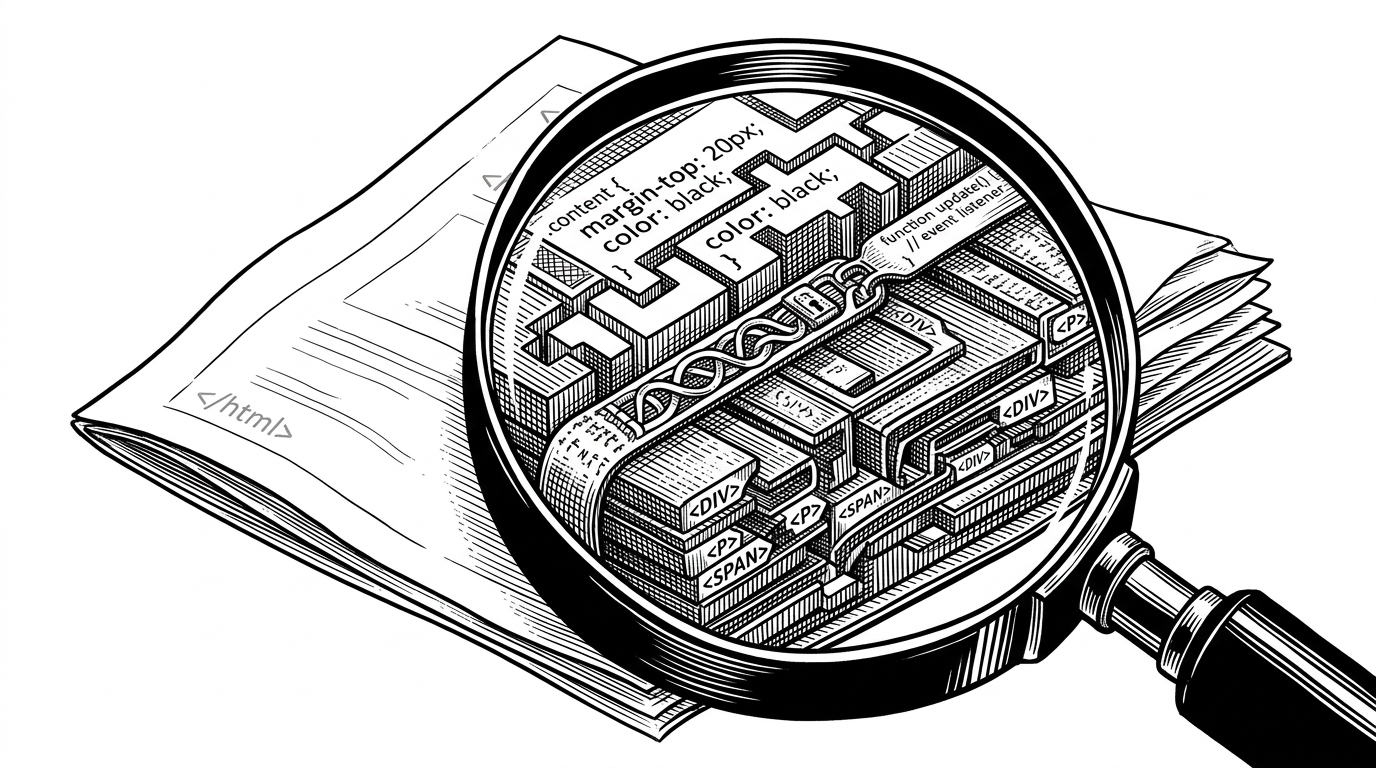
That is also why the HTML-only implementation matters. No build chain. No framework ceremony. No dependency theater. A single file makes the argument portable, because a manifesto should survive the same way a memo survives: by being easy to copy and hard to overcomplicate.
<!doctype html>
<html lang="en">
  <head>
    <style>
      /* Typography, layout, and lightbox CSS live here */
    </style>
  </head>
  <body>
    <main class="manifesto">
      <!-- content, comparisons, and diagrams -->
    </main>
    <script>
      // Lightbox and margin comment behavior live here
    </script>
  </body>
</html>
What it is pushing against
The manifesto is not only saying what to value. It is naming what to stop pretending is enough. Vibe coding can produce output fast, but it often leaves judgment thin. Traditional OSS tooling can be robust, but it still assumes the human is hand-authoring most of the path. The ultrathink posture tries to sit above both.
| Dimension | Ultrathink engineering | Vibe coding | Traditional OSS tooling | Agile-era process |
|---|---|---|---|---|
| Primary unit of value | Reasoning depth and orchestration | Fast output from prompts | Reusable libraries and commands | Team cadence and delivery |
| Human role | Strategist, editor, verifier | Prompt author, consumer | Maintainer, integrator | Planner, ceremonialist |
| Model role | Extended cognition over long tasks | Shortcut to a finished artifact | Optional helper | Usually absent |
| Productivity means | More good decisions per unit of attention | More artifacts per hour | More stable automation | More predictable delivery |
| Optimizes for | Context, memory, and control | Speed and novelty | Capability and distribution | Coordination and risk reduction |
| Failure mode | Clever orchestration with weak judgment | Shallow output and hidden debt | Framework bloat | Process theater |
Seen that way, the repo is less about tools than status. It wants a new default identity for technical people: not a keyboard-hero, not a prompt tourist, but an operator of agentic cognition. That is a bigger claim than a UI choice, and the page knows it.
The bigger bet
The long-term bet is that engineering work will be judged less by how much syntax a person can type and more by how well they can shape constraints, review outputs, and keep a machine system honest. In that world, the scarce skill is not production of code. It is the design of attention.
That is why this repo feels unusually self-aware for a static document. It is not trying to be the tool that does the work. It is trying to be the vocabulary that tells you what the work has become.