Hirely-job: The Job Portal That Refuses to Let AI Failure Break the Interview Prep Flow
A MERN-based hiring app that pairs resumes with job descriptions, then falls back to keyword-driven questions when Gemini is unavailable.
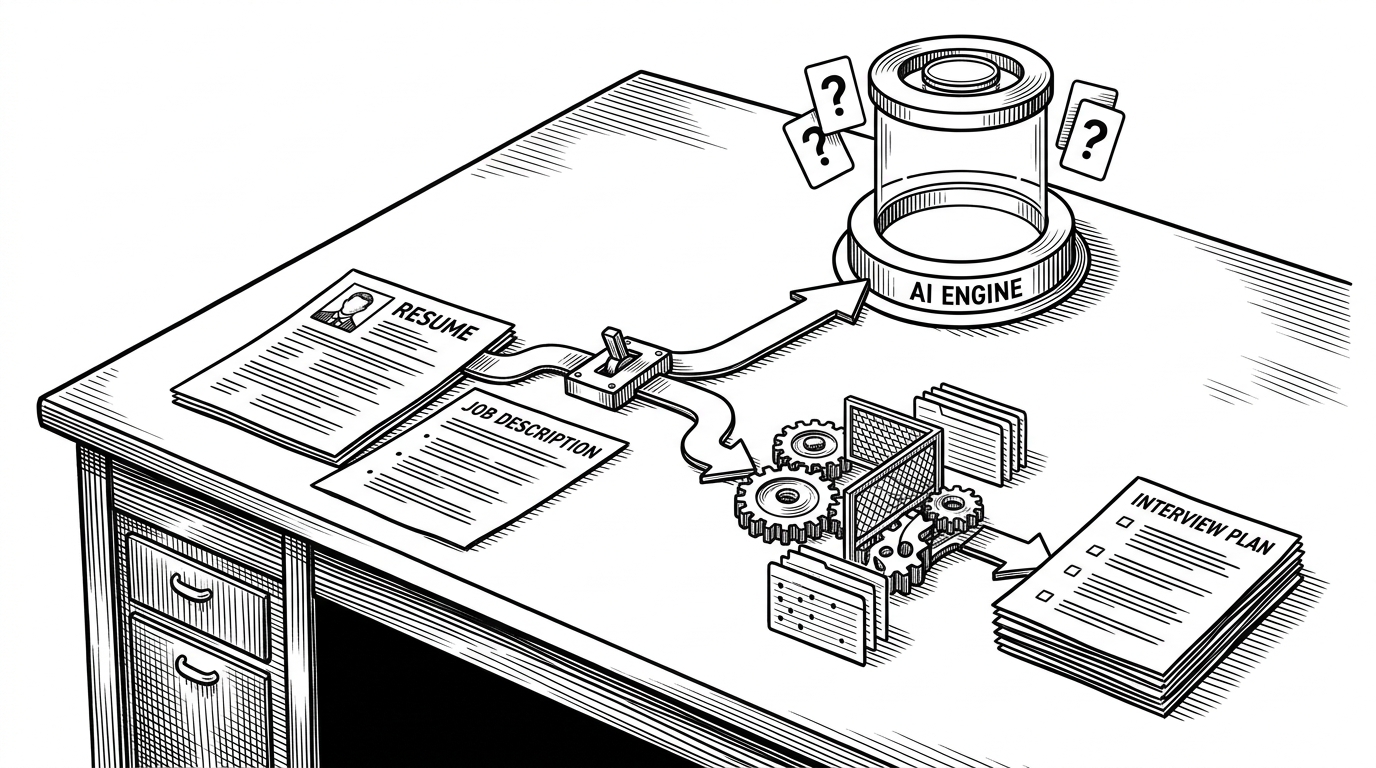
- Hirely-job treats AI as a fast path, not a dependency, so the interview flow still produces something useful when Gemini fails.
- The interview engine is built around structured inputs, resume parsing, and a fallback keyword pipeline rather than loose prompt magic.
- The app pairs a multi-role product model with role checks, cookies, and controller logic that keep student and recruiter flows separate.
- Its schema choices and frontend stack make it look like an MVP, but the implementation shows unusually careful product thinking.
When the LLM Fails, the Product Still Works
Most AI job tools advertise intelligence and quietly assume the model will cooperate. Hirely-job makes a different bet. It assumes the model can fail, and it still keeps the interview-prep experience moving.
That is the real story here. The app is not just a job board with a Gemini call bolted on. It is a hiring workflow that treats AI as one layer in a larger system, not the system itself.
That choice matters because interview prep is a high-friction moment. A broken model response should not strand the user at the most stressful point in the flow.
The Interview Engine Is the Real Product
The core flow starts with a resume PDF and a job description. The backend uses pdf-parse to extract the resume text, then sends that text plus the role details into an interview-plan generator.
async function createInterviewPlan(req, res) {
  const resumeBuffer = req.file.buffer;
  const resumeText = await pdfParse(resumeBuffer);

  try {
    const plan = await generateInterviewPlan({
      resumeText: resumeText.text,
      jobDescription: req.body.jobDescription,
    });

    return res.json({ success: true, plan });
  } catch (error) {
    const fallback = fallbackQuestionSet(req.body.jobDescription);
    return res.json({ success: true, plan: fallback });
  }
}
That compact shape is the point. The controller does not promise perfection. It promises continuity. If the model response is available, great. If not, the app still returns a usable interview plan.
The Fallback Is Smarter Than a Generic Error
The fallback path is not a dead end or a canned apology. The repo’s research shows a keyword pipeline built around stop-word removal and frequency analysis. That means the app can still surface useful interview prompts from the job description even when the model is offline or rate limited.
This is defensive AI product design in practice. The system shifts from probabilistic generation to deterministic heuristics, and the experience stays intact.
| Approach | Input | Failure mode | User value |
|---|---|---|---|
| Generic job portal | Resume and job description | Stops at browsing or a blank form | Low, because it does not help with preparation |
| Brittle AI assistant | Resume and job description | Breaks when the model errors | High when healthy, zero when unhealthy |
| Hirely-job | Resume, job description, and keyword fallback | Degrades to heuristic generation | Consistent, because the flow still produces a plan |
That fallback logic also changes the product story. The app is not trying to prove that AI is magical. It is proving that useful software can survive the normal messiness of model APIs.
Two Users, Two Products
Hirely-job is built for two distinct roles: students and recruiters. That split is not cosmetic. It shapes access, routes, and what each person can do once they are inside the app.
The auth flow reinforces that boundary with role checks, HTTP-only cookies, and controller-level enforcement. In practice, the app behaves like two products sharing one codebase.
| Dimension | Student flow | Recruiter flow |
|---|---|---|
| Primary task | Browse jobs and prepare for interviews | Post jobs and manage applications |
| Core value | Reduce interview anxiety | Filter and track candidates |
| Access control | Role-checked user session | Admin-style permissions |
| Success state | A prepared interview plan | A clean hiring pipeline |
That is a good product shape for a compact repository. It keeps the UI coherent while still acknowledging that applicants and recruiters need different tools and different trust boundaries.
A MongoDB App With Relational Habits
The schema design is MongoDB-native, but the relationships are deliberately relational in spirit. Jobs point to companies and creators, applications point back to jobs, and interview plans store structured output rather than loose blobs.
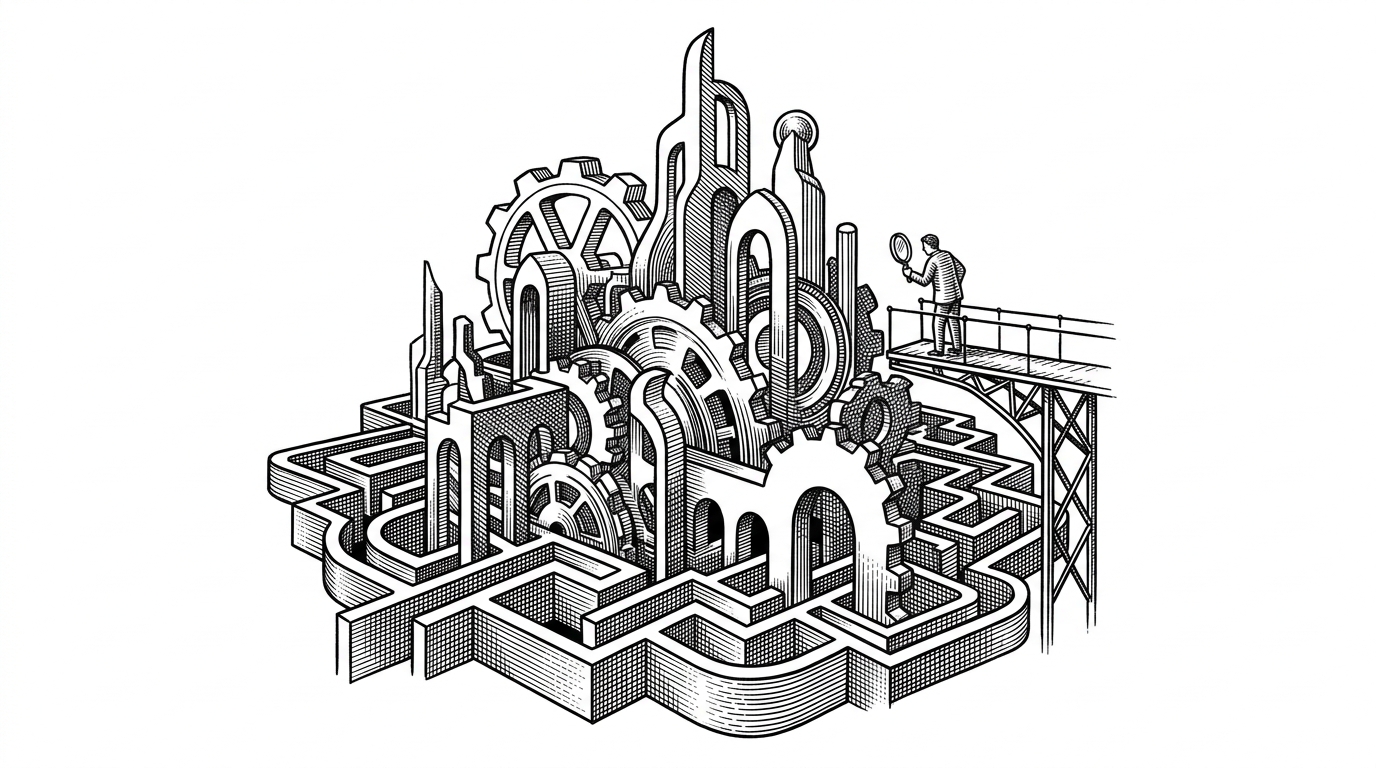
That is convenient because Mongoose can hydrate the right view with populate(). It is also where scale questions start to show up. The same convenience that makes the app feel simple can become a bottleneck if the data volume grows sharply.
Still, for an MVP-sized hiring product, the trade-off is sensible. The model matches the workflow, and the code stays legible.
The Stack Says MVP, the Execution Says Polished
The frontend stack is the kind of stack you see in serious product prototypes: Vite, React, Redux Toolkit, Tailwind, Shadcn UI, Lucide, and Cloudinary. Nothing here is exotic. The value is in the assembly.
Redux keeps the browsing and job detail flows from repeatedly refetching the same state. Shadcn UI pushes the interface past plain forms. Cloudinary handles the file path cleanly, which matters in a job workflow where resumes are central, not incidental.
| Layer | Choice | Why it matters |
|---|---|---|
| UI | Shadcn UI plus Tailwind | Fast to build, still polished |
| State | Redux Toolkit | Reduces duplicate fetching and UI drift |
| File handling | Multer plus Cloudinary | Keeps resumes portable and persistent |
| Backend | Express plus Mongoose | Simple enough to read, structured enough to extend |
The result looks like a portfolio project at first glance, but the implementation choices are unusually coherent. The app knows what it is trying to be, and the code follows that shape.
What Hirely-job Gets Right About AI Hiring Tools
Hirely-job is not trying to replace recruiting. It is trying to reduce friction in one specific step: interview preparation. That makes the product easier to believe and easier to use.
The bigger lesson is the fallback. If you build with AI, assume it will fail at some point. Then design the non-AI path so the user still gets value.
That is the difference between an AI demo and an AI product. One collapses when the model does. The other keeps moving.