Klipper: The 3D Printer Firmware That Split Time in Two
A Python host, a timing-obsessed MCU, and a configuration model that turned 3D printing firmware into a distributed system.
The printer that stopped thinking in real time
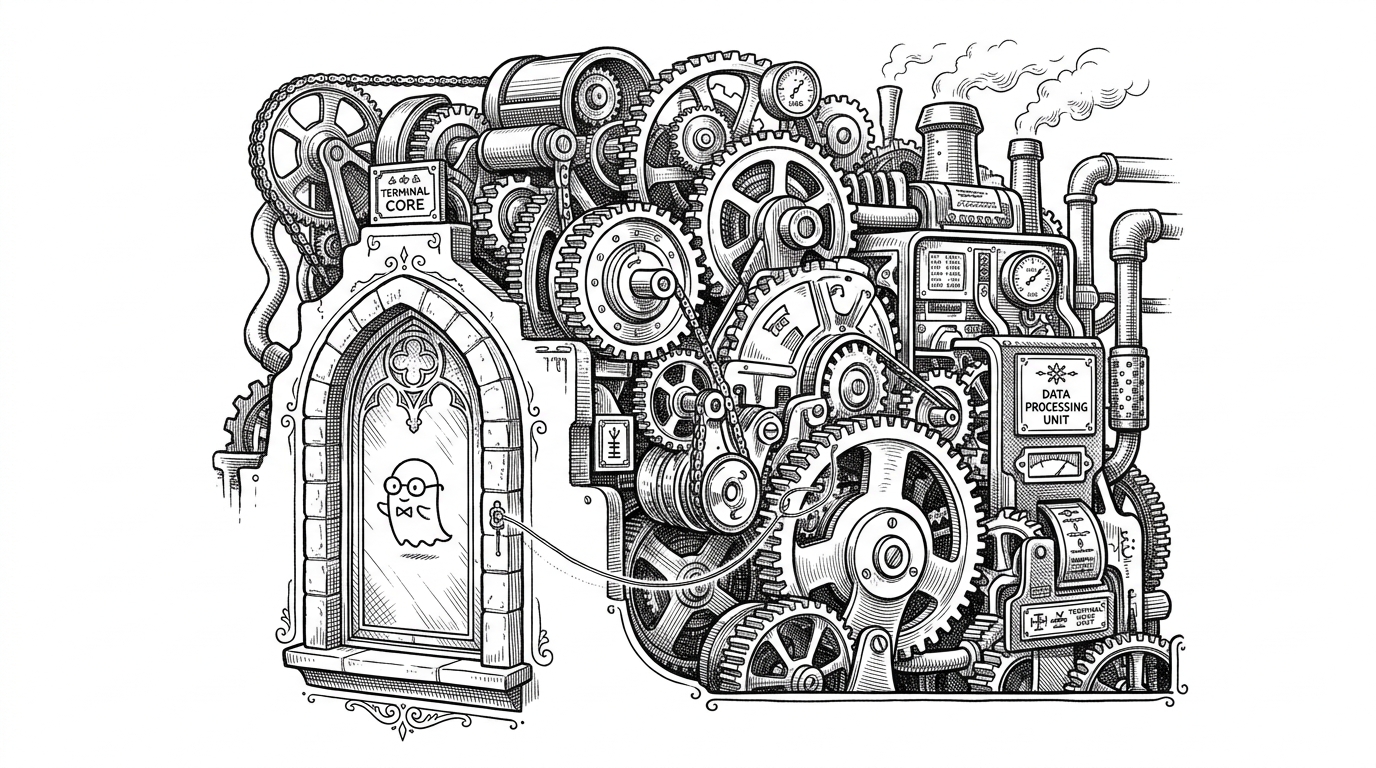
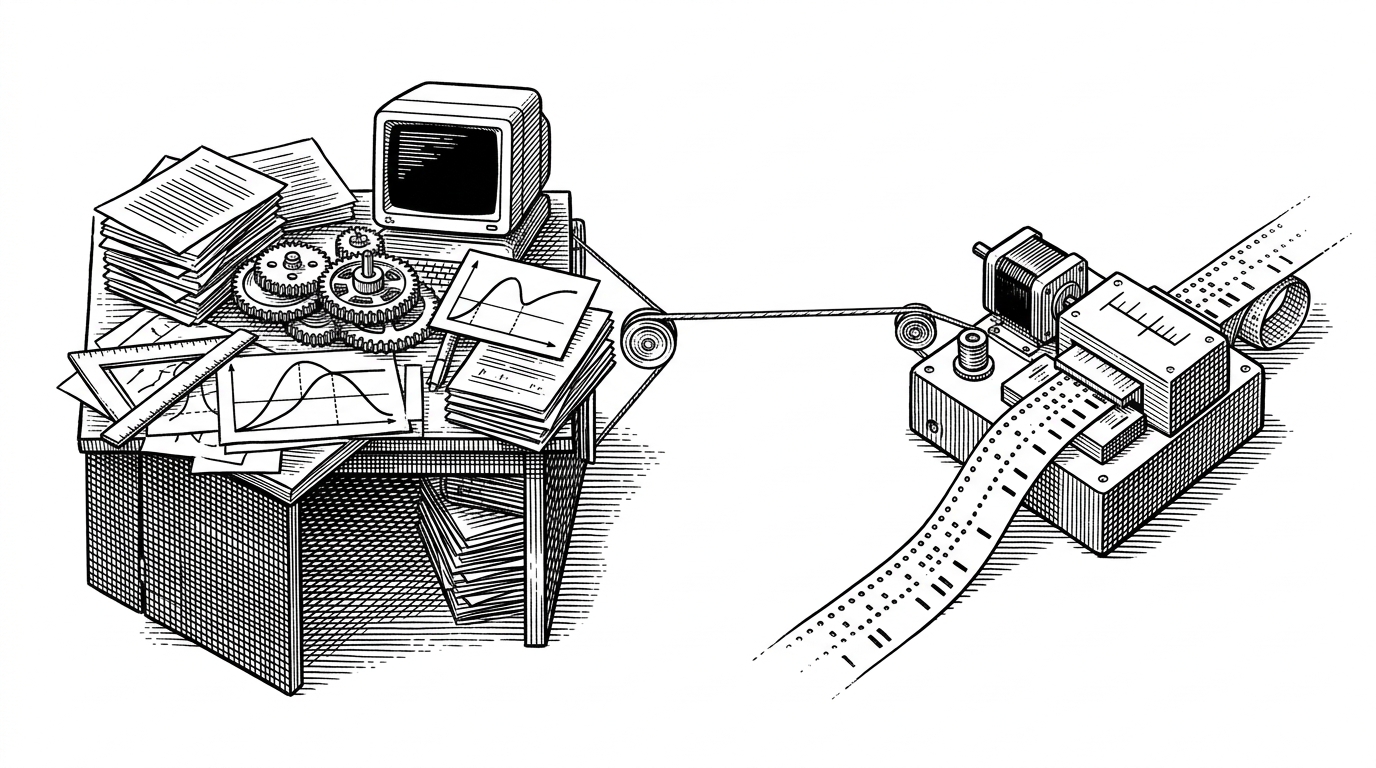
Klipper’s most important move is also its strangest one: it refuses to make the microcontroller do everything. Instead, a Python host parses G-code, plans motion, and hands the MCU a timed execution plan. The printer still moves with hard real-time precision, but the expensive thinking happens somewhere better suited for it.
That is why Klipper feels bigger than printer firmware. It is a systems design choice disguised as a maker project. The project treats timing as a contract between two machines, not as a burden one tiny chip must carry alone.
What actually runs where
The split is simple in concept and careful in implementation. The host side, written in Python, handles configuration, motion planning, kinematics, and higher-level features. The MCU side, written in C, focuses on timing-sensitive work like stepping, PWM, and ADC.
The important detail is that the host does not generate every pulse live. It calculates when motion events should happen, packs them into a binary protocol, and streams that schedule to the MCU. That lets Klipper push complex motion logic upward without losing the exactness that printer hardware needs.
I wanted to write the software in such a way that it could be run on a printer without having to write to a particular printer and that just goes to one of my original goals was the idea of moving a lot of the software over to a general purpose computer instead of doing it all on a microcontroller.
That quote is the whole project in one sentence. Klipper is not trying to make Python behave like firmware. It is changing what firmware is responsible for.
Why Kconfig fits a hardware jungle
Klipper supports a messy hardware world: different MCUs, different boards, different pin maps, different clocks. A plain ad hoc config system would collapse under that variety. Kconfig gives the project a disciplined way to express hardware choices without scattering special cases through the codebase.
| Problem | Traditional approach | Klipper’s approach |
|---|---|---|
| Board diversity | Hard-coded board variants | Kconfig-driven feature selection |
| Build output | Manual firmware edits and reflashing | menuconfig and generated autoconf.h |
| Hardware knowledge | Spread across source files | Concentrated in build-time configuration |
| Failure mode | One-off hacks pile up | Unsupported combinations are rejected earlier |
The shape of the build matters here. Files like menuconfig, autoconf.h, and compile_time_request.o are not just implementation details. They are the mechanism that lets one repo span a wide range of boards without turning configuration into tribal knowledge.
How a move gets bent without breaking
The cleanest example of Klipper’s modularity is bed_mesh.py. It does not replace the motion system. It intercepts a move and transforms it as the toolhead crosses a non-flat bed. The original command still exists, but its path is adjusted through a geometric model layered on top.
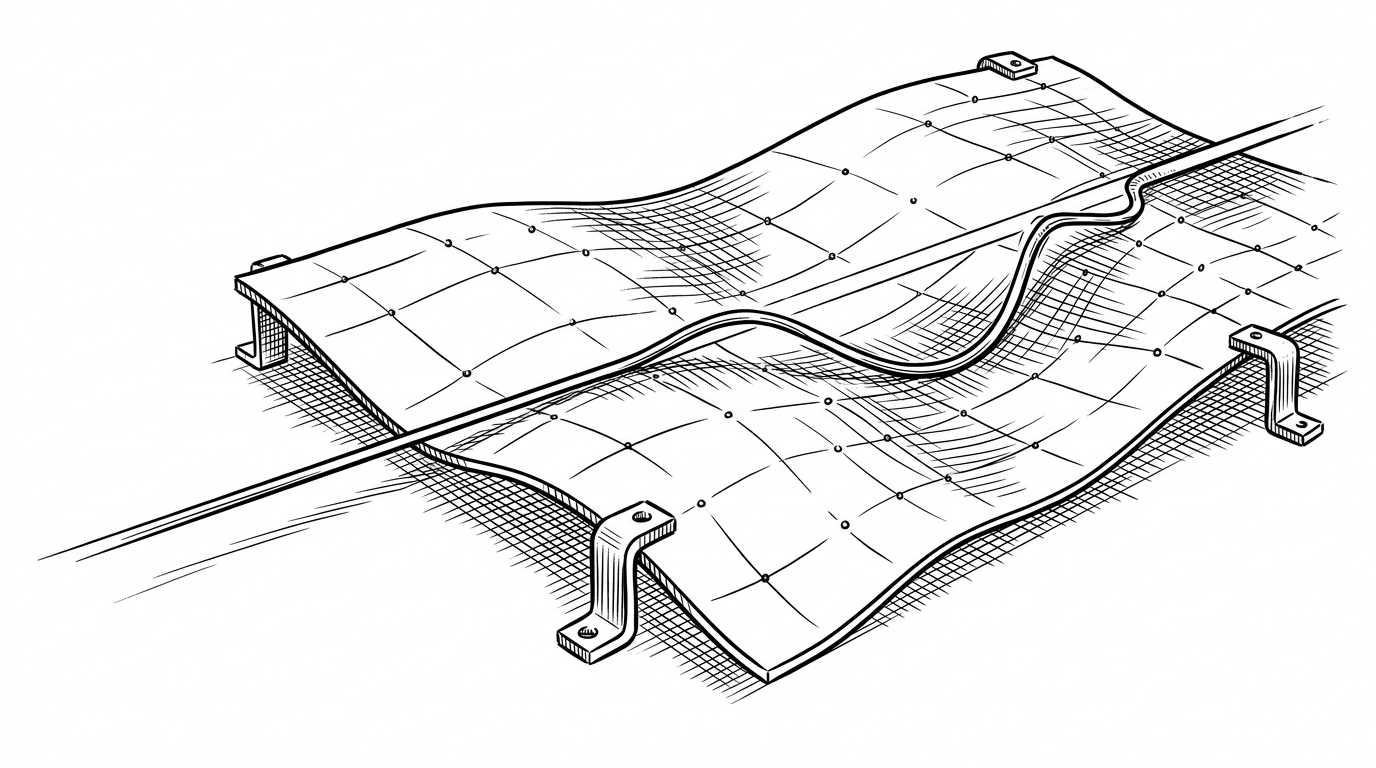
That design is the key to Extras. Instead of inflating the core motion engine, Klipper lets specialized features sit as modular transforms. Bed leveling, resonance compensation, and pressure advance can grow without making the base system unreadable.
Extras are the real product strategy
Extras is not a plugin folder in the casual sense. It is Klipper’s scaling strategy. The project can keep the core small because the feature surface grows outward, not inward.
| Layer | Core job | Why it matters |
|---|---|---|
| klippy core | Motion planning and protocol logic | Keeps the base system stable |
| extras | Specialized transforms and features | Adds capability without core bloat |
| config files | Per-printer behavior | Makes advanced tuning editable without recompiling |
That structure explains why the repo can support such a wide range of machines and feature sets. It also explains why community innovation lands so often in Extras first. The system is designed to absorb new ideas at the edges.
Klipper versus Marlin versus RepRapFirmware
This is not a race to the same endpoint. It is a comparison of three different answers to where real-time complexity should live.
| Project | Architecture | Configuration style | Best fit | Trade-off |
|---|---|---|---|---|
| Klipper | Host-MCU split | Text config and build-time board selection | High-performance DIY and advanced tuning | More moving parts, steeper setup |
| Marlin | Monolithic MCU firmware | Compile and reflash | Broad budget printer support | Less headroom for heavy computation |
| RepRapFirmware | MCU-centric with dynamic config | G-code and onboard configuration | Duet-based and professional setups | Less distributed, still hardware-centered |
The cleanest summary is also the shortest. Marlin keeps the whole problem inside the printer. RepRapFirmware modernizes that model. Klipper walks away from the assumption that the printer itself must do all the thinking.
I don't think of Klipper being in competition with Marlin. I don't think of Klipper being in competition with the RepRap firmware or any of the other any other major firmwares that are out there I like to think of it as more of an ecosystem.
The people and the ecosystem
Klipper’s credibility comes from more than one maintainer’s idea. Kevin O’Connor shaped the architecture, but reviewers and contributors helped harden the details. Dmitry Butyugin’s work on input shaping and Eric Callahan’s work on bed leveling and web APIs show how the ecosystem matured around specialized expertise.
That matters because Klipper’s design invites serious contribution. Once the architecture established where complexity belongs, the project could accept sharper tools without turning brittle. That is a rare kind of maturity in a hardware-adjacent repo.
I'm pretty sick of running a print for 14+ hours, to have the print fail due to Klipper being too smart. I'm not saying Klipper is all bad, but some problems are completely inexcusable.
Even criticism points back to the same theme. Klipper can feel strict because it refuses to blur timing guarantees. That trade-off is part of the deal when your firmware is also a distributed system.