Ghostty and the Art of Architectural Stubbornness
Why the most anticipated terminal in a decade rejected cross-platform frameworks to build a native-first future in Zig.
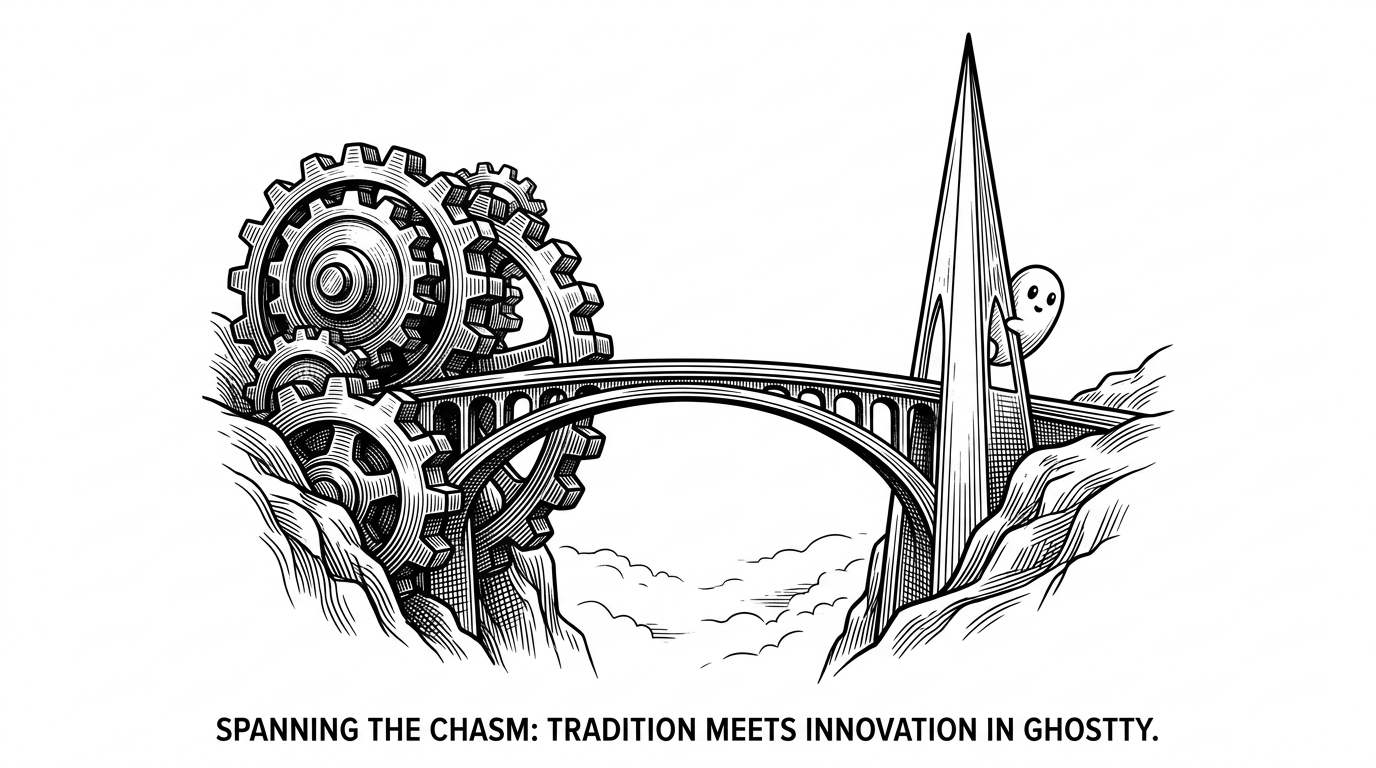

"I started Ghostty because I was frustrated with the terminal emulator landscape... I wanted a terminal that was fast, native, and customizable, without being bloated."
- Ghostty uses a decoupled architecture that pairs a shared Zig core with separate native frontends for each operating system.
- The core engine utilizes SIMD-optimized parsing to achieve high-speed performance comparable to minimalist terminal emulators.
- The project implements a human-centric Vouch system for contributions to prevent AI-generated code from compromising the codebase.
- Ghostty prioritizes deep OS integration like native menu bars over the platform-agnostic approach of frameworks like Electron.
The Death of the "Good Enough" App
If you have integrated a cross-platform application into your workflow, you know the feeling. The application works everywhere, but it feels truly native nowhere. You are forced to choose between massive, dependency-heavy web wrappers or simplistic text boxes that lack deep OS integration. This is the uncanny valley of modern software development.
Ghostty is a refutation of this trend. It is a terminal emulator that treats performance as a feature, but it also considers a native menu bar and native windowing primitives as non-negotiable requirements. Rather than adopting a framework like Electron or Flutter to write once and run anywhere, the Ghostty team chose the hardest possible path. They wrote a shared core in a systems language and hand-coded separate, native-class frontends for every operating system.
One Brain, Many Bodies
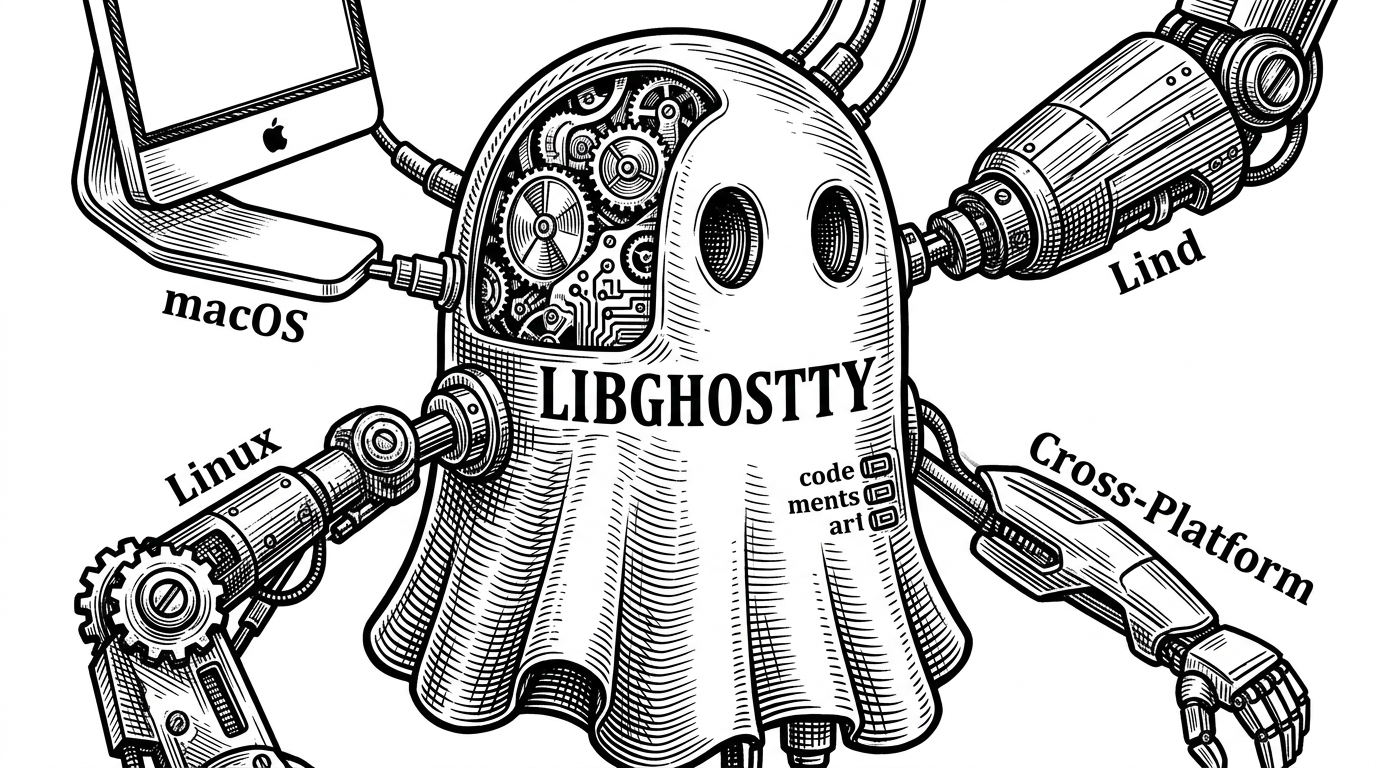
The architectural magic of Ghostty lies in its core library, known as libghostty. This shared brain handles the complex state machine of terminal emulation. It consumes Virtual Terminal data and updates an internal grid, entirely decoupled from how those pixels are eventually drawn on a screen.
When you run Ghostty on macOS, you are interacting with a SwiftUI application that uses Apple's Metal API for rendering. When you run it on Linux, you are using a GTK application powered by OpenGL. The core engine never knows or cares about the windowing system. It simply crunches terminal state and hands it off to the native limbs.
The Zig Bet
To achieve this seamless decoupling, the core engine needed to be fast, memory-safe, and highly interoperable with C. The team placed a massive bet on Zig. Zig is a modern systems language that forces explicit memory management and avoids hidden control flow. It allowed the developers to write highly optimized parsers that utilize CPU-specific SIMD instructions.
Ghostty parses terminal streams at extreme speeds by looking at multiple bytes simultaneously. This SIMD-optimized parsing makes it competitive with the fastest options on the market, like Alacritty, while still supporting a massive feature set.
Guarding the Gates
High performance requires high standards. As the project grew in popularity, the maintainers implemented a unique social architecture to protect the technical integrity of the Zig codebase. The repository utilizes a Vouch system to filter contributions.
New contributors must be vouched for by existing trusted members. The project takes a hardline stance against low-effort, AI-generated code. Maintainers recognize that hallucinated logic in a systems-level project can compromise memory safety and ruin the pristine rendering pipeline. This governance model ensures that human comprehension remains the primary driver of the project.
The Performance Spectrum
Ghostty is not trying to be the absolute fastest terminal in existence by stripping away every feature. Instead, it aims to provide the most complete feature set at incredibly high speeds. It fills the native-performance niche for developers who want the speed of minimalistic terminals but refuse to give up tabs, splits, and deep OS integration.
| Project | Rendering | UI Feel | Configuration |
|---|---|---|---|
| Ghostty | Metal / OpenGL | Native | Plain text |
| Alacritty | OpenGL | Custom Toolkit | YAML / TOML |
| WezTerm | OpenGL | Custom Toolkit | Lua |
| Warp | Metal | Custom UI | GUI |
"The goal of Ghostty is to be a drop-in replacement for your existing terminal emulator, but with better performance and a more modern feature set."
By respecting system-level behaviors and utilizing a highly optimized shared core, Ghostty proves that the uncanny valley is a choice, not an inevitability. It is a masterclass in building software that feels like it truly belongs on the machine running it.
Sources: Codebase analysis, ghostty-org/ghostty repository, and public statements by Mitchell Hashimoto.