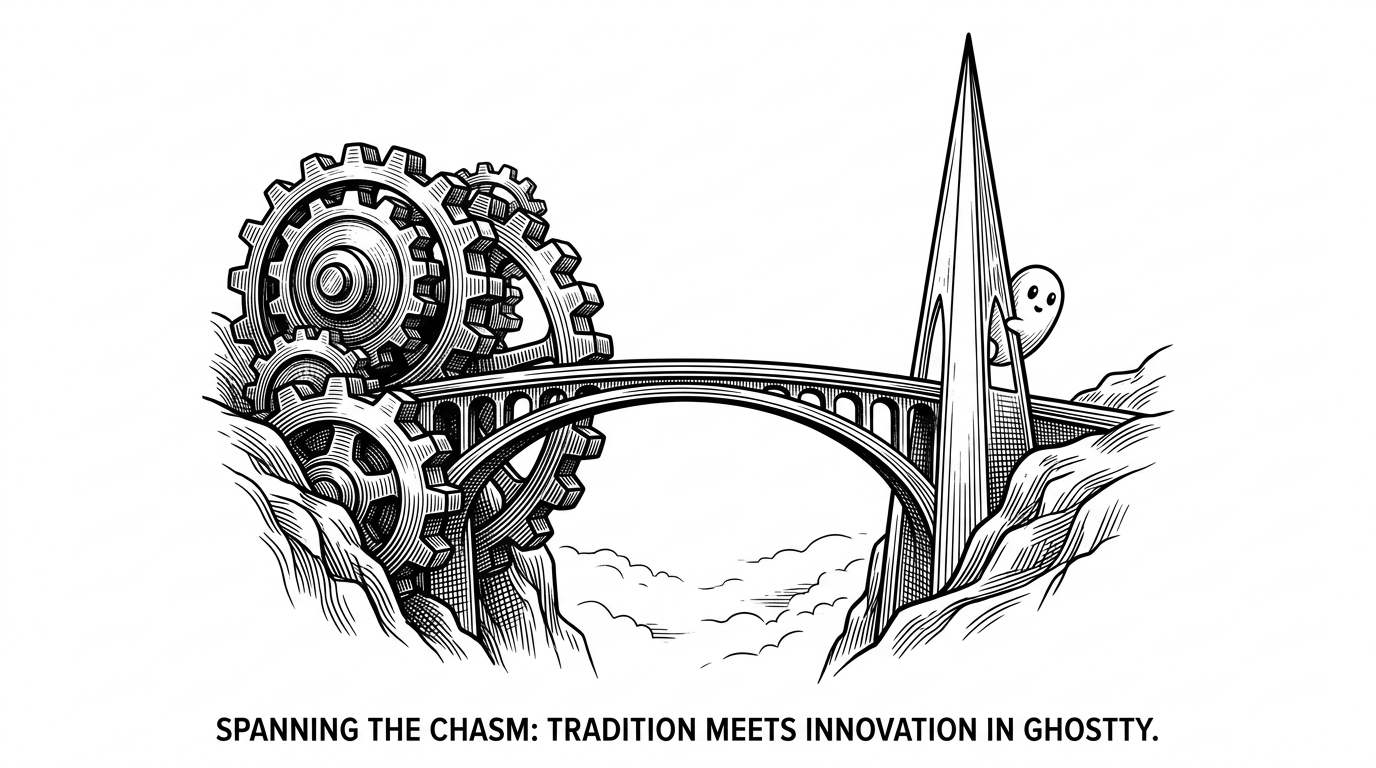
Goose: A Swift Kernel Extension Proof of Concept
An experimental macOS project that tests a simple but sharp idea: can Swift do work usually reserved for C, C++, and Rust at the system boundary?
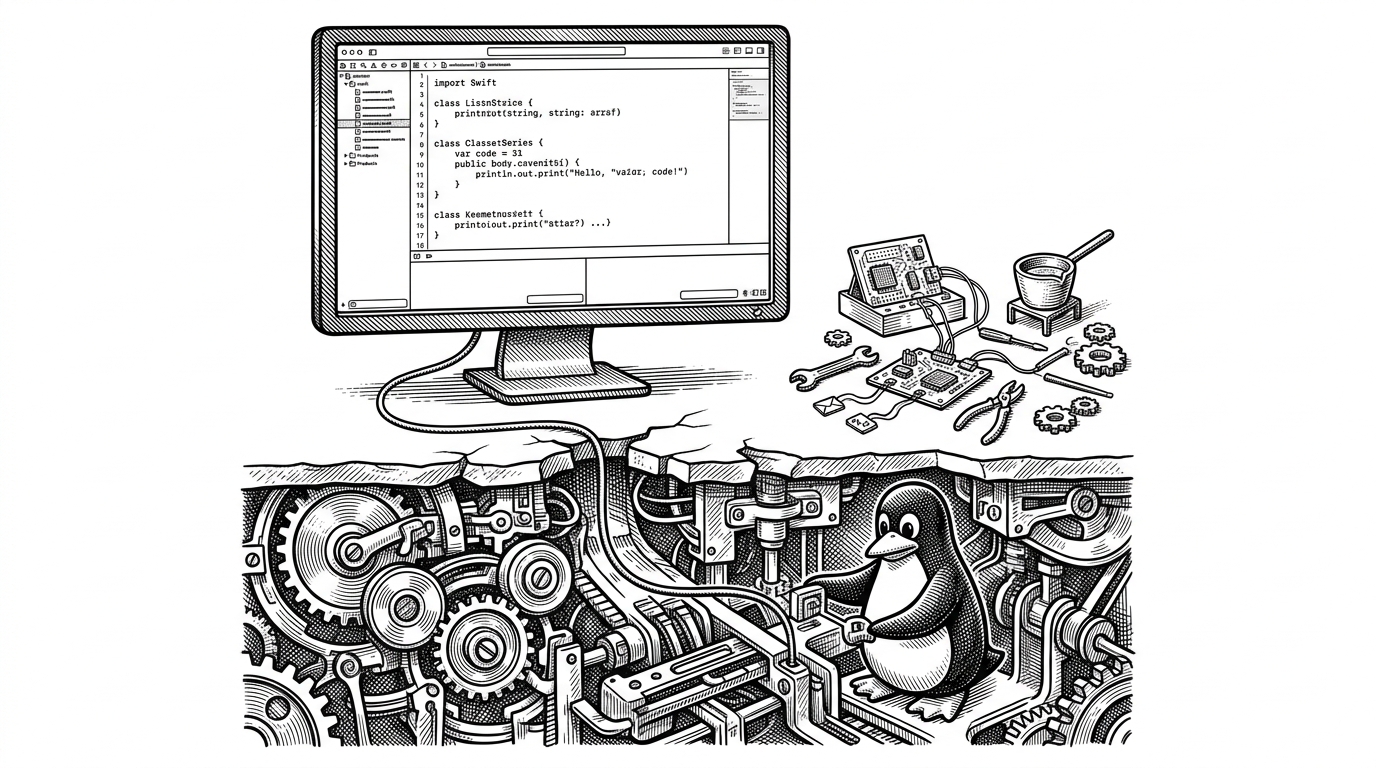
- Goose matters because it treats Swift as a systems language experiment, not just an app language.
- The project’s real claim is architectural: it tries to prove that a higher-level language can still cross the boundary into kernel-adjacent work.
- Its value is not production readiness, but a disciplined test of where Swift fits in low-level software.
- The repository is interesting because the boundary itself, not the UI, is the story.
A Swift Project That Wants to Live Below the App Layer
Most Swift repos stay safely inside apps. Goose does the opposite. It is a proof-of-concept for writing a macOS kernel extension in Swift, which makes it less a product than an argument: language choice should not stop at the UI layer.
That is why the repo is interesting. Kernel work is usually associated with C and C++, with Rust increasingly part of the conversation. Goose asks a narrower question, but a useful one: what if Swift could participate in that world too?
This is a proof-of-concept showing that it's possible to write a macOS kernel extension in Swift.
The Core Idea Is Feasibility, Not Polish
The README is explicit about the project’s limits. Goose is experimental, educational, and not intended for production use. That matters because it frames every design choice as evidence, not productization.
In other words, the repository is trying to answer a technical question first. If Swift can be pushed into kernel extension territory, then the language gets a broader credibility claim. If it cannot, the repo still teaches where the boundaries are.
This project is for educational and experimental purposes only and is not intended for production use.
What the Codebase Is Really Testing
The architecture is the point. Goose is organized around a system boundary problem: can a modern language with strong ergonomics still satisfy the constraints of kernel-adjacent development?

Why Swift Here Is the Surprise
Swift is not the obvious kernel-language pick. That is exactly why Goose has a point. It suggests that systems programming is not just about performance and control, but also about whether a language can be made to fit strict operational constraints.
The project sits in a small, technically interesting niche. C and C++ remain the incumbents. Rust is the better-known modern challenger. Goose explores a third path, one that uses Swift’s ergonomics and safety story to probe a domain most developers would never associate with it.
How It Compares
| Dimension | Goose (Swift) | C / C++ | Rust |
|---|---|---|---|
| Primary question | Can Swift reach kernel extension territory? | Can the traditional systems stack do the job? | Can a memory-safe systems language do it cleanly? |
| Ergonomics | High-level and familiar | Low-level and manual | Modern and explicit |
| Safety model | Managed by Swift’s runtime constraints | Developer-managed | Memory safety by default |
| Maturity in this niche | Proof of concept | Established standard | Rapidly growing |
| Main value | Exploration | Control and precedent | Safety and modern tooling |
The comparison is not about which language wins in the abstract. It is about what each language makes easy to believe. C and C++ make the boundary feel native. Rust makes safety feel plausible. Goose makes Swift feel experimentally possible.
Why the Repo Still Matters
Proof-of-concepts age differently from products. A product has to survive edge cases, users, and maintenance. A proof-of-concept only has to open a door cleanly enough that other people can see the shape of the room beyond it.
That is Goose’s real contribution. It is not claiming to replace established kernel tooling. It is showing that the language boundary is more fluid than people assume, and that a small repo can still make a serious point about platform strategy.