The End of the Linear Pipeline: Inside langchain-ai/langchain
How the standard library for AI agents survived its monolithic origins by abandoning simple chains for stateful, observable graphs.
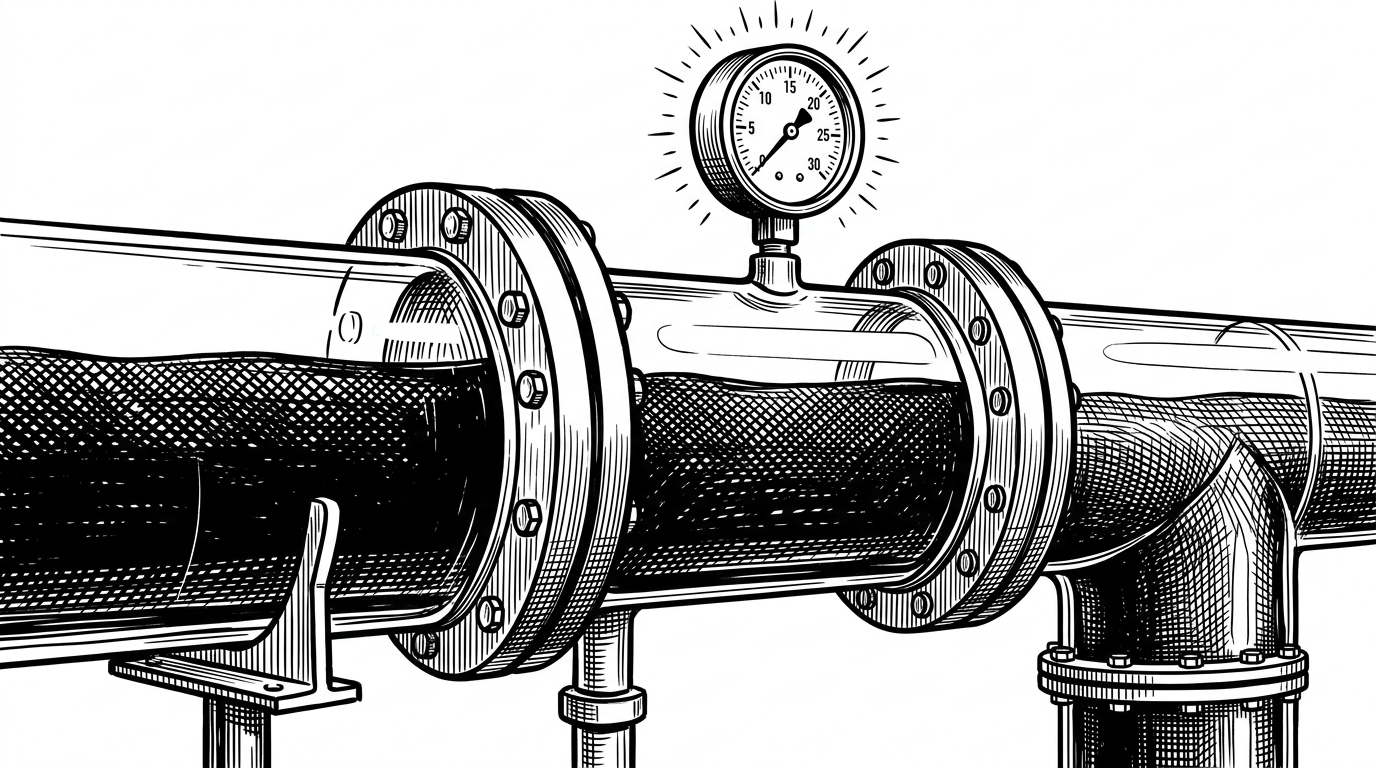
- LangChain secured its dominance through the Runnable interface and pipe operator, enabling functional composition of multi-step AI pipelines.
- The opacity of deeply abstracted pipelines necessitated defensive serialization at the core, creating an observability tax solved by LangSmith.
- The 1.0 architecture dismantled the original monolith, decoupling core logic from partner integrations to stabilize a chaotic dependency tree.
- The framework's evolution culminates in LangGraph, reflecting the structural reality that autonomous agents require cyclic state machines rather than single-pass linear chains.
The Pipe Operator's Double-Edged Sword
At the heart of `libs/core/langchain_core` lies the `Runnable` interface. This abstraction defines a standard unit of work across the entire framework. By overloading Python's bitwise OR operator (`|`), LangChain allows developers to compose functional pipelines declaratively. It mirrors the elegance of Unix pipes: data flows from prompt, to model, to output parser in a single readable line.
from langchain_core.prompts import ChatPromptTemplate
from langchain_openai import ChatOpenAI
from langchain_core.output_parsers import StrOutputParser

prompt = ChatPromptTemplate.from_template("Tell me a joke about {topic}")
model = ChatOpenAI()
parser = StrOutputParser()

chain = prompt | model | parser
chain.invoke({"topic": "software engineering"})
This functional composition, known as LangChain Expression Language (LCEL), automatically bridges synchronous and asynchronous execution. If a component lacks a native `ainvoke` method, the framework wraps the synchronous call in a thread pool executor. However, this level of abstraction comes with a severe tradeoff: when a directed acyclic graph (DAG) of arbitrary complexity fails, finding the broken link in a silent cascade becomes nearly impossible.
The Observability Tax
The elegant abstraction of LCEL created an immediate debugging crisis. Heavy reliance on deeply nested `RunnableSequence` objects meant that multi-modal inputs and intermediate token states were obscured. To solve this, the maintainers integrated defensive serialization directly into the core abstractions. Base classes like `Serializable` and `LangSmithParams` ensure that every step of the black box is transparent to debuggers.
You need observability: structured visibility into what your system actually did, not just what it returned. This means three things: Tracing — what was the execution flow? Which nodes ran, in what order, with what inputs? Logging — structured records of tokens consumed, latency, costs, prompts, and completions Monitoring — aggregated views of cost trends, error rates, and performance over time
Shattering the Monolith
In its earliest days, LangChain was a single, bloated package containing hundreds of integrations. Installing it meant installing "literally everything," leading to import chaos, versioning conflicts, and breaking-change fatigue. The 1.0 release represented a structural reset. The architecture was decoupled into `libs/core` for abstract interfaces and separate partner packages (`libs/partners`) for specific provider implementations.
The Paradigm Shift to Graphs
As applications evolved from simple chatbots to autonomous agents, the limitations of single-pass linear chains became apparent. Agents require planning, memory, and the ability to recursively loop through tool calls until a condition is met. This realization birthed LangGraph, fundamentally shifting the framework's core paradigm from linear execution to state machine orchestration.
Here’s what nobody tells you: LangGraph is LangChain with one structural addition. A graph. Nodes are functions. Edges are transitions. State is a typed dictionary that flows between them. That’s the whole thing.
| Feature | LangChain (LCEL) | LangGraph |
|---|---|---|
| Execution Model | Directed Acyclic Graph (DAG) | Cyclic State Machine |
| Data Flow | Single pass (Input to Output) | Continuous state updates via looping |
| Primary Use Case | Data transformations, RAG pipelines | Autonomous agents, multi-actor systems |
| Error Recovery | Limited to node-level retries | Dynamic routing based on tool feedback |
Governing the AI Standard Library
Despite its massive success and foundational role in the AI ecosystem, LangChain faces the growing pains of monorepo scale. A recent governance audit highlighted struggles with automated test discovery and the enforcement of AI-assisted development rules. Managing the standard library for the future of AI requires not just brilliant abstractions, but rigorous, scalable governance.