larksuite/cli: When the Primary User is an LLM
How the official Feishu command-line tool turns a complex enterprise platform into a programmable nervous system for AI agents.
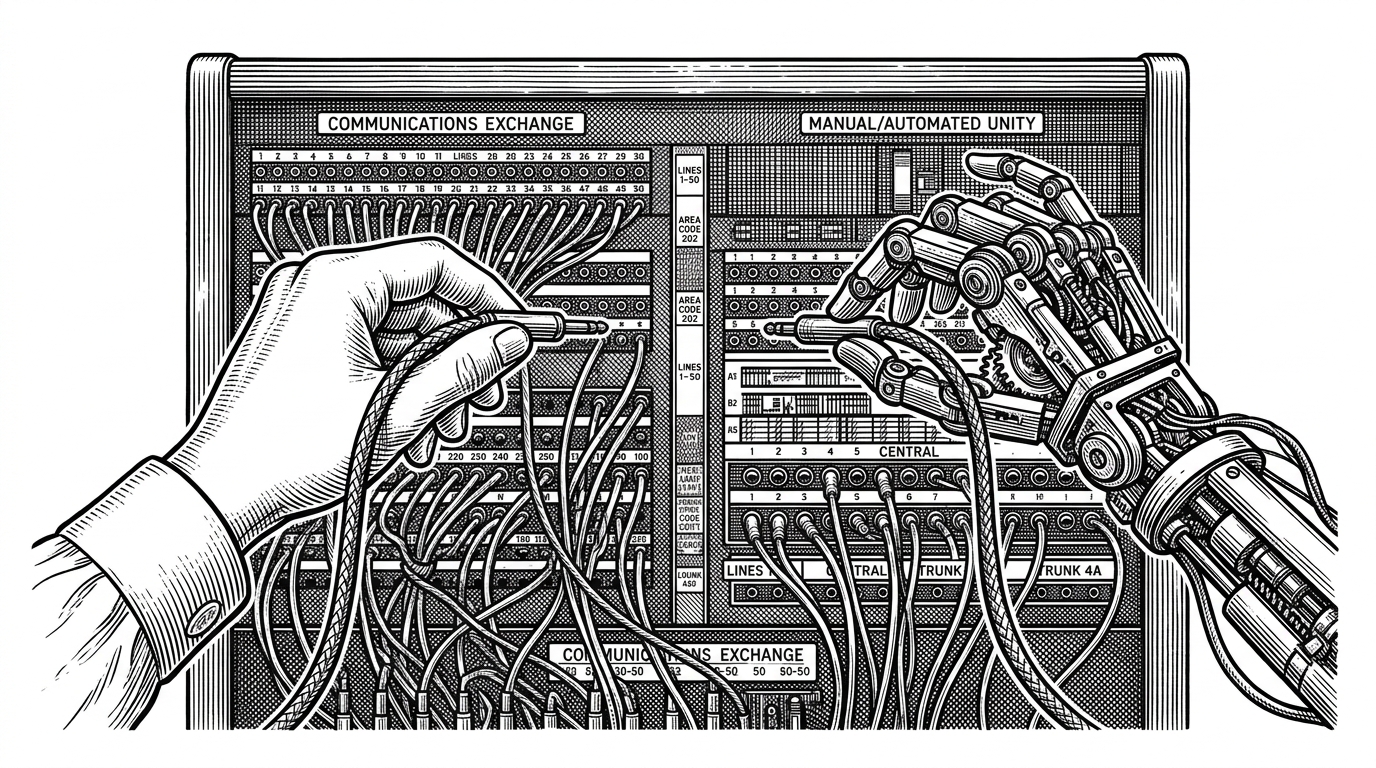
- The larksuite/cli treats LLMs as first-class citizens, solving headless authentication and command discovery for AI agents.
- A purpose-built device flow bypasses the headless auth trap that breaks traditional CLIs in agent environments.
- Structured error envelopes replace standard stack traces, allowing LLMs to algorithmically self-correct rather than hallucinate.
- A metadata-driven architecture dynamically generates over 200 commands, scaling infinitely without hardcoding.
The Non-Human User
Command-line interfaces were originally built for human fingers and human eyes. They expect users to read colored text, navigate interactive prompts, and occasionally authorize access via a web browser. The larksuite/cli introduces a paradigm shift: it treats AI agents as a primary audience. While it offers high-level shortcuts for humans (like +agenda), its true power lies in its structured backend, designed for LLMs to read, write, and automate enterprise workflows without clicking a GUI.
Every command is tested with real agents, designed with concise parameters, smart defaults, and structured output formats to maximize automation success rates.
Solving the Headless Auth Trap
AI agents live in headless environments. When a standard CLI triggers an OAuth flow, it attempts to open a local browser. In an agent's context, this crashes the workflow. The larksuite/cli solves this with a purpose-built --no-wait device flow. The agent requests access, receives a URL and pairing code, and polls the background while a human approves the request on a separate device.
Output Enveloping and Self-Correction
When an LLM receives a raw stack trace, it often hallucinates a fix. The larksuite/cli wraps all responses in a structured envelope. If an API call fails, the CLI returns machine-readable JSON containing specific error codes and actionable hints. This structured output allows the agent to algorithmically self-correct.
The Dynamic Registry
Maintaining a CLI with over 200 commands across 11 business domains is an endless chore. The Lark team bypassed hardcoding by building a Metadata-Driven Architecture. The Go engine reads JSON specifications on the fly to generate Cobra commands. This architecture scales infinitely without requiring constant manual code updates.
The NPM Trojan Horse
Go binaries are fast, but Node.js rules the AI agent tooling ecosystem. By wrapping the Go core in an NPM package, larksuite/cli achieves the performance of compiled code with the frictionless distribution of npx. Furthermore, it registers 'Skills' to inject its metadata directly into the context window of tools like Claude Code.
| Feature | Traditional CLI | Agentic CLI (larksuite/cli) |
|---|---|---|
| Primary Consumer | Human eyes | LLM context windows |
| Authentication | Local browser redirect | Headless device-code polling |
| Error Handling | Colored text and stack traces | Structured JSON envelopes with hints |
| Command Structure | Hardcoded subcommands | Dynamic JSON metadata registry |
| Distribution | Homebrew / Apt | NPM wrapper with native Agent Skills |