oapi-sdk-gin: The Tiny Adapter That Makes Lark Speak Gin
A one-file bridge that preserves raw request bodies, reuses one handler pipeline for events and card actions, and cuts out webhook boilerplate.

- oapi-sdk-gin shows that the hardest part of platform DX is often the last mile, not the core SDK.
- Its main trick is preserving raw request bytes and headers long enough for Lark verification to work safely.
- A single private pipeline can serve both event webhooks and card actions when the interface boundary is right.
- Official bridge libraries matter because they make a platform feel native inside the frameworks developers already use.
This repo is small enough to miss and useful enough to study. It sits between Gin and Lark's official Go SDK, then does one job well: keep the request intact, hand it to the SDK in the right shape, and write the response back without ceremony.
The mismatch this repo quietly solves
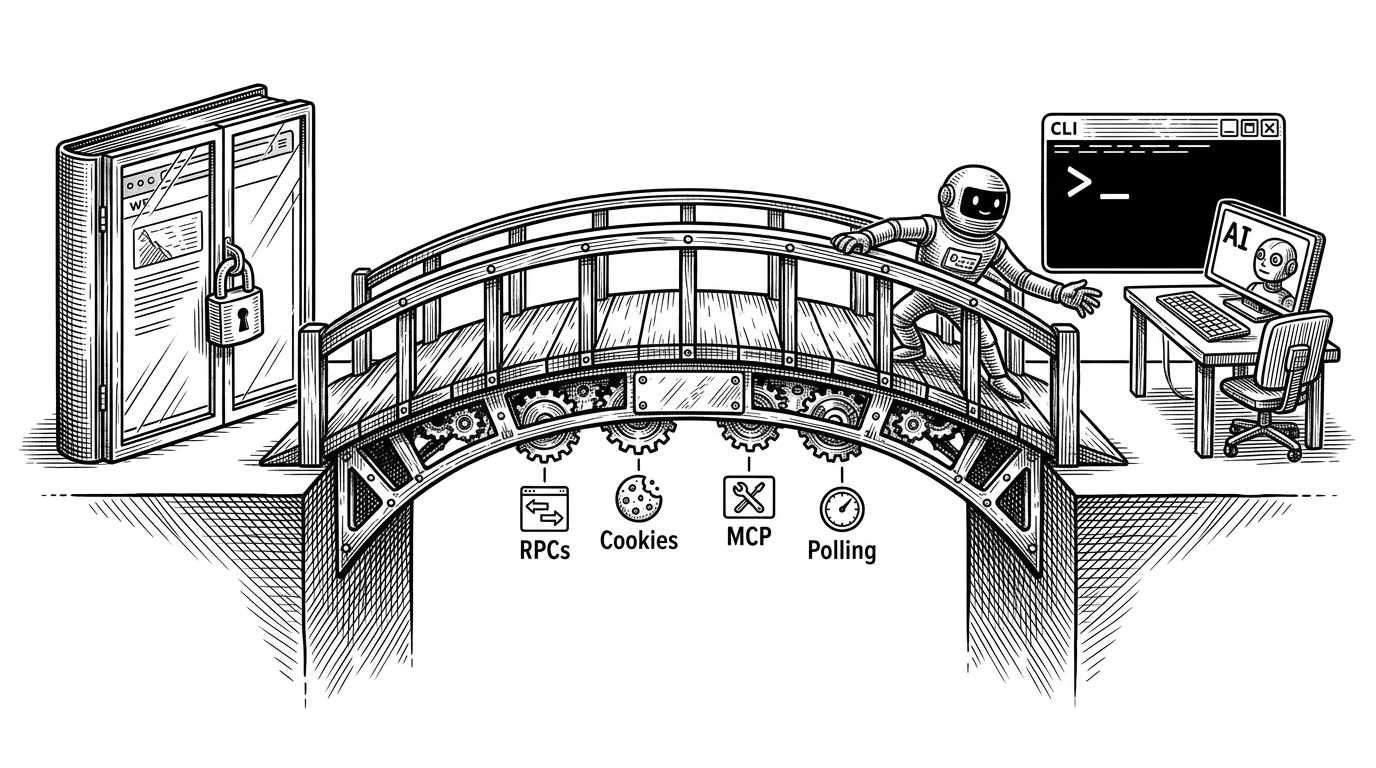
Gin gives you a framework-centric request context. Lark's SDK wants the raw HTTP body, the headers, and a handler interface it can trust for verification and dispatch. oapi-sdk-gin exists to reconcile those two worlds without forcing every app to rebuild the same adapter.
an oapi-sdk-go extension package that integrates the Gin Web framework
Why the raw body matters
The sharpest technical constraint is simple: the body must stay raw until the SDK has a chance to verify it. If middleware reads, rewrites, or consumes the payload too early, signature checks can fail and the whole webhook path becomes brittle.
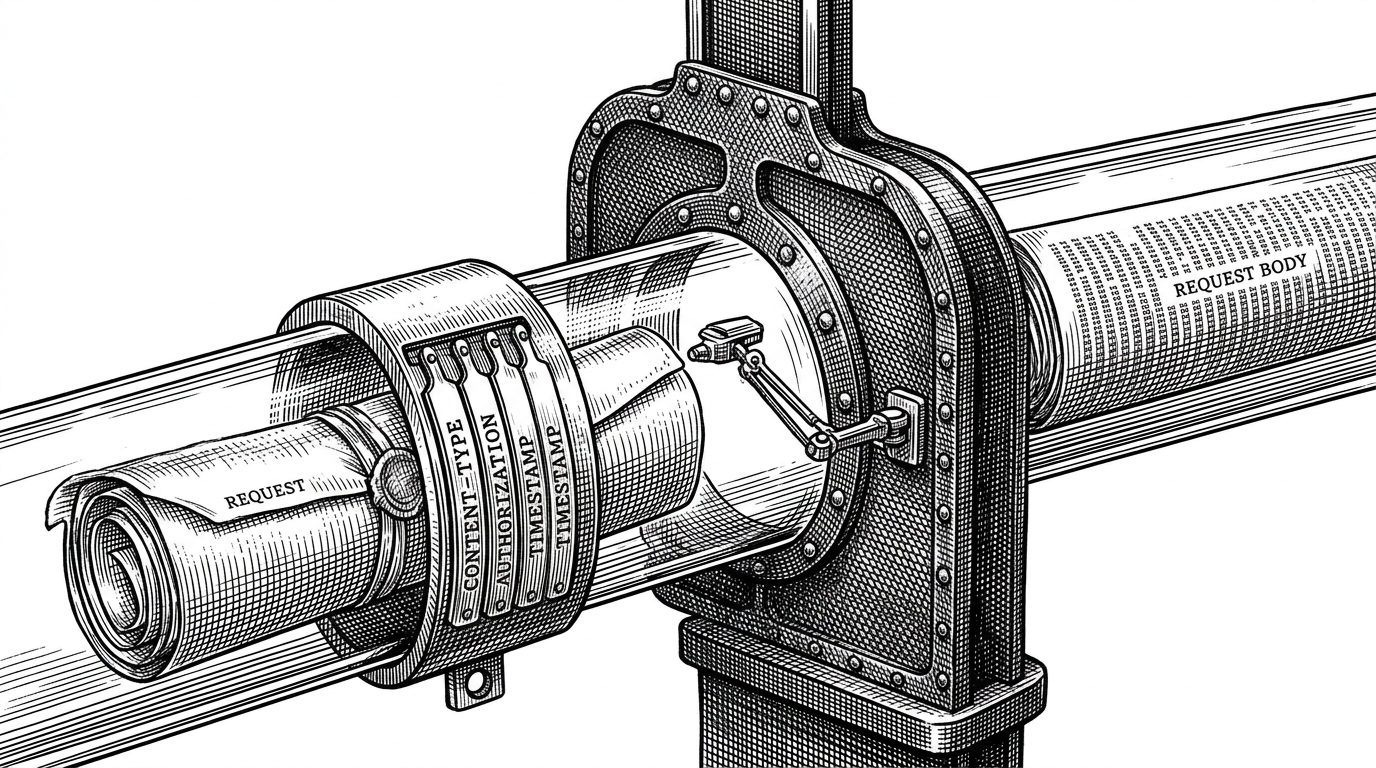
That is the real trick here. The adapter does not invent a new protocol. It protects the one the SDK already expects, then hands control off as early as possible.
One private pipeline, two public entry points
The design stays elegant because the public API is thin. Two constructors expose two Gin handlers, but both end up in the same private orchestration path. That works because the underlying Lark handlers implement the same request interface.
g.POST("/webhook", sdkginext.NewEventHandlerFunc(eventDispatcher))
g.POST("/card", sdkginext.NewCardActionHandlerFunc(cardActionHandler))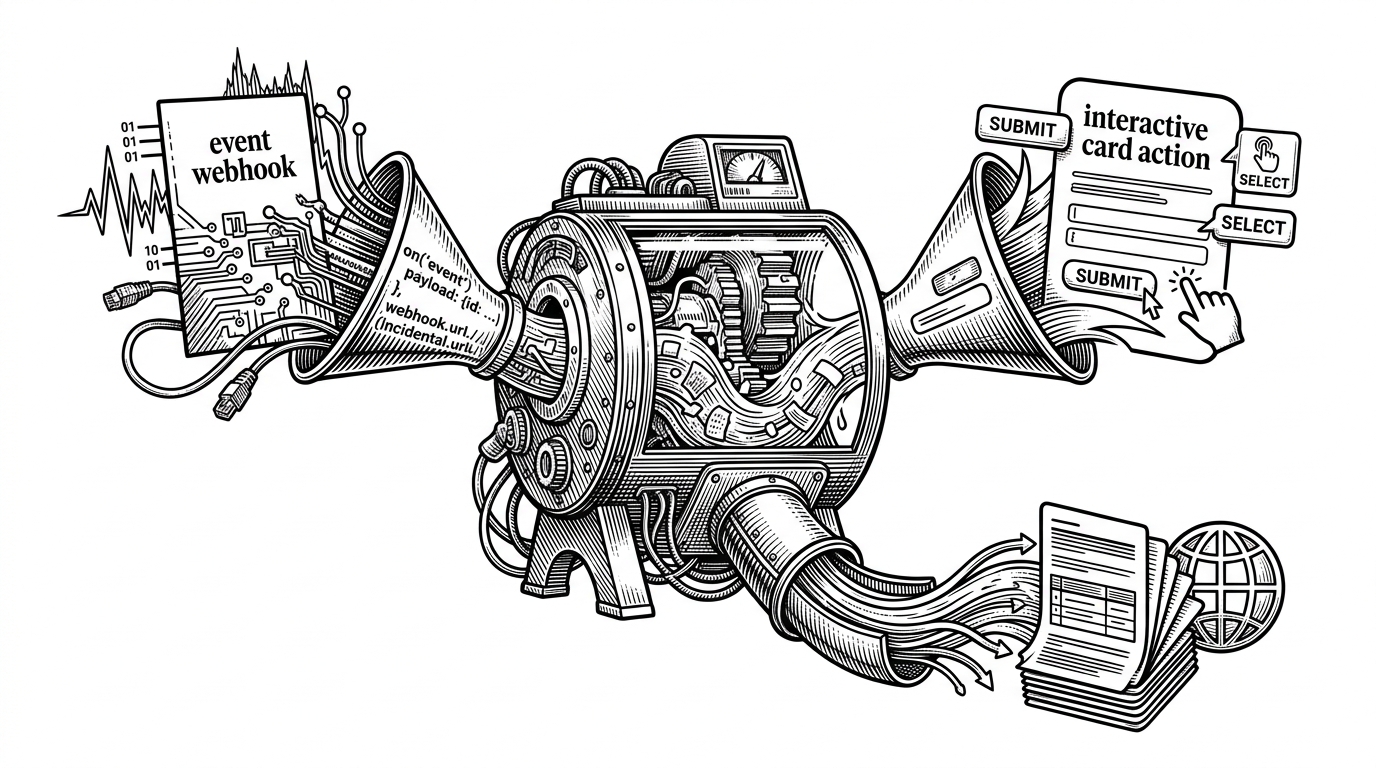
That interface choice matters more than it looks. It lets the adapter treat event dispatchers and card action handlers as siblings, not special cases.
What the tests reveal about real usage
The test file is more than a test file. It is a usage guide in disguise. You see the intended server shape, the route registration pattern, and the way the package fits into a real Gin app without ceremony.
r := gin.Default()
r.POST("/event", sdkginext.NewEventHandlerFunc(eventDispatcher))
r.POST("/card", sdkginext.NewCardActionHandlerFunc(cardActionHandler))
r.Run(":8080")
The examples also point to the package's real job. It is not trying to replace Lark's SDK. It is trying to make the official SDK feel at home inside a Gin server.
Manual Gin wiring vs the adapter
| Concern | Manual Gin + official SDK | oapi-sdk-gin |
|---|---|---|
| Route registration | You build and glue the handler yourself. | You register the SDK handler directly as a Gin route. |
| Raw body handling | Easy to consume or mutate the payload too early. | The adapter captures and preserves raw bytes before dispatch. |
| Header propagation | You must copy request and response headers by hand. | The wrapper carries headers through the bridge. |
| Verification readiness | Signature checks are easy to get subtly wrong. | The flow is already arranged for Lark's verification path. |
| Event and card action reuse | Usually two separate glue paths. | One private pipeline serves both interaction types. |
| Boilerplate cost | Repeated per app and per route. | Almost none beyond route registration. |
The comparison is boring in the best way. The adapter saves you from writing the same fragile plumbing again, and it makes the dangerous part, request fidelity, harder to mess up.
Why an official bridge matters
The repo lives under the official larksuite organization, and that is the signal. Platform teams do not only ship SDKs. They also need narrow adapters that match the frameworks developers already use, because that is where adoption actually happens.
This project is archived, but the design still says something durable. Great developer platforms are not just APIs and auth flows. They also remove the last 10 percent of integration pain, the part that decides whether a tool feels polished or merely possible.